Close-ups
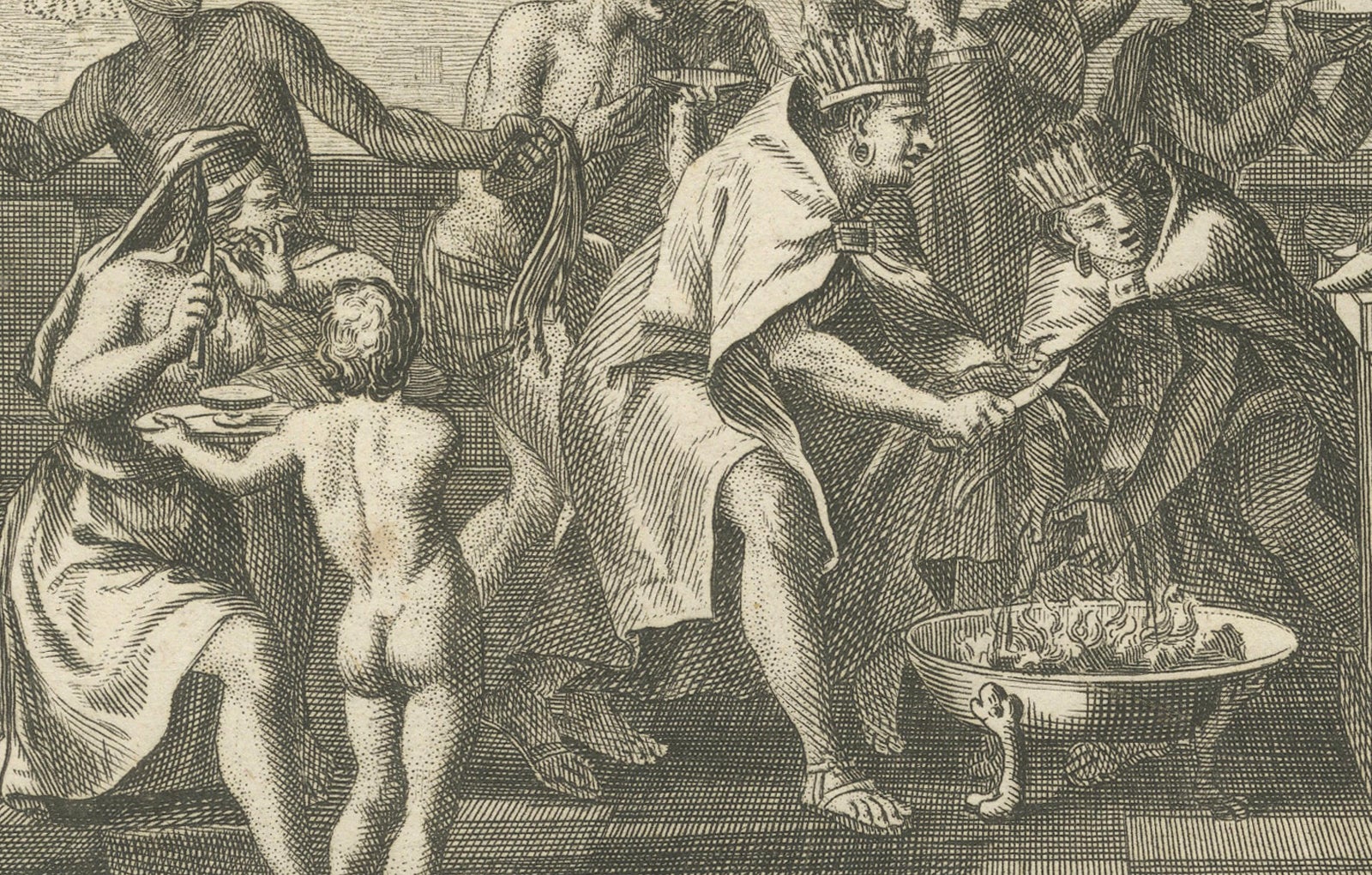
Framed and on the wall

Frame and rooms are illustrations of how the print could look, drawn to its real size; it is sold unframed unless the description says otherwise.
Rites of the World
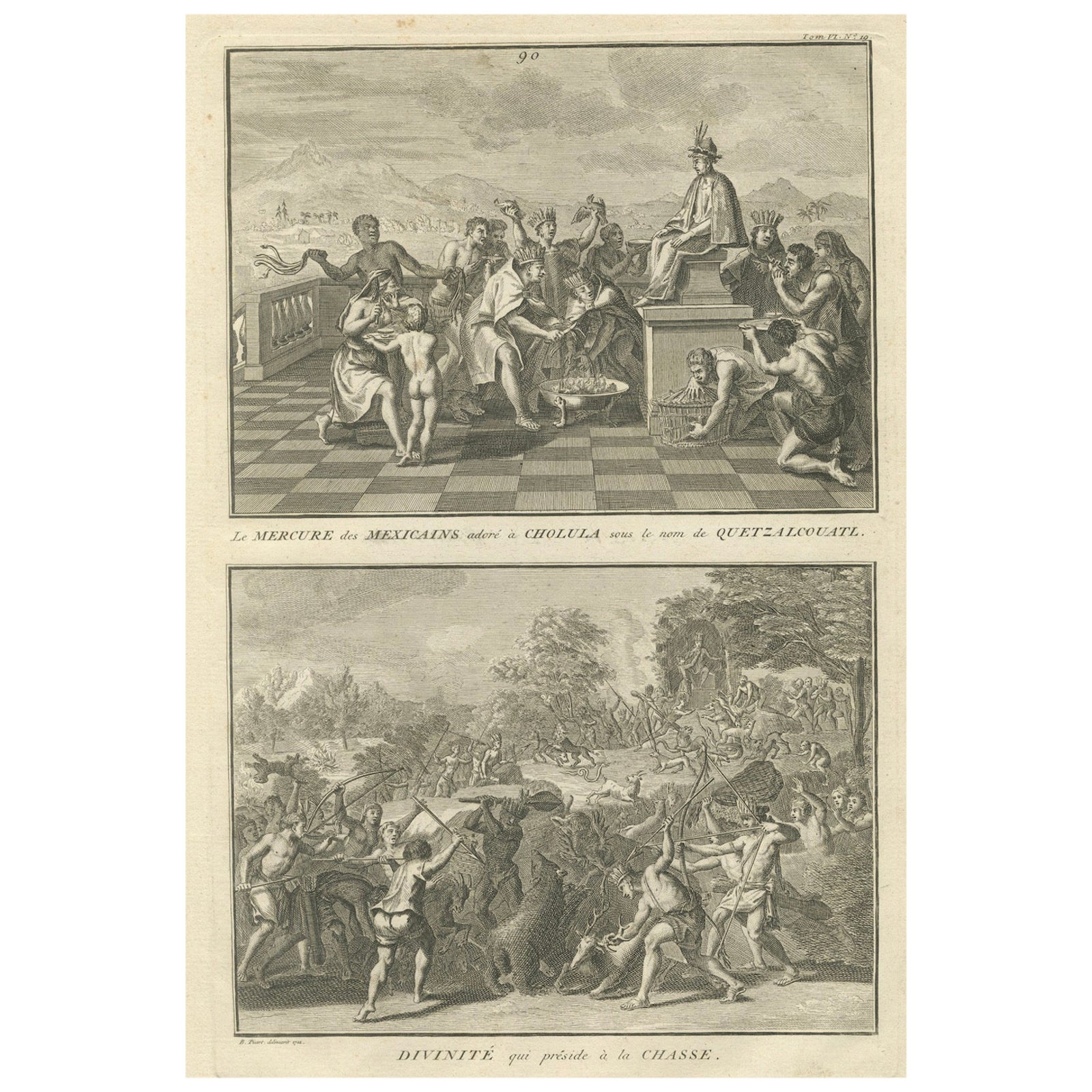
Quetzalcoatl Worship and Hunting Deity, Rare 1734 Engraving of Aztec Rituals
Anno Domini MDCCXXXIV1734
€260
$290 · £220
Original print, not a reproduction
Ships worldwide from the Netherlands, flat, insured and tracked. 14-day returns. To buy, use Ask a question (info@antiquesacredprints.com) and we will reserve it for you.
- Date
- 1734
- Sheet size
- 16.5 × 10.2 in (42 × 26 cm)
- Condition
- Good. Condition is good. The engraving has strong impressions and crisp detailing throughout. There is some minor toning along the edges, light foxing near the lower margin, and a faint crease in the top right corner. The paper is otherwise stable, clean.
- Faith
- Indigenous Americas
- Collection
- Rites of the World
- Era
- 1700 to 1799, Mortier, Picart and the illustrated Bible
- Stock no.
- f_45019962
What the condition grades mean
- Excellent
- Bright and clean, with no faults worth mentioning.
- Very good
- Only light signs of age, such as faint toning.
- Good
- Normal signs of age for a sheet of this period: toning, some foxing, small marks or neat old repairs.
- Fair
- Clear faults such as staining, tears or repairs, priced to match.
Every fault we see is written in the condition note, and the whole sheet is shown uncropped in the photos.
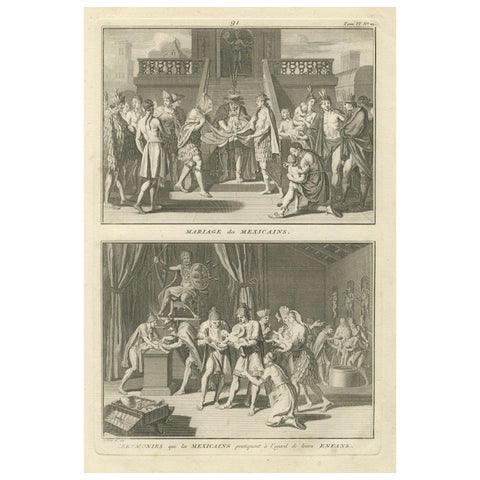
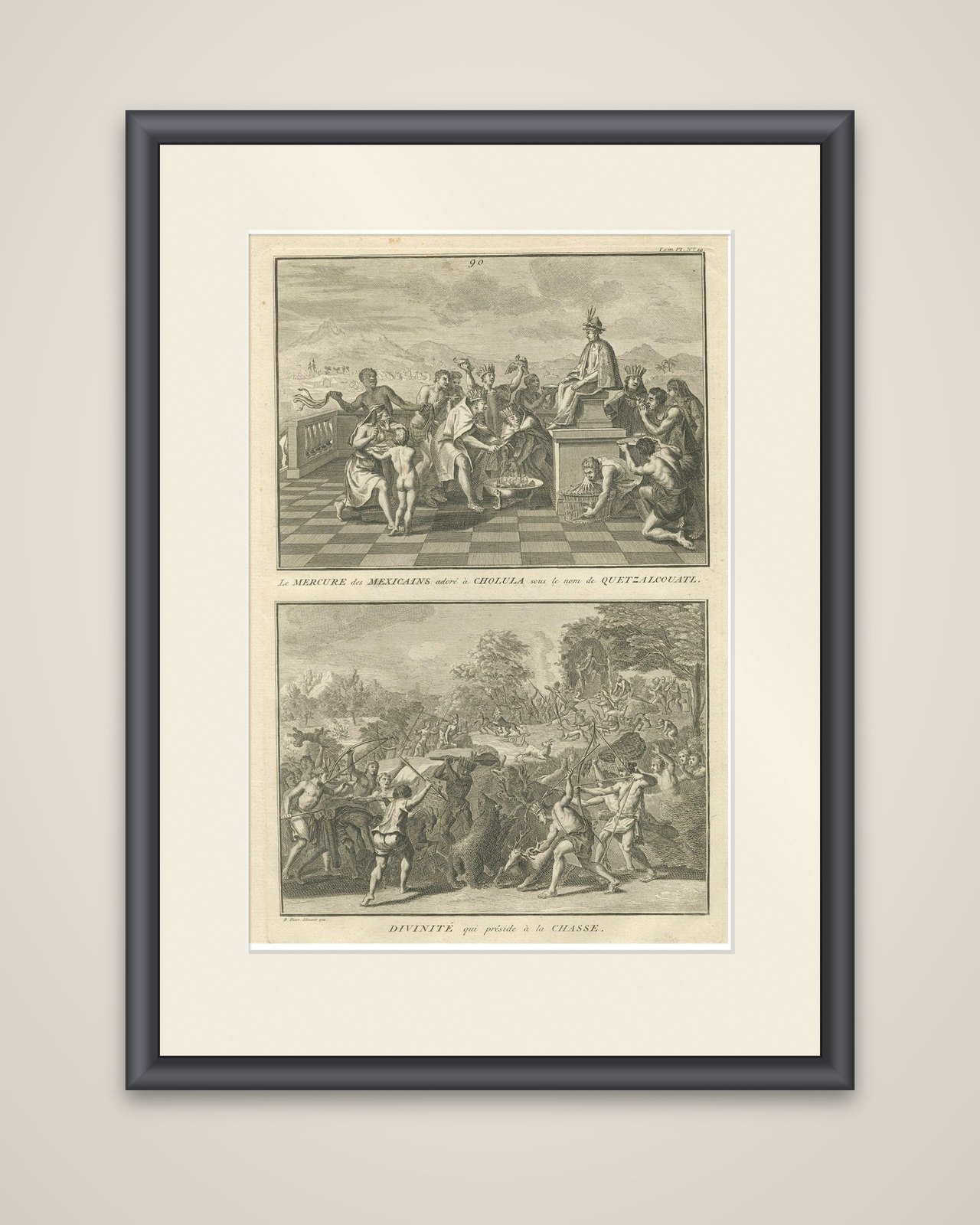
Quetzalcoatl and the hunting deity, a copperplate engraving of 1734 from Les Cérémonies et Coutumes Religieuses de tous les Peuples du Monde, engraved after designs by Bernard Picart (Tome IX, plate numbered 90 at the top). Two scenes appear on one sheet.
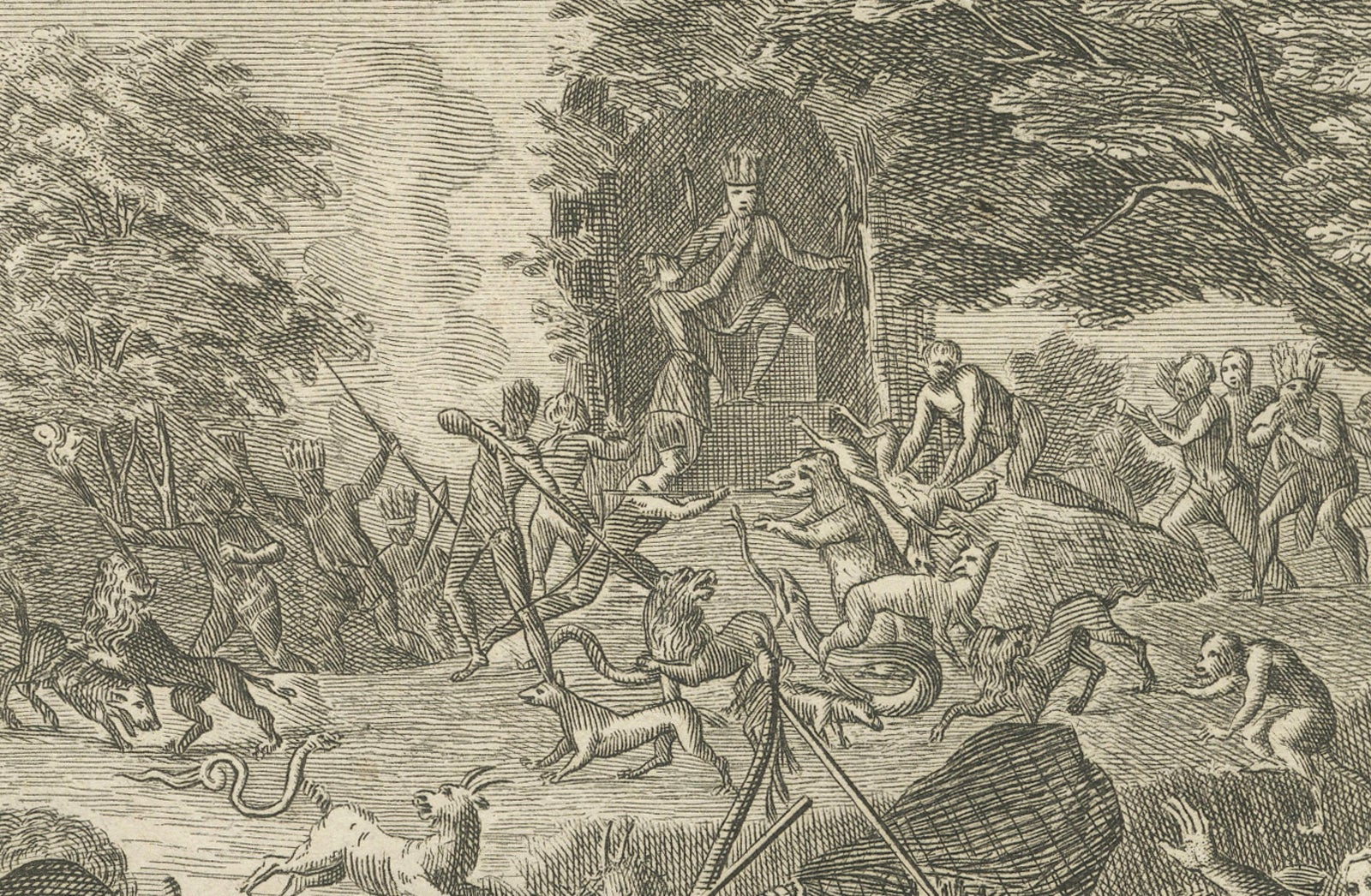
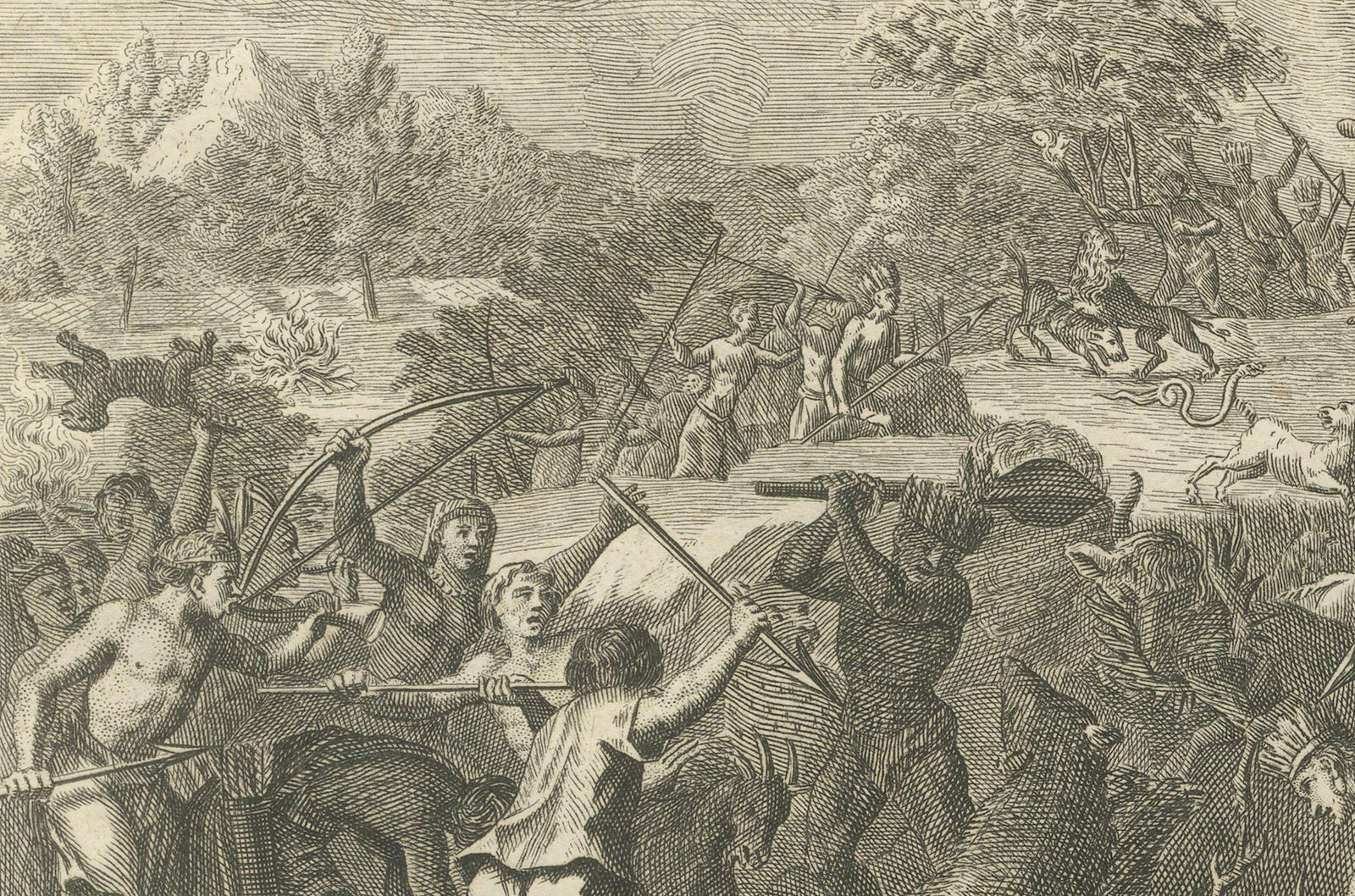
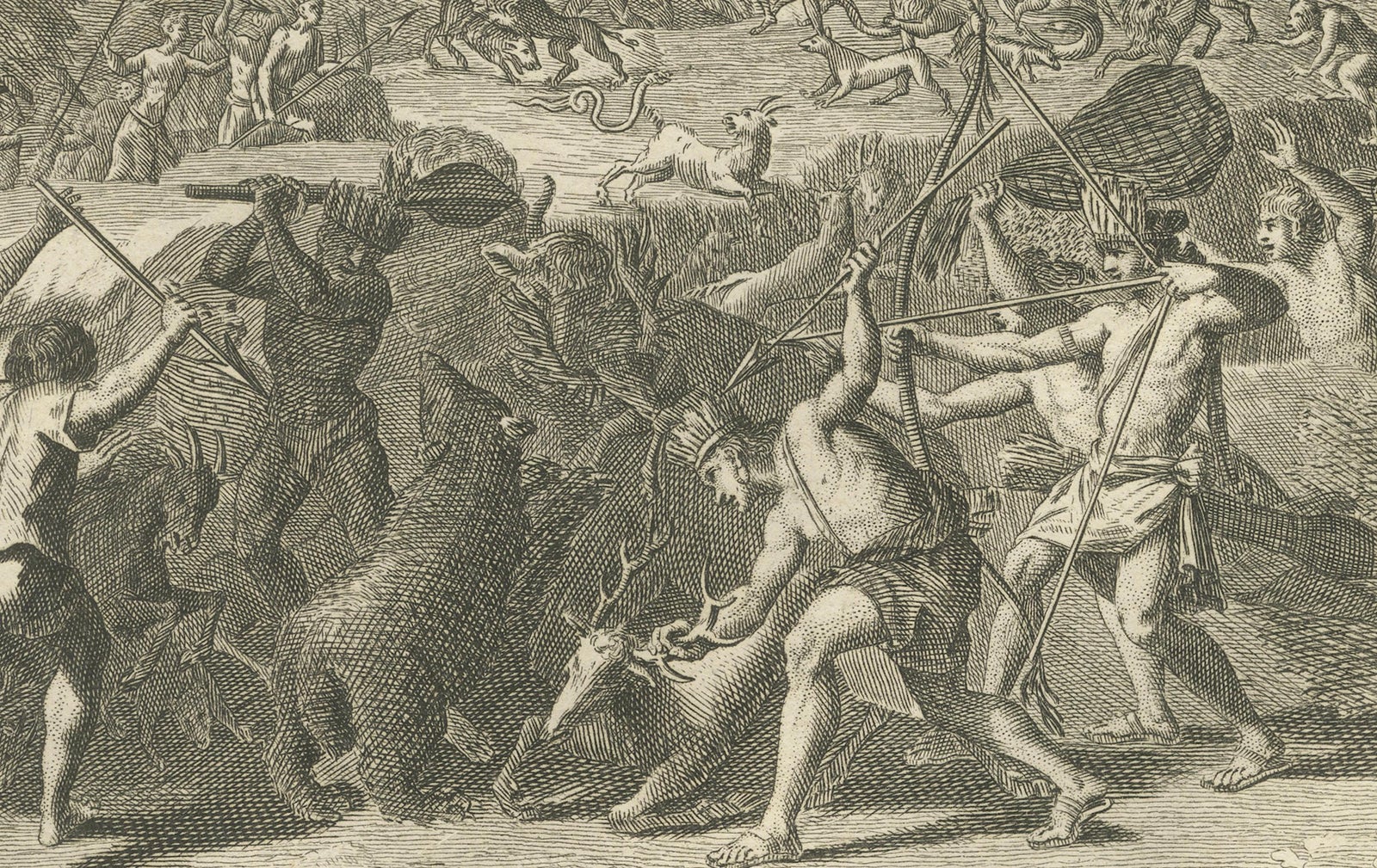
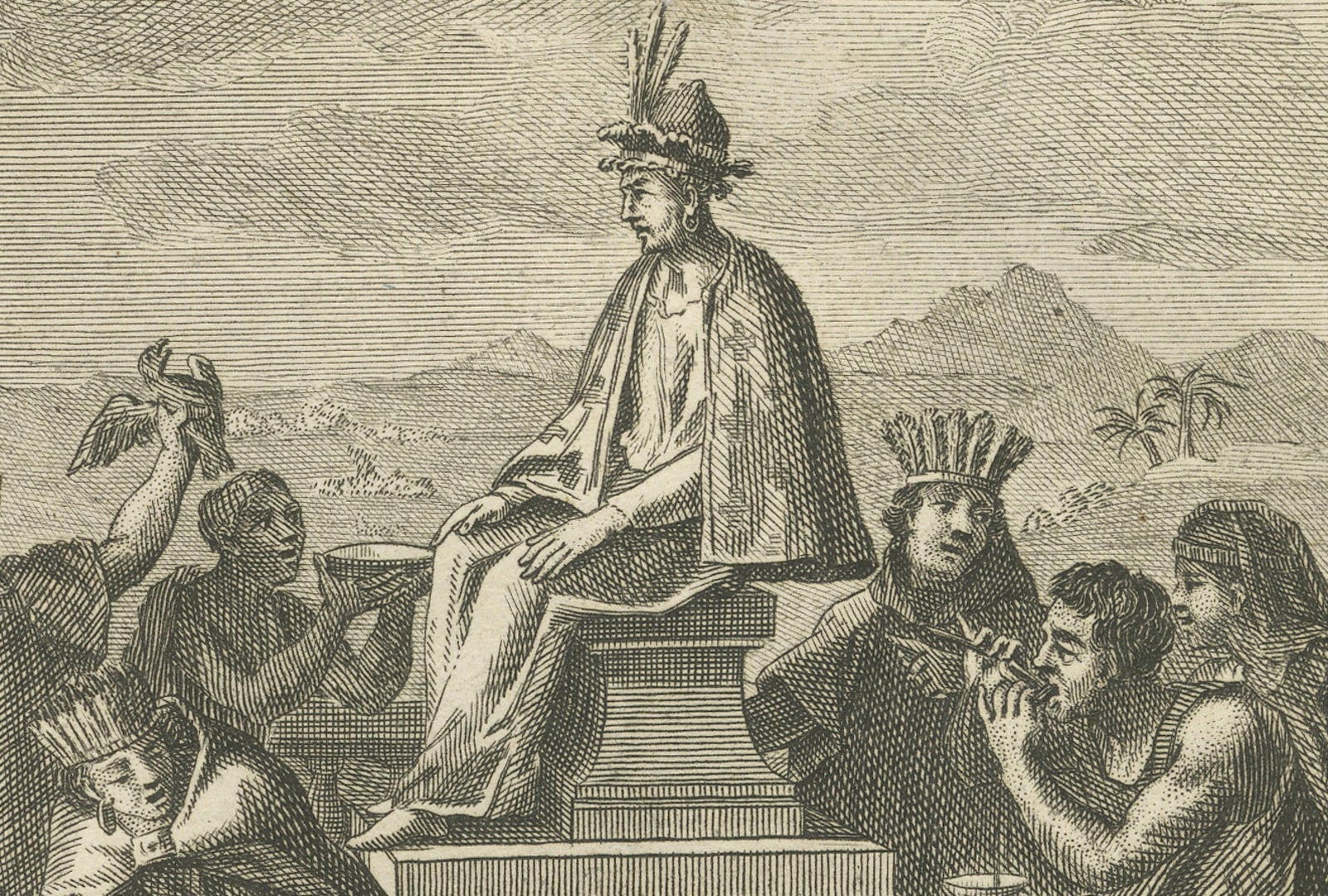
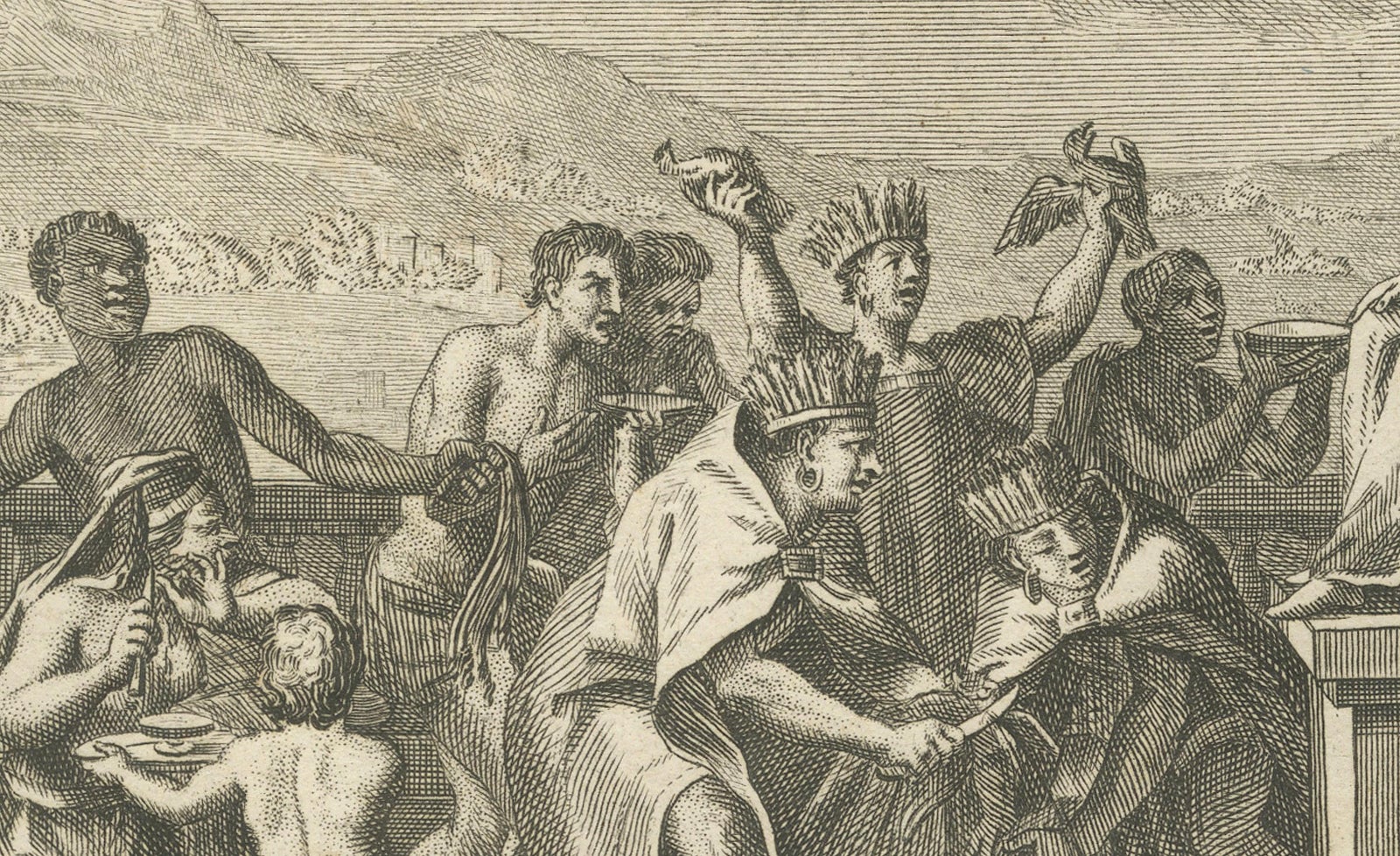
The upper scene is lettered "Le Mercure des Mexicains adoré à Cholula sous le nom de Quetzalcouatl". A seated figure on a stepped pedestal receives the offerings of a crowd on a checkered terrace: kneeling attendants, men in feathered headdresses, a woman with a child in the foreground, a brazier, and a man bringing a caged bird. Mountains and a distant town appear beyond the balustrade. The lower scene, "Divinité qui préside à la chasse", is a crowded hunt in a wooded landscape, with figures drawing bows and clubbing animals around a large central beast.
The engraver follows a European habit of matching foreign gods to classical ones, and so the feathered serpent deity is lettered as the Mercury of the Mexicans.
Explore