Close-ups
Framed and on the wall
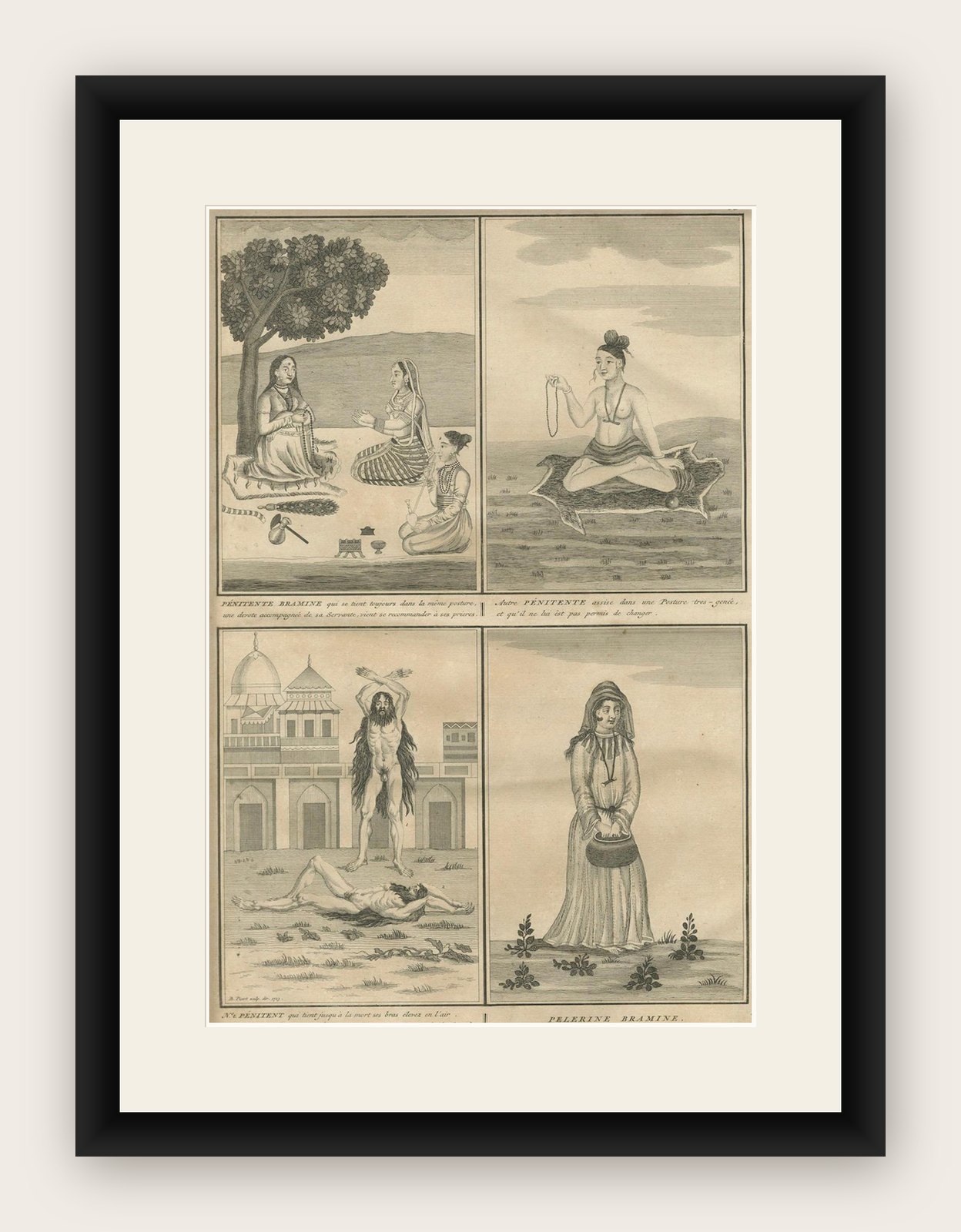
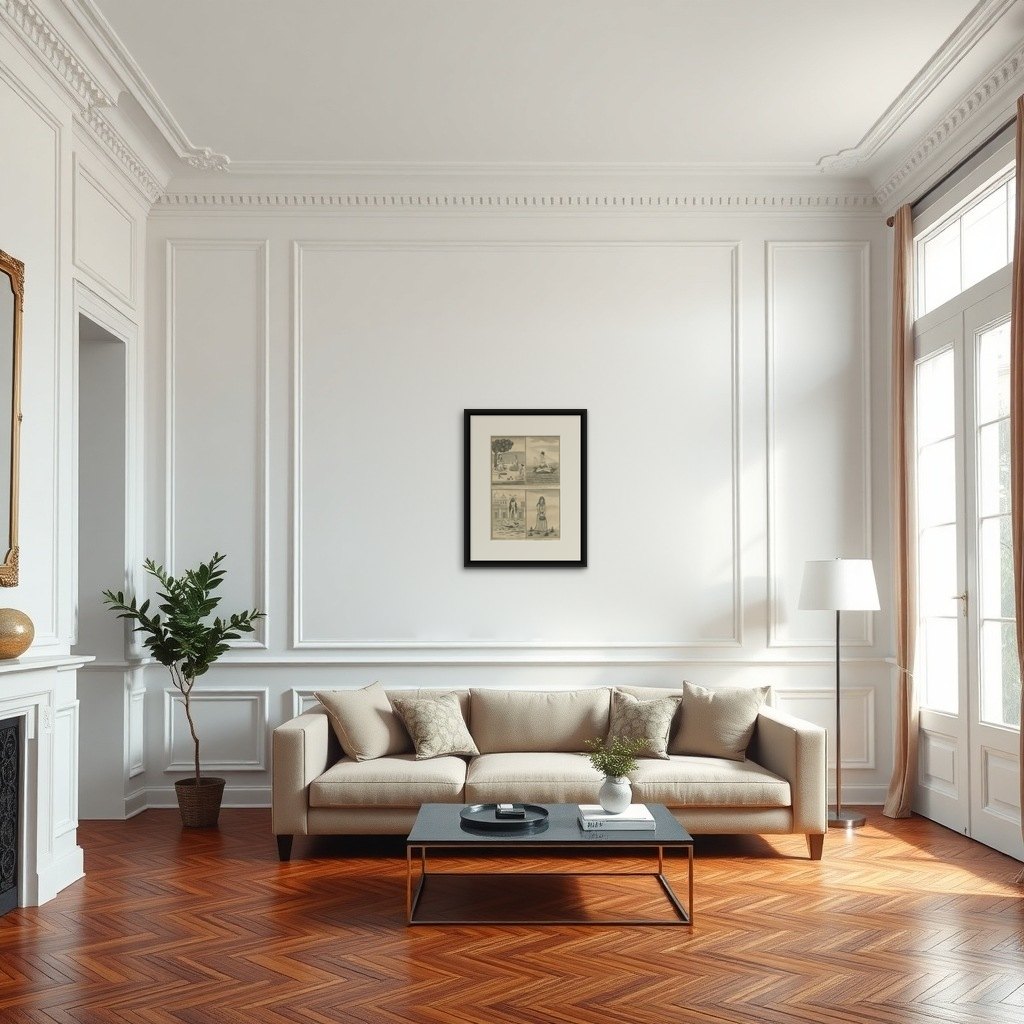
Frame and rooms are illustrations of how the print could look, drawn to its real size; it is sold unframed unless the description says otherwise.
Rites of the World
Indian Brahmin Penitents and Pilgrim, Rare 18th Century Ritual Engraving, 1734
Anno Domini MDCCXXXIV1734
$245
€220 · £185
Original print, not a reproduction
Ships worldwide from the Netherlands, flat, insured and tracked. 14-day returns. To buy, use Ask a question (info@antiquesacredprints.com) and we will reserve it for you.
- Date
- 1734
- Sheet size
- 16.5 × 10.2 in (42 × 26 cm)
- Condition
- Good. Good condition, with a strong plate impression and well-preserved imagery. Light foxing is visible, especially along the lower edge and margins, and there is minor toning near the edges. Paper is untrimmed, with deckled edges and some slight wear.
- Faith
- Hinduism
- Collection
- Rites of the World
- Era
- 1700 to 1799, Mortier, Picart and the illustrated Bible
- Stock no.
- f_45016312
Title: Indian Brahmin Penitents and Pilgrim, Rare 18th Century Ritual Engraving
Description:
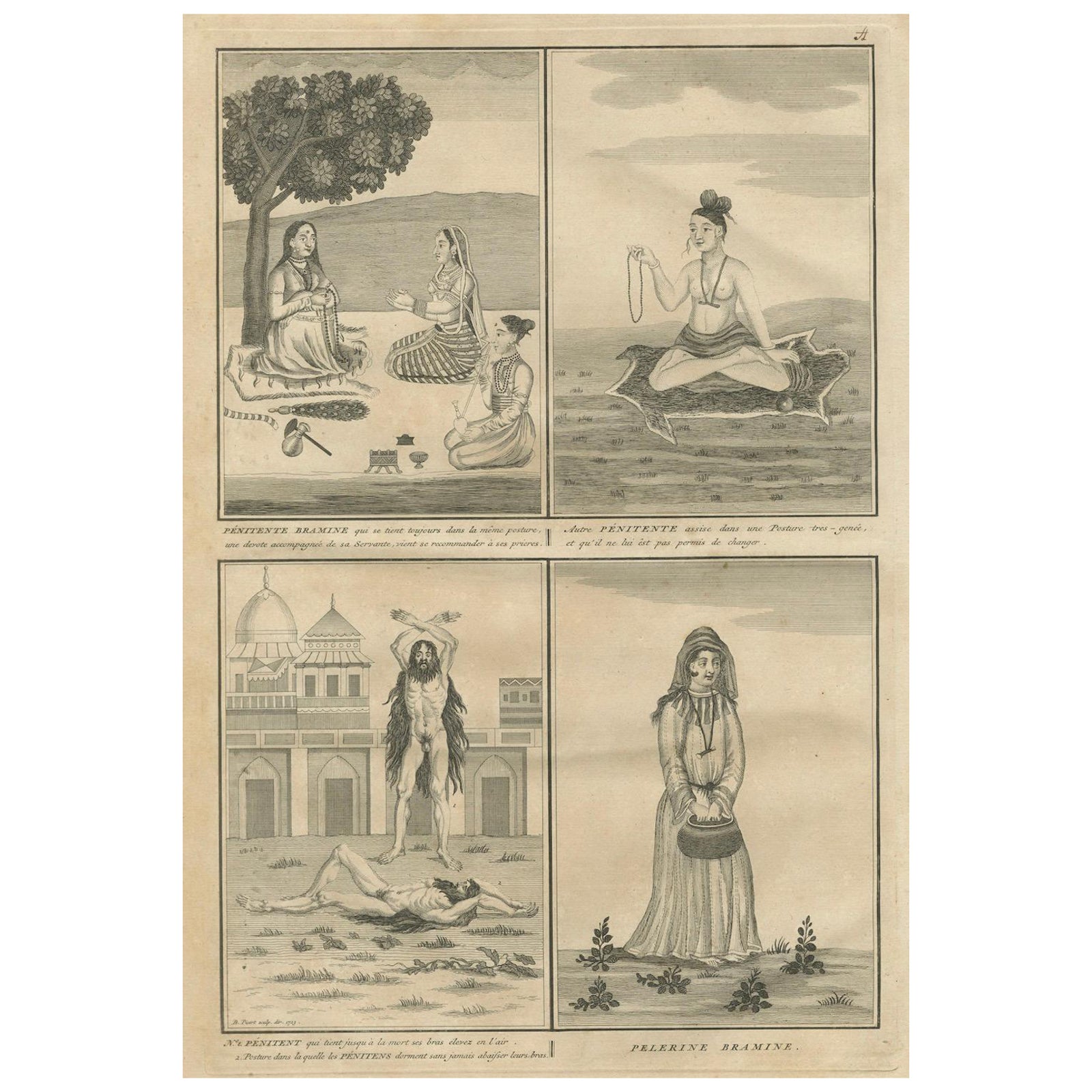
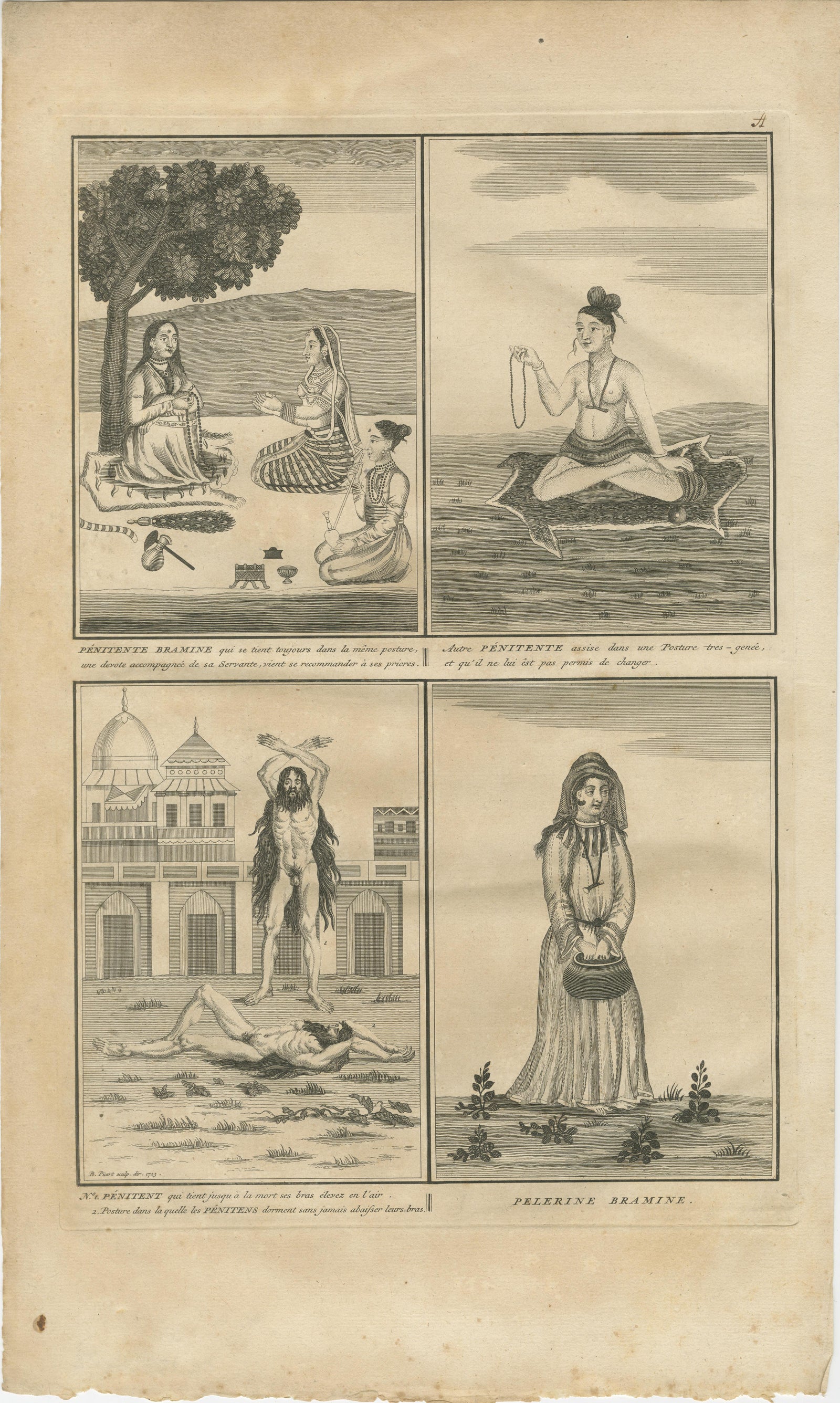
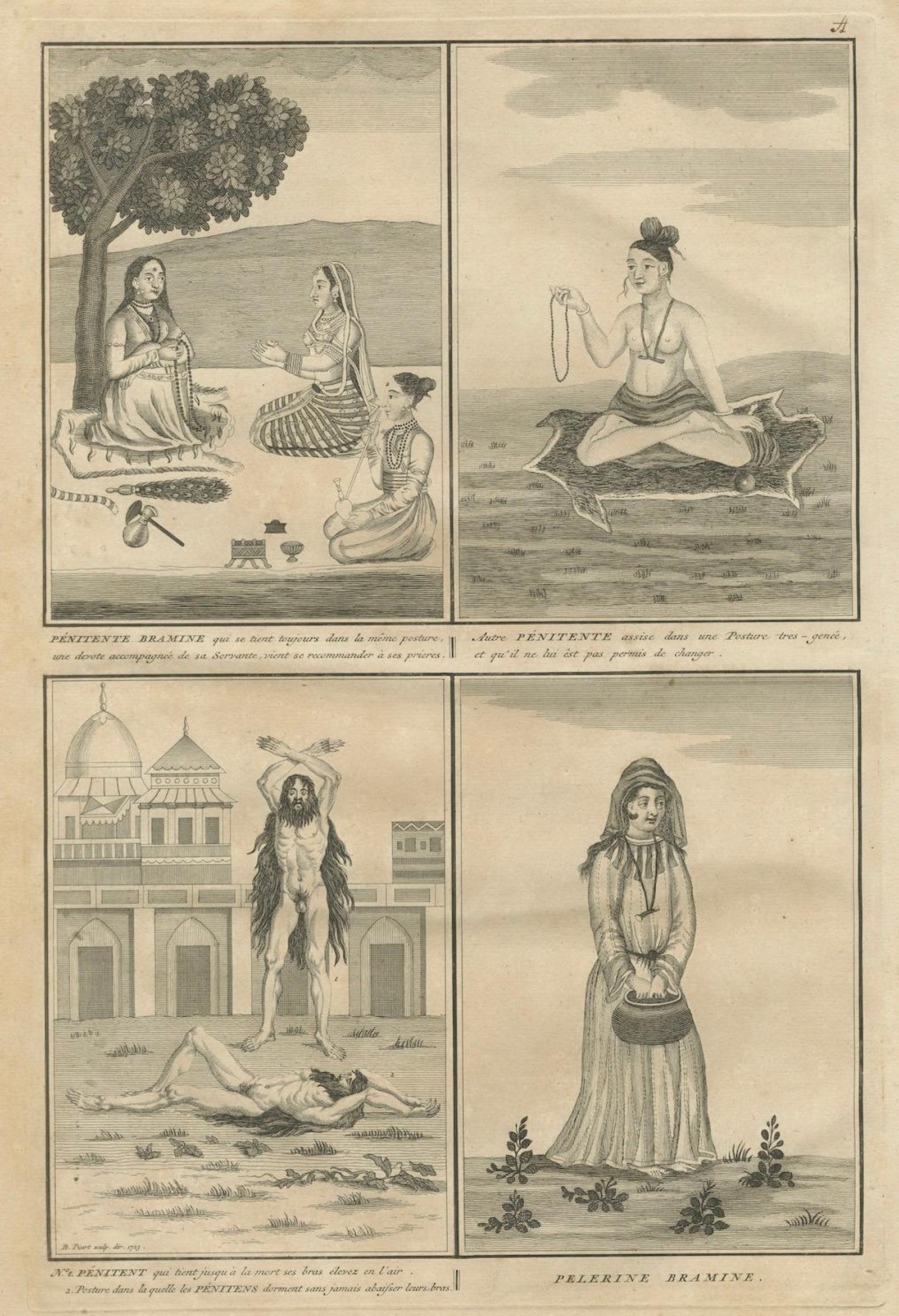
This compelling copperplate engraving from the 18th century offers a rare visual study of Indian religious asceticism and devotion as interpreted through a European lens. It likely originates from the later volumes of *The Ceremonies and Religious Customs of Various Nations of the Known World*, the monumental multi-volume series published in Amsterdam and Paris during the early to mid-1700s, with illustrations attributed to Bernard Picart and his collaborators.
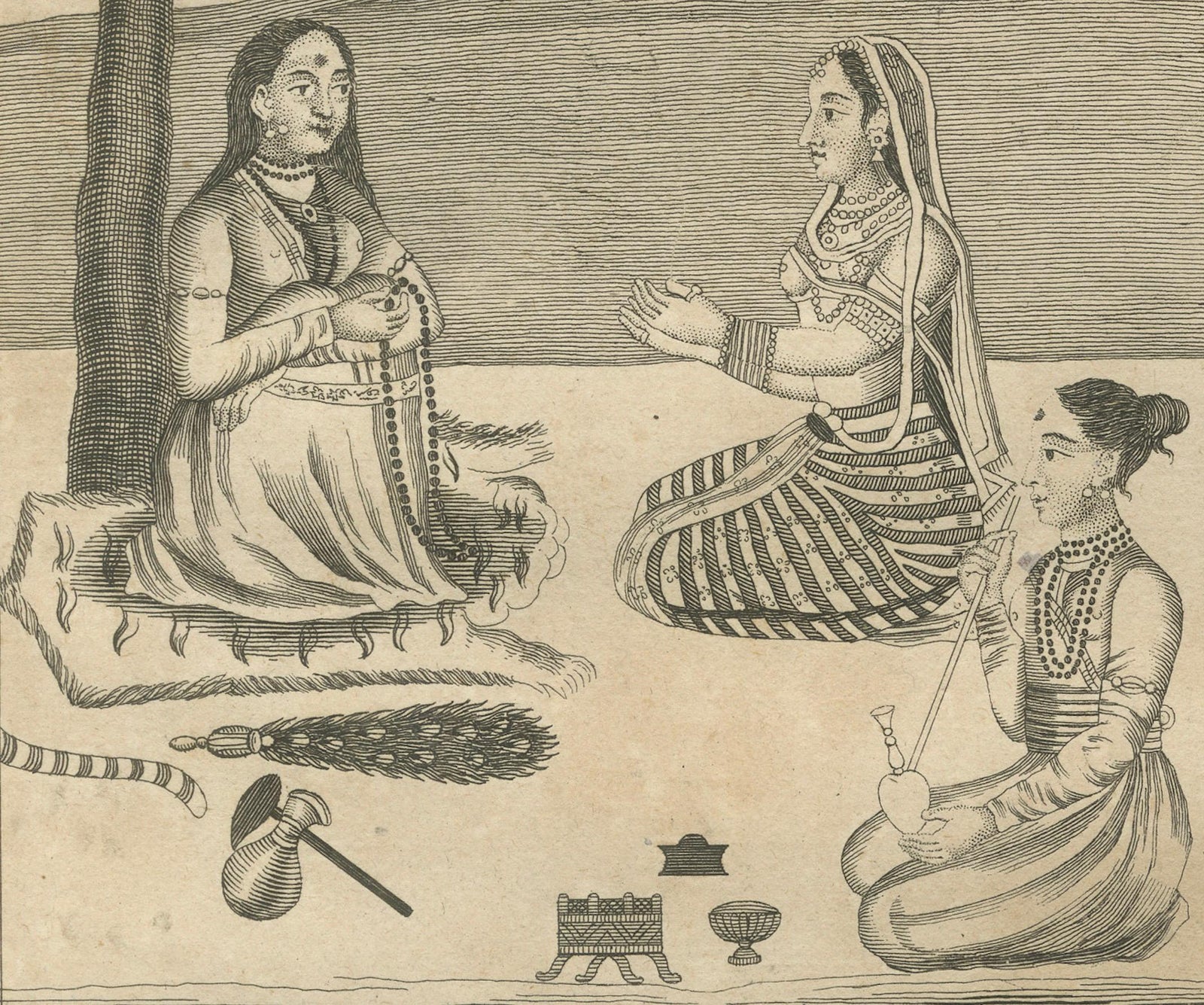
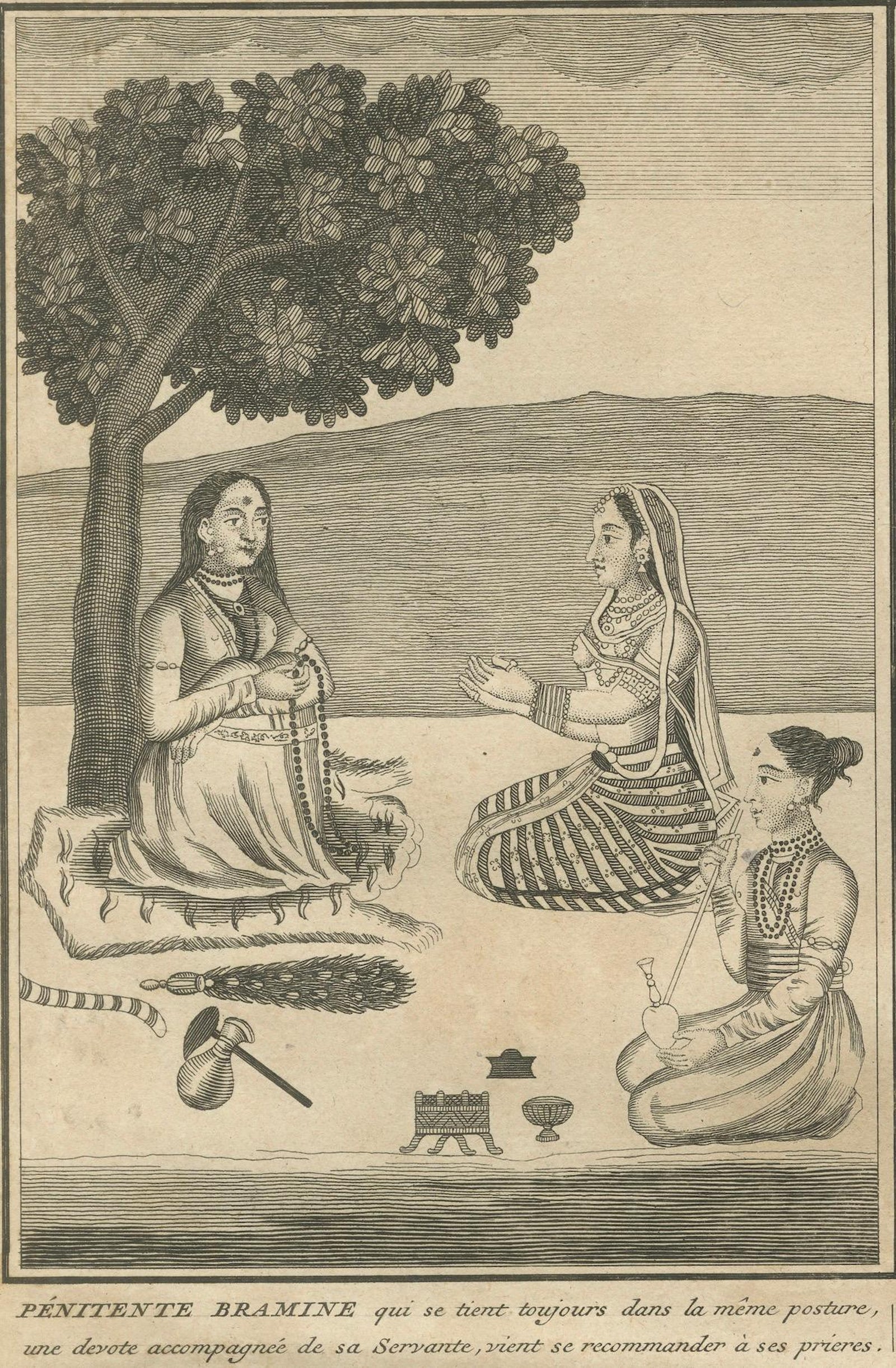
The sheet is divided into four separately framed scenes, each depicting a unique figure engaged in acts of penance or pilgrimage. The upper left panel shows a seated female "Pénitente Bramine" (Brahmin penitent) under a flowering tree, joined by other women in a meditative or devotional posture. The details, such as the tiger skin mat and ceremonial tools, signal both religious symbolism and ritual practice.
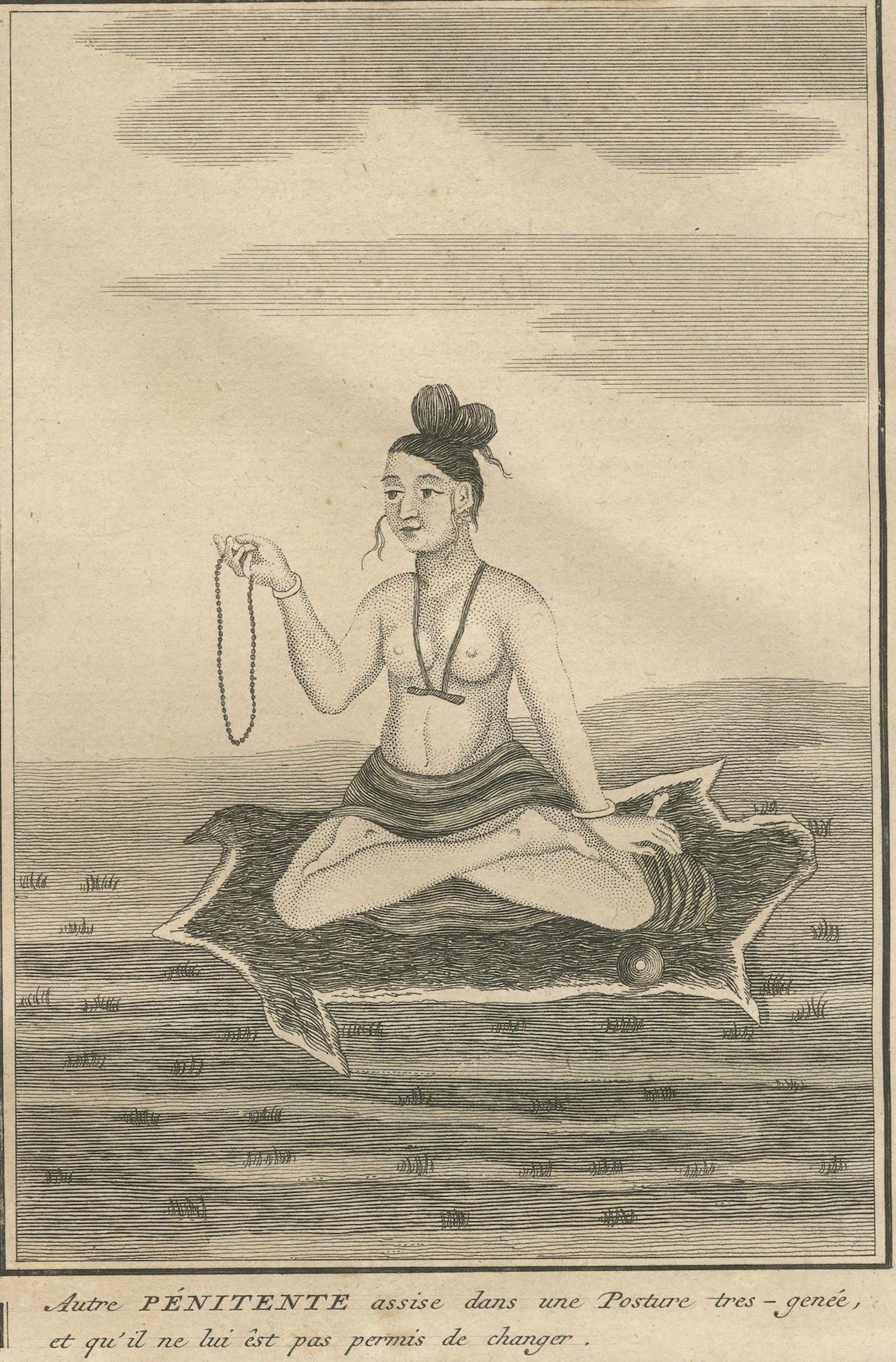
The upper right image presents a solitary ascetic woman seated in rigid meditation on what appears to be a stretched animal hide floating in water, holding a prayer bead mala. The caption explains she must never change position, emphasizing the extremity of her discipline.
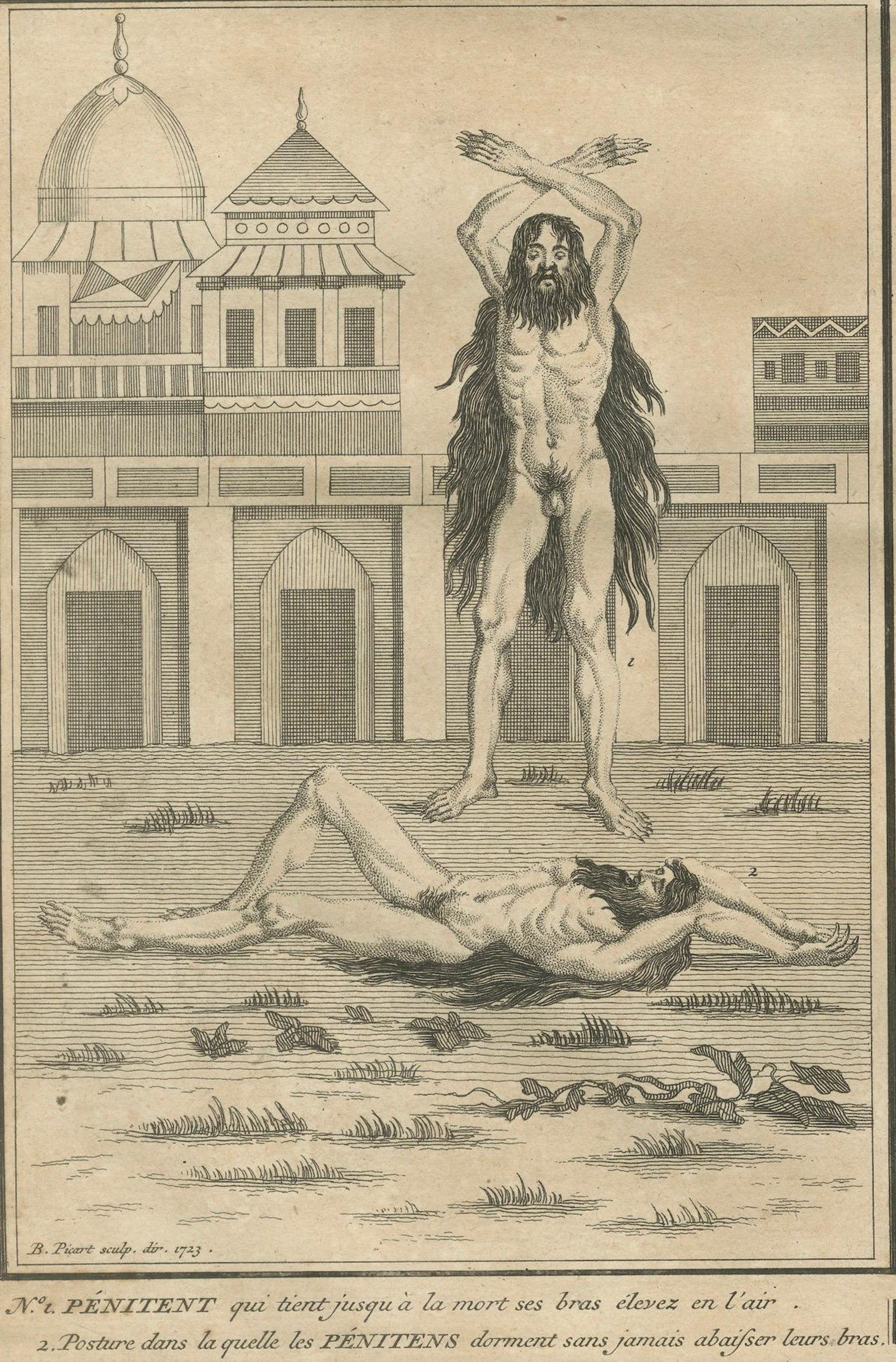
The lower left quadrant is the most dramatic: a male penitent with wild hair stands before a temple with both arms raised straight in the air, said to remain that way until death. Another figure lies prostrate in the grass, illustrating the prescribed sleeping posture for certain penitents, lying flat without ever bending their legs. These powerful visual representations underscore the physical trials undertaken by devout individuals in pursuit of spiritual transcendence.
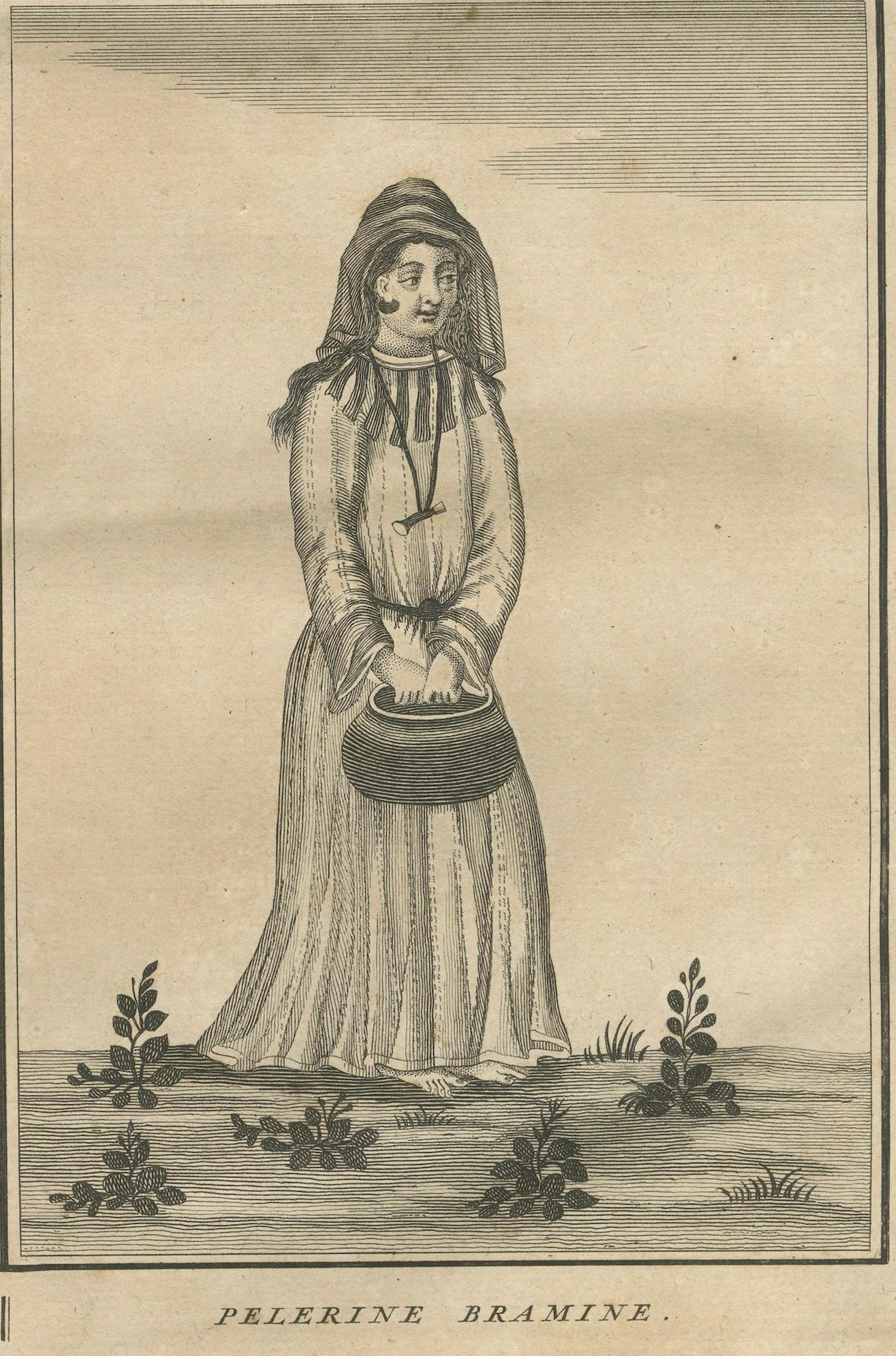
In the lower right, a "Pélerine Bramine" (Brahmin female pilgrim) stands quietly, dressed simply, with a bowl in hand, perhaps engaged in ritual begging or a pilgrimage vow. The simplicity of her stance contrasts with the intensity of the other scenes, adding contemplative balance to the print.
This engraving provides an extraordinary look at Hindu religious devotion as imagined by Enlightenment-era European observers. While the interpretations are colored by Western perceptions, they reflect genuine curiosity and a desire to document the world's spiritual diversity.
Condition report:
Good condition overall, with a strong plate impression and well-preserved imagery. Light foxing is visible, especially along the lower edge and margins, and there is minor toning near the edges. Paper is untrimmed, with deckled edges and some slight wear on corners, but no tears or restorations.
Framing suggestions:
Due to the vertical layout and four-part design, this piece frames well in a tall format with a generous mat window. A warm-toned off-white or ivory archival mat will complement the natural color of the aged paper. A slender black or dark wood frame provides a clean, museum-quality presentation. UV-filtering glass is recommended to prevent fading or deterioration over time. Floating the sheet to show the full margin and plate border would enhance its antique appeal.
Explore