Close-ups
Framed and on the wall
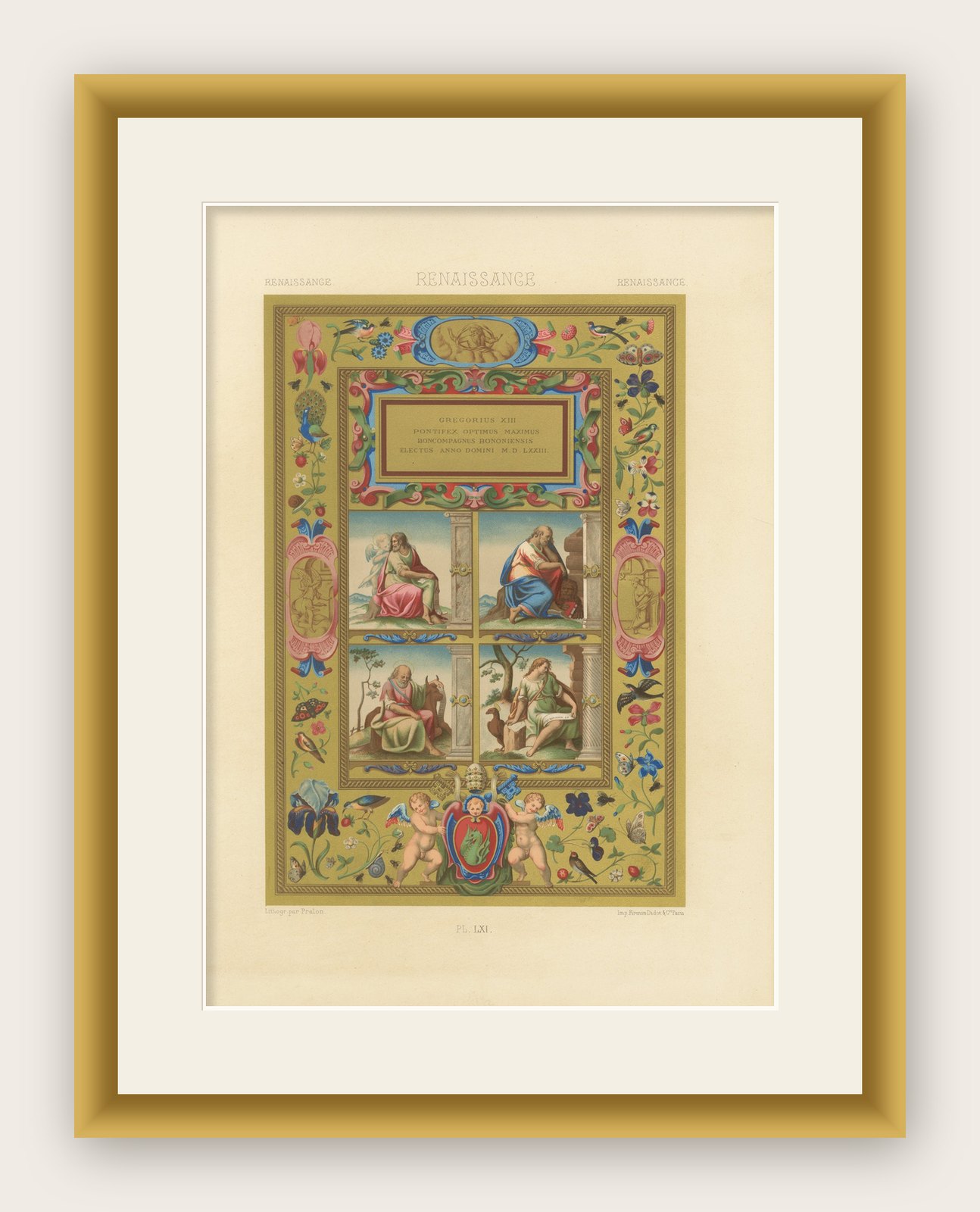

Frame and rooms are illustrations of how the print could look, drawn to its real size; it is sold unframed unless the description says otherwise.
Saints and Devotion
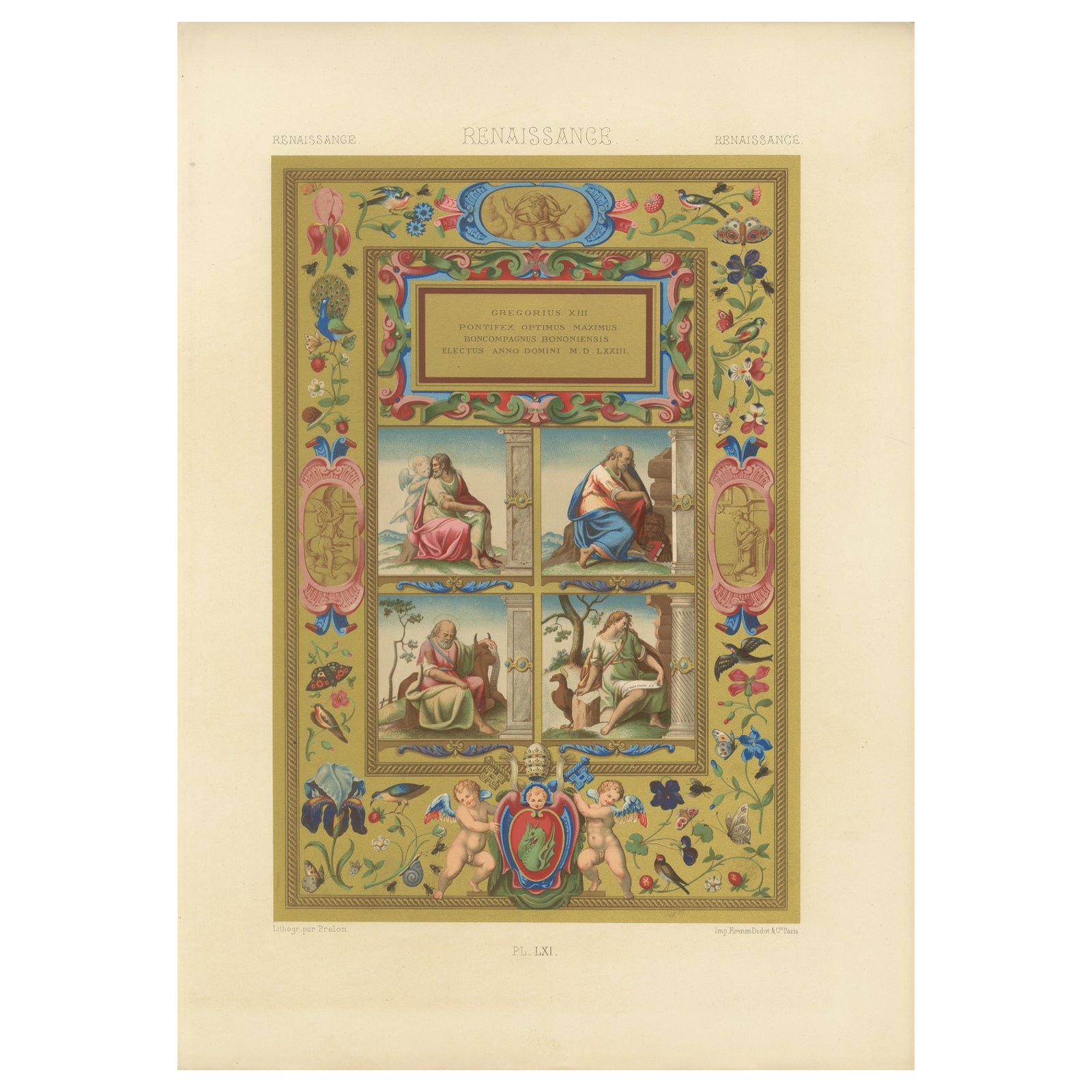
Renaissance Illumination of Pope Gregory XIII, Antique Print, Plate LXI, 1869
Anno Domini MDCCCLXIX1869
€270
$305 · £230
Original print, not a reproduction
Ships worldwide from the Netherlands, flat, insured and tracked. 14-day returns. To buy, use Ask a question (info@antiquesacredprints.com) and we will reserve it for you.
- Date
- 1869
- Sheet size
- 15.9 × 11.3 in (40.4 × 28.8 cm)
- Condition
- Excellent. Overall. Colors remain vivid and the paper is clean with minimal edge toning. No visible tears or major blemishes.
- Faith
- Christianity
- Collection
- Saints and Devotion
- Era
- 1850 and after, Chromolithographs and devotional prints
- Stock no.
- f_46122742
Renaissance Illumination Honoring Pope Gregory XIII, Antique Chromolithograph, Pl. LXI
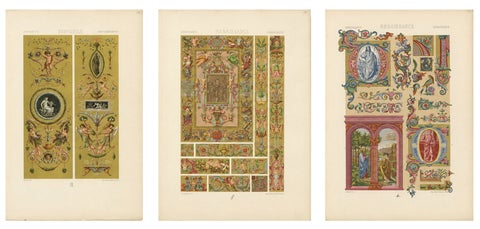
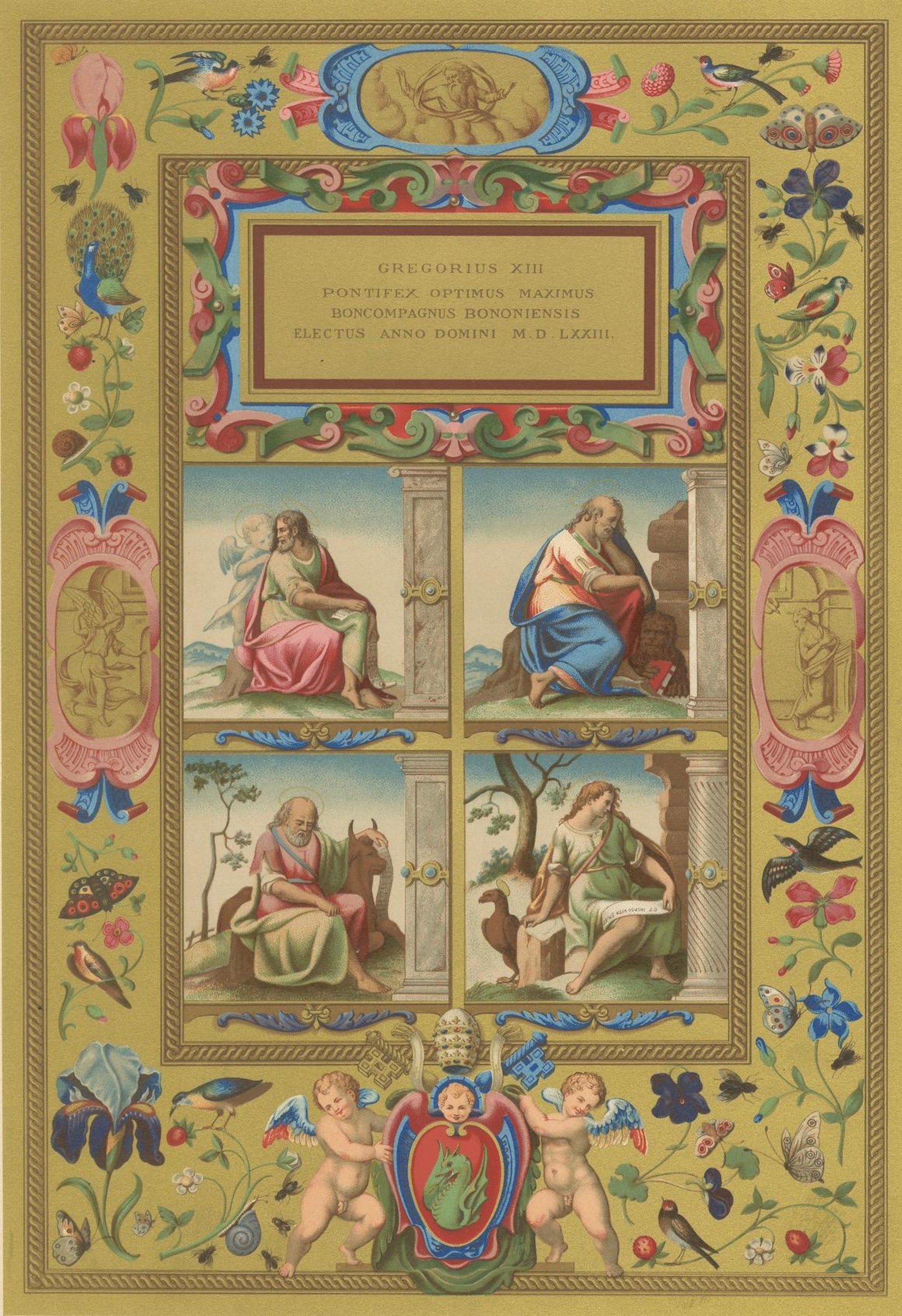
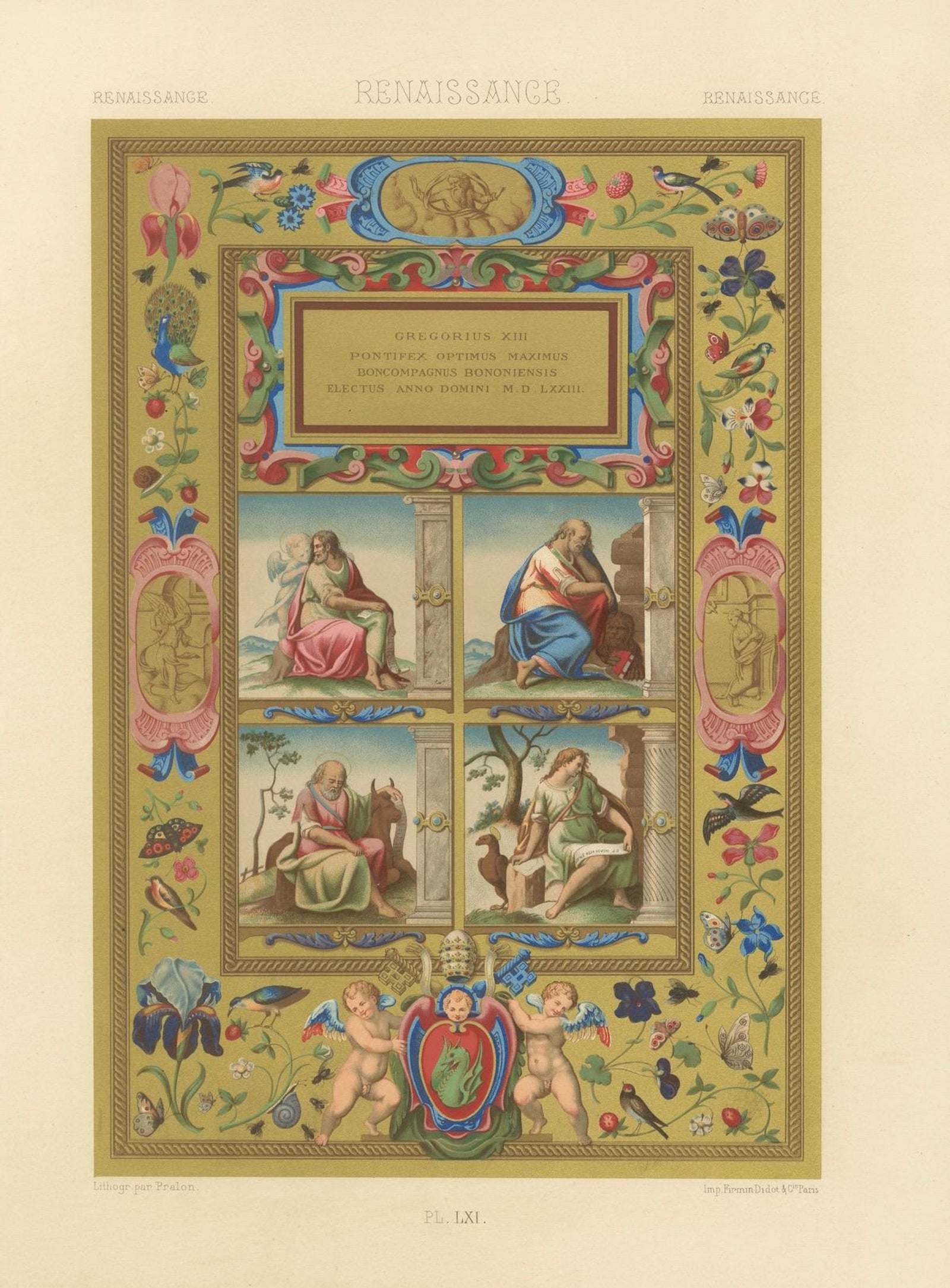
This exquisite chromolithograph, Plate LXI from *L'Ornement Polychrome* (Paris, circa 1869), presents a richly detailed Renaissance decorative panel dedicated to Pope Gregory XIII. Lithographed by Pralon and printed by Firmin-Didot Frères, this plate exemplifies the refined art of ecclesiastical ornament during the late 16th century.
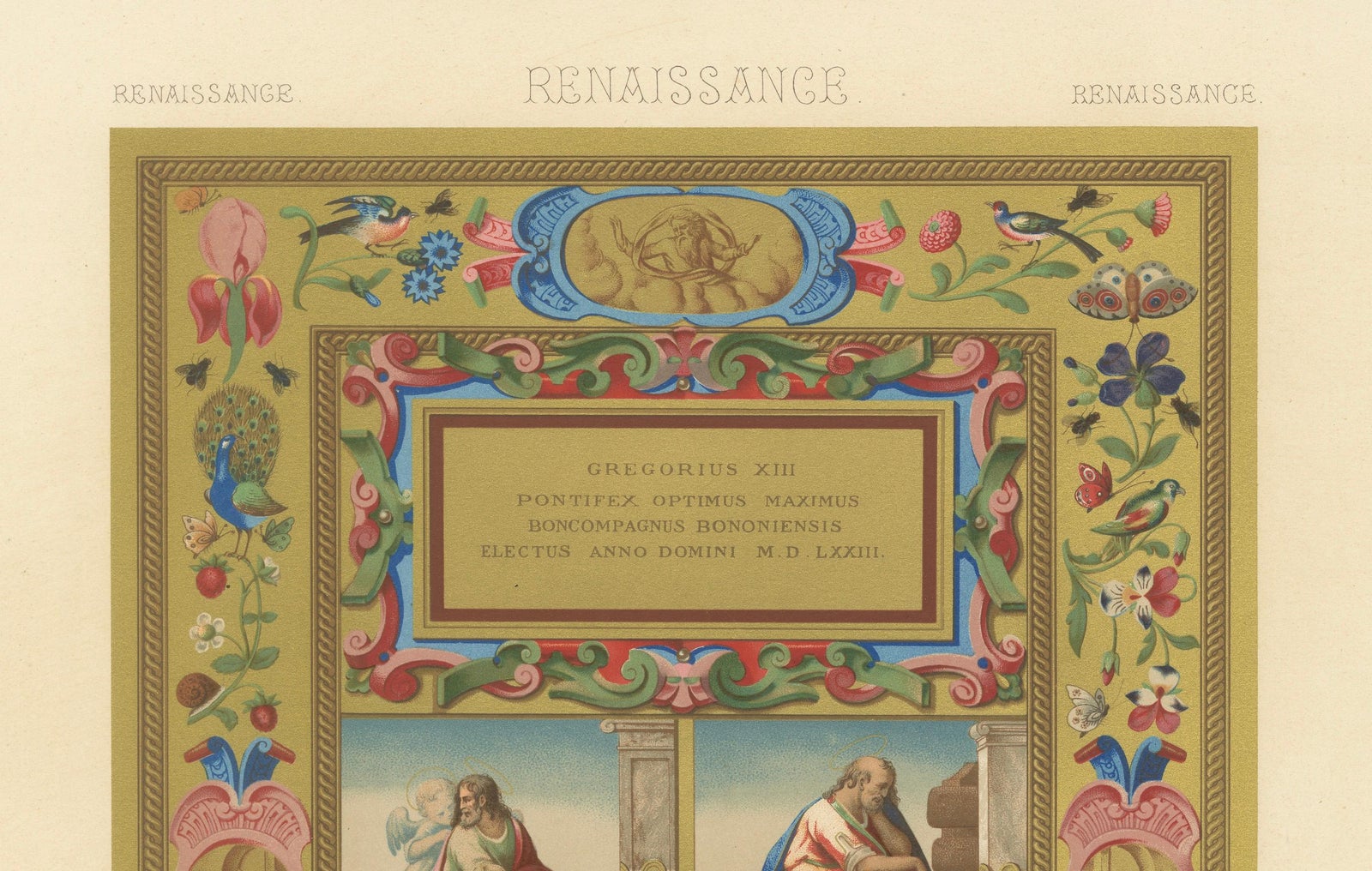
At the center is an ornate cartouche inscribed:
**“Gregorius XIII
Pontifex Optimus Maximus
Boncompagnis Bononiensis
Electus Anno Domini MDLXXIII.”**
This dedication commemorates the election of Pope Gregory XIII (Ugo Boncompagni of Bologna) in 1572. He is renowned for introducing the Gregorian calendar reform in 1582, a pivotal achievement in the history of timekeeping.
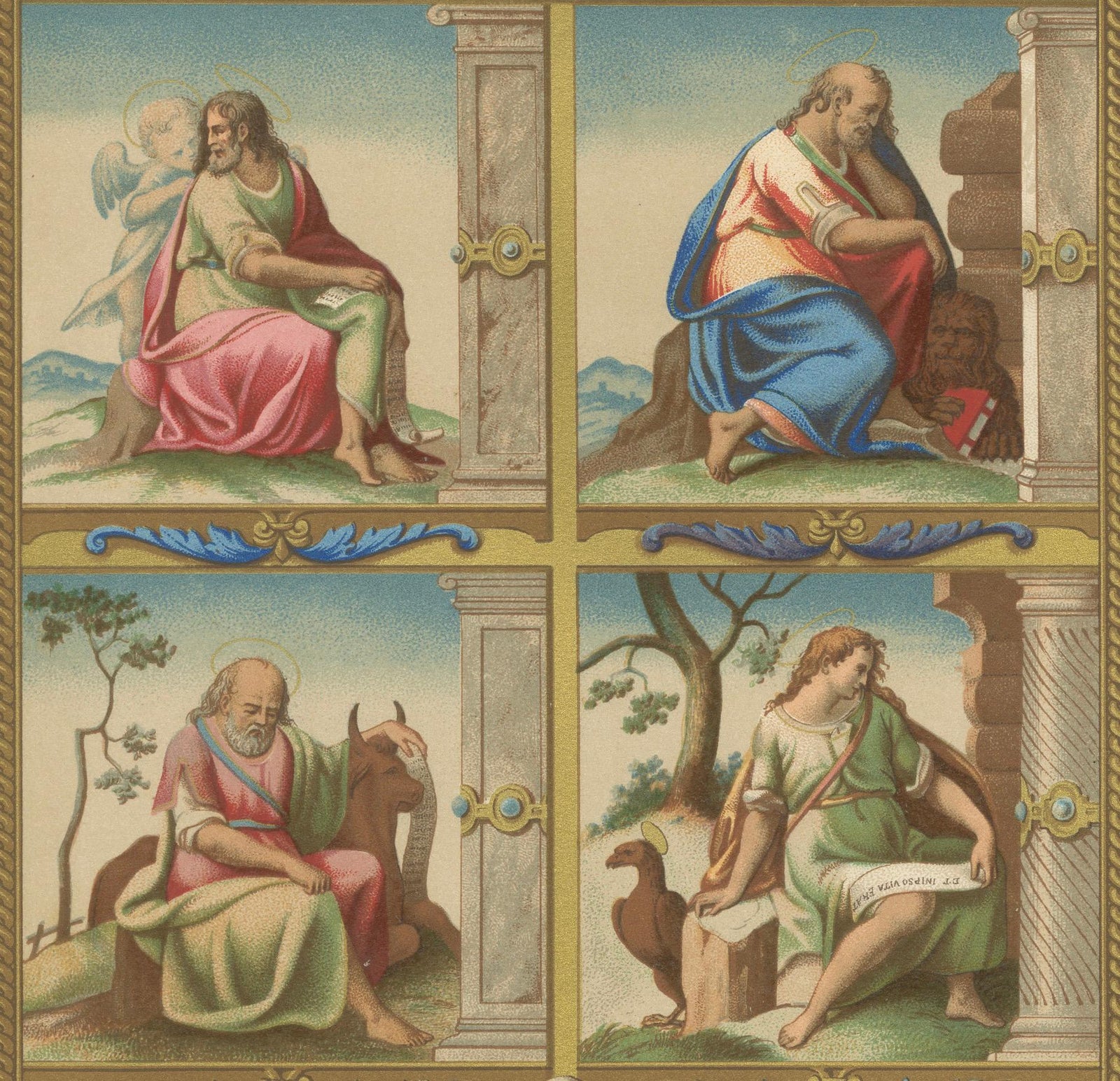
Surrounding this central inscription is a miniature quadriptych featuring the four Evangelists, Matthew, Mark, Luke, and John, each seated with their traditional symbols (angel, lion, ox, and eagle) and portrayed in quiet contemplation, writing or reading, in a classical architectural setting.
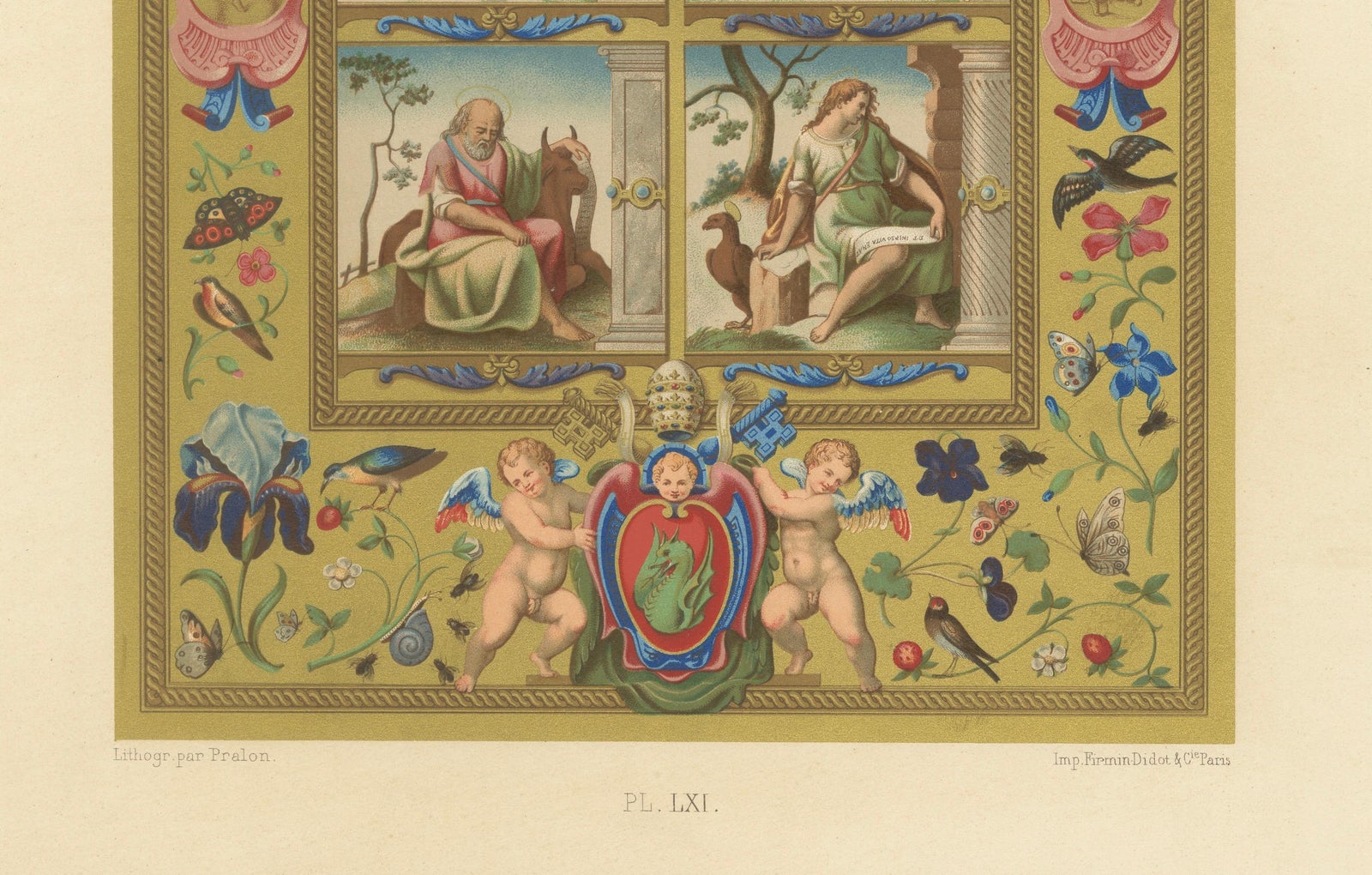
The richly illuminated border teems with botanical motifs, birds, butterflies, and putti. Vivid flowers like irises, carnations, and violets intertwine with symbolic fruits and leaves. On either side of the vertical borders, delicately framed medallions contain sculptural Renaissance-style figures in grisaille.
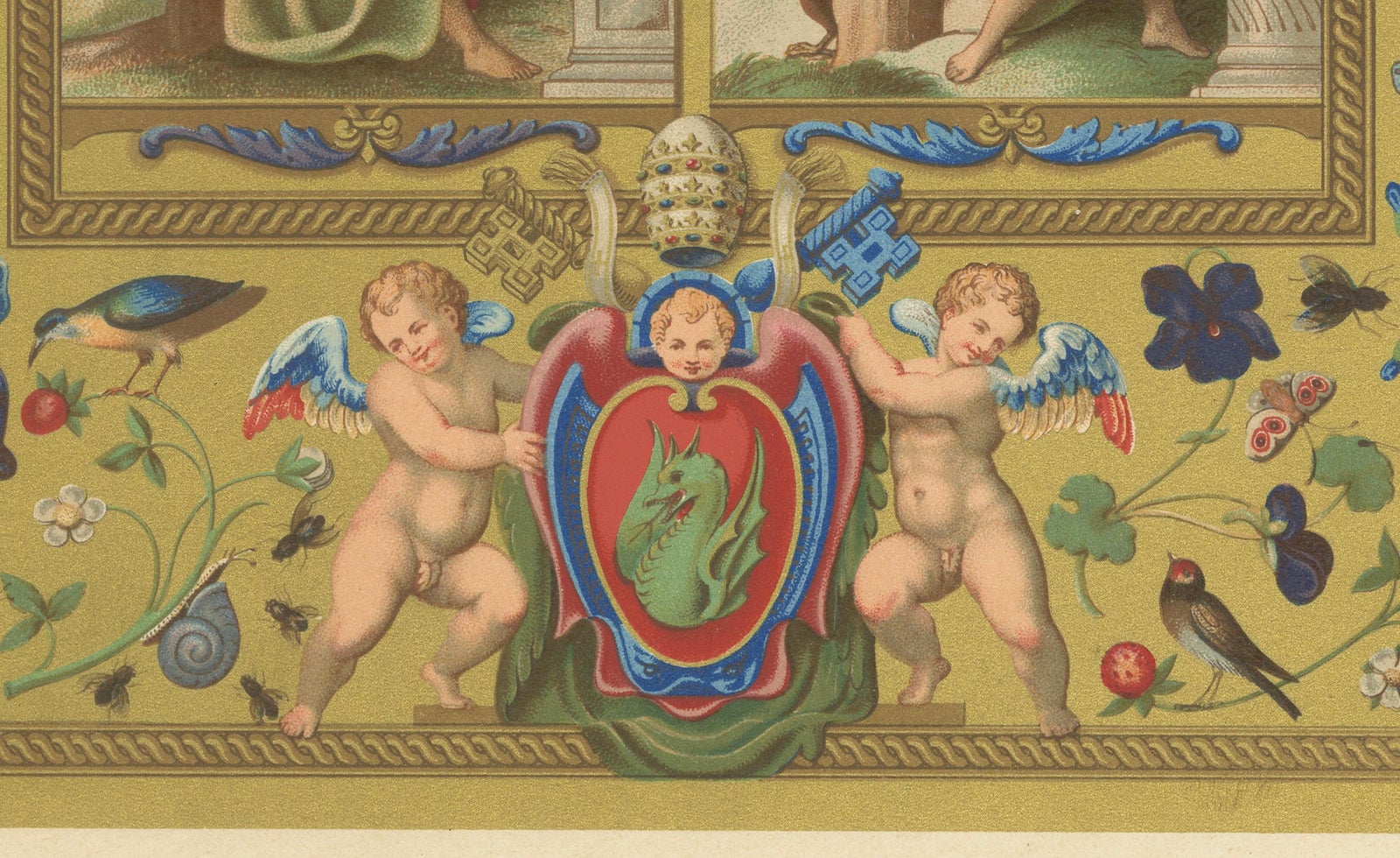
At the bottom center, the papal tiara and crossed keys surmount a coat of arms supported by two winged cherubs. The heraldic emblem is presumably that of the Boncompagni family, framed in red and green.
This composition, blending religious portraiture with botanical precision and classical architectural motifs, is a masterful expression of High Renaissance aesthetics. It would have been inspired by illuminated manuscripts, Vatican frescoes, or wall panels within ecclesiastical palaces.
Condition: Excellent overall. Colors remain vivid and the paper is clean with minimal edge toning. No visible tears or major blemishes.
Framing tips: Choose a deep olive or antique gold frame with a neutral ivory mat to complement the warm palette. An inner red filet or green line can echo the central heraldic shield.
Technique: Chromolithograph
Maker: Pralon (lith.); Firmin-Didot Frères, Paris, c.1869