Close-ups
Framed and on the wall


Frame and rooms are illustrations of how the print could look, drawn to its real size; it is sold unframed unless the description says otherwise.
Houses of Worship
St. George's Cathedral: A Gothic Revival Landmark of London's Catholic Heritage
$180
€160 · £135
Original print, not a reproduction
Ships worldwide from the Netherlands, flat, insured and tracked. 14-day returns. To buy, use Ask a question (info@antiquesacredprints.com) and we will reserve it for you.
- Date
- Not stated
- Sheet size
- 13.8 × 9.8 in (35 × 25 cm)
- Condition
- Good, given age. Light foxing and offset. General age-related toning and/or occasional minor defects from handling. Please study scan carefully.
- Faith
- Christianity
- Collection
- Houses of Worship
- Stock no.
- f_41112602
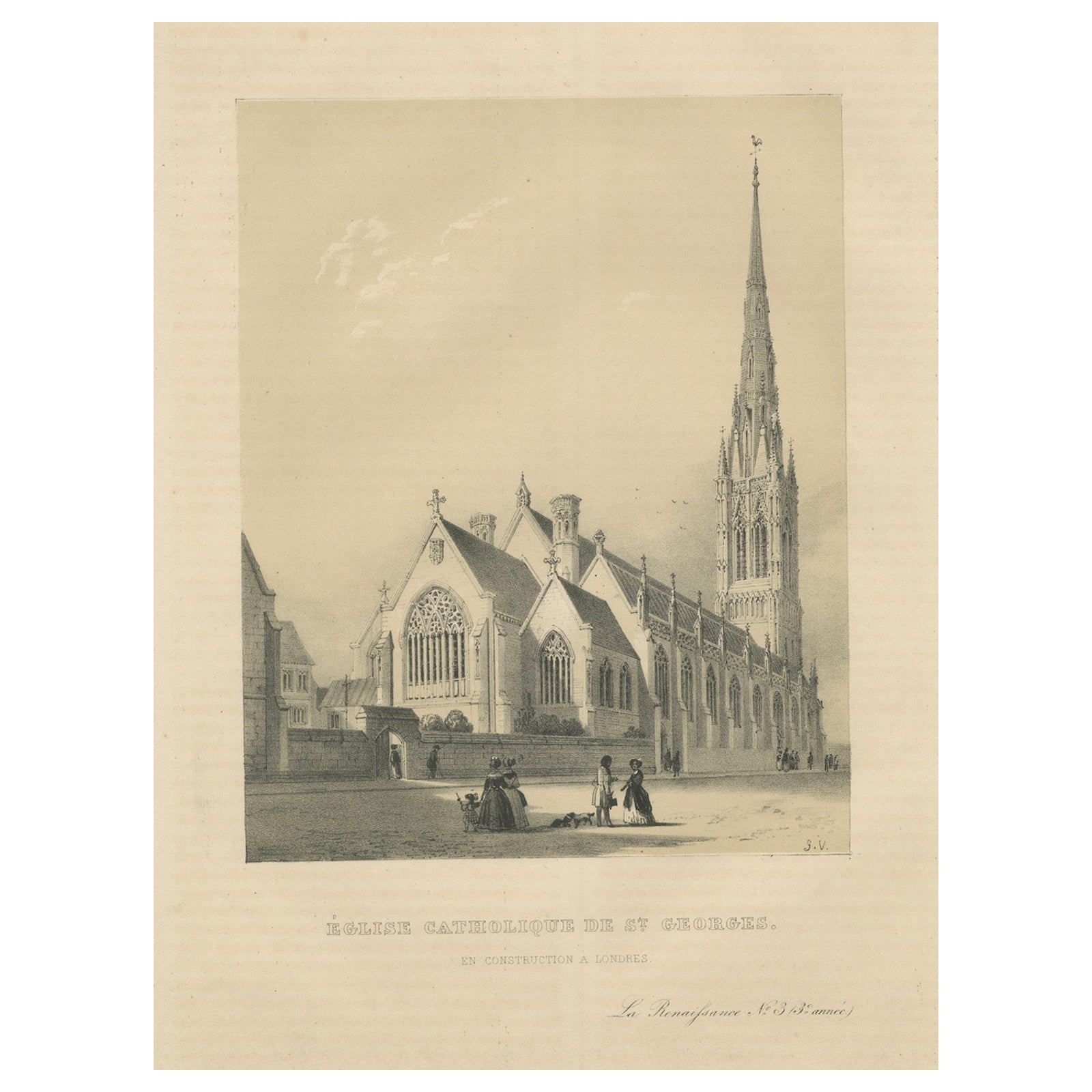
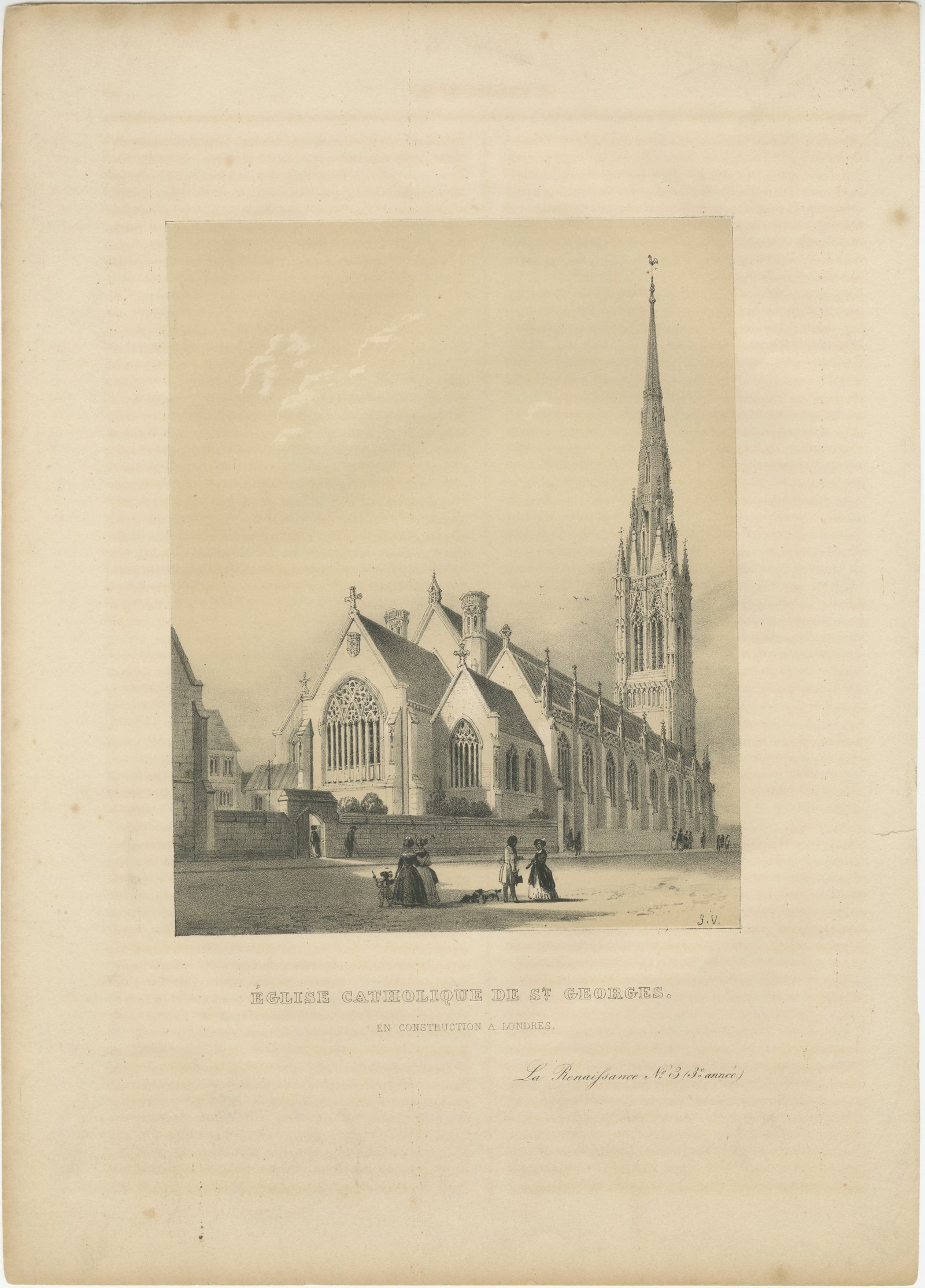
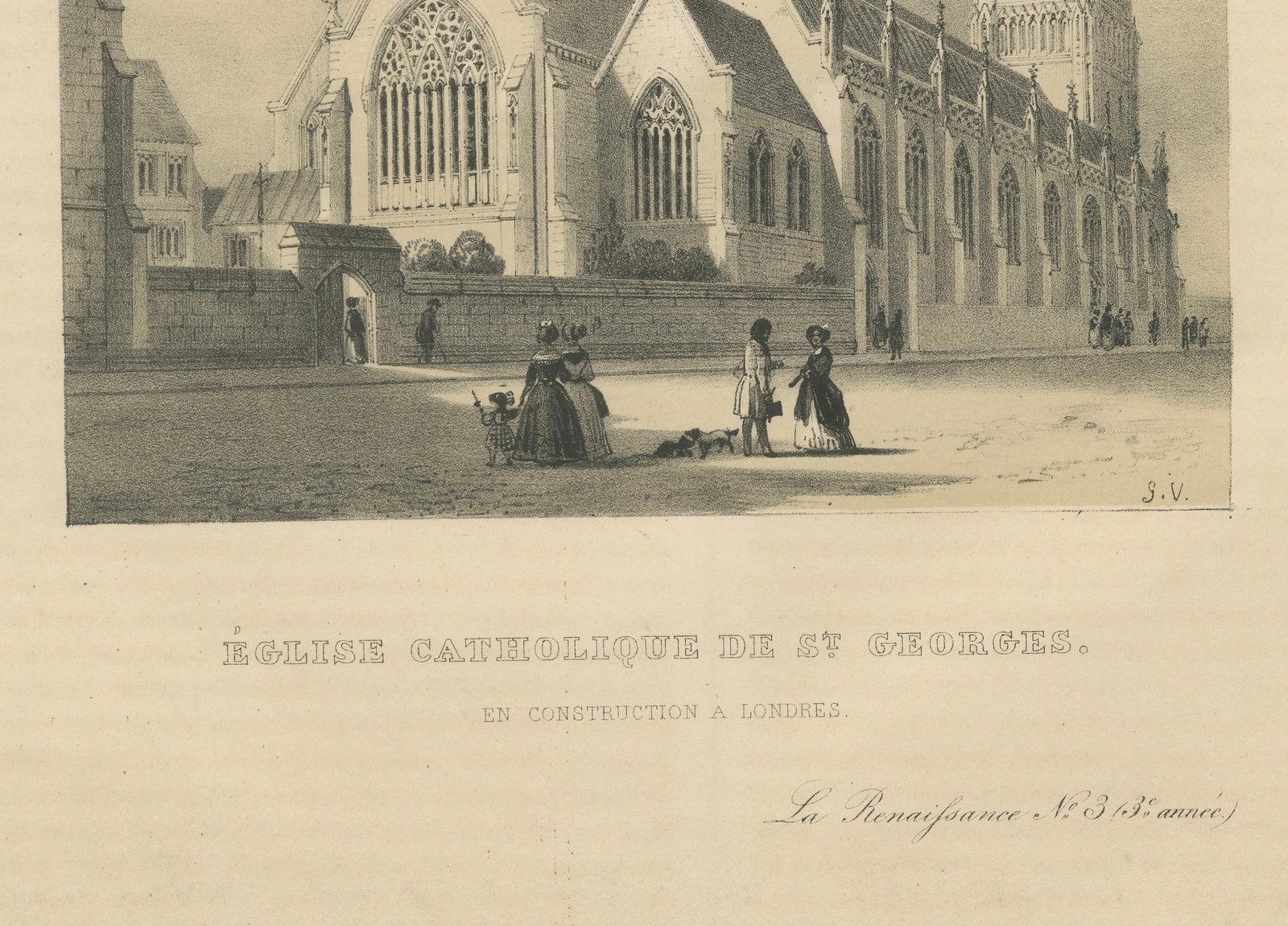
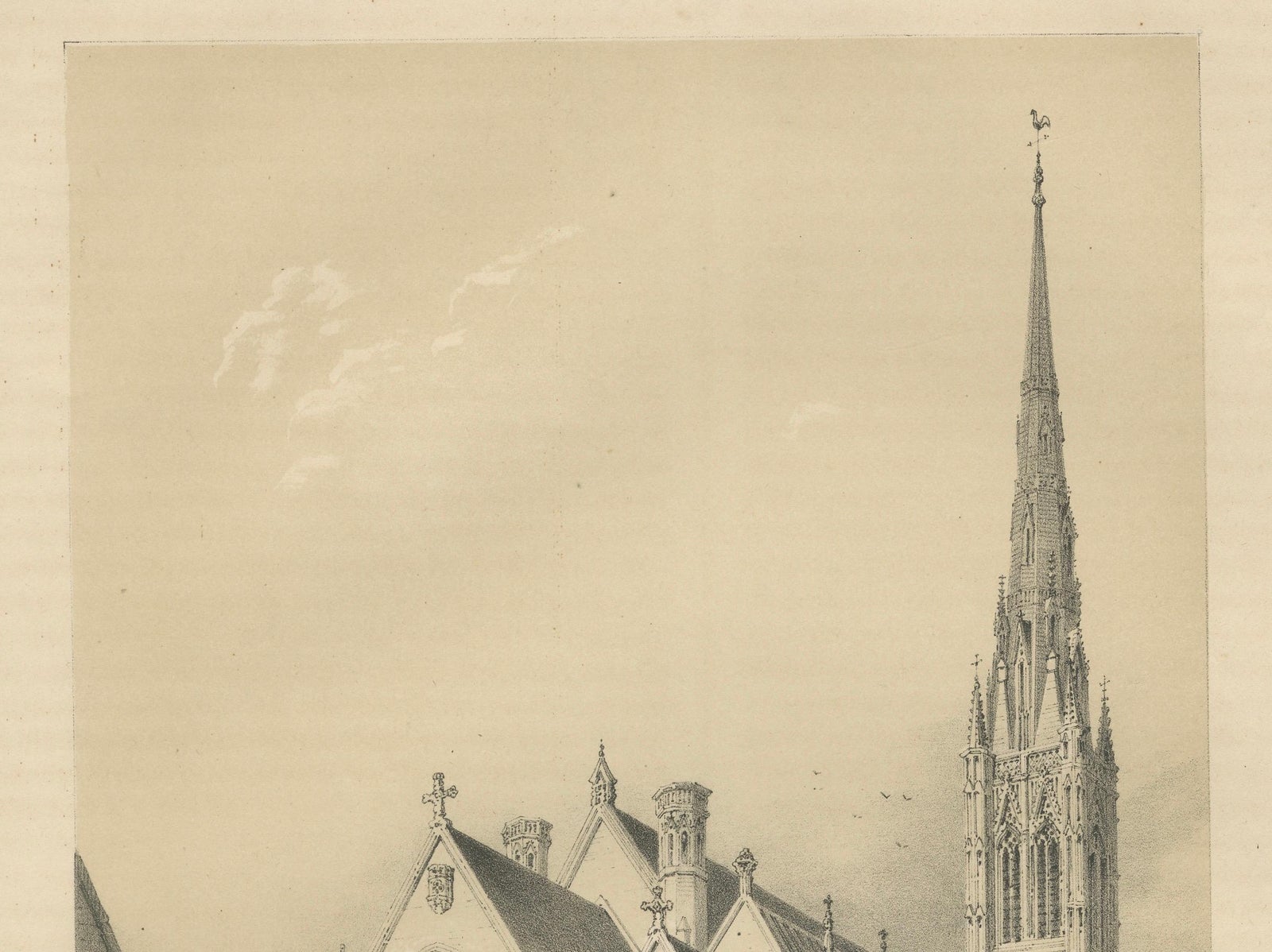
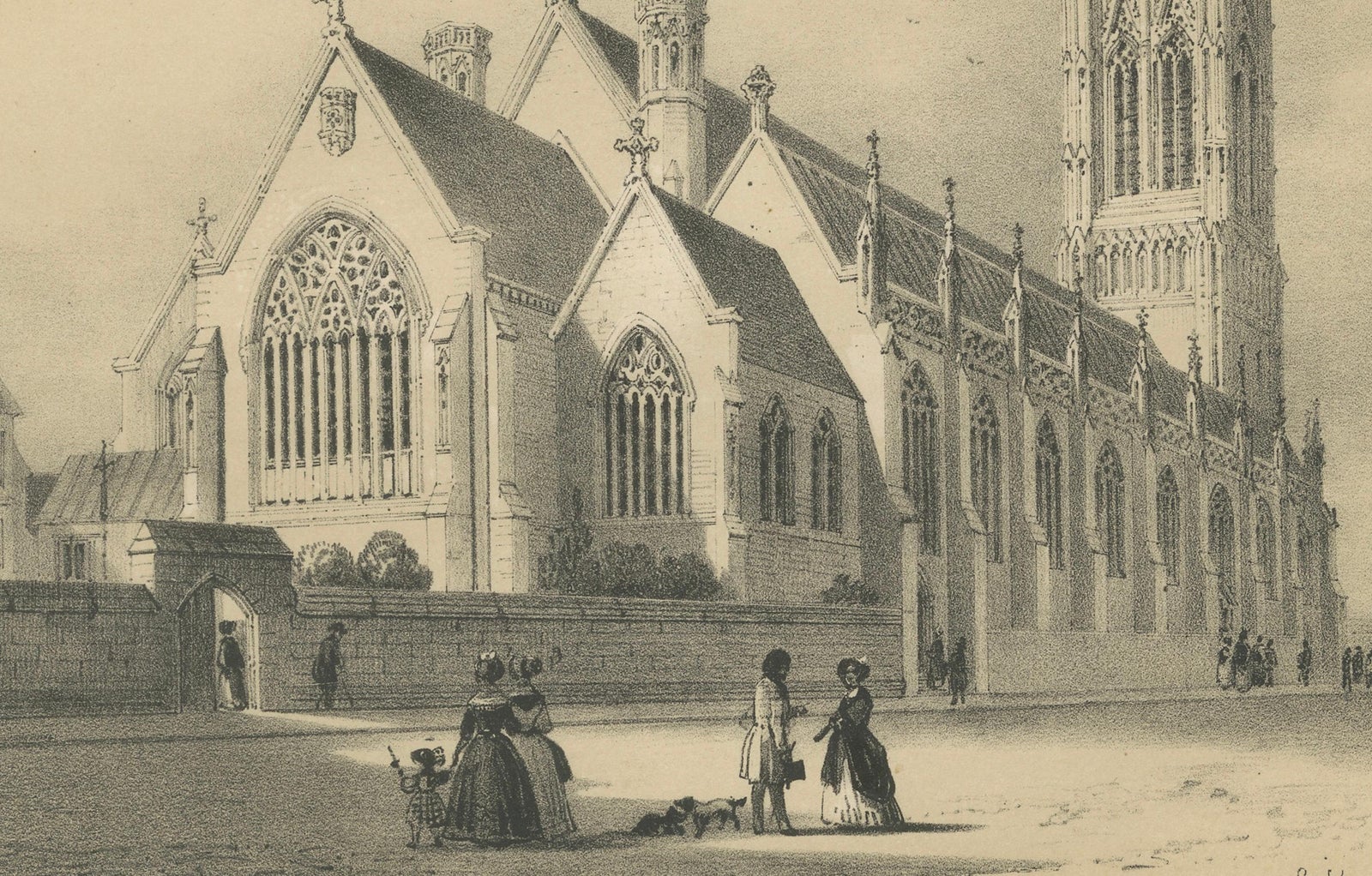
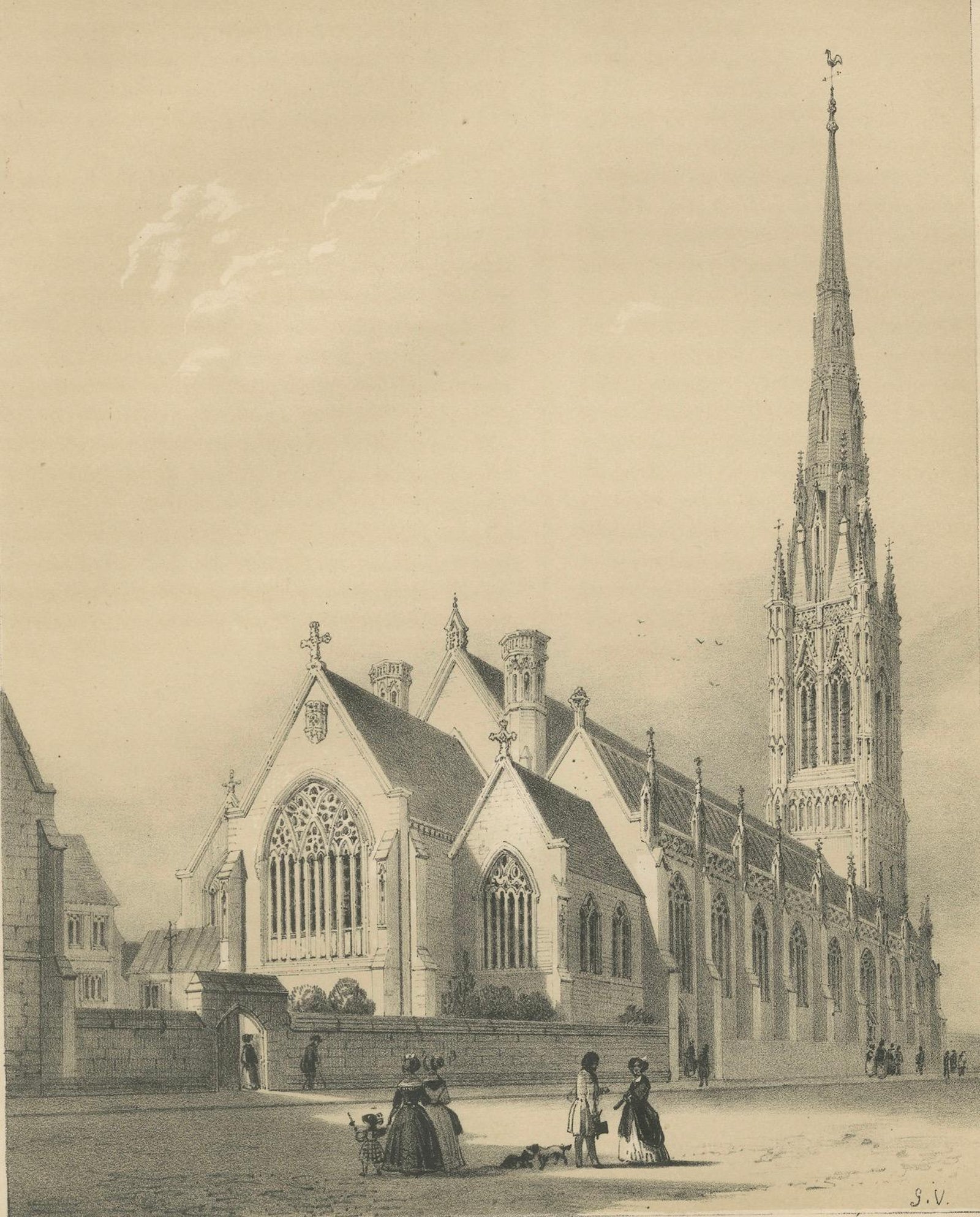
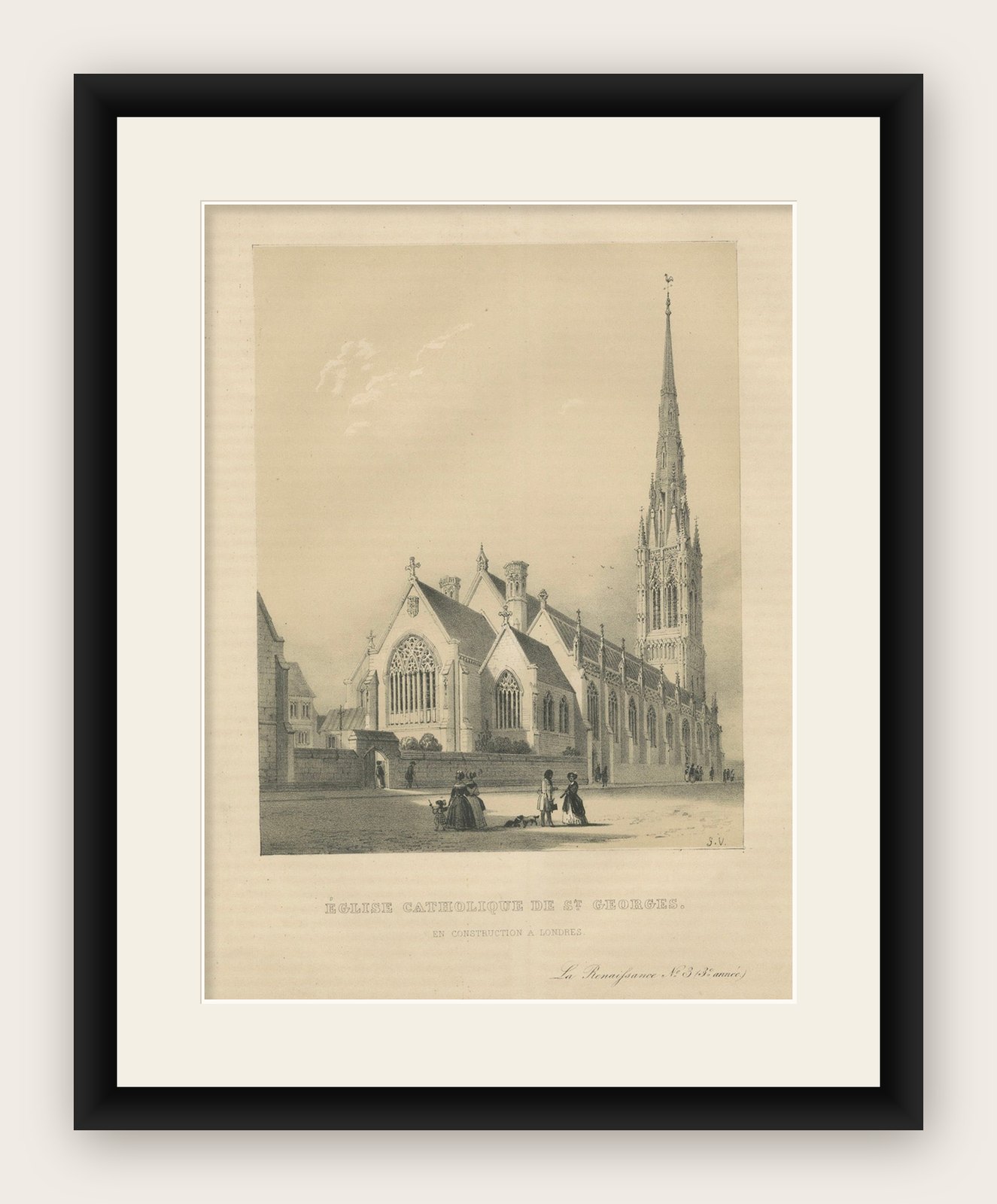
The lithograph depicts the Saint-Georges, Église Catholique de St. Georges, captured during its construction phase in London. The artist is possibly Guillaume Van der Hecht, a notable printmaker whose work often featured architectural subjects. The piece was published by the Société des Beaux-Arts in Brussels, between 1841 and 1842.
The print showcasing the distinctive Gothic architecture of St. George's Church. This work is part of a series that visually documents the church's development, emphasizing its detailed façade and the bustling scene around it, reflecting the social context of the time.
This lithograph is a significant historical artifact, not only as a representation of 19th-century ecclesiastical architecture but also as a piece of art that conveys the aesthetic and cultural values of the period. The involvement of the Société des Beaux-Arts suggests it was considered a work of high artistic merit, likely intended for a discerning audience appreciative of fine art and architecture.
History and Location:
St. George's Cathedral, also known as the Metropolitan Cathedral Church of St. George, is situated in Southwark, a district of central London. The church was originally designed by the famous architect Augustus Welby Northmore Pugin, known for his work in the Gothic Revival style. The construction of the church began in 1841 and was completed in 1848. It became the first Catholic cathedral in England since the Reformation.
During World War II, St. George's Cathedral suffered significant damage. On April 16, 1941, during the Blitz, the cathedral was hit by an incendiary bomb, which caused a devastating fire. The fire destroyed the roof and much of the interior, including the high altar and many of the stained glass windows. The bombing left the cathedral largely in ruins.
The Cathedral Today:
After the war, efforts were made to restore St. George's Cathedral. The restoration work, led by architect Romilly Craze, took many years and was completed in 1958. The reconstructed cathedral preserved much of Pugin's original design while incorporating modern elements where necessary. Today, St. George's Cathedral serves as the seat of the Archbishop of Southwark and remains an important place of worship for the Catholic community in London. It also hosts various cultural and community events and stands as a symbol of resilience and renewal following the destruction of World War II.
Explore