Close-ups
Framed and on the wall
Frame and rooms are illustrations of how the print could look, drawn to its real size; it is sold unframed unless the description says otherwise.
Houses of Worship
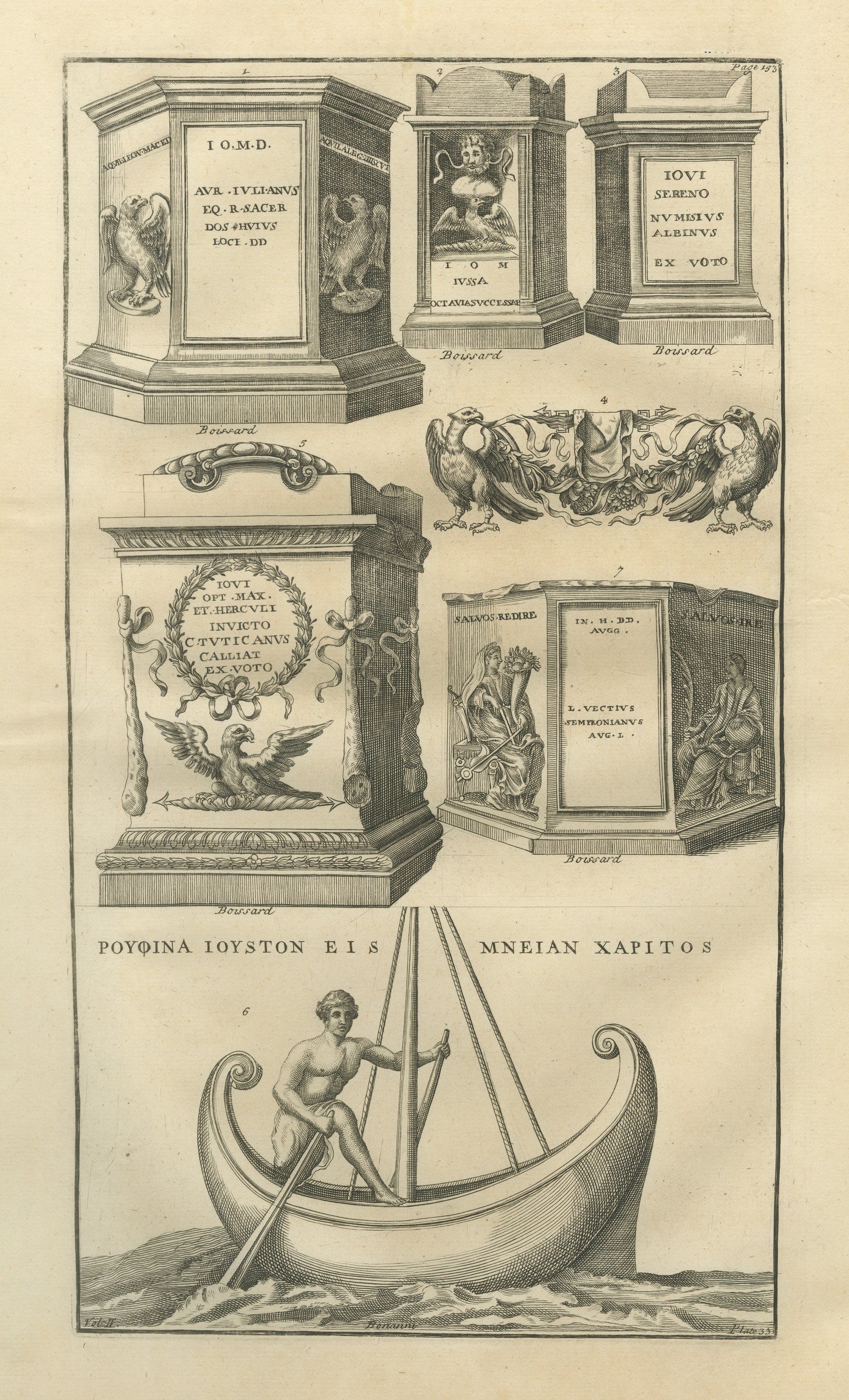
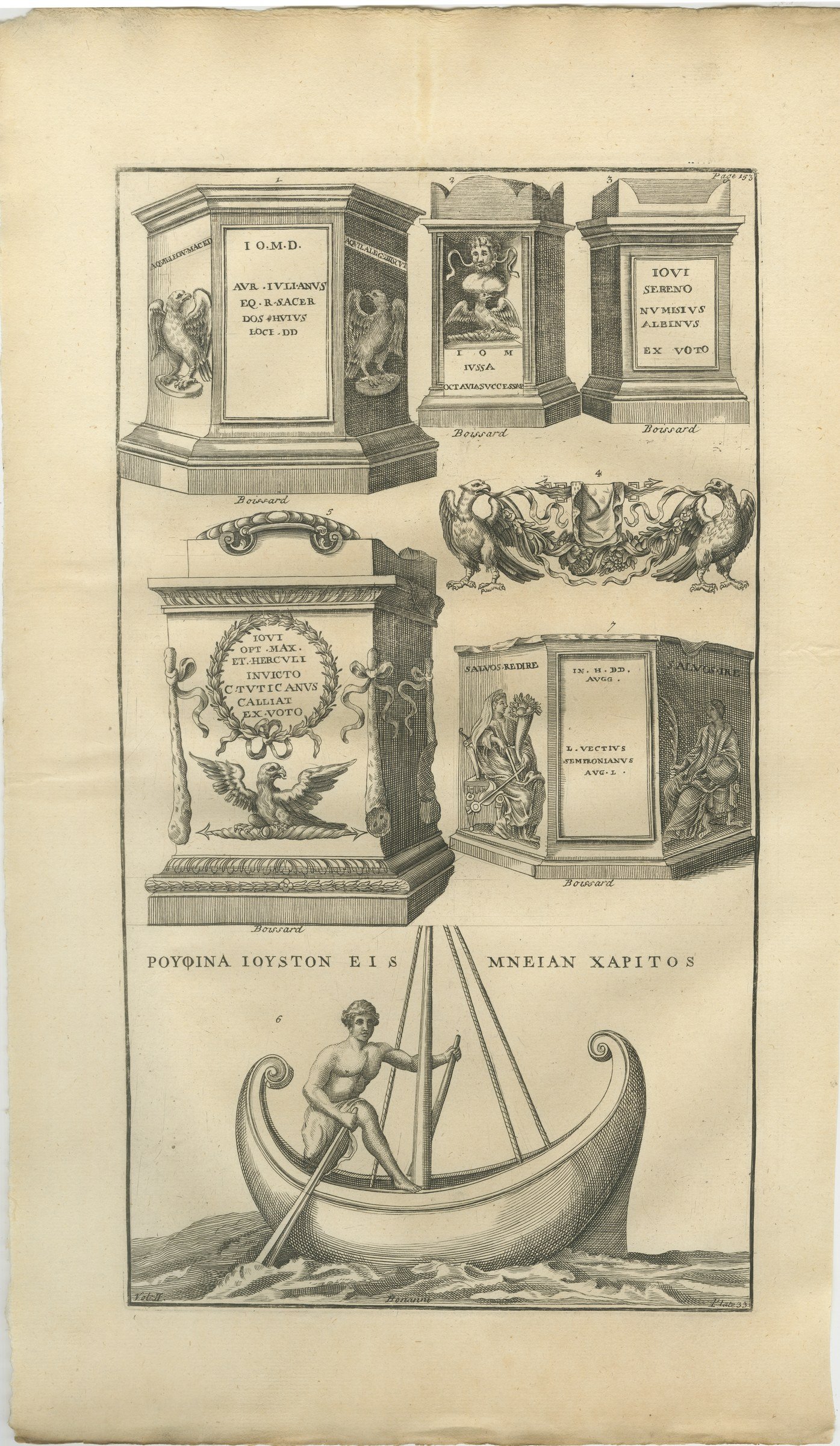
Roman Votive Altars to Jupiter with Eagles, Antique Engraving, 1721
Anno Domini MDCCXXI1721
€365€25630% off
$280 · £215
Original print, not a reproduction
Ships worldwide from the Netherlands, flat or rolled, insured and tracked. 14-day returns.
- Date
- 1721
- Sheet size
- 16.5 × 9.8 in (42 × 25 cm)
- Technique
- Copper Engraving
- Coloring
- Uncolored
- Condition
- Good. Strong age toning, the paper a warm buff, with the paper darker along the top and bottom edges, foxing through the margins, one or two spots larger than the rest, stains in the margins and wear to the bottom left corner.
- Collection
- Houses of Worship
- Era
- 1700 to 1799, Mortier, Picart and the illustrated Bible
- Stock no.
- BG-14184-2-33
What the condition grades mean
- Excellent
- Bright and clean, with no faults worth mentioning.
- Very good
- Only light signs of age, such as faint toning.
- Good
- Normal signs of age for a sheet of this period: toning, some foxing, small marks or neat old repairs.
- Fair
- Clear faults such as staining, tears or repairs, priced to match.
Every fault we see is written in the condition note, and the whole sheet is shown uncropped in the photos.
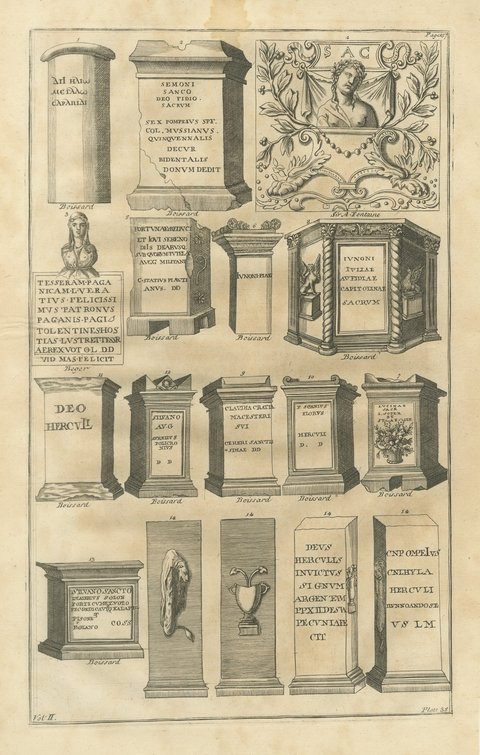
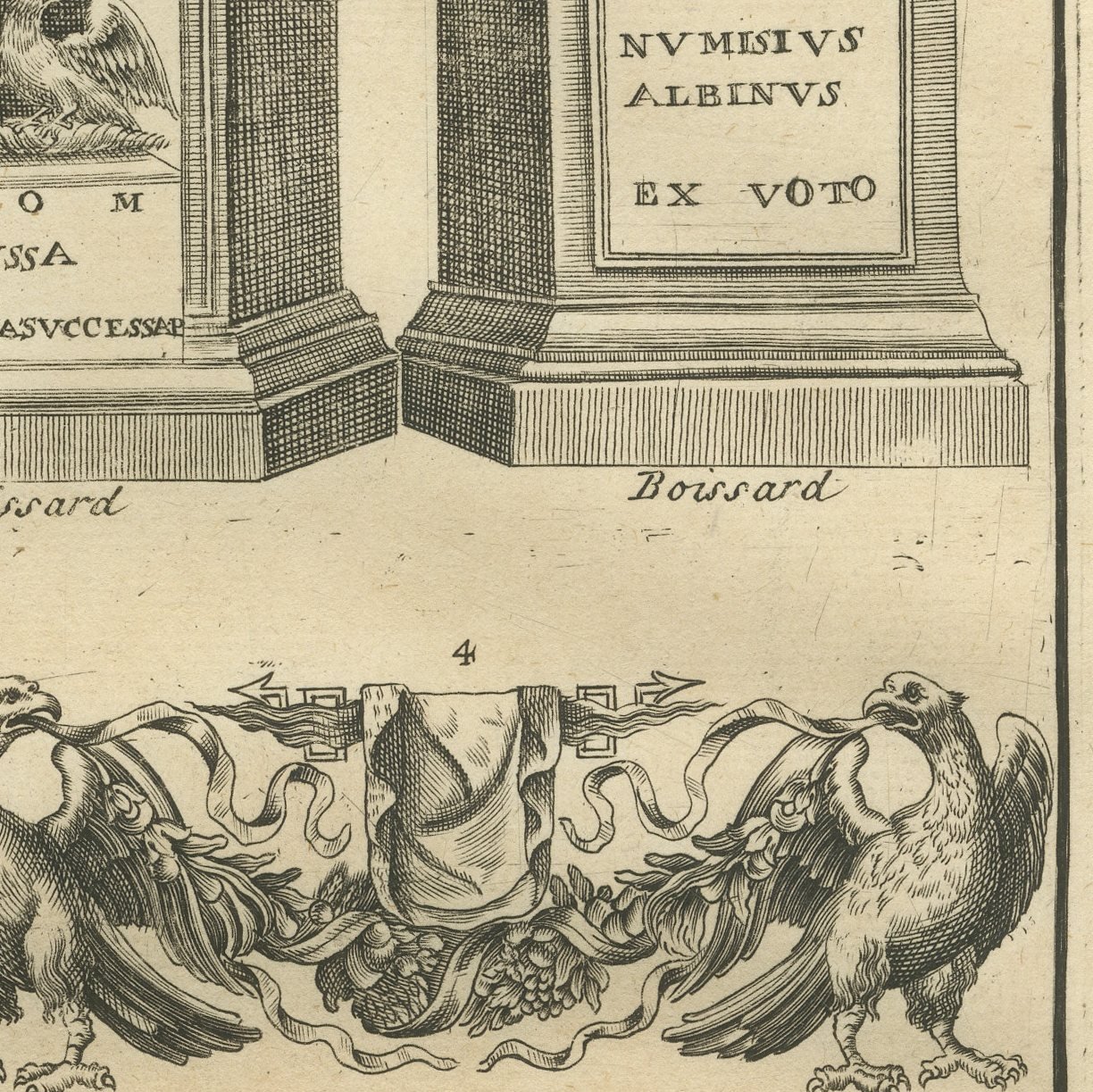
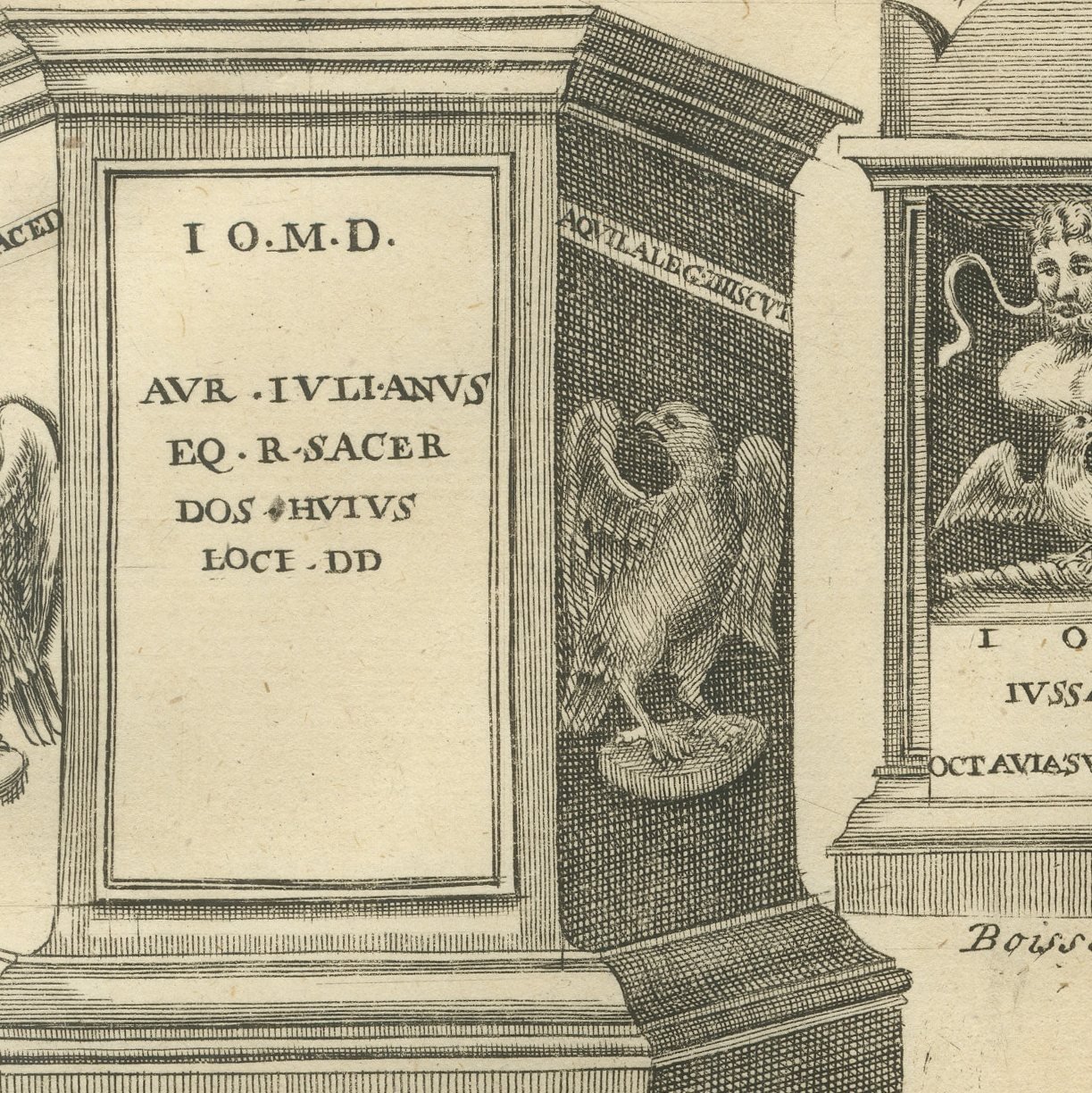
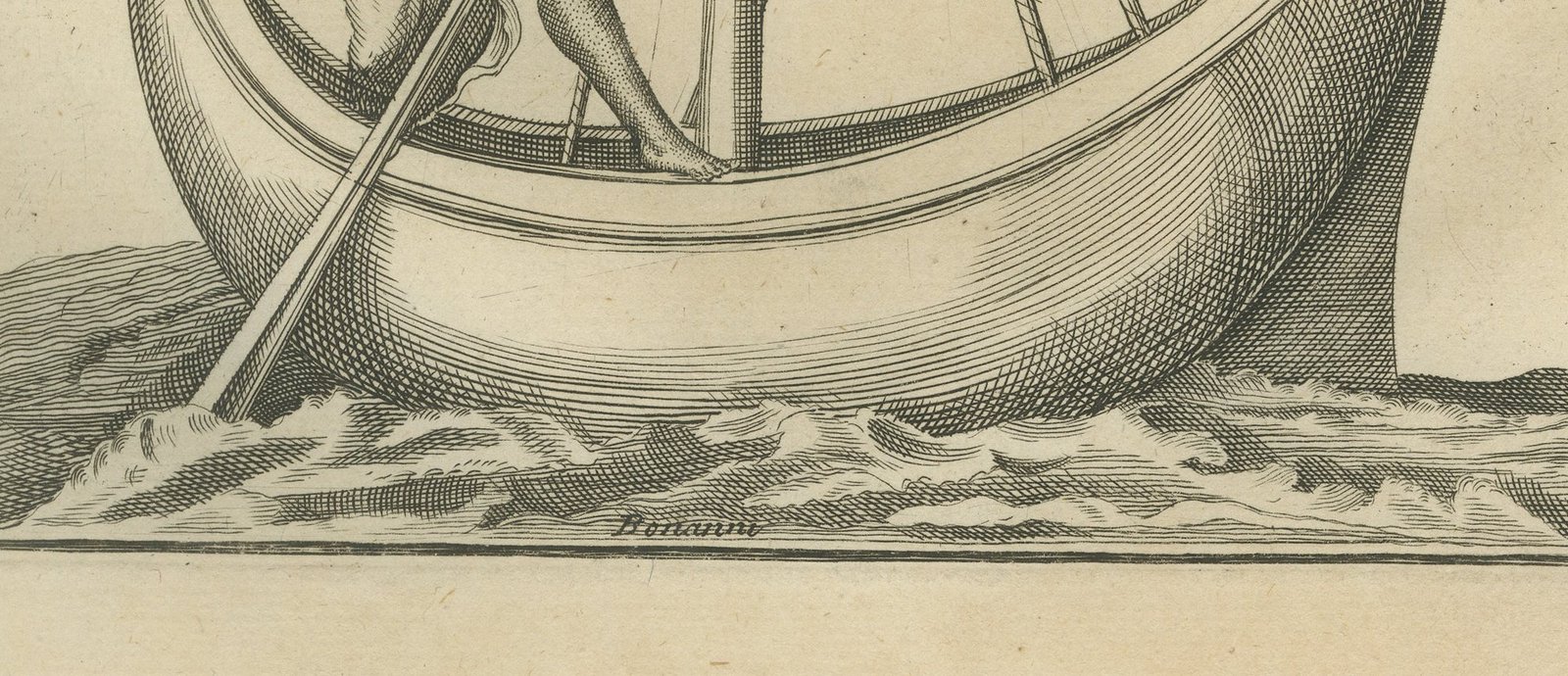
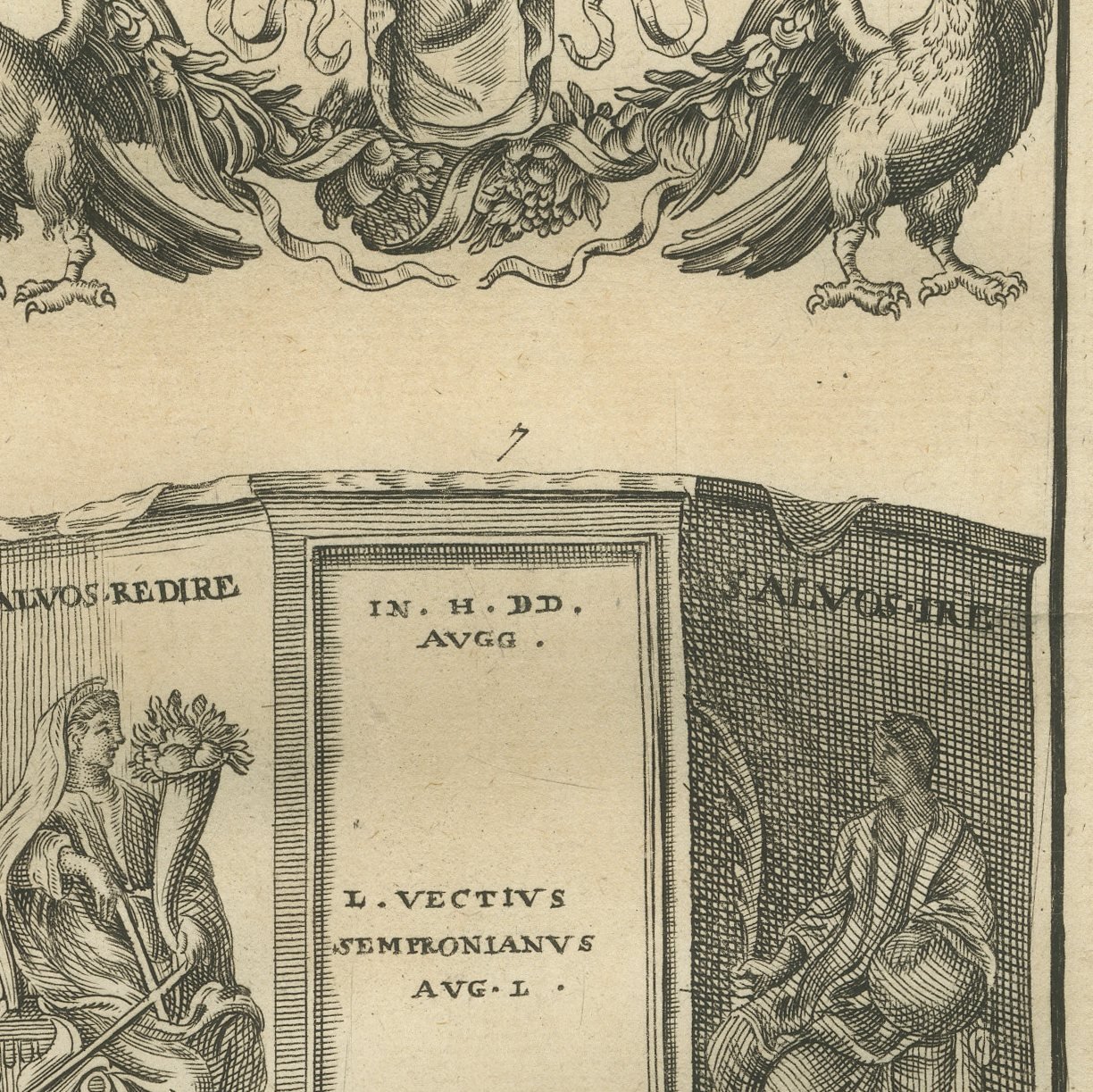
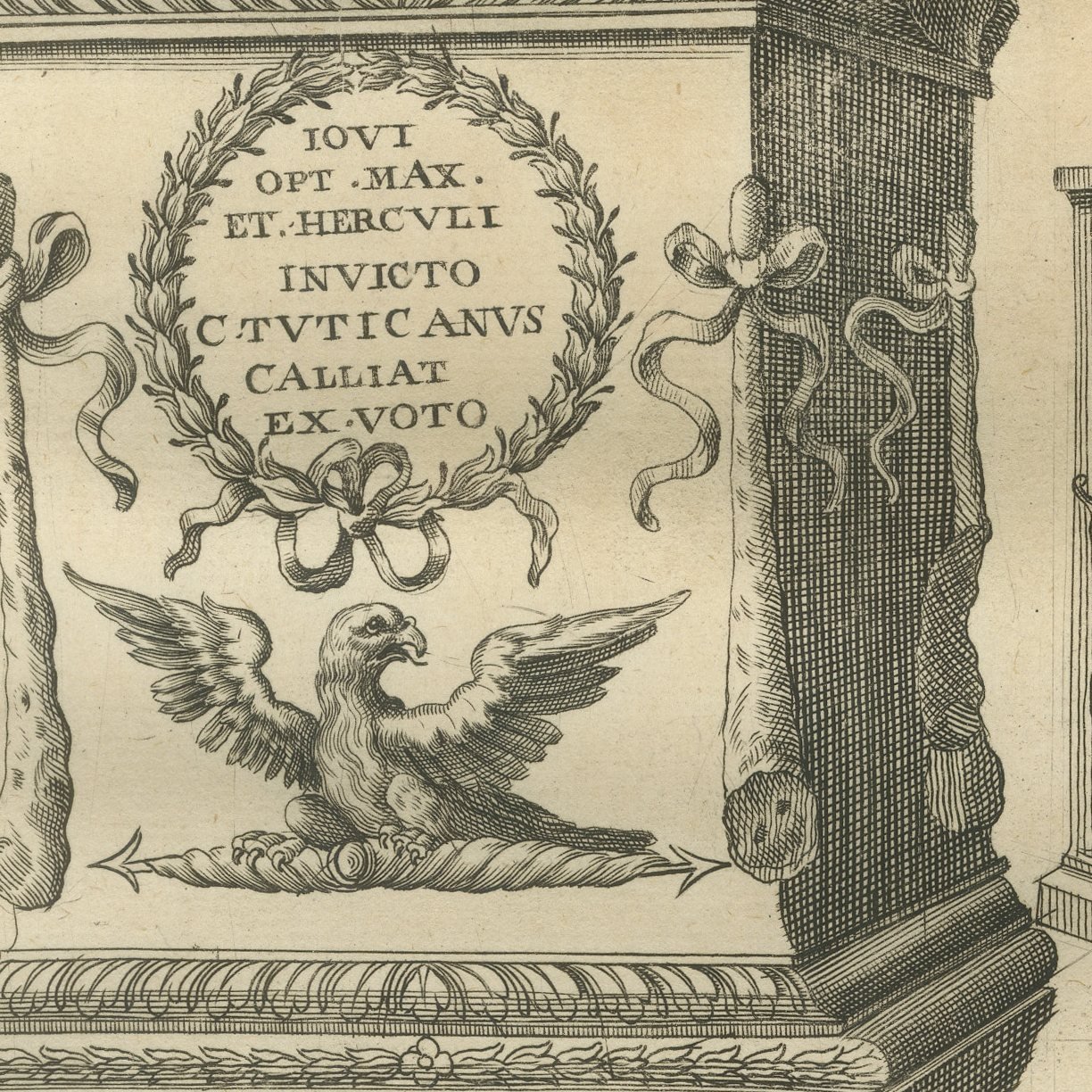
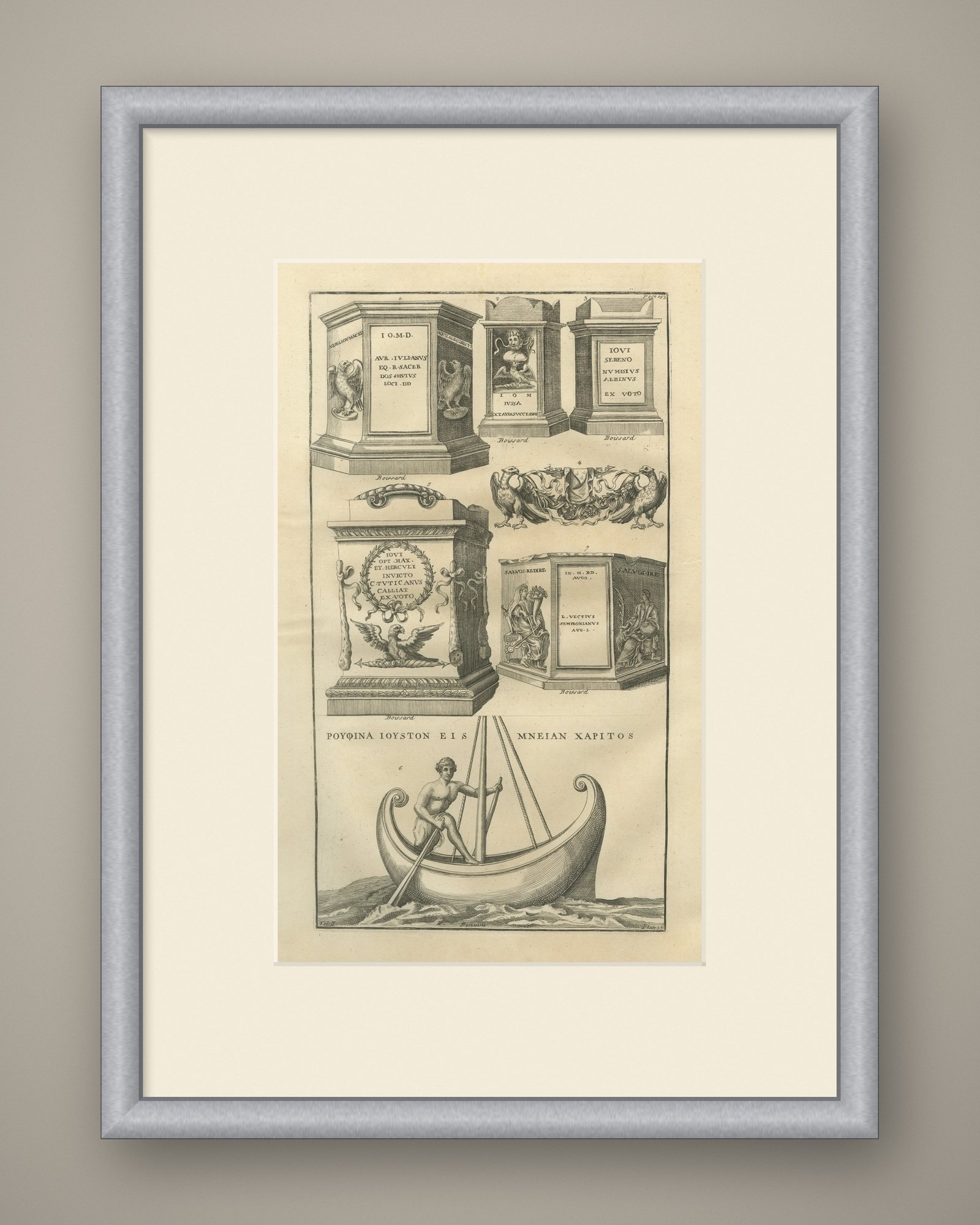
This original antique engraving of 1721 is a sheet of inscribed Roman altars, and every text on it is engraved to be read. A tall altar at the head of the plate carries eagles standing on its returns and the dedication of Aurelius Julianus, a Roman knight and priest of the place, to Jupiter Best and Greatest. Beside it a small shrine encloses a winged head over the words IOM IVSSA, and a third stone is dedicated to Jupiter the Serene by Numisius Albinus in fulfilment of a vow. A larger altar carries a laurel wreath inscribed to Jupiter Best and Greatest and to Hercules Unconquered. A hexagonal stone set up by Lucius Vectius Sempronianus is lettered on its faces for a safe return. At the foot a Greek relief shows a man rowing a crescent shaped boat beneath the words POYΦINA IOYΣTON EIΣ MNEIAN XAPITOΣ. The corners read Vol. II and Plate 33.
The plate comes from Volume the Second of Antiquity Explained, and Represented in Sculptures, the English translation of L'Antiquité expliquée et représentée en figures, published in Paris in 1719 by Bernard de Montfaucon (1655 to 1741), a French Benedictine monk of the Congregation of Saint Maur. The translation is by David Humphreys, fellow of Trinity College, Cambridge, and was printed in London by J. Tonson and J. Watts in five folio volumes, the first two dated 1721 and the other three 1722. The second volume deals with the worship of the Greeks and Romans and with the religions of other peoples, among them the Egyptians, Syrians, Persians, Germans and Gauls. Montfaucon arranged the surviving images of ancient monuments by subject, so that each plate gathers figures copied from statues, reliefs, altars, gems, coins and other objects, numbered to his commentary. The plates carry no engraver's name and no printed title.
The sheet is lettered with its volume and plate number, Vol. II and Plate 33, and with the page of Montfaucon's text that it faces.
Strong age toning, the paper a warm buff, with the paper darker along the top and bottom edges, foxing through the margins, one or two spots larger than the rest, stains in the margins and wear to the bottom left corner.
This is an original antique print, not a modern reproduction. This item is sold unframed.
Explore