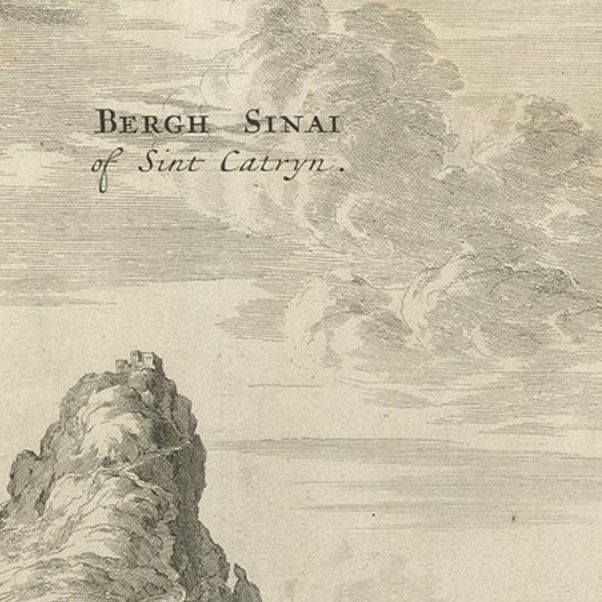
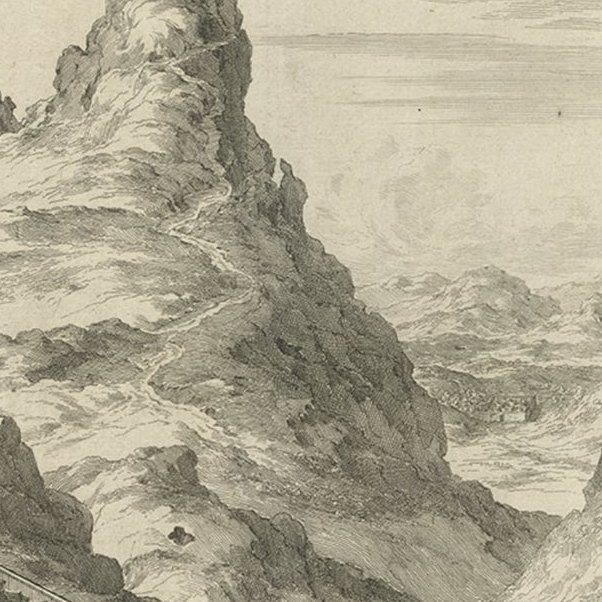
Close-ups
Framed and on the wall
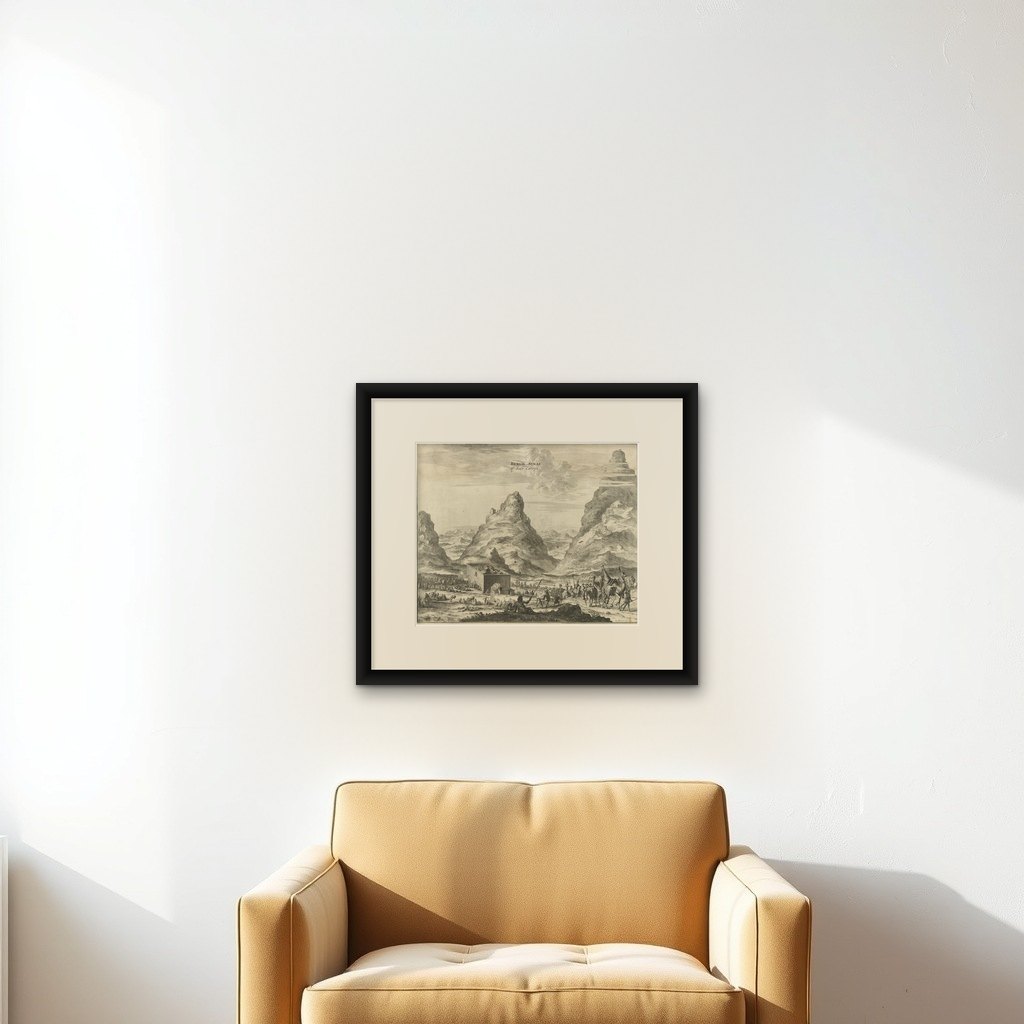

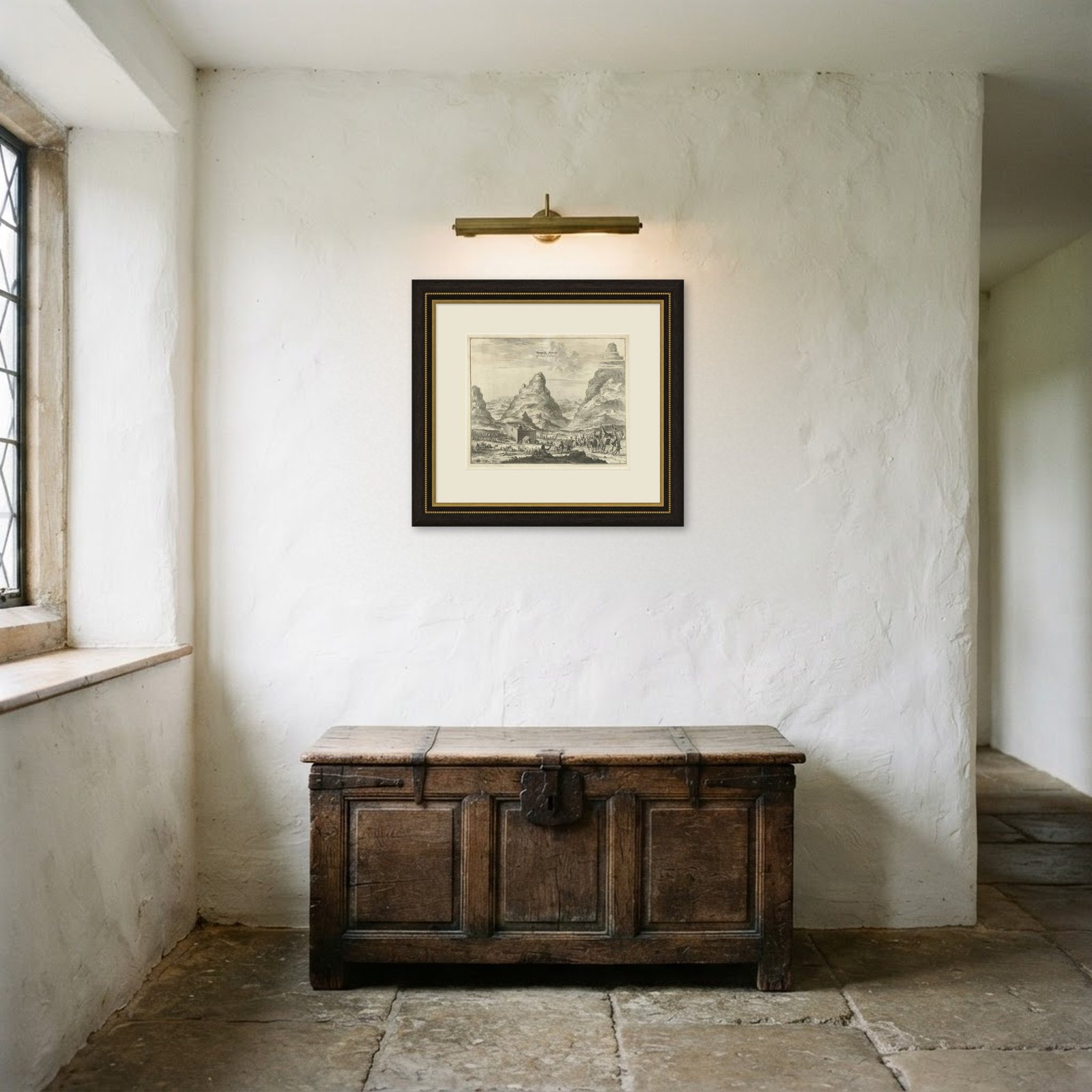
Frame and rooms are illustrations of how the print could look, drawn to its real size; it is sold unframed unless the description says otherwise.
Houses of Worship
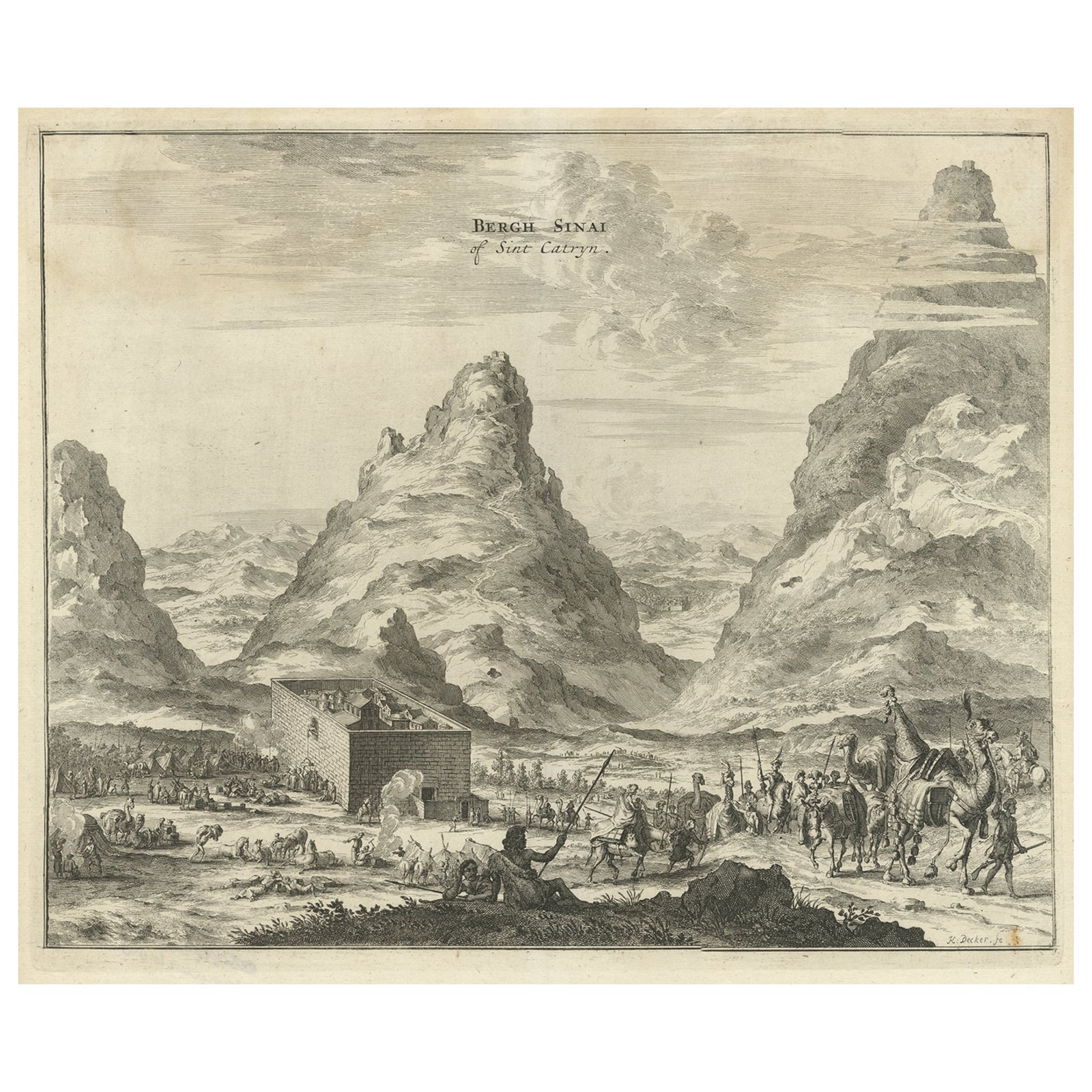
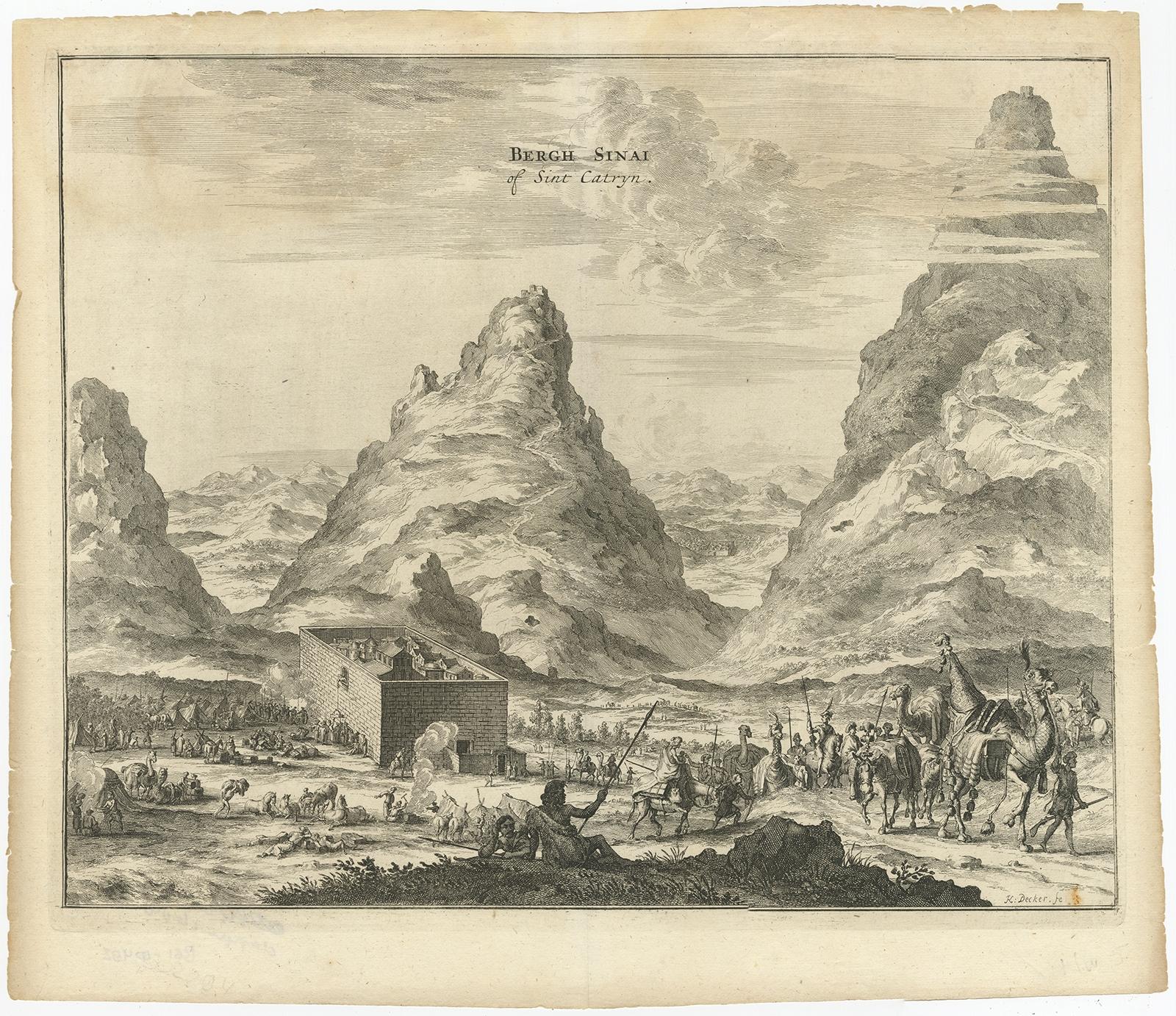
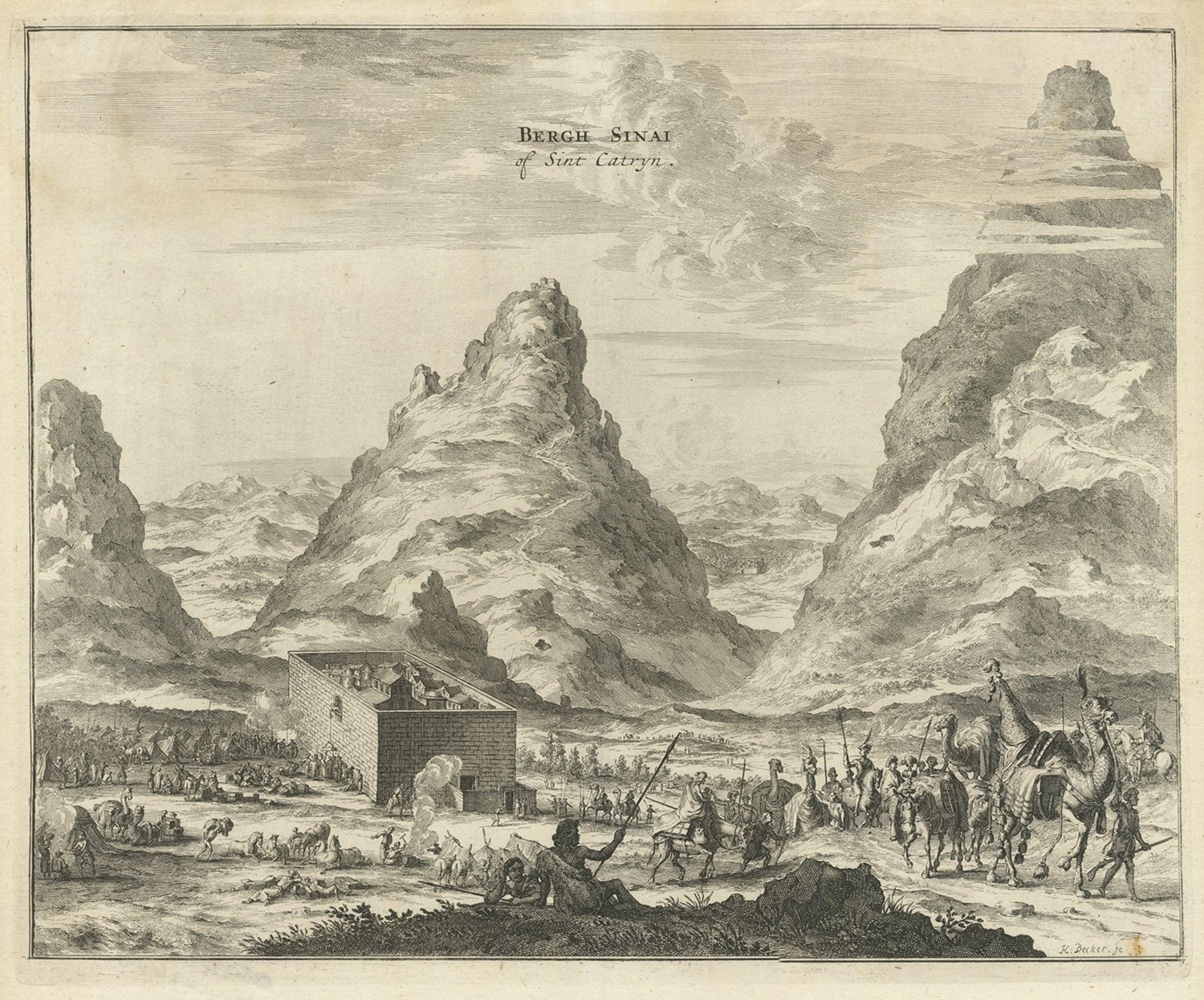
Rare Engraving of Mount Sinai with St. Catherine's Monastery and Bedouins, 1680
Anno Domini MDCLXXX1680
£415£31025% off
$410 · €371
Original print, not a reproduction
Ships worldwide from the Netherlands, flat or rolled, insured and tracked. 14-day returns.
- Date
- 1680
- Sheet size
- 12.7 × 14.6 in (32.3 × 37 cm)
- Condition
- Good. Some light staining in the upper part of the print and a small brownish spot on the lower right.
- Faith
- Christianity
- Collection
- Houses of Worship
- Era
- Before 1700, Woodcuts and the great atlases
- Stock no.
- BGI-00492
What the condition grades mean
- Excellent
- Bright and clean, with no faults worth mentioning.
- Very good
- Only light signs of age, such as faint toning.
- Good
- Normal signs of age for a sheet of this period: toning, some foxing, small marks or neat old repairs.
- Fair
- Clear faults such as staining, tears or repairs, priced to match.
Every fault we see is written in the condition note, and the whole sheet is shown uncropped in the photos.
Rare antique print titled ‘Bergh Sinai of Sint Catryn’.
This engraving shows Mount Sinai (also known as Mount Horeb) with St. Catherine's Monastery at the foot of the mountains and Bedouin encampments surrounding it. Engraved by Karl Decker.
Artists and Engravers: Arnold Montanus, actually Arnold van den Berghe (1625-1683) was a Dutch theologian, historian, author and publisher. His father Peter Montanus was related to the Hondius family. He worked as teacher for ancient languages and was involved in the publication of some geographical books and atlases with Jodocus and Heinrich Hondius. Arnold Montanus was rector of a Latin school in Schoonhoven, but was also active as theologian and philosopher publishing several writings. He also developed a passion for travelogues on faraway and foreign countries. Thus, besides works on clerical history and theology he soon wrote treatises on peoples and culture of the New World as well as Dutch overseas history especially in Japan. As he himself never left Europe, he was dependent on the assistance of others. So he bought travelogues and information from seafarers and members of the Dutch East India Company. Montanus' travel books were richly illustrated by fine engravings, for beauty and wealth often compared to those of de Bry. The images did not only depict geographical details but also ethnographic, natural scientific or religious peculiarities of the respective region.The maps are decorated by beautiful figural cartouches, the views are captivating by their vivid ornamentation with ships and local people.