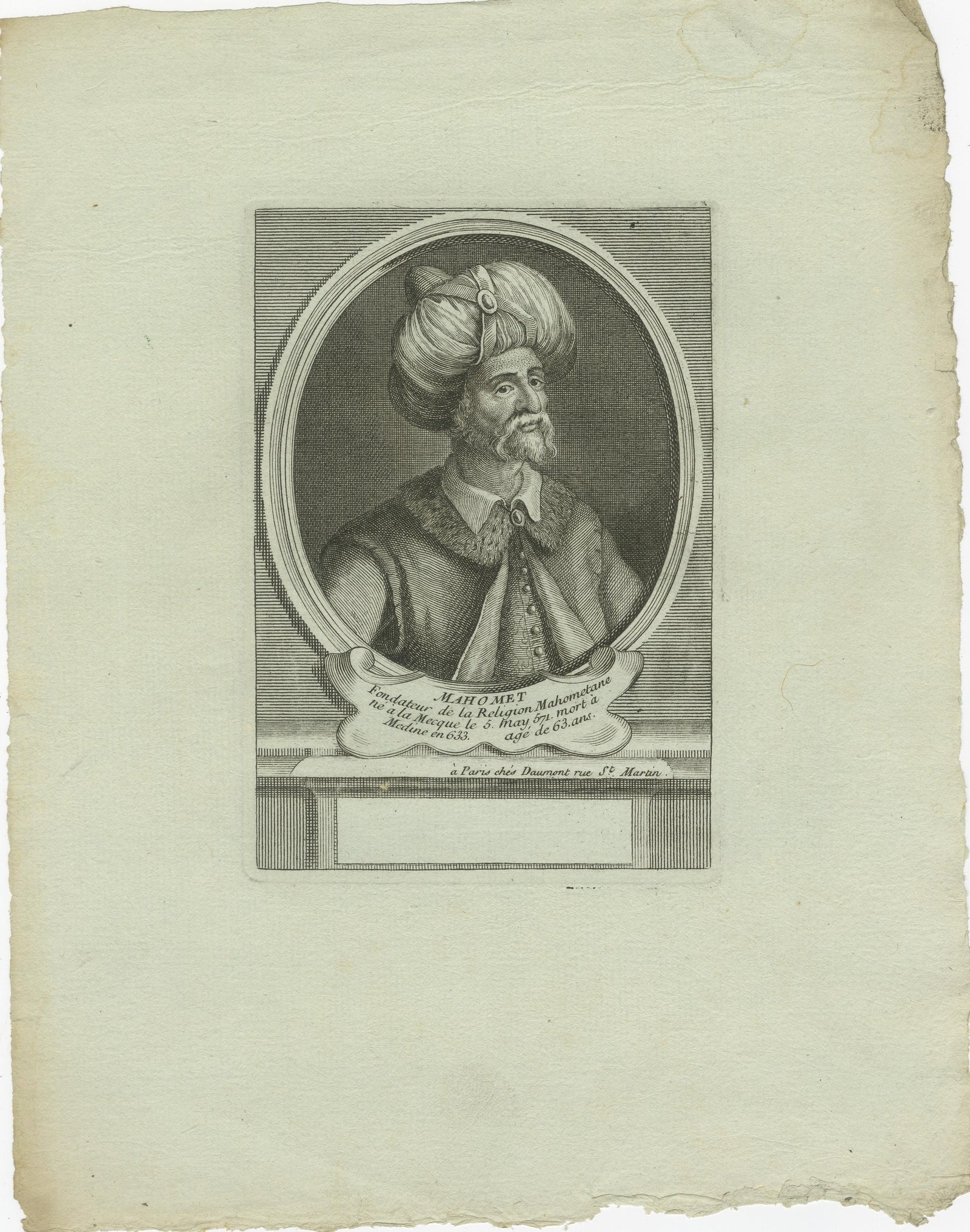
Close-ups
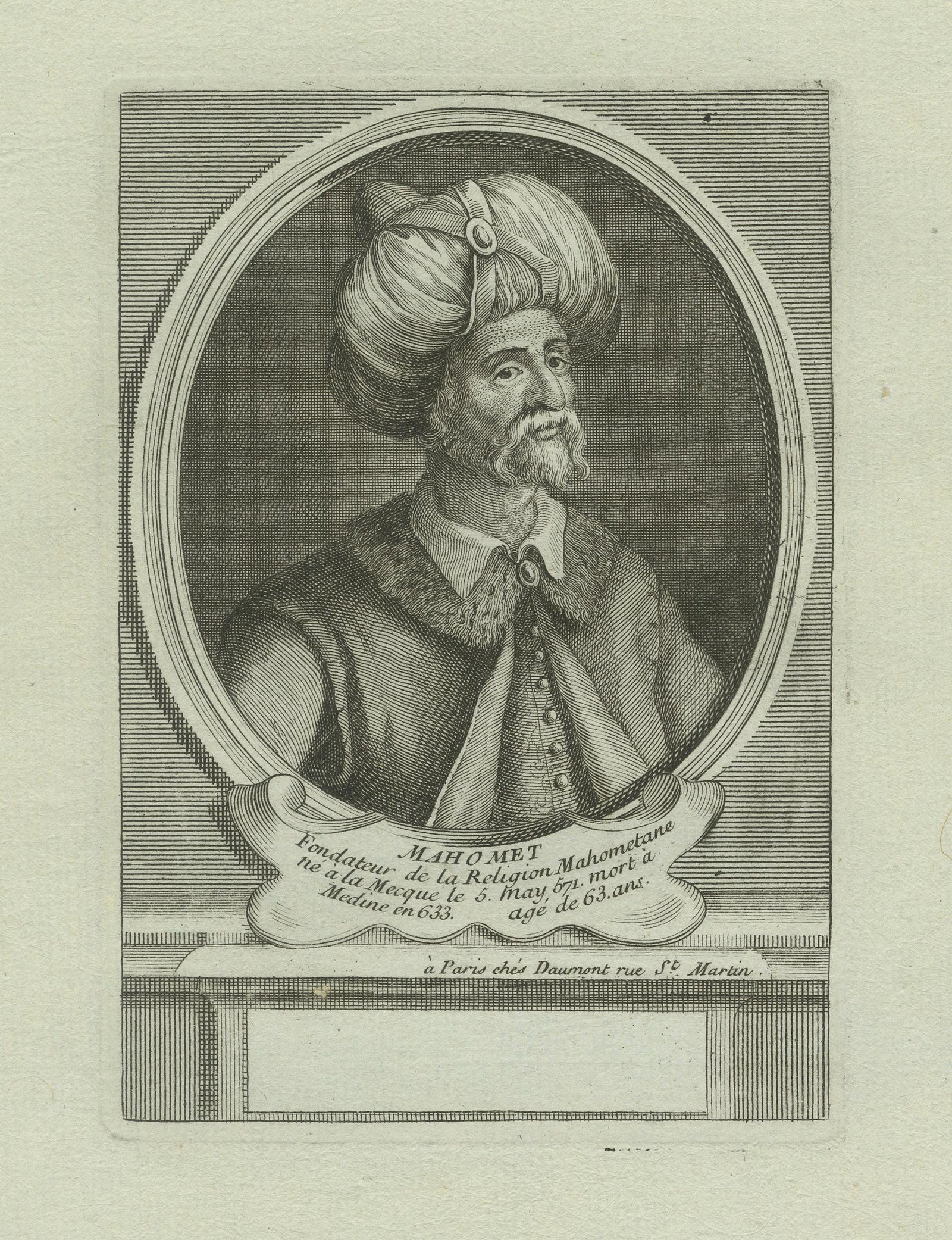
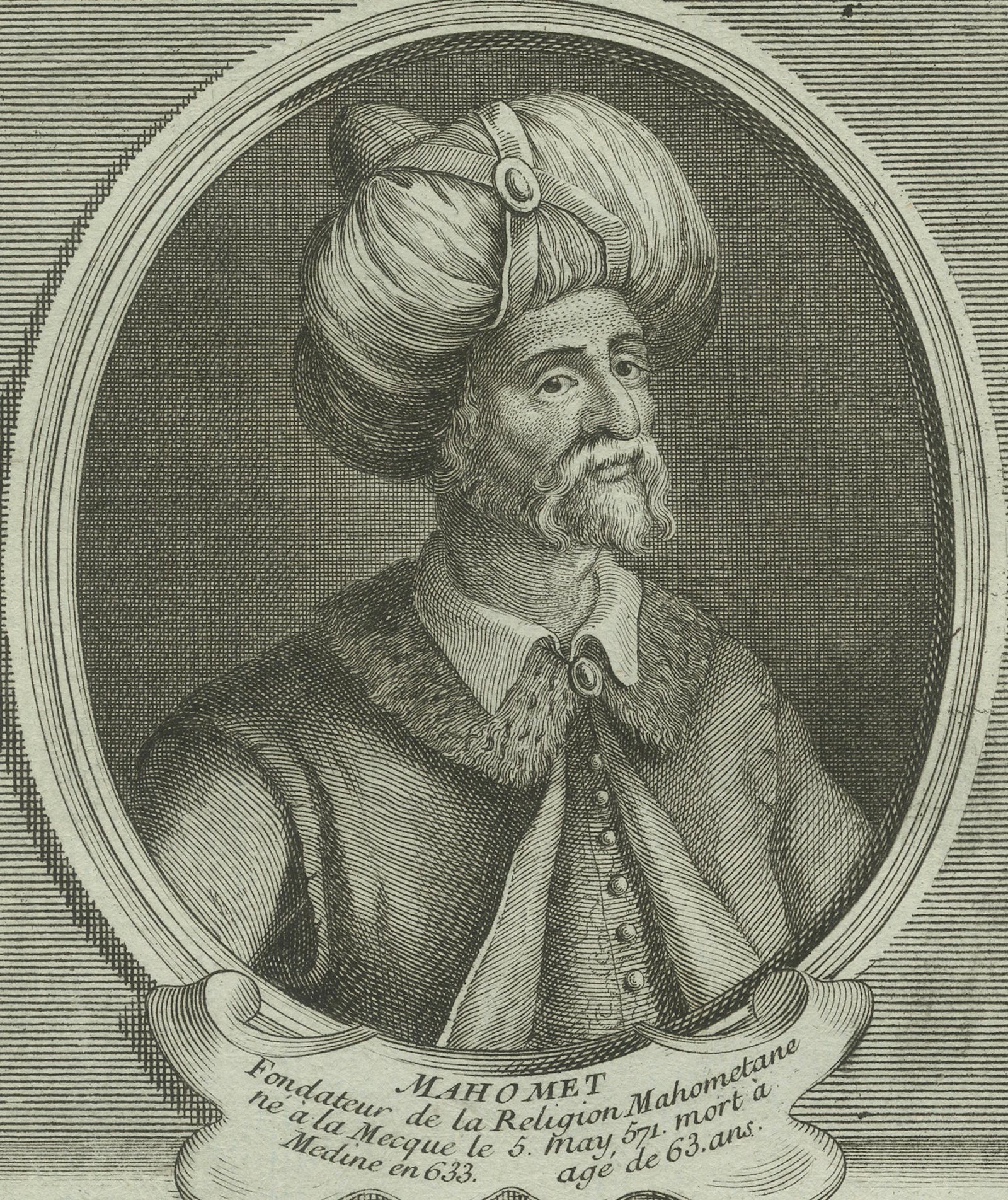
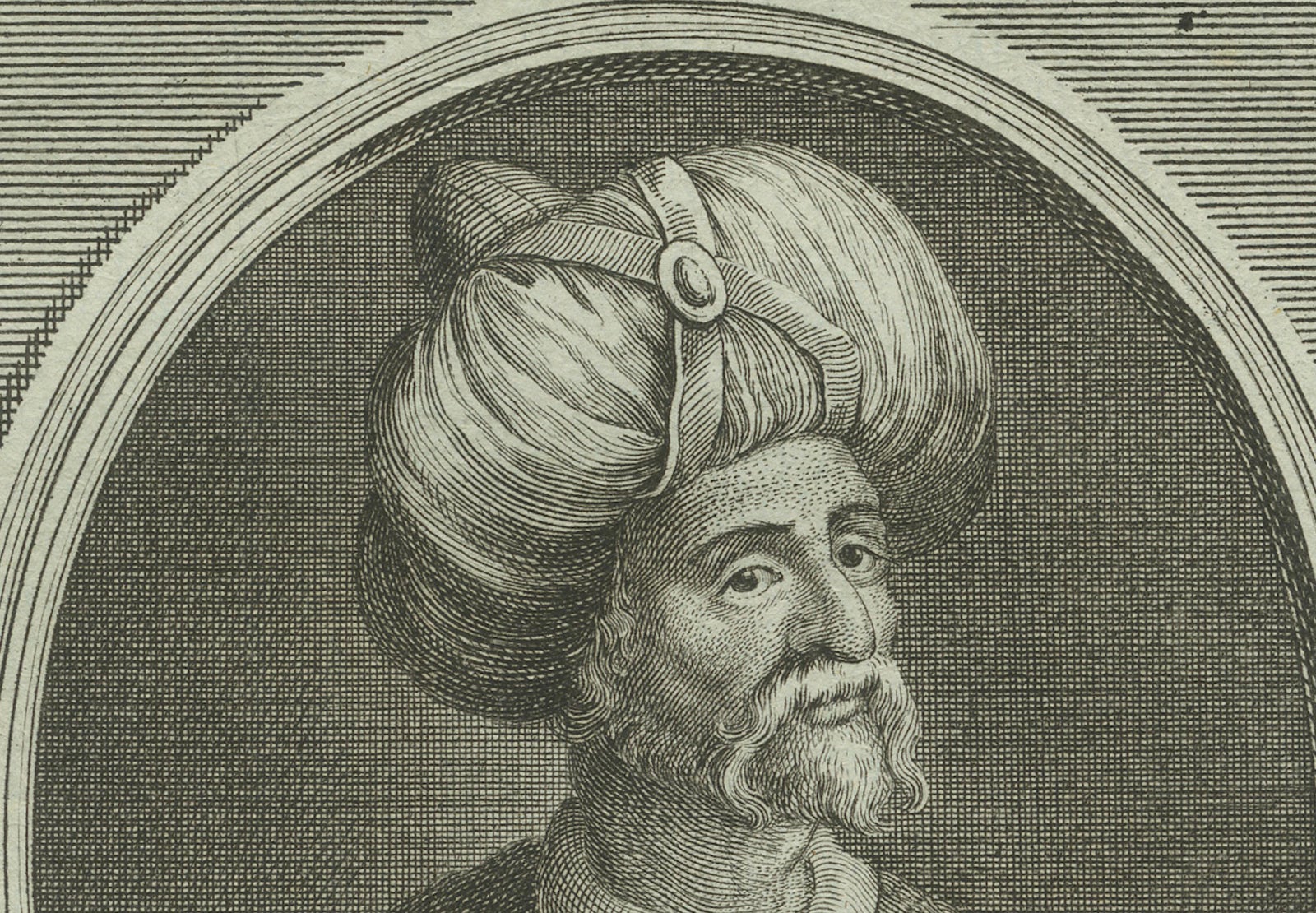
Framed and on the wall

Frame and rooms are illustrations of how the print could look, drawn to its real size; it is sold unframed unless the description says otherwise.
Rites of the World
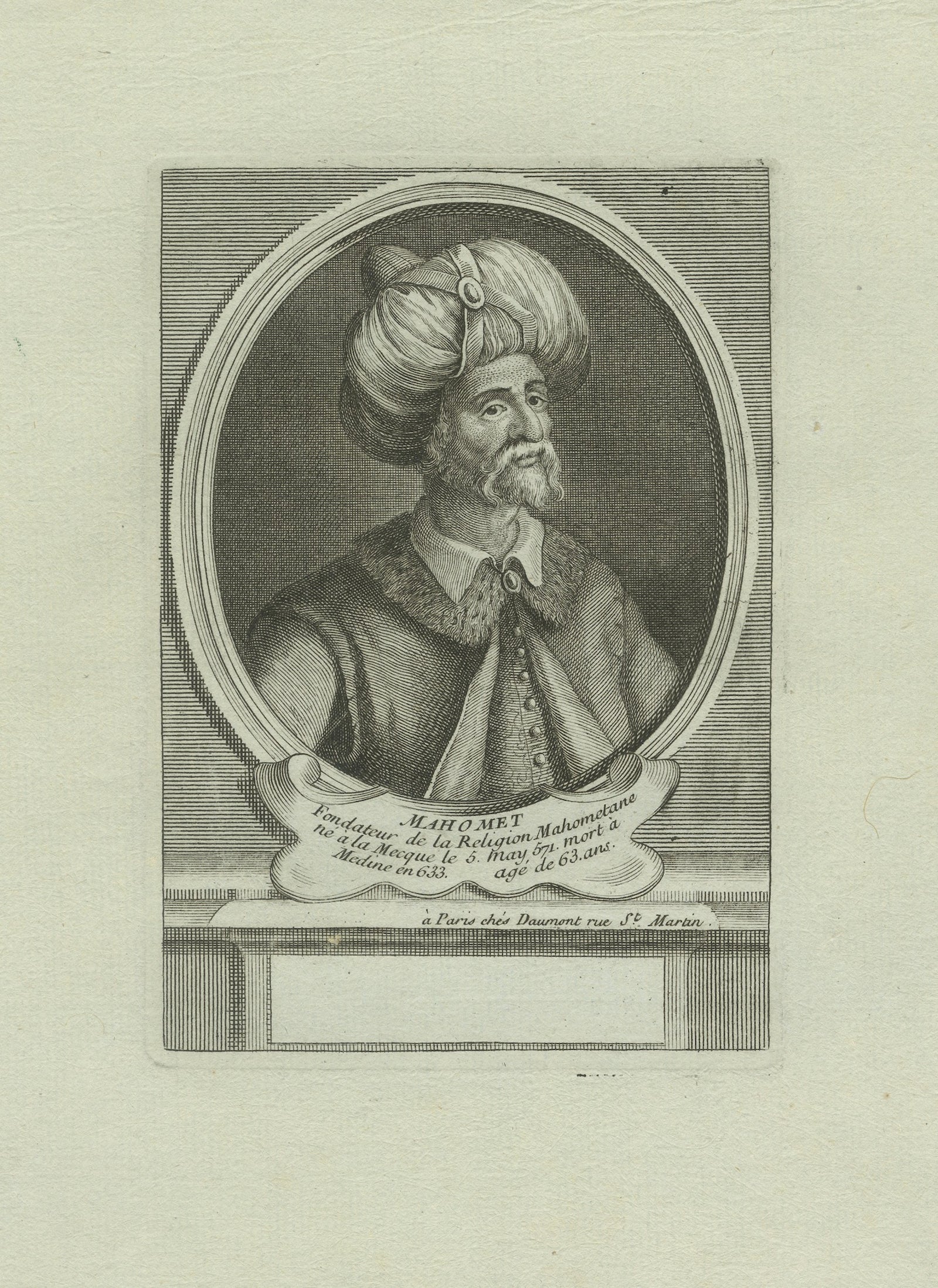
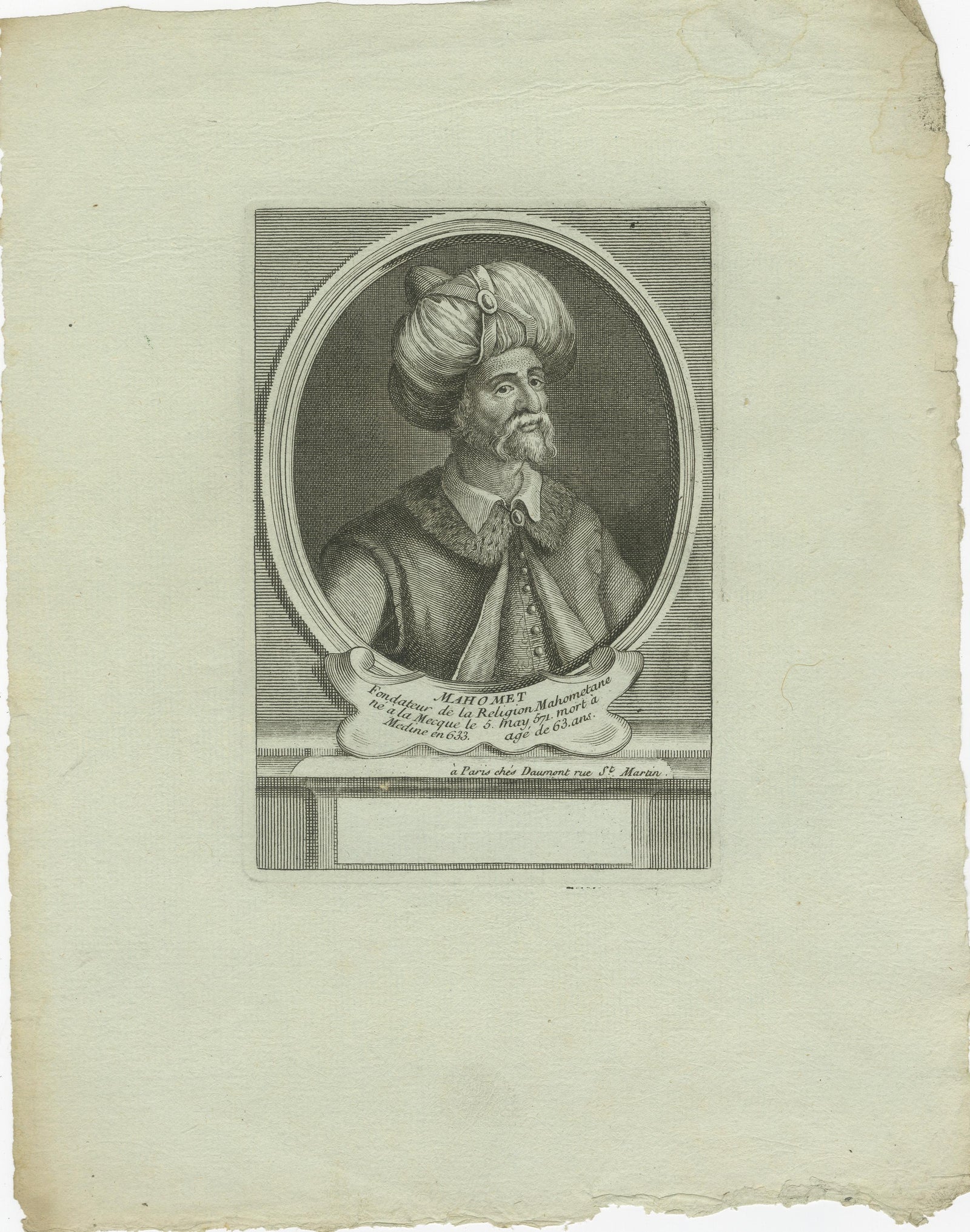
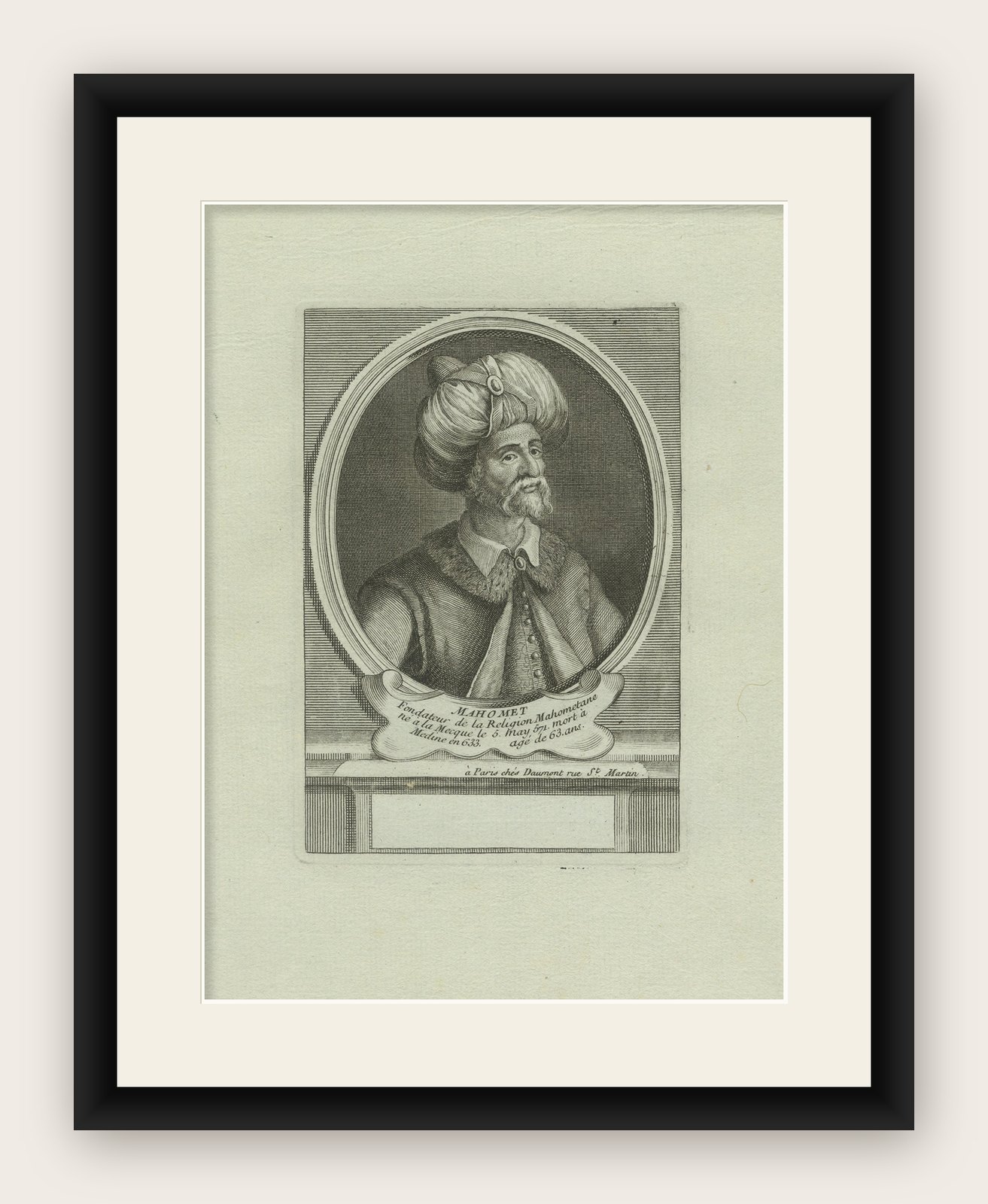
Prophet Muhammad (Mahomet), 18th Century Paris Engraving by Daumont, c.1770
Anno Domini MDCCLXX1770
€460€32230% off
$355 · £270
Original print, not a reproduction
Ships worldwide from the Netherlands, flat or rolled, insured and tracked. 14-day returns.
- Date
- 1770
- Sheet size
- 10.5 × 8.4 in (26.7 × 21.4 cm)
- Condition
- Good. Good condition overall. The sheet has full wide margins with deckle edges, minor creases and a water stain to the upper right margin, not affecting the plate or image. The impression remains strong and clear.
- Faith
- Islam
- Collection
- Rites of the World
- Era
- 1700 to 1799, Mortier, Picart and the illustrated Bible
- Stock no.
- BG-14073-9
What the condition grades mean
- Excellent
- Bright and clean, with no faults worth mentioning.
- Very good
- Only light signs of age, such as faint toning.
- Good
- Normal signs of age for a sheet of this period: toning, some foxing, small marks or neat old repairs.
- Fair
- Clear faults such as staining, tears or repairs, priced to match.
Every fault we see is written in the condition note, and the whole sheet is shown uncropped in the photos.
18th Century Engraving of Mahomet (Prophet Muhammad), Published by Daumont Paris
Description:
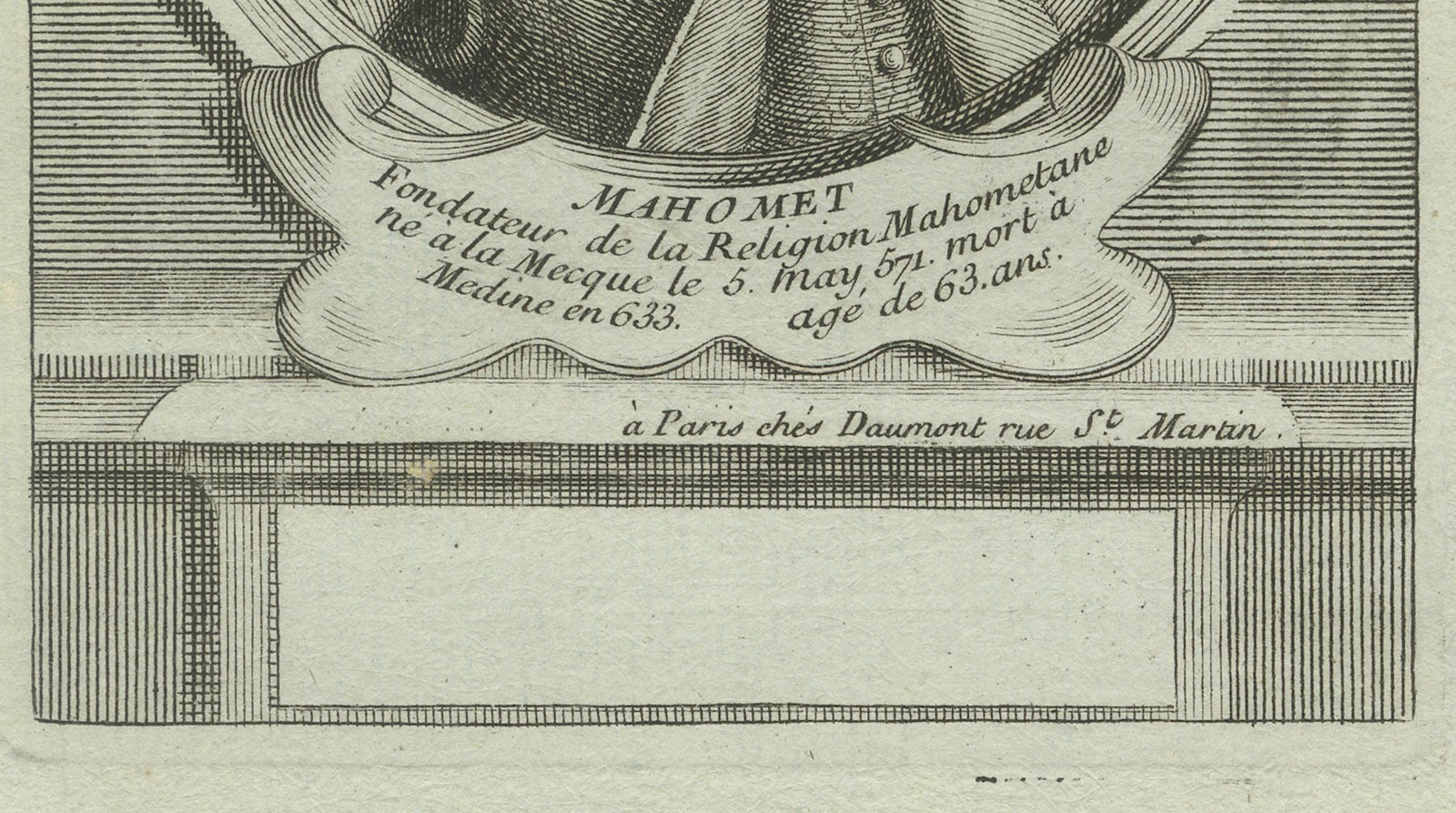
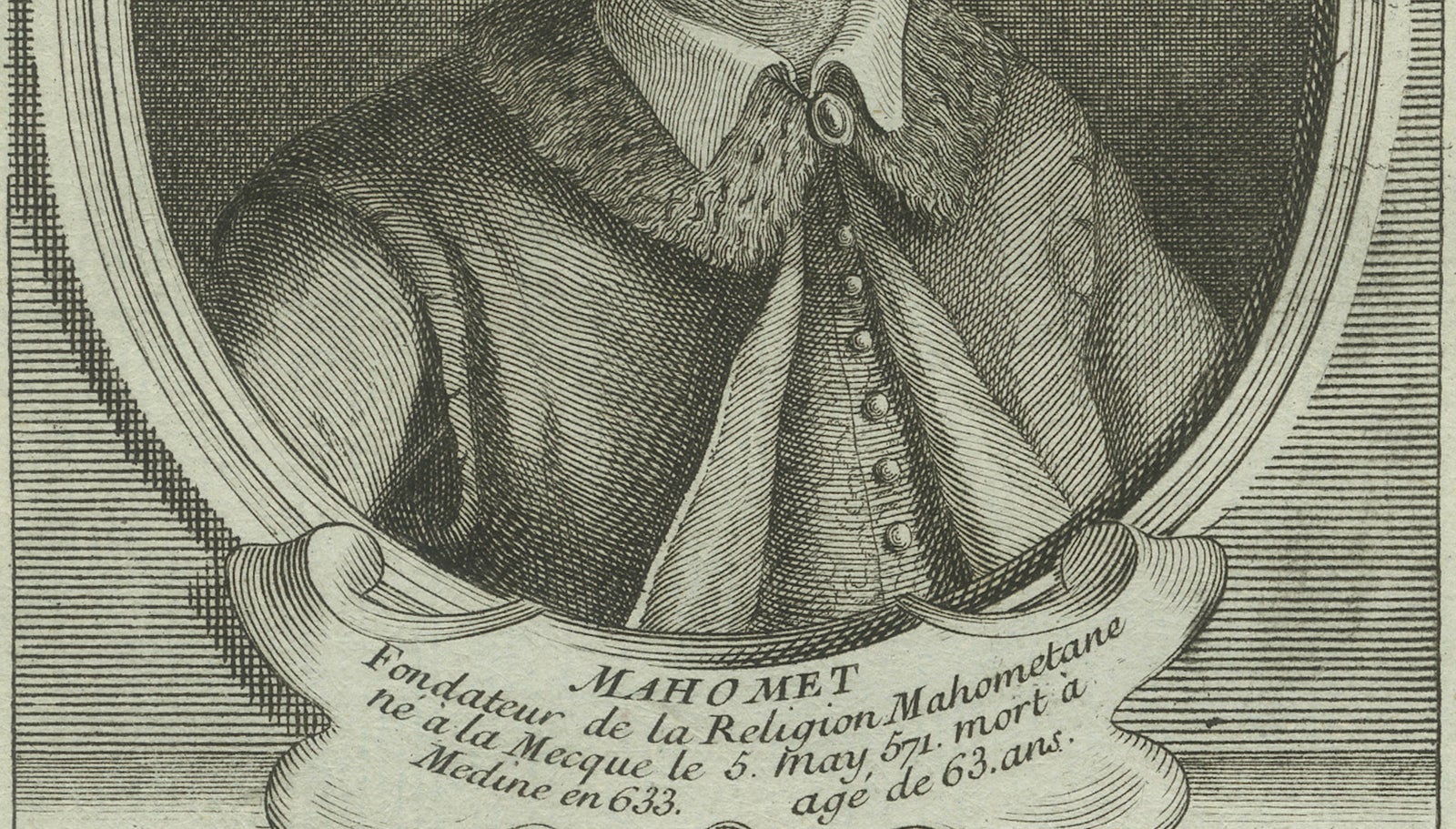
This antique French engraving depicts Mahomet (Muhammad), described here as the founder of the Islamic religion, wearing a turban and fur-collared robe in a Europeanised portrait style typical of 18th-century French historical prints. The inscription below reads:
“Mahomet
Fondateur de la Religion Mahometane
ne à la Mecque l’an 571. mort à
Medine en 633. agé de 63 ans.”
Translation: “Muhammad, founder of the Mohammedan religion, born in Mecca in 571, died in Medina in 633, aged 63 years.”
The portrait is enclosed in an oval frame with drapery ornamentation and is printed on laid paper with wide margins. It was published by Daumont, Rue St. Martin, Paris, known for producing engraved portraits and ethnographic prints for European collectors between approximately 1740 and 1780.
Although the depiction does not follow Islamic artistic conventions, it reflects European Enlightenment-era interest in world religions, history, and rulers. Such prints were used in encyclopaedic collections and cultural compendia of the time to illustrate important historical figures.
Condition report:
Good condition overall. The sheet has full wide margins with deckle edges, minor creases and a water stain to the upper right margin, not affecting the plate or image. The impression remains strong and clear.
Tips for framing:
This engraving would suit a classic thin gilt or walnut frame with a cream or warm gray mount to highlight its historical and documentary nature. For an elegant presentation, consider floating the print to reveal the entire sheet and plate border.
Here are the different ways the Prophet Mohammed's name is written:
Arabic: Muhammad
English transliterations: Mohammed, Muhammad, Mohammad, Muhammed, Mohamad, Mohamed, Mahomet (older European and medieval usage), Mehmet (Turkish variant)
French: Mahomet (traditional spelling in historic French texts), Mohammed or Muhammad (modern usage)
German: Mohammed, Mahomet (historical texts)
Dutch: Mohammed, Mahomet (in older texts from the 17th and 18th century)
Turkish: Muhammed (religious or formal), Mehmet (common Turkish variant for the name)
Persian: Muhammad, Mohamad
Indonesian and Malay: Muhammad, Mohamad, Muhamad
Other historical or Latinised forms: Machometus (Latin medieval manuscripts), Mahumet (medieval European texts), Mahound (Old English, used pejoratively in medieval literature)
Explore