Close-ups
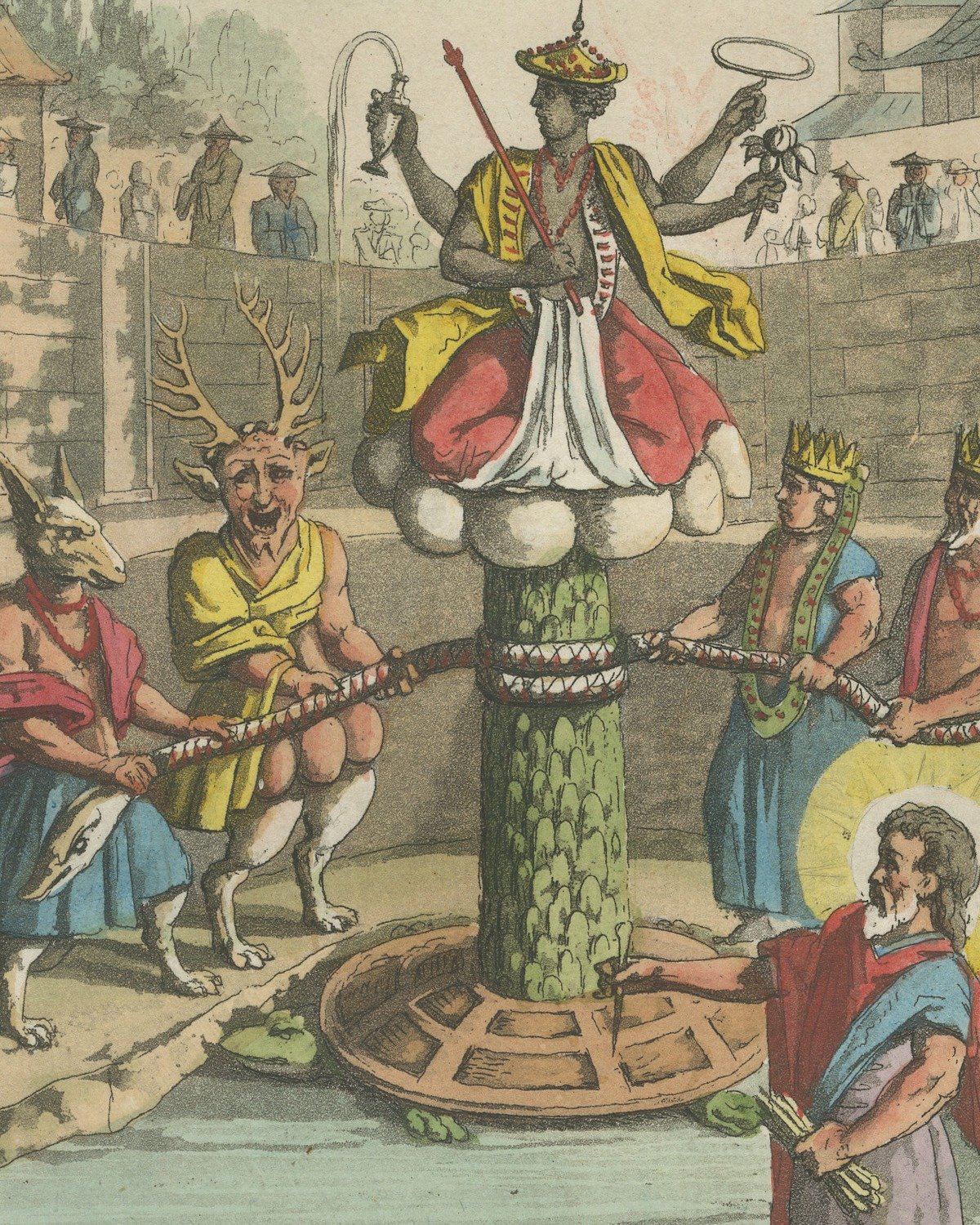
Framed and on the wall
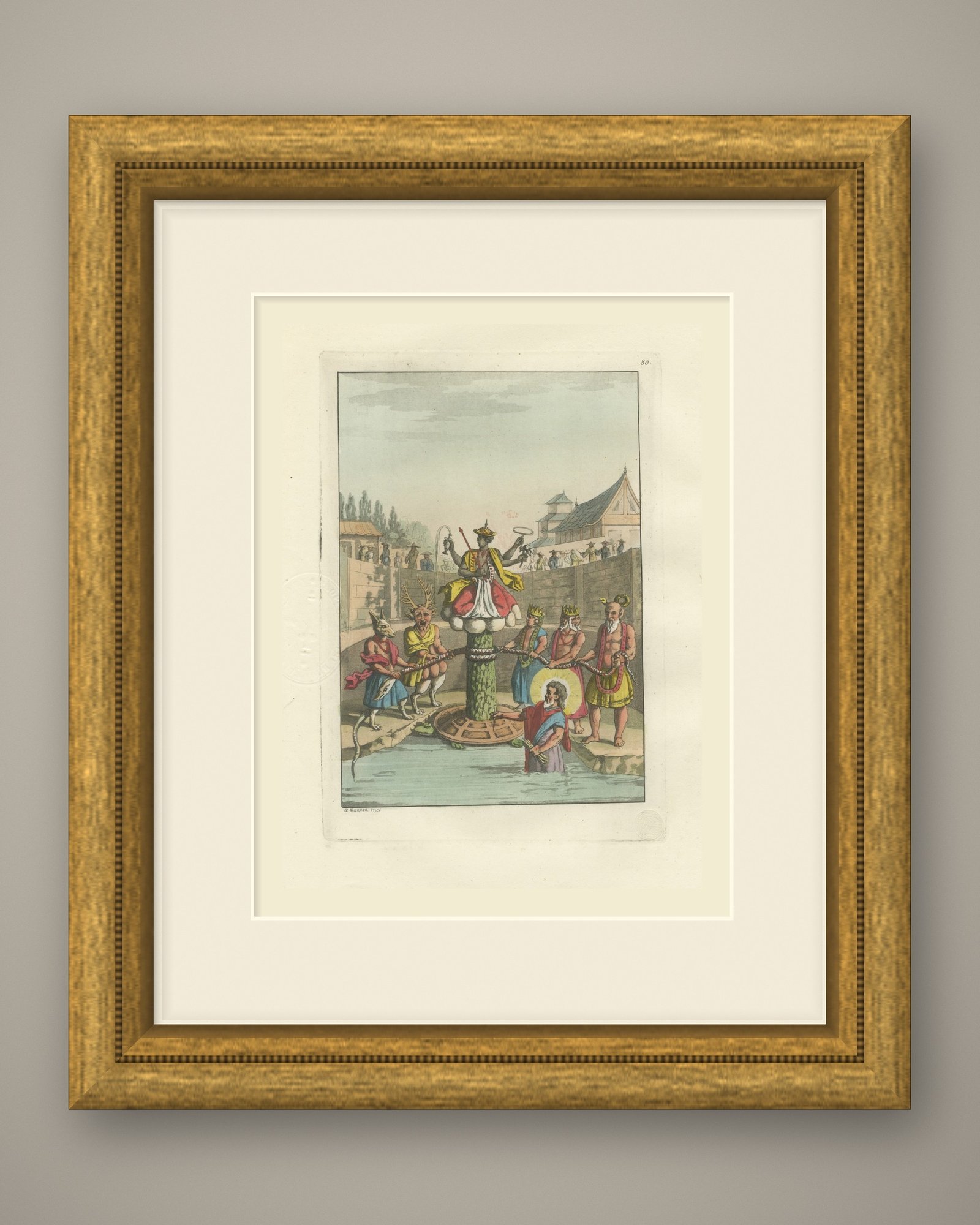

Frame and rooms are illustrations of how the print could look, drawn to its real size; it is sold unframed unless the description says otherwise.
Rites of the World
Original Antique Hindu Mythology, Churning of the Ocean, Ferrario, 1815
Anno Domini MDCCCXV1815
£190
$255 · €225
Original print, not a reproduction
Ships worldwide from the Netherlands, flat or rolled, insured and tracked. 14-day returns.
- Date
- 1815
- Technique
- Copper Engraving
- Coloring
- Original hand color
- Condition
- Good. Even age toning. Marked handling soiling along the bottom, left and top edges. Scattered light foxing in the margin. Slight wear at the bottom left and bottom right corners. Minor edge wear, shallow nicks along the left.
- Faith
- Hinduism
- Collection
- Rites of the World
- Era
- 1800 to 1849, Travellers and the costume books
- Stock no.
- BG-13000-80
What the condition grades mean
- Excellent
- Bright and clean, with no faults worth mentioning.
- Very good
- Only light signs of age, such as faint toning.
- Good
- Normal signs of age for a sheet of this period: toning, some foxing, small marks or neat old repairs.
- Fair
- Clear faults such as staining, tears or repairs, priced to match.
Every fault we see is written in the condition note, and the whole sheet is shown uncropped in the photos.
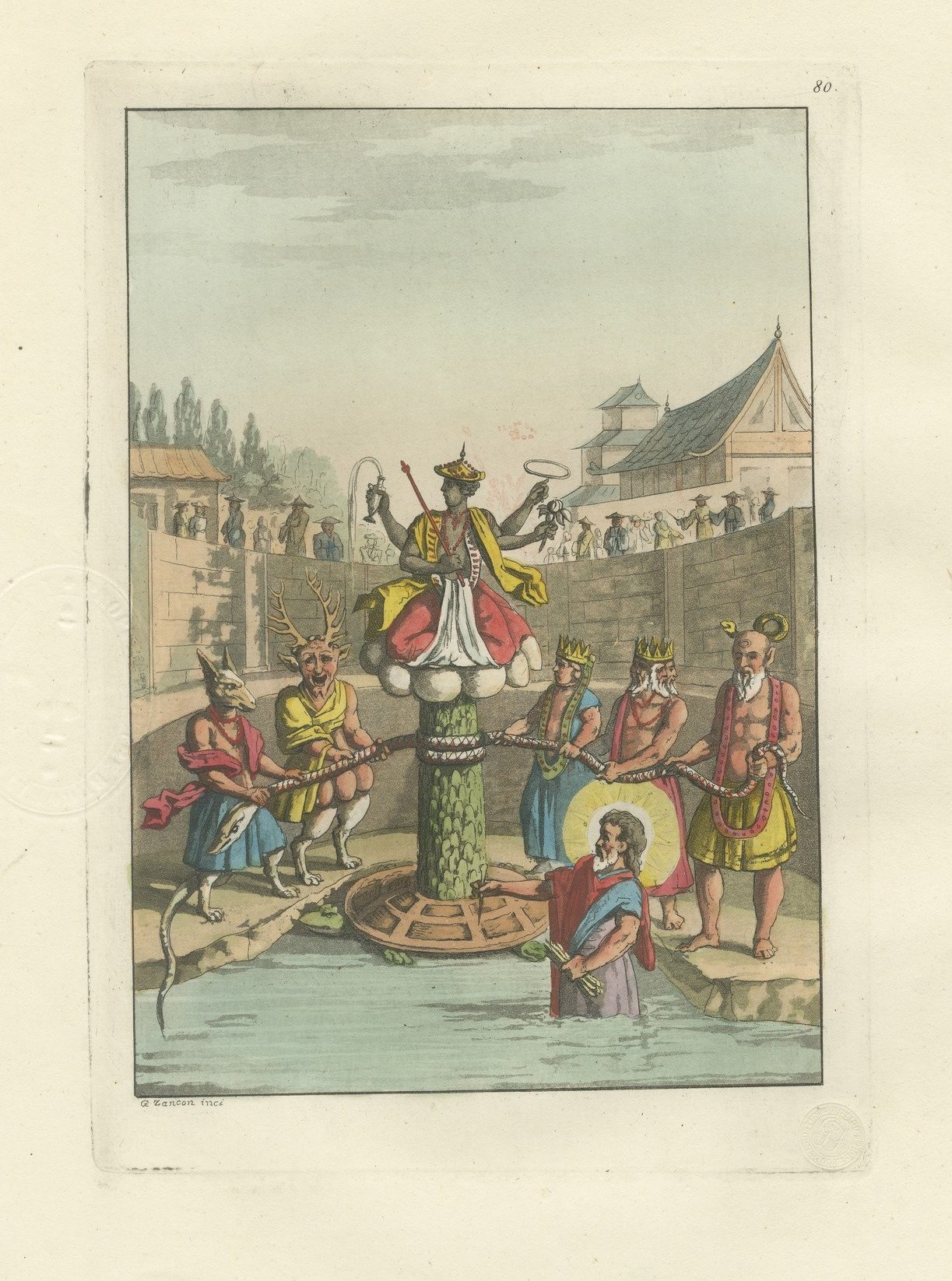
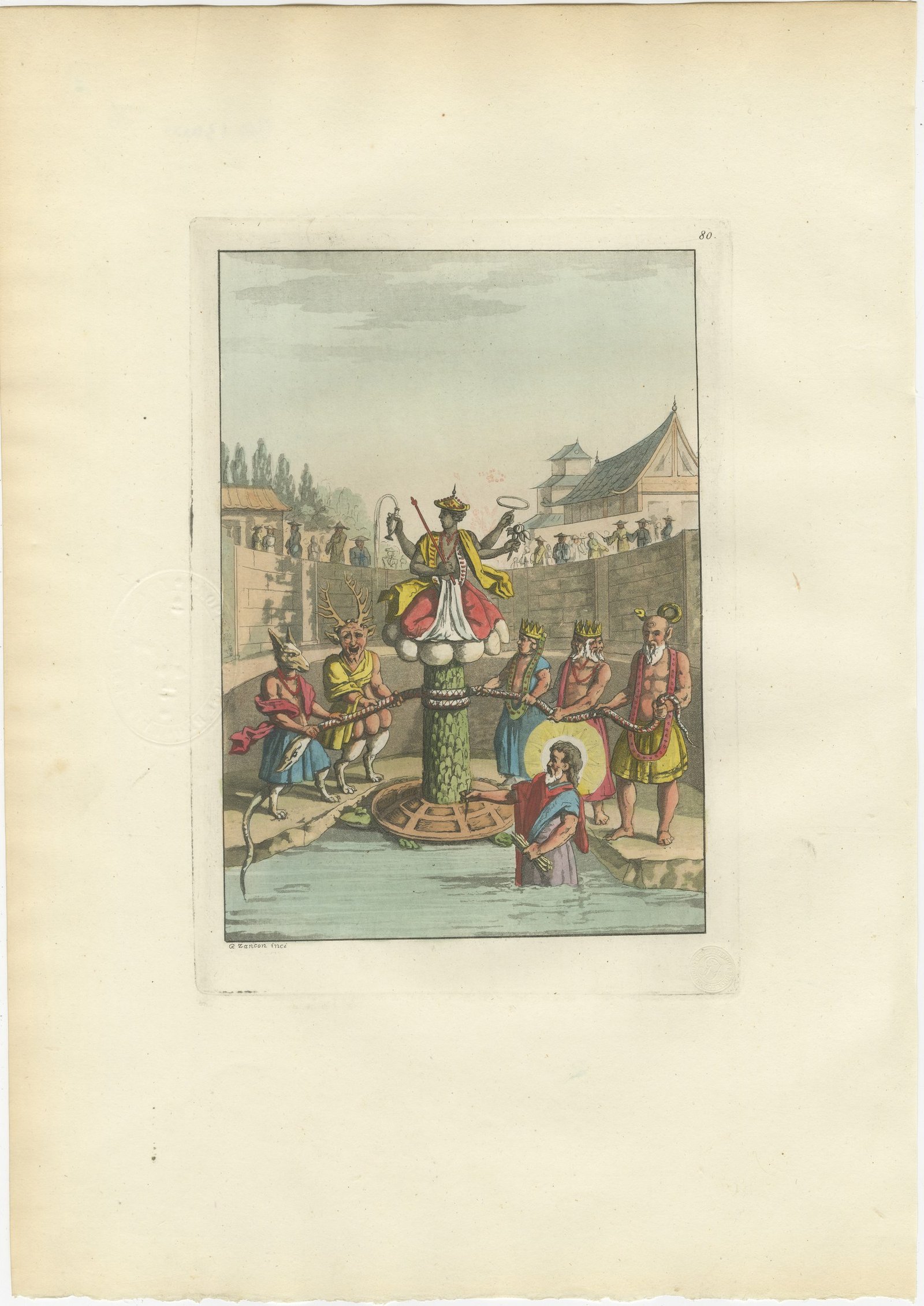
This is an original hand colored copper engraving, dated 1815, from Giulio Ferrario's Le Costume Ancien et Moderne (ancient and modern costume), showing the Hindu myth of the churning of the ocean. The plate has no engraved title or caption.
A dark skinned, four armed figure in a yellow mantle and crimson skirt sits on a lotus at the head of a tall green column, holding a ewer, a red scepter, a ring and a flower. The column stands on the back of a great tortoise lying in a pool, and a serpent is wound around it as a rope. Two groups haul on the serpent from either side. At the left are a figure with a long eared animal head and a figure with stag's antlers and animal legs; at the right are two crowned figures, one of them bearded, and a bald, bearded figure with a horned ornament, garlanded with beads. A bearded figure with a golden halo stands waist deep in the water in front, holding a bundle of rods and reaching toward the tortoise's shell. Spectators in broad hats line the top of the wall behind, with tiled roofs and a tall gabled building beyond.
The plate number "80." is engraved at the upper right above the border, and the engraver signed below the border at the lower left: "G. Zancon inci". A small round blind stamp is pressed at the lower right corner of the plate mark, and an oval blind stamp is pressed at the left edge of the plate.
The plate comes from Le Costume Ancien et Moderne by Giulio Ferrario (1767 to 1847), a Milanese scholar and publisher. The work was a multi-volume illustrated survey of the customs of the peoples of the world, issued in parts in Italian and in French. The part wrapper issued with these plates closes with the imprint "MILAN, DE L'IMPRIMERIE DE L'EDITEUR, MDCCCXV" (Milan, from the publisher's press, 1815). In Hindu mythology the gods and the demons churned the ocean of milk, using Mount Mandara as the churning staff and the serpent Vasuki as the rope. Vishnu, in his form as the tortoise Kurma, carried the mountain on his back.
Even age toning. Marked handling soiling along the bottom, left and top edges. Scattered light foxing in the margin. Slight wear at the bottom left and bottom right corners. Minor edge wear, shallow nicks along the left.
This is an original antique print, not a modern reproduction. This item is sold unframed. Any framed or interior images are shown for presentation and inspiration only, unless the listing explicitly states that the item is sold framed.