Close-ups
Framed and on the wall

Frame and rooms are illustrations of how the print could look, drawn to its real size; it is sold unframed unless the description says otherwise.
Rites of the World
Orientalist India Engraving, Muslim at Prayer, Daniell & Cochran c.1836
Anno Domini MDCCCXXXVI1836
£305£23025% off
$300 · €274
Original print, not a reproduction
Ships worldwide from the Netherlands, flat or rolled, insured and tracked. 14-day returns.
- Date
- 1836
- Sheet size
- 11.1 × 7.9 in (28.3 × 20 cm)
- Condition
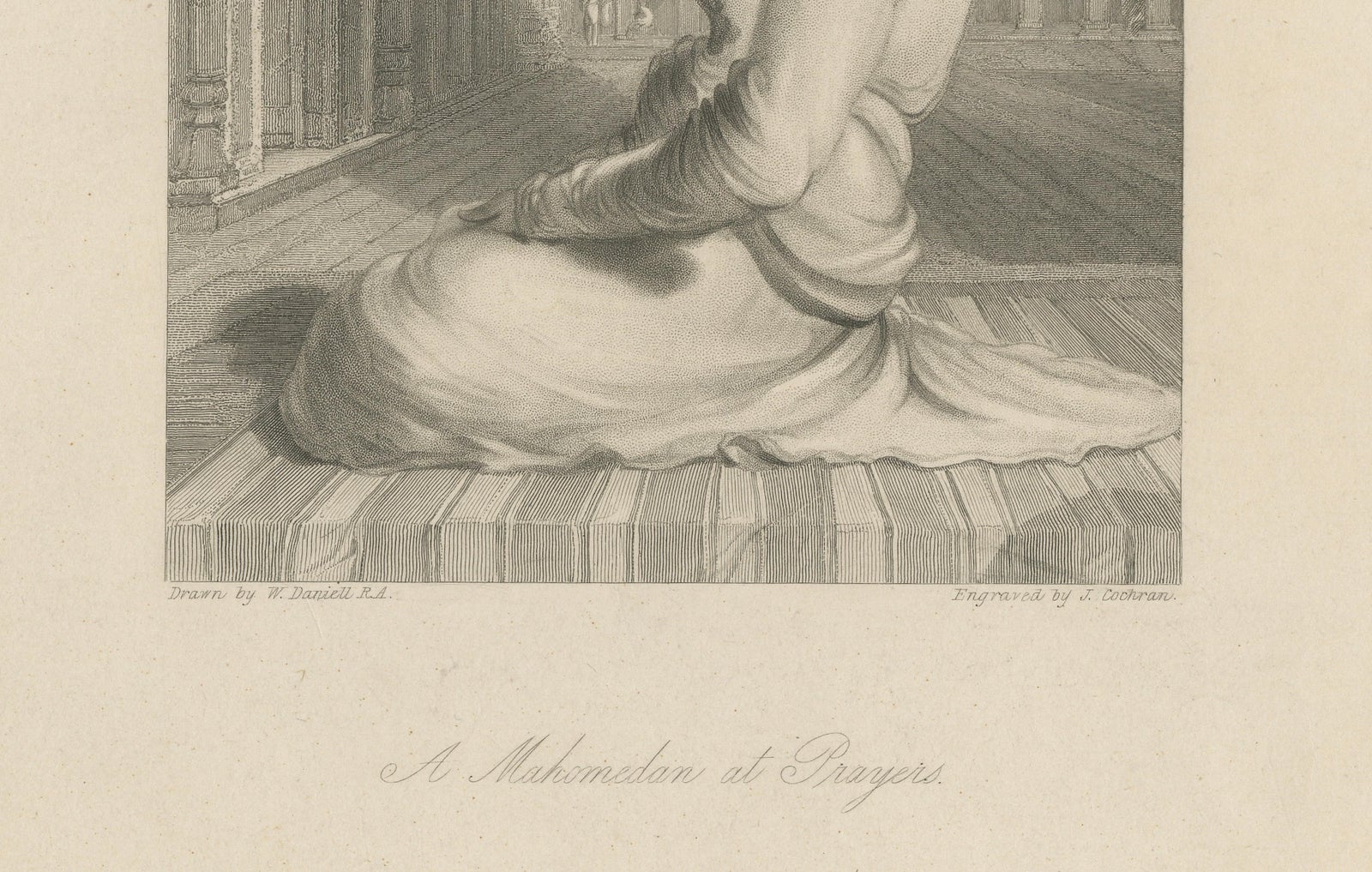
- Good. In good condition with age-related toning and scattered foxing visible across the sheet, particularly in the margins. The engraving is printed within a wide plate mark, which remains clearly visible. Some light staining and handling wear.
- Faith
- Islam
- Collection
- Rites of the World
- Era
- 1800 to 1849, Travellers and the costume books
- Stock no.
- BG-14170-8
What the condition grades mean
- Excellent
- Bright and clean, with no faults worth mentioning.
- Very good
- Only light signs of age, such as faint toning.
- Good
- Normal signs of age for a sheet of this period: toning, some foxing, small marks or neat old repairs.
- Fair
- Clear faults such as staining, tears or repairs, priced to match.
Every fault we see is written in the condition note, and the whole sheet is shown uncropped in the photos.
Orientalist India Engraving, Muslim at Prayer, Daniell & Cochran c.1836
Description:
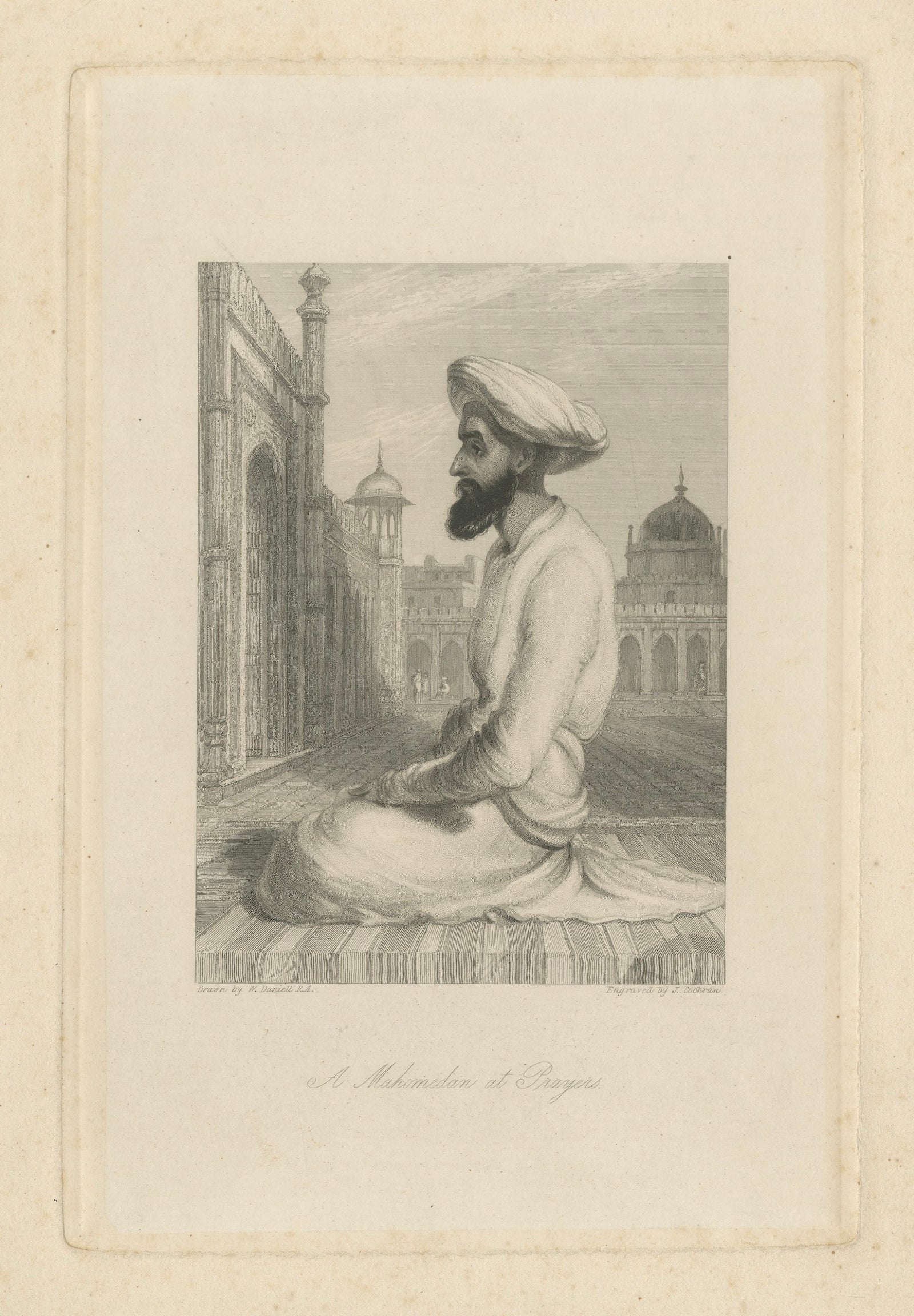
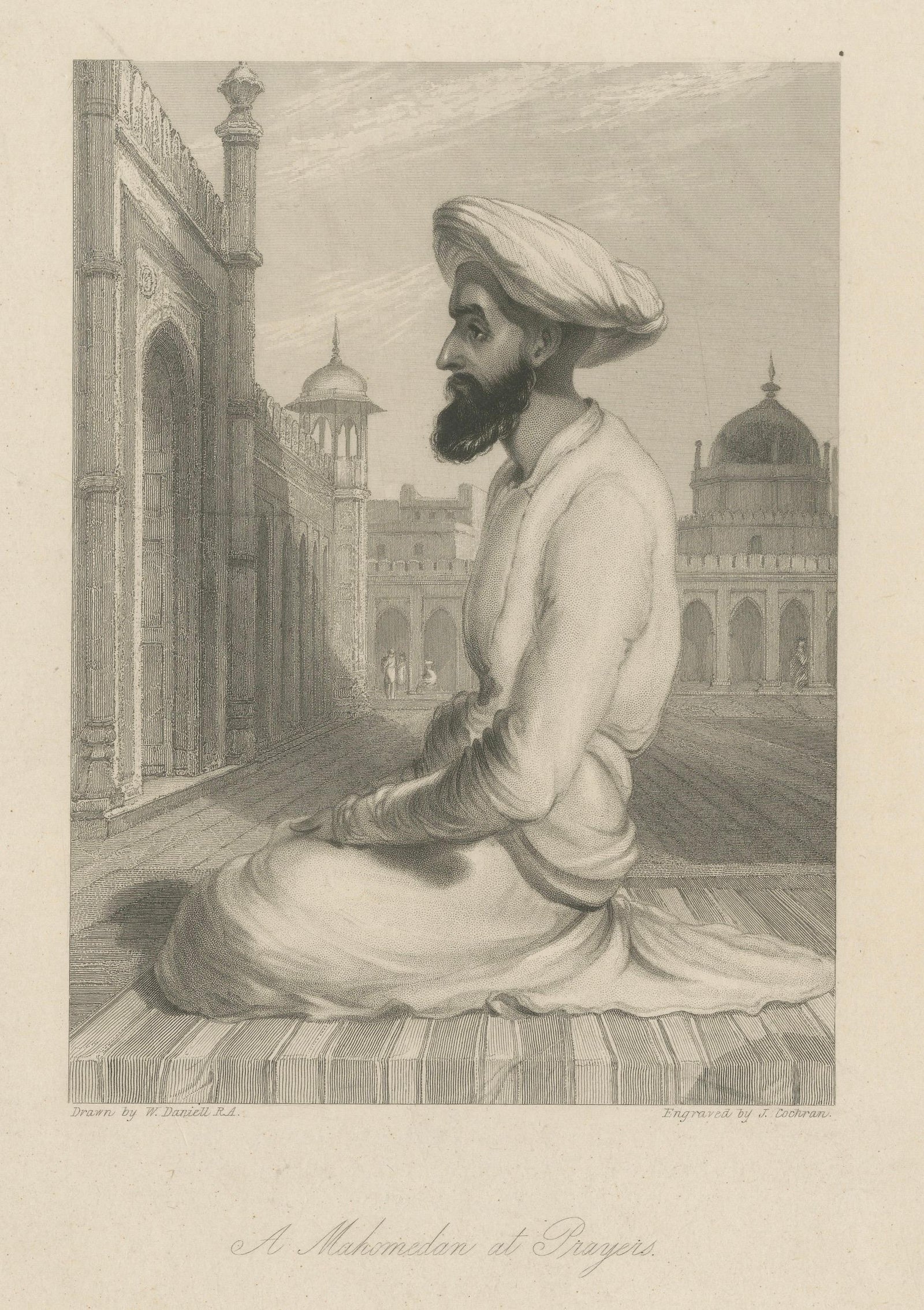
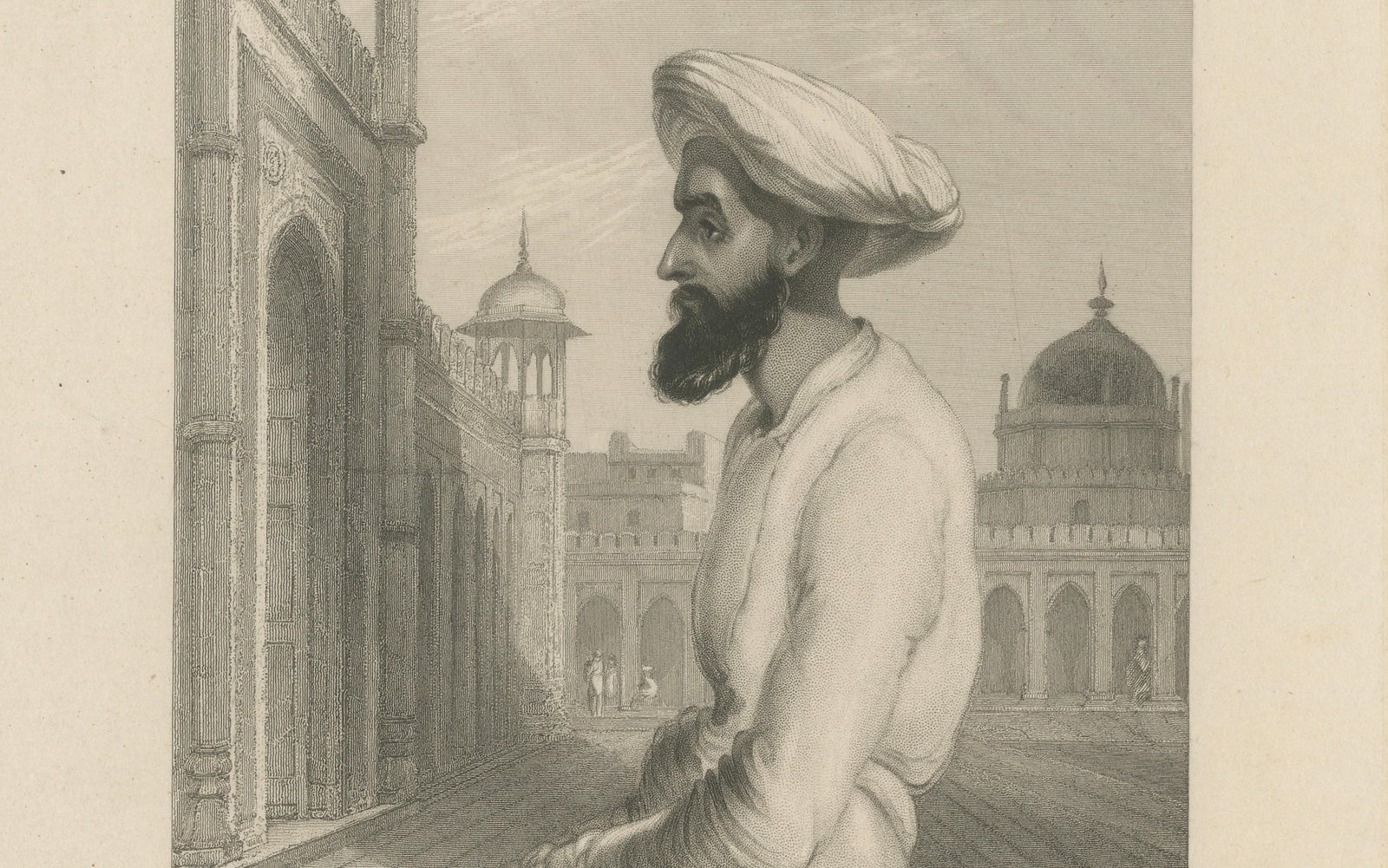
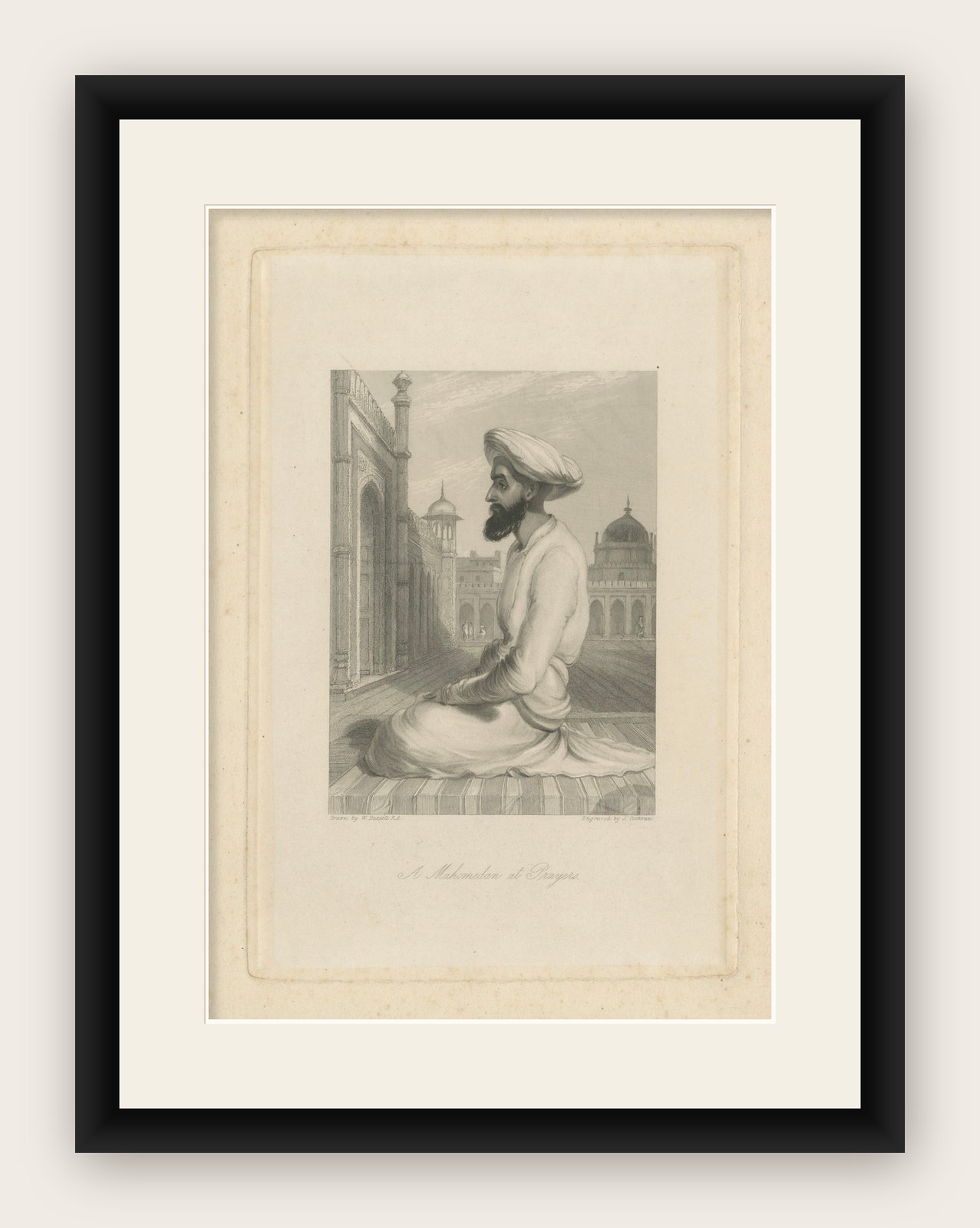
A refined and evocative mid-19th-century steel engraving titled A Mahometan at Prayer, engraved by J. Cochran after a drawing by the distinguished British artist William Daniell, R.A. This composition was published as a frontispiece in The Oriental Annual, one of the most celebrated illustrated works capturing British perceptions of India during the early 19th century.
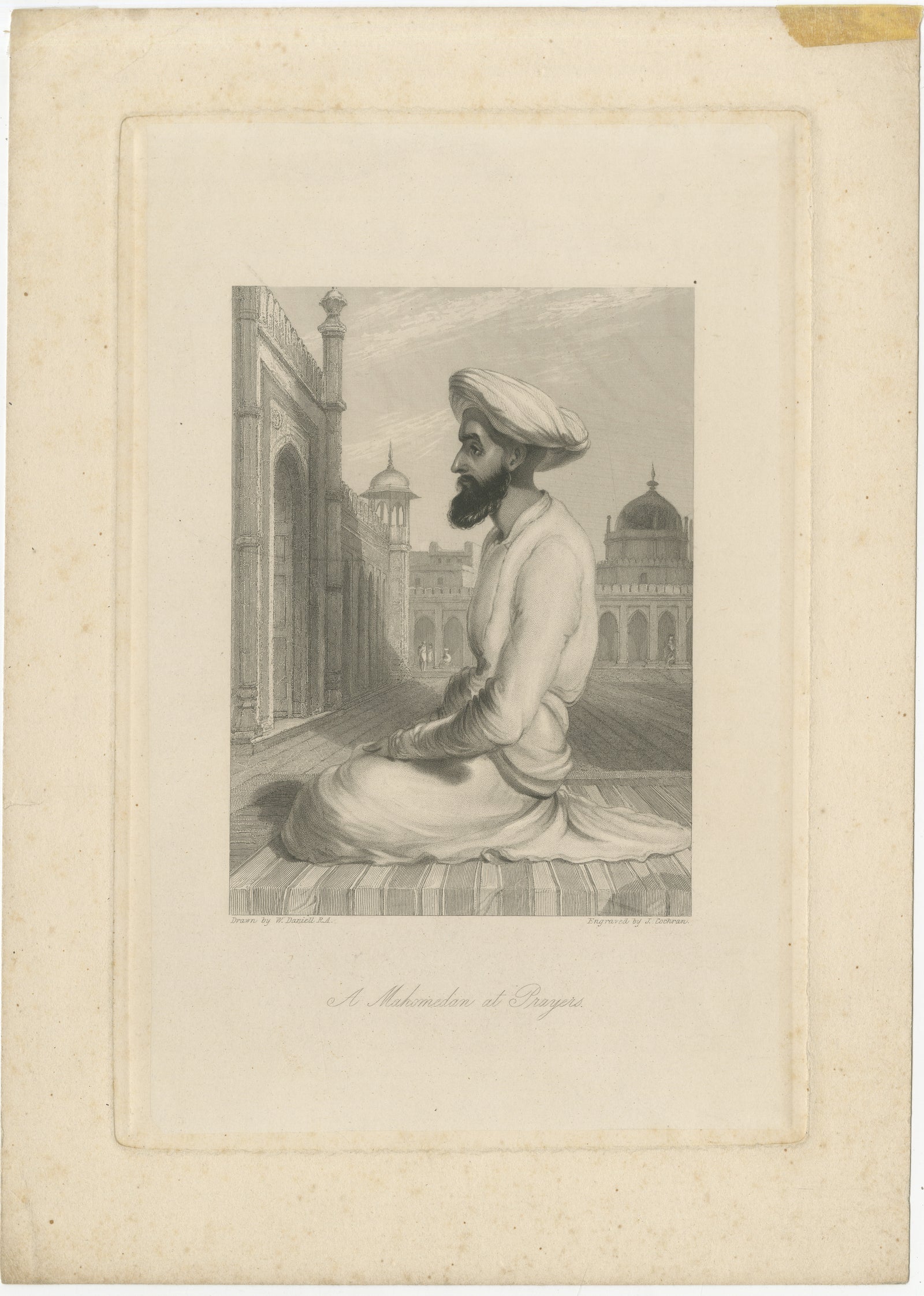
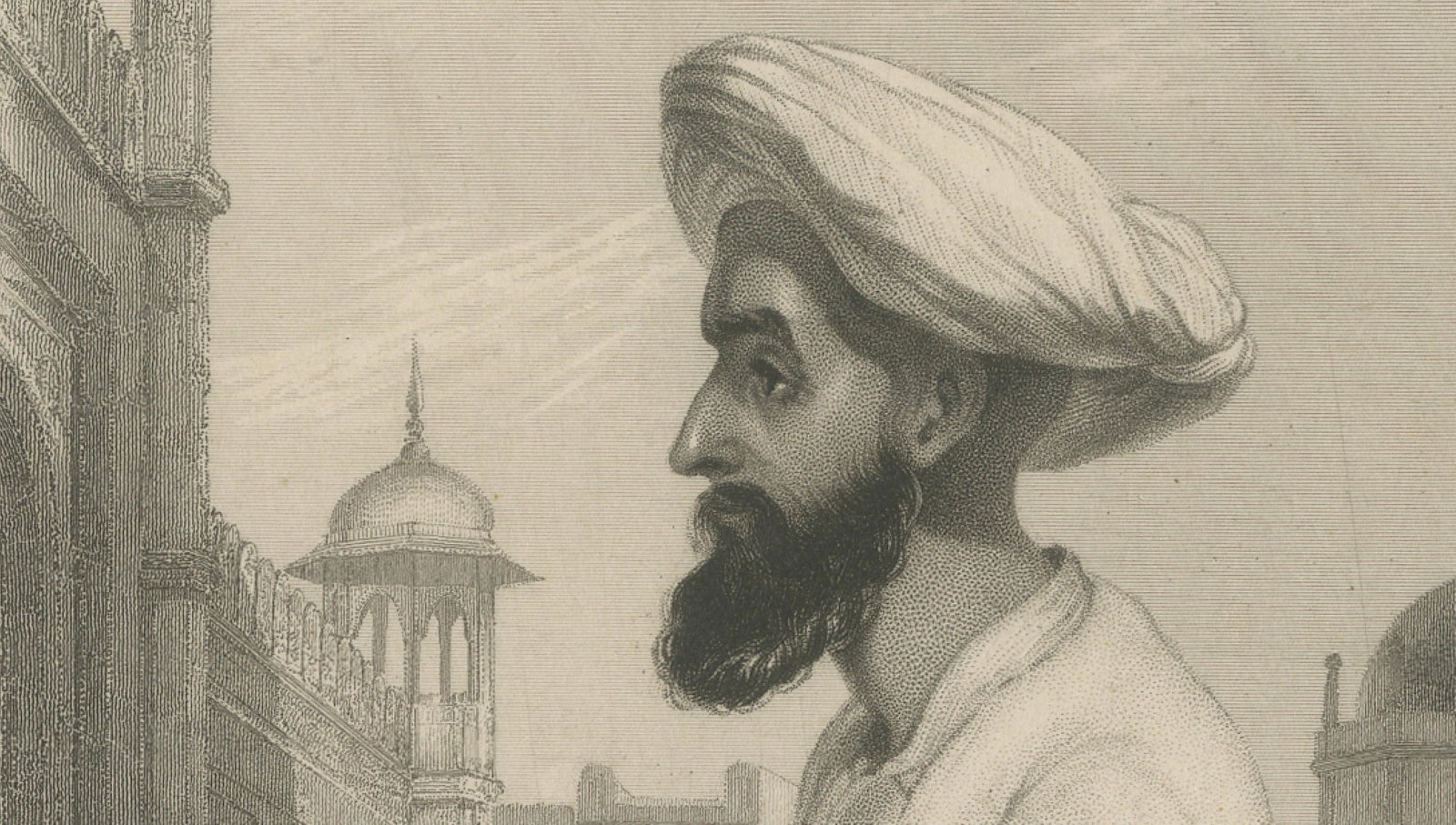
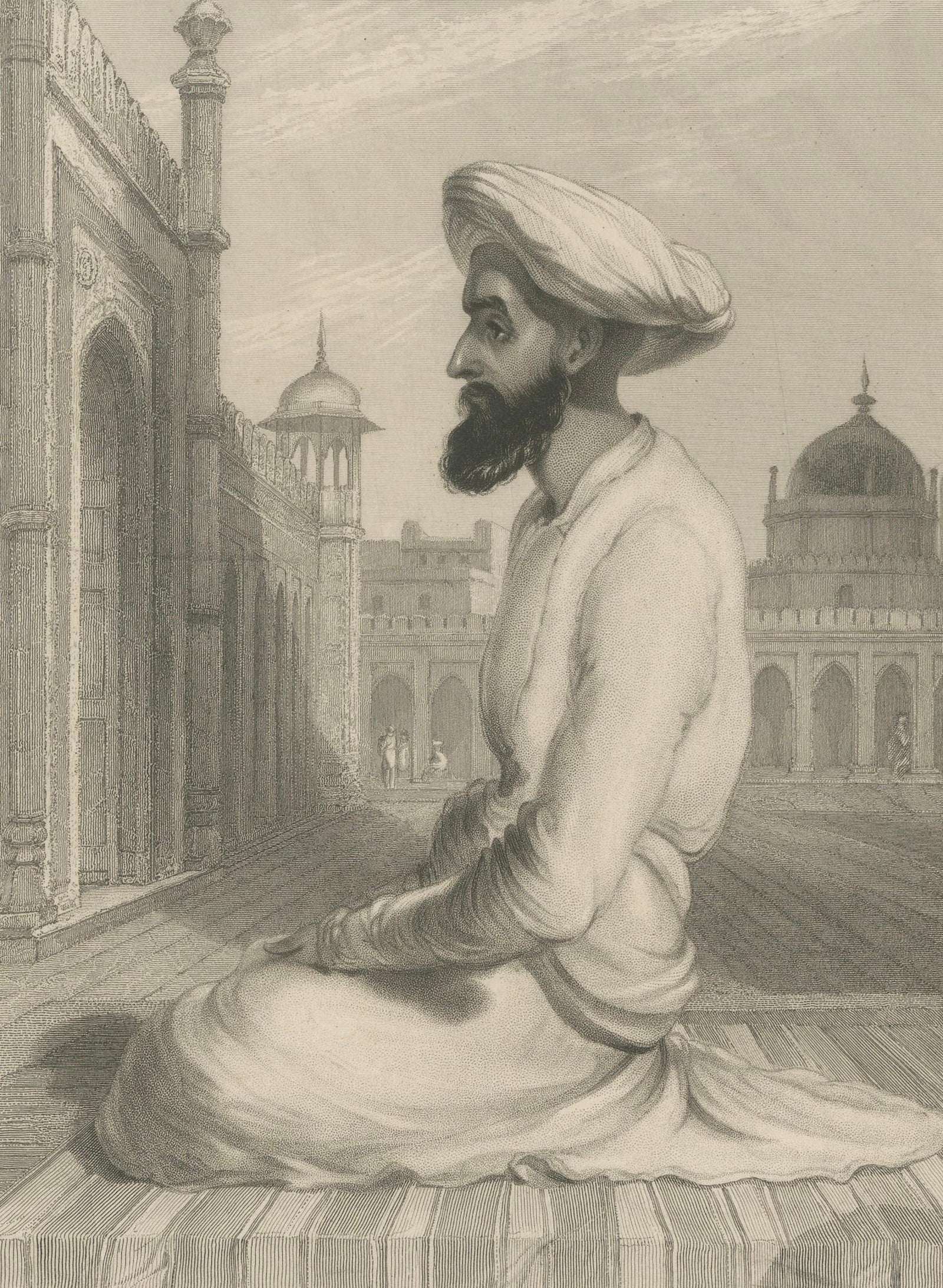
The scene presents a solitary Muslim figure kneeling in prayer within an architectural setting inspired by Mughal India. The figure is shown in calm profile, his posture composed and contemplative, embodying a moment of spiritual devotion. The surrounding architecture, featuring domes, arcades, and finely detailed façades, suggests a grand imperial complex, likely inspired by monuments such as those in Delhi or Agra. The careful rendering of perspective and architectural ornament reflects Daniell’s deep familiarity with Indian landscapes, developed during his extensive travels across the subcontinent.
Cochran’s engraving translates Daniell’s drawing into a delicate network of fine lines, achieving subtle tonal gradations and a soft atmospheric quality. The restrained composition, with the figure placed centrally against an expansive architectural backdrop, creates a strong sense of quiet introspection and balance. Such images were highly sought after in the 1830s, appealing to European audiences fascinated by the cultures and landscapes of the East.
As part of The Oriental Annual, this engraving belongs to a broader visual tradition that combined artistic refinement with documentary interest, offering insight into both daily life and the romanticized vision of India during the British colonial period. Today, it remains a compelling piece for collectors of Orientalist art, British travel illustration, and early steel engravings.
Condition report:
In good condition with age-related toning and scattered foxing visible across the sheet, particularly in the margins. The engraving is printed within a wide plate mark, which remains clearly visible. Some light staining and handling wear consistent with age. The upper right corner shows a small area of old paper reinforcement or tape. Overall structurally sound.
Framing tips:
This engraving would benefit from a classic museum-style presentation. A dark walnut or ebonized frame paired with a wide ivory or warm off-white mat will enhance the subtle tonal range and lend a timeless, gallery-quality appearance. For a brighter, contemporary setting, a thin black or soft metallic frame with a clean white mat will create a lighter, elegant presentation while maintaining focus on the composition.
Technique: Steel engraving
Maker: J. Cochran after W. Daniell, England, circa 1836 to 1839
Special note: This is an original early 19th century engraving, not a reproduction.
Explore