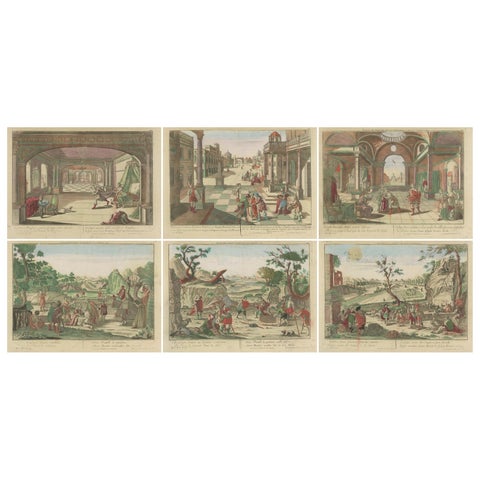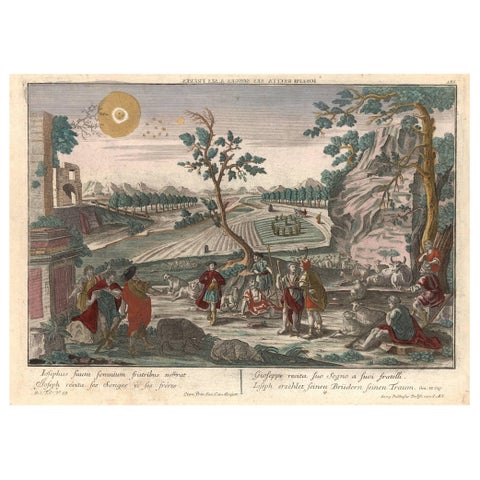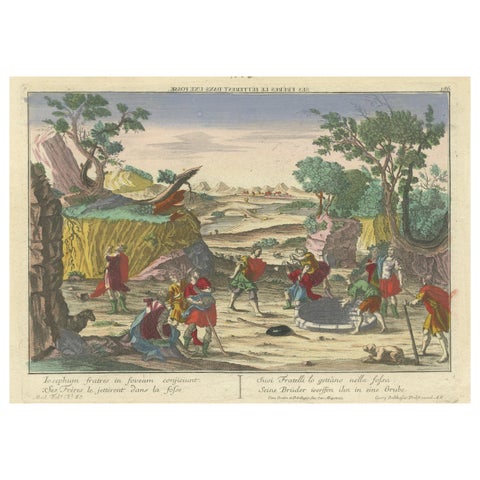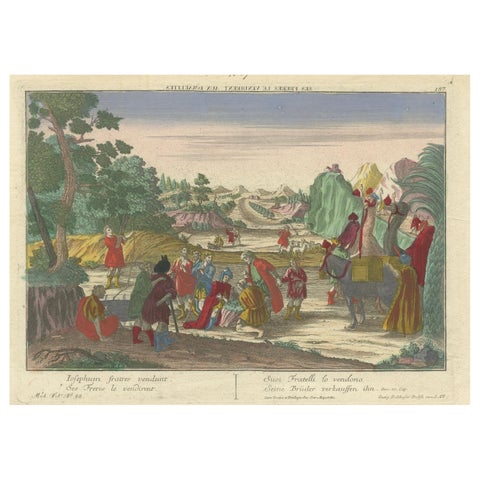
Close-ups
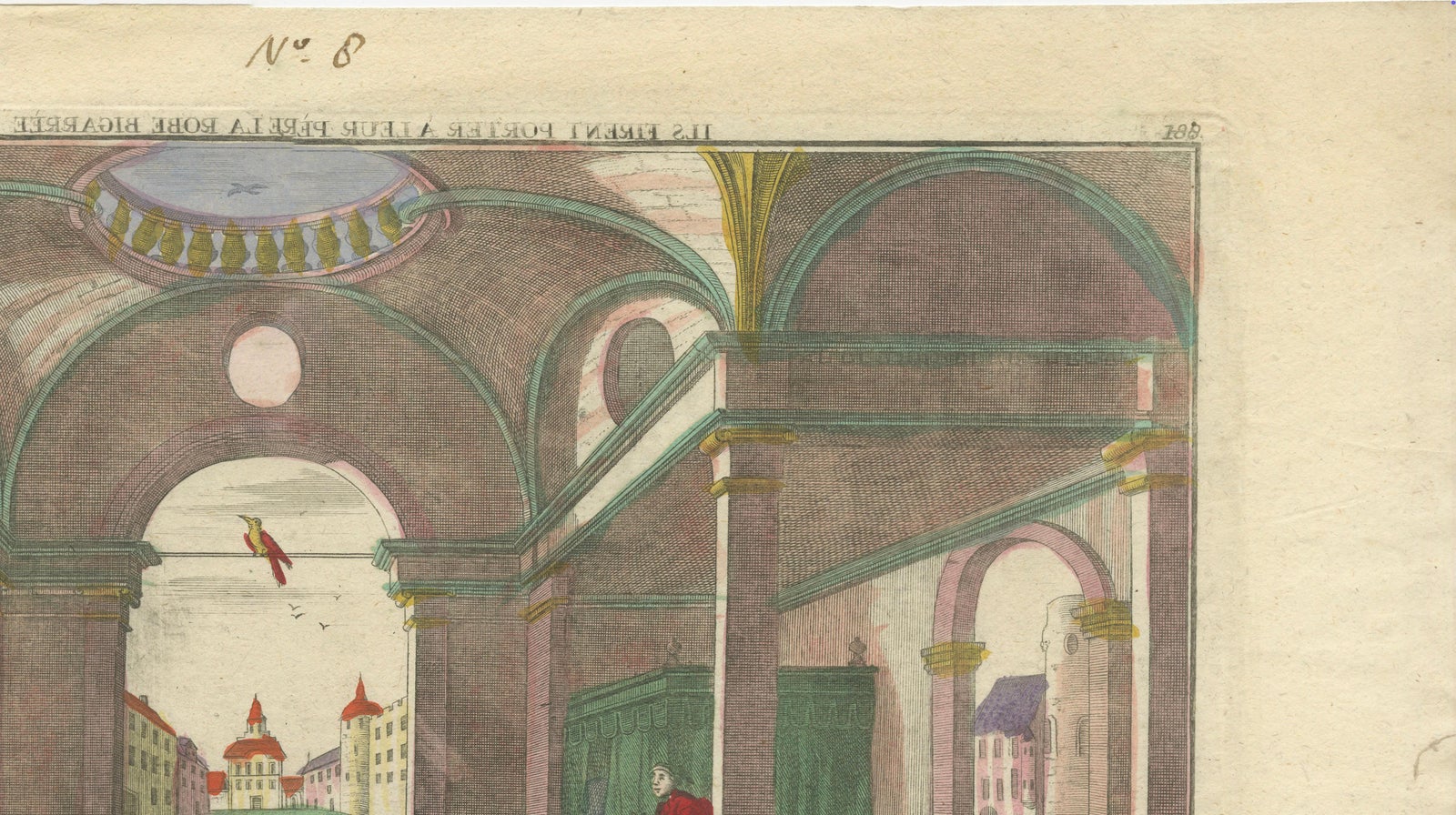
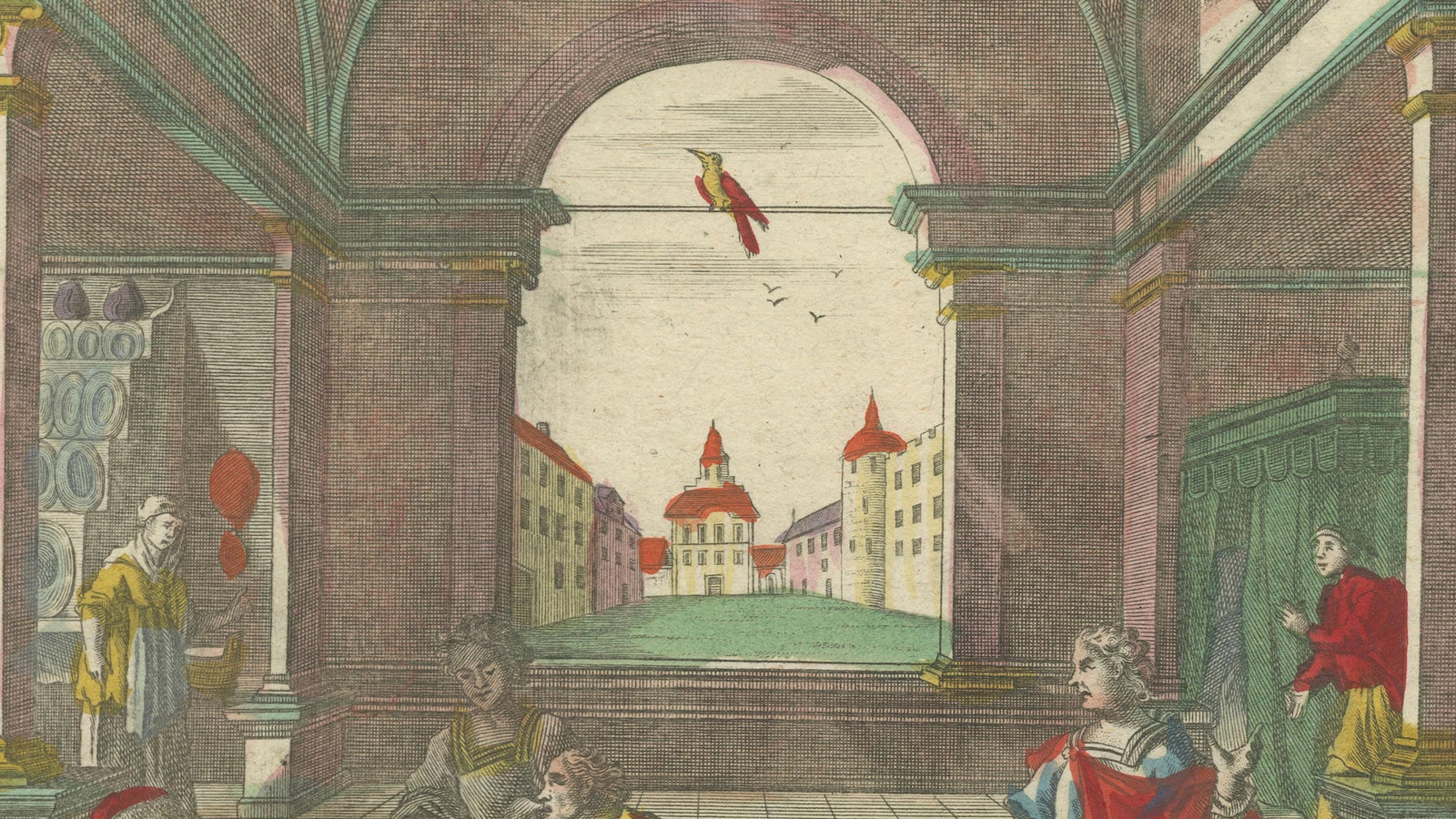
Framed and on the wall
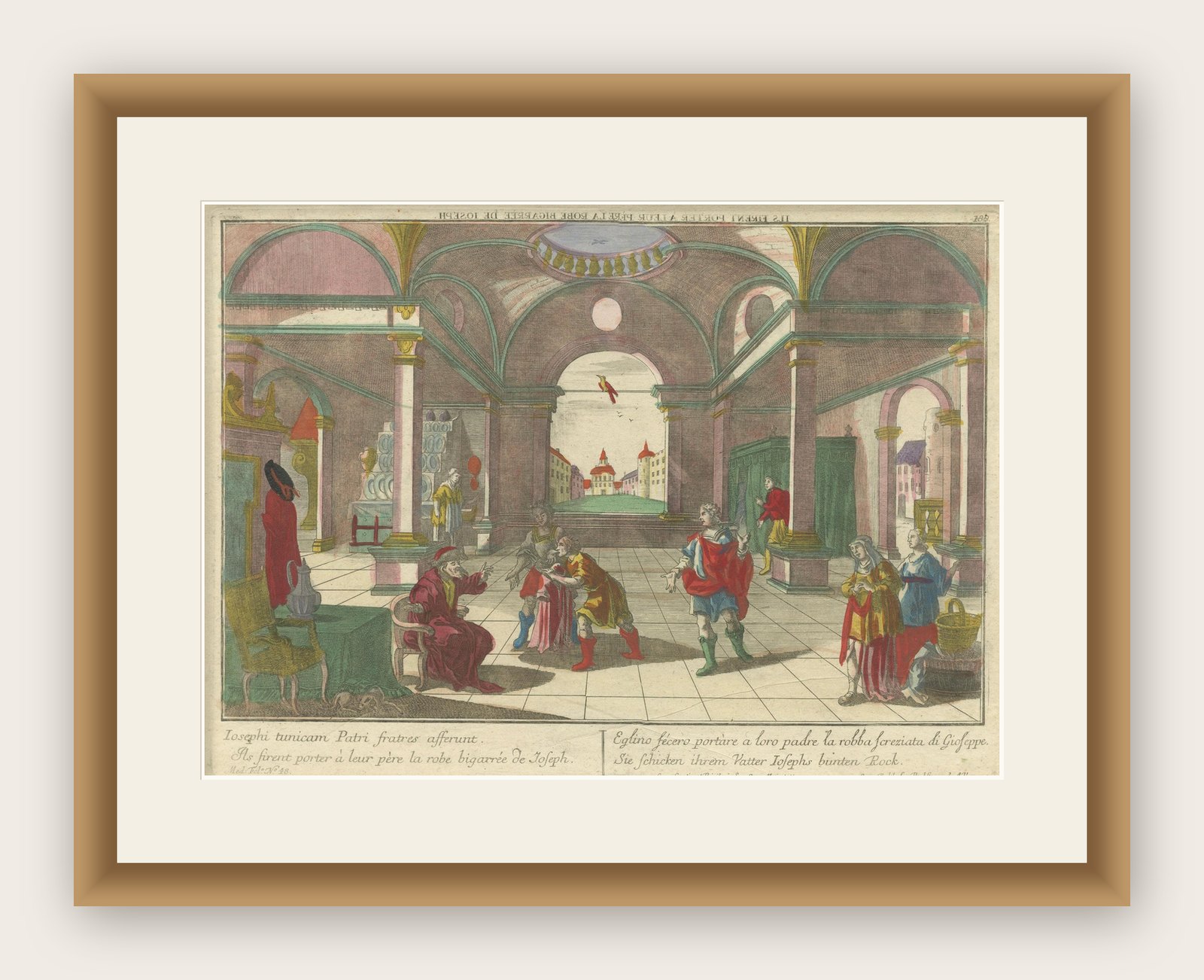
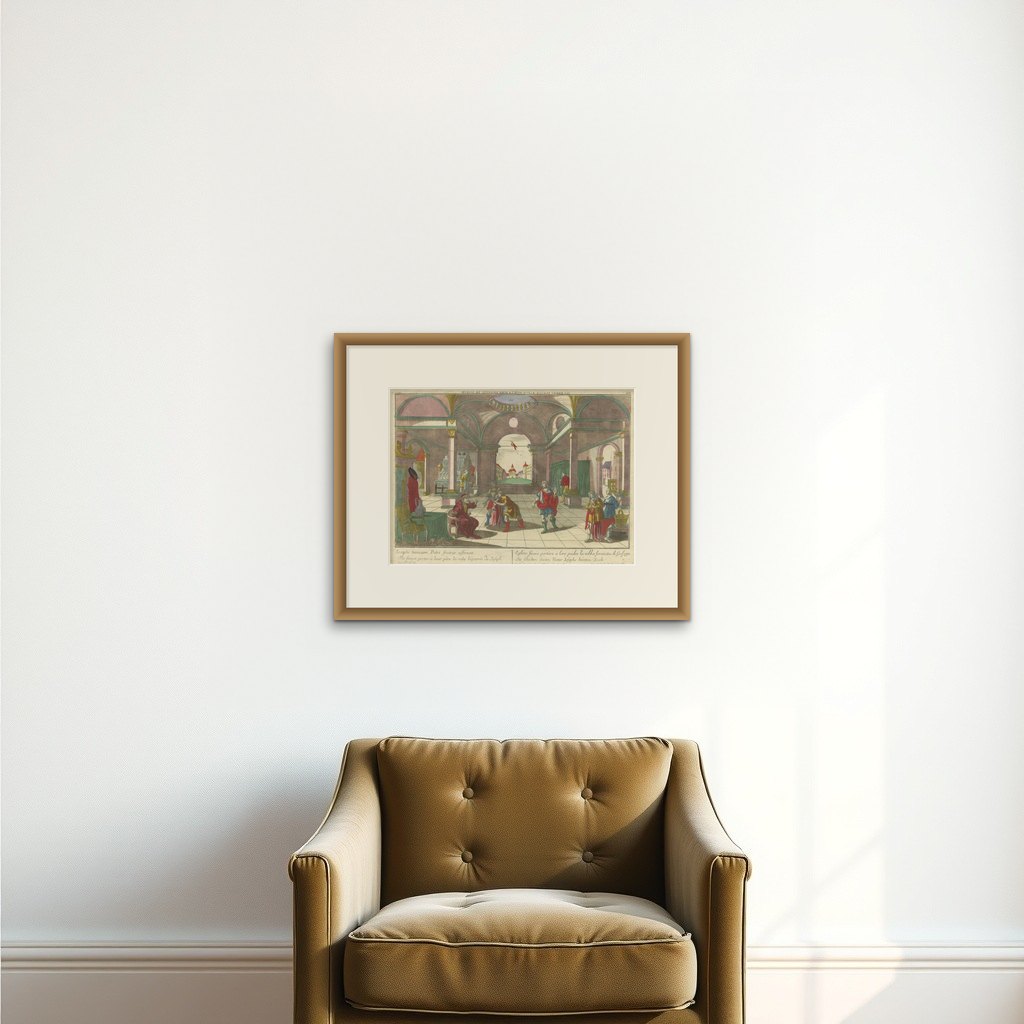
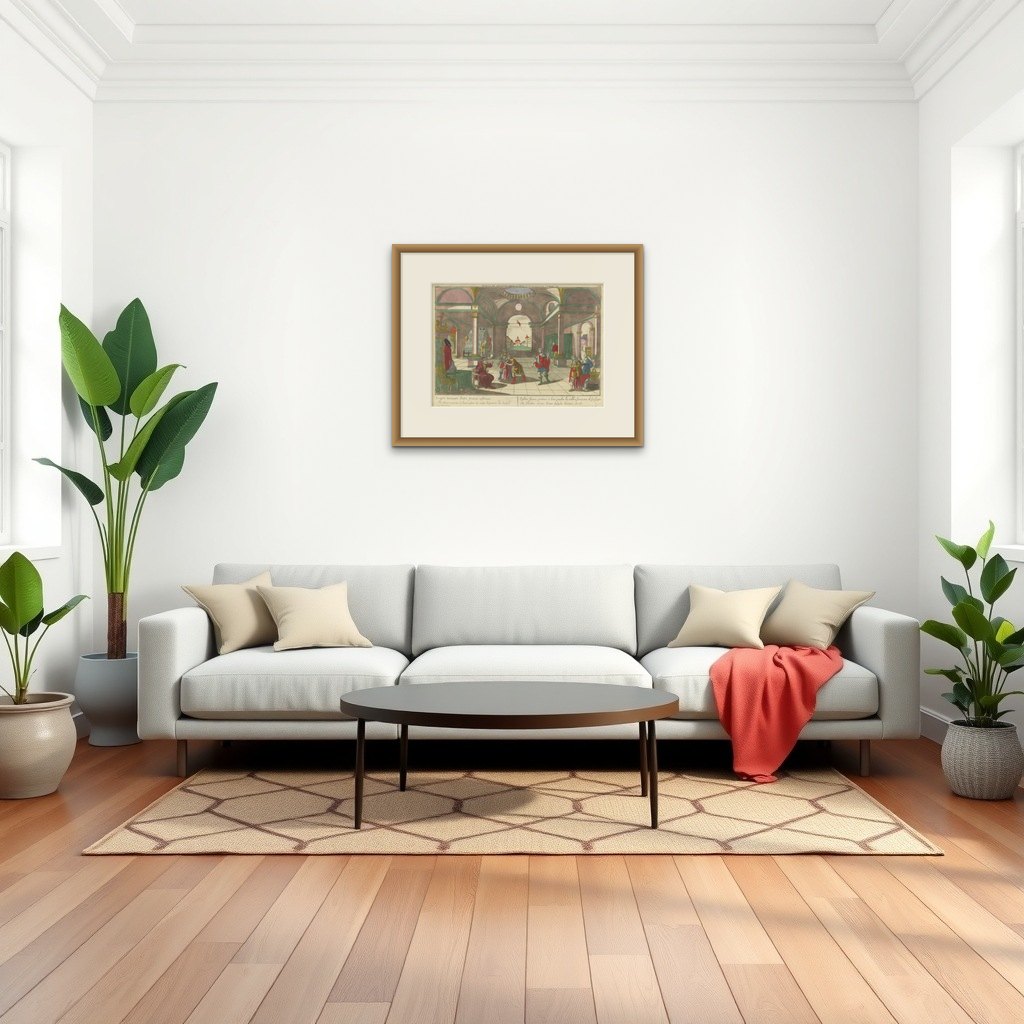
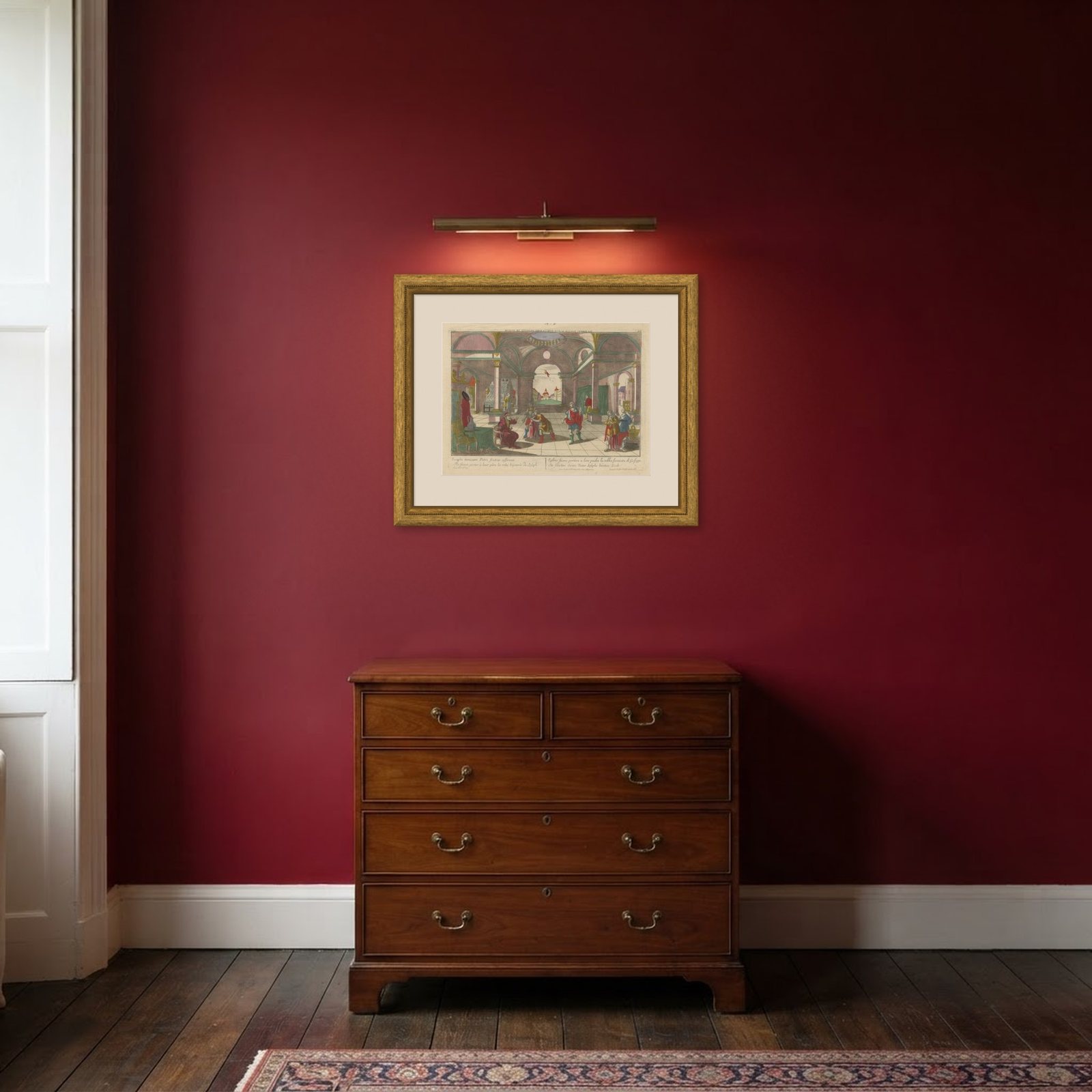
Frame and rooms are illustrations of how the print could look, drawn to its real size; it is sold unframed unless the description says otherwise.
Scripture
Optica Print of Joseph's Robe Shown to Jacob, 1770, Hand-Colored Biblical Scene
Anno Domini MDCCLXX1770
$690$48530% off
€441 · £370
Original print, not a reproduction
Ships worldwide from the Netherlands, flat or rolled, insured and tracked. 14-day returns.
- Date
- 1770
- Sheet size
- 13.7 × 20 in (34.8 × 50.8 cm)
- Condition
- Good. Very good condition with strong plate impression and richly preserved original hand-coloring. Minor age-toning and small spots in the margins do not affect the image. Ample margins, clean verso, and no tears or repairs visible.
- Faith
- Christianity, Judaism
- Collection
- Scripture
- Era
- 1700 to 1799, Mortier, Picart and the illustrated Bible
- Stock no.
- BG-14080-3
What the condition grades mean
- Excellent
- Bright and clean, with no faults worth mentioning.
- Very good
- Only light signs of age, such as faint toning.
- Good
- Normal signs of age for a sheet of this period: toning, some foxing, small marks or neat old repairs.
- Fair
- Clear faults such as staining, tears or repairs, priced to match.
Every fault we see is written in the condition note, and the whole sheet is shown uncropped in the photos.
Optica Print of Joseph's Robe Shown to Jacob, circa 1770, Hand-Colored Architectural Biblical Scene
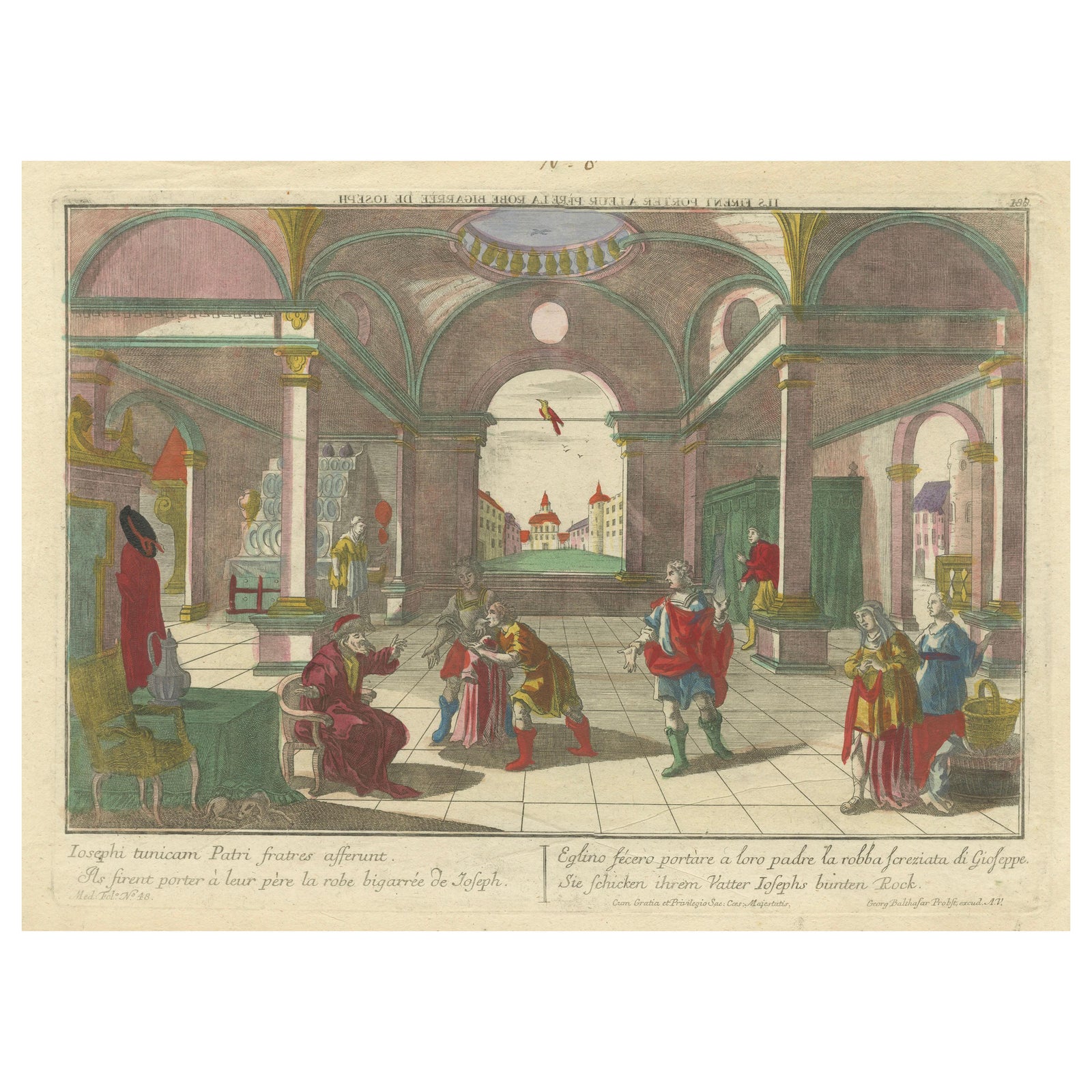
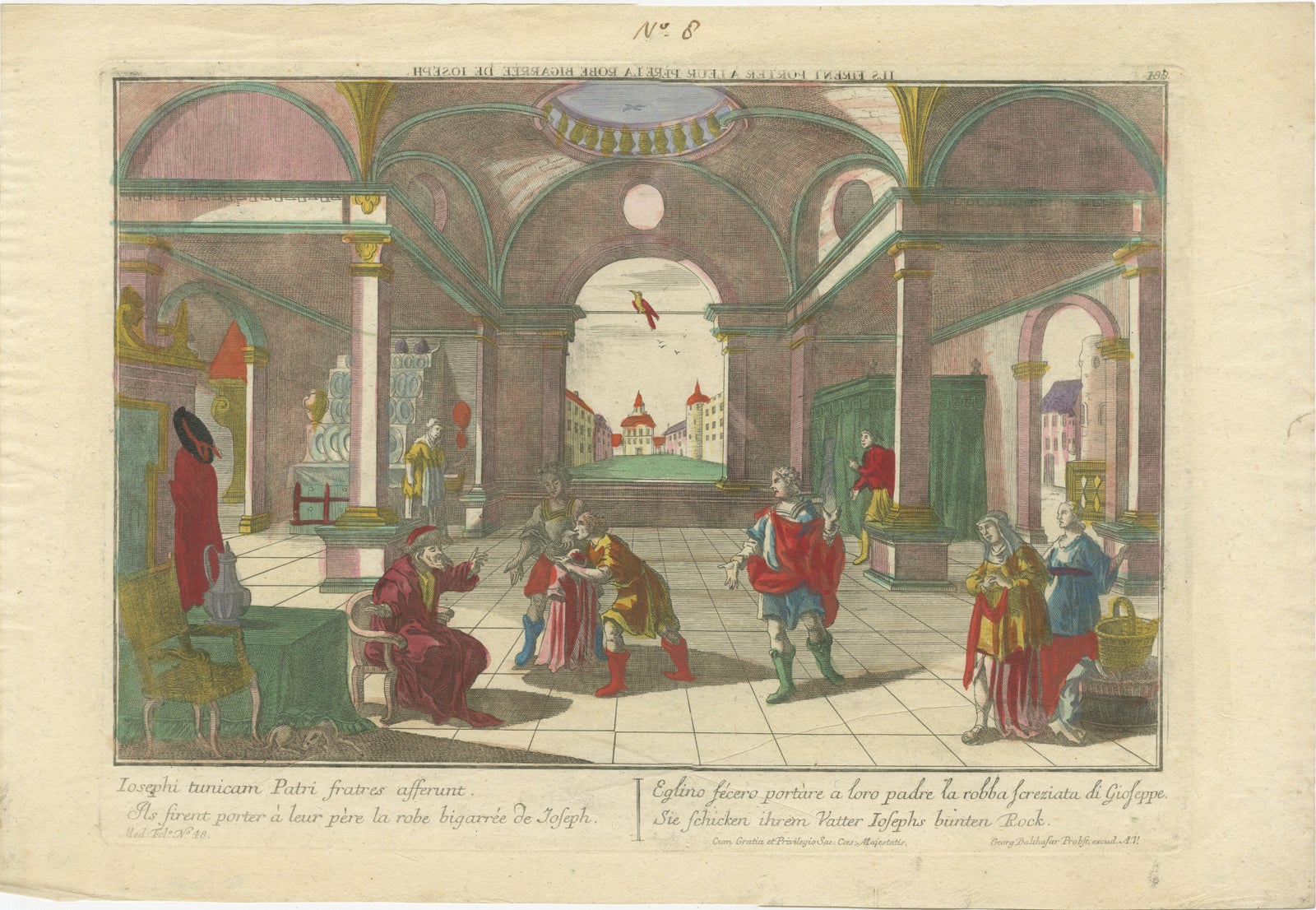
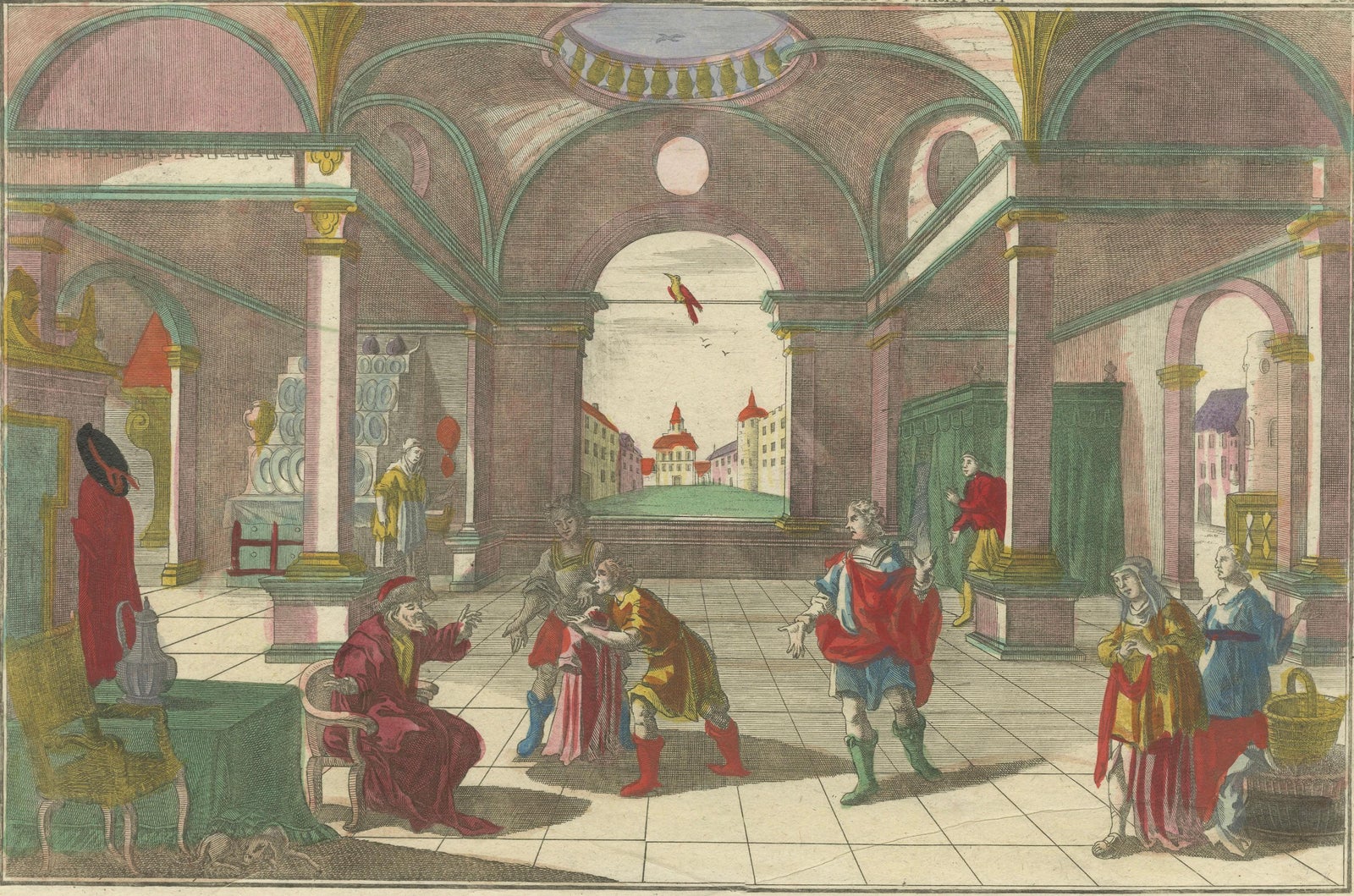
This elegant 18th-century 'vue d’optique' titled "Josephi tunicam Patri fratres afferunt" (Joseph’s brothers bring his coat to their father) is a hand-colored engraving published by Georg Balthasar Probst in Augsburg around 1770. This richly detailed biblical scene captures the moment in the Book of Genesis when Jacob, father of Joseph, is shown his son’s torn and bloodied coat by his other sons, part of their deception to make him believe Joseph had been killed by a wild animal.
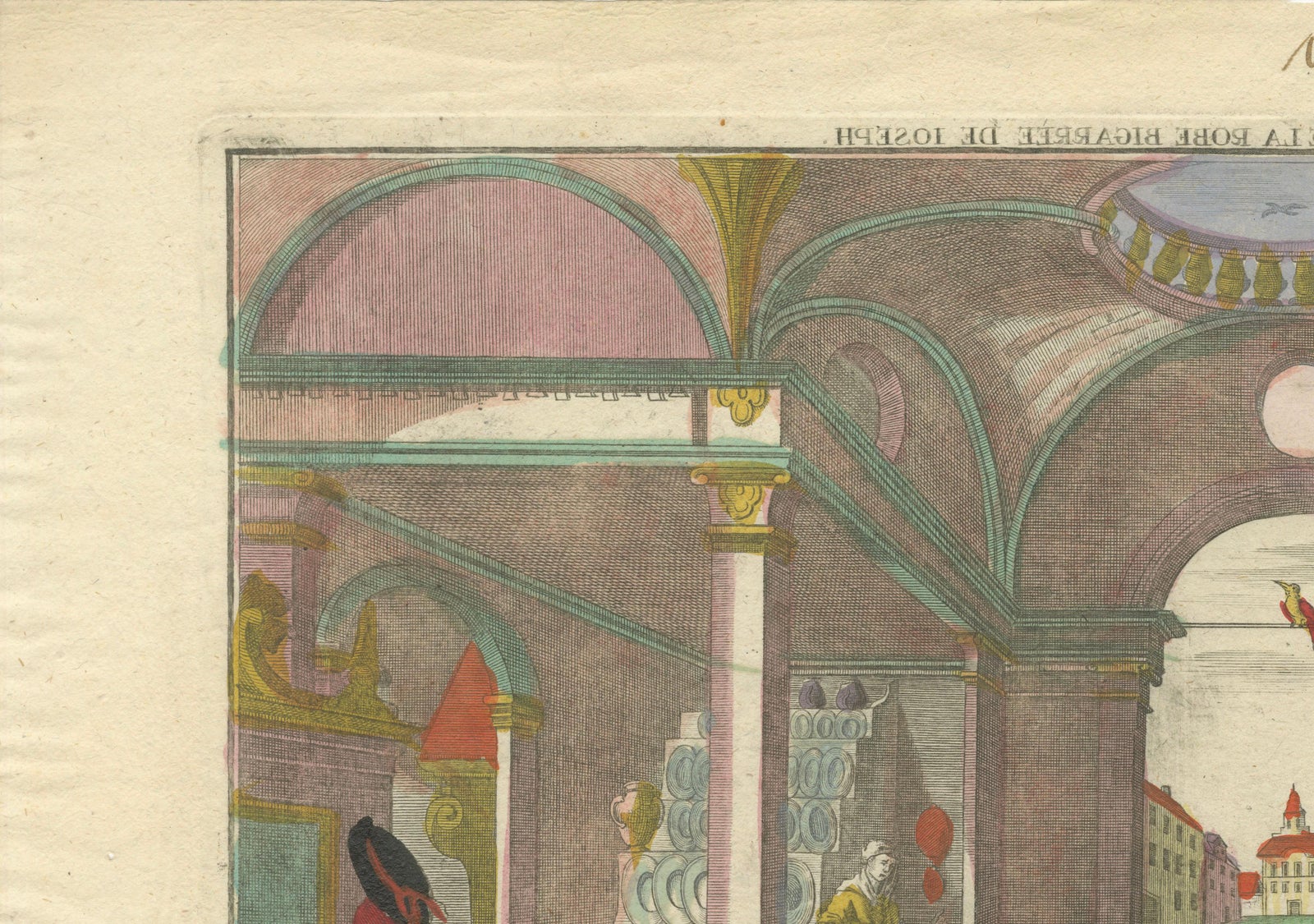
The print is part of a series of optica prints designed to be viewed through a zograscope or optical viewing box, devices that added a sense of depth and dimensionality to printed scenes. These prints were immensely popular in the 18th century, serving both as moral instruction and visual amusement for a broad audience across Europe. Reversed text along the top edge is typical for vues d’optique, as it would appear correctly when viewed through a lens.
Georg Balthasar Probst (1732 to 1801) was a prolific publisher known for his finely executed optical prints. His workshop in Augsburg produced religious, architectural, and city views specifically tailored to this optical entertainment market. In this scene, we see an elaborately constructed palace interior, complete with vaulted ceilings, Corinthian columns, and tiled floors. The emotional core of the narrative unfolds in the foreground, where Jacob, seated and visibly distressed, receives the multicolored robe from his sons. The drama is accentuated by the expressive gestures and body language of the figures, while background scenes of domestic life and city architecture enrich the composition.
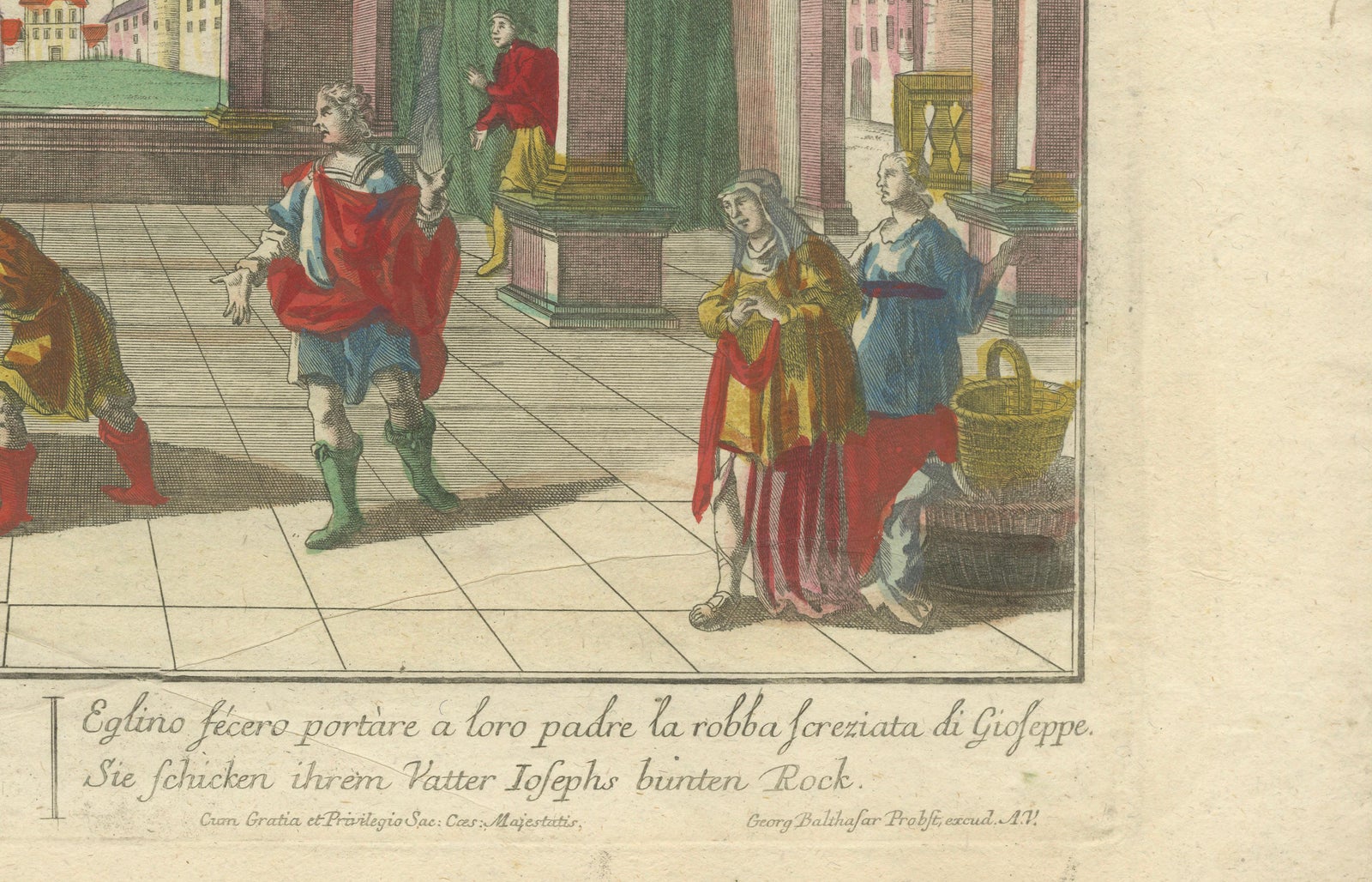
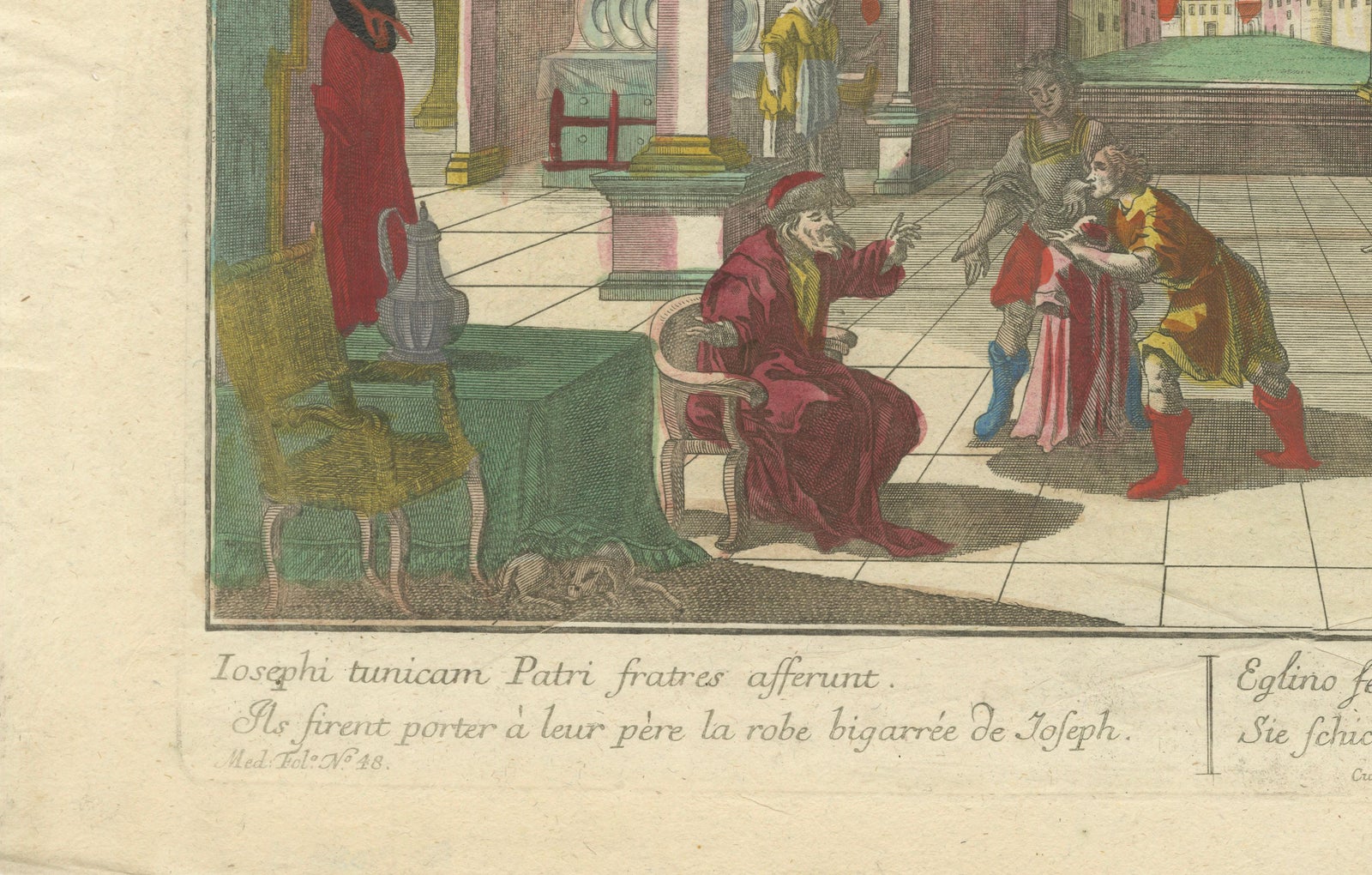
Multilingual captions in Latin, French, Italian, and German underline the widespread appeal and didactic function of the print. This fine example of biblical storytelling combines spiritual narrative with neoclassical design elements, making it ideal for collectors of religious prints, Baroque or Rococo art, and antique optical views.
Very good condition with strong plate impression and richly preserved original hand-coloring. Minor age-toning and small spots in the margins do not affect the image. Ample margins, clean verso, and no tears or repairs visible. Reverse title remains crisp and clear, enhancing its authenticity as an optica print.
Framing Tip:
Frame this work in a classical wood frame, gold leaf, mahogany, or walnut finishes complement the architectural elements well. A warm-toned mat in cream or ivory will draw attention to the detailed composition. Consider UV-protective glass to safeguard the delicate hand coloring. Ideal for placement in traditional interiors, studies, or alongside other religious or architectural prints for a curated historical wall display.