Close-ups
Scripture
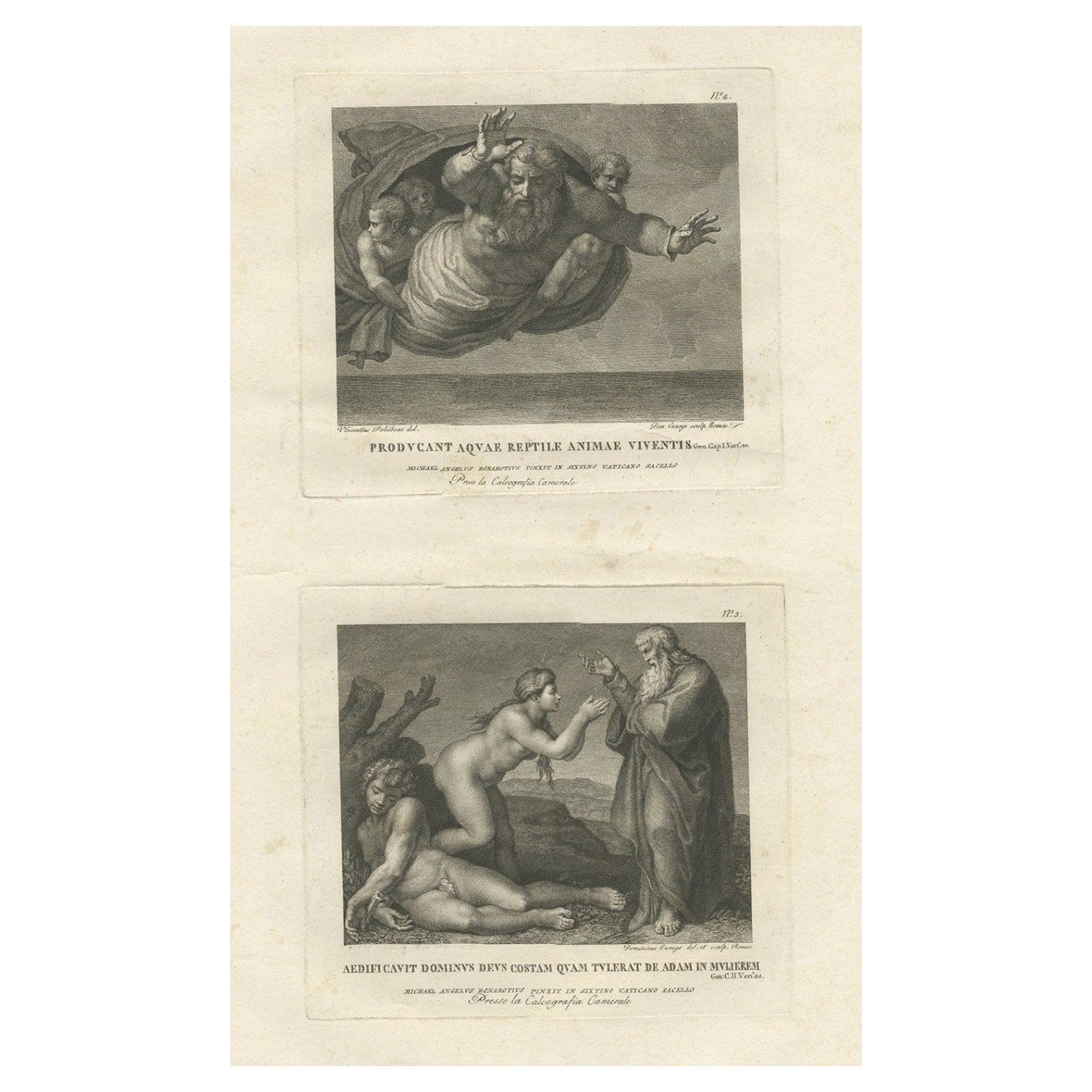
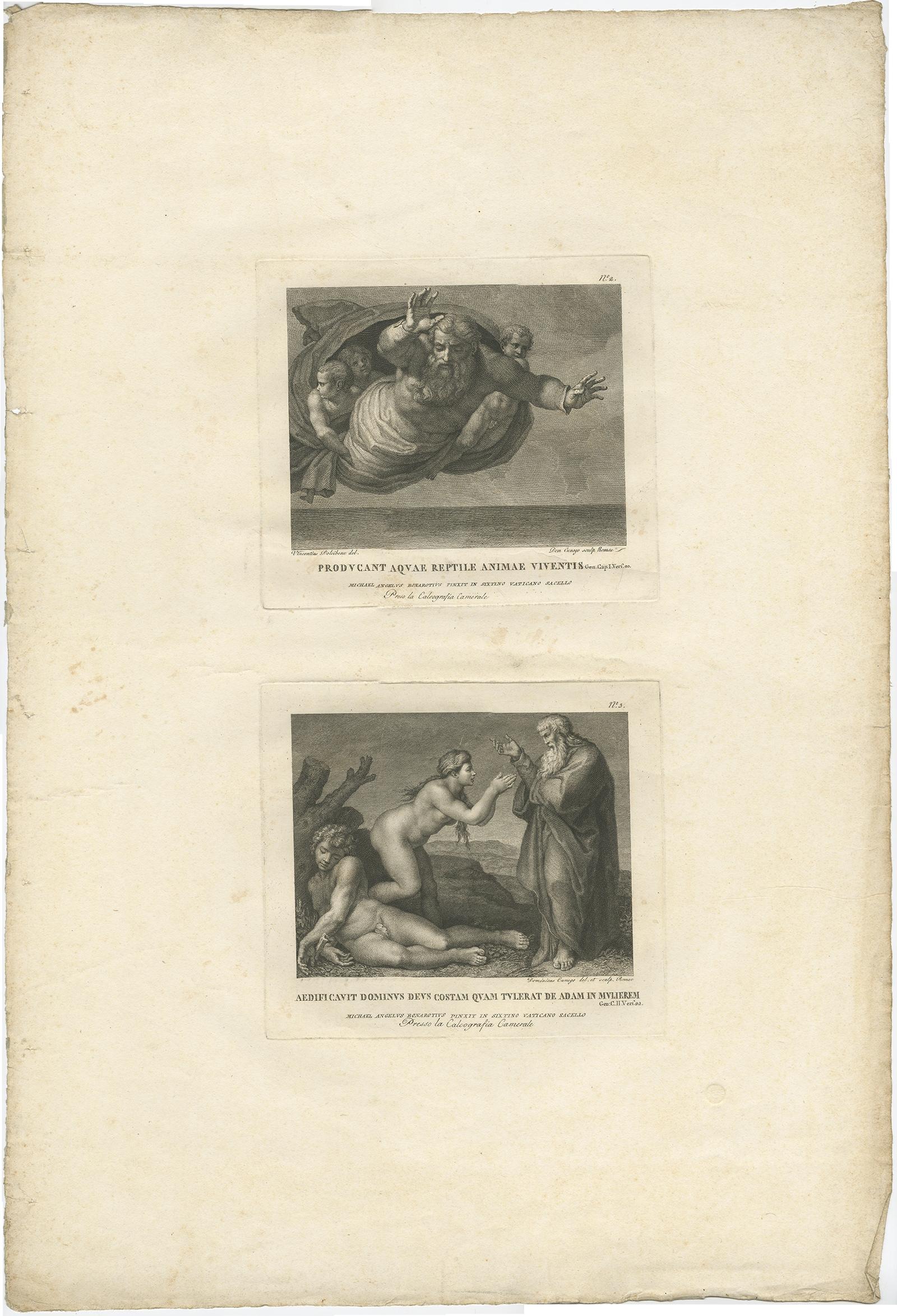
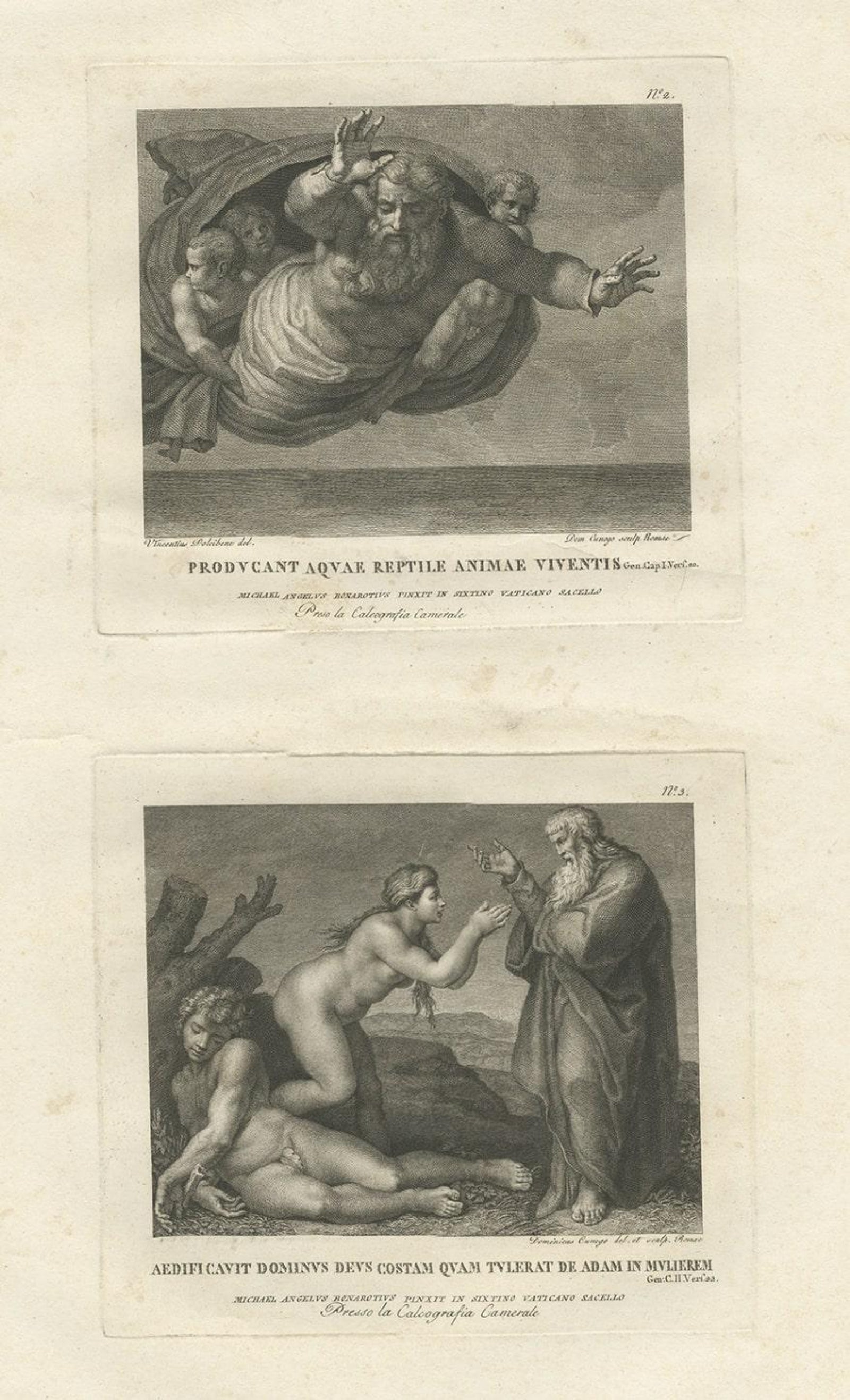
Old Vatican Frescoes; Separation of Land from Sea & The Creation of Eve, ca.1780
Anno Domini MDCCLXXX1780
£500
$660 · €590
Original print, not a reproduction
Ships worldwide from the Netherlands, flat, insured and tracked. 14-day returns.
- Date
- 1780
- Sheet size
- 30.3 × 20.7 in (77 × 52.5 cm)
- Condition
- Good. Minor foxing in image. Outside image some foxing and minor defects from handling. Please study image carefully.
- Faith
- Christianity, Judaism
- Collection
- Scripture
- Era
- 1700 to 1799, Mortier, Picart and the illustrated Bible
- Stock no.
- f_27420872
What the condition grades mean
- Excellent
- Bright and clean, with no faults worth mentioning.
- Very good
- Only light signs of age, such as faint toning.
- Good
- Normal signs of age for a sheet of this period: toning, some foxing, small marks or neat old repairs.
- Fair
- Clear faults such as staining, tears or repairs, priced to match.
Every fault we see is written in the condition note, and the whole sheet is shown uncropped in the photos.
Antique print religion titled 'Producant Aquae Reptile Animae Viventis (..)'.
This print depicts the seperation of Land from Sea and the Creation of Eve. Originates from 'Frescoes in the Sistine Chapel'.
The Sistine Chapel is a chapel in the Apostolic Palace, in Vatican City and the official residence of the pope. Originally known as the Cappella Magna ('Great Chapel'), the chapel takes its name from Pope Sixtus IV, who had it built between 1473 and 1481. Since that time, the chapel has served as a place of both religious and functionary papal activity. Today, it is the site of the papal conclave, the process by which a new pope is selected. The fame of the Sistine Chapel lies mainly in the frescoes that decorate the interior, most particularly the Sistine Chapel ceiling and The Last Judgment, both by Michelangelo.
Artists and Engravers: Engraved by Domenico Cunego after Michelangelo Buonarotti.