Close-ups
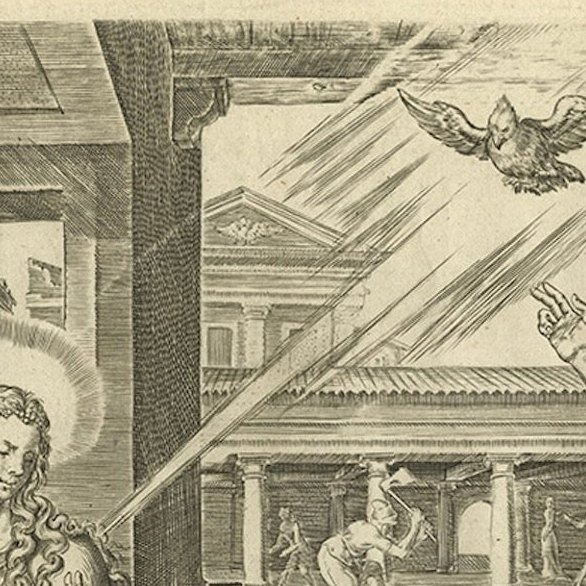
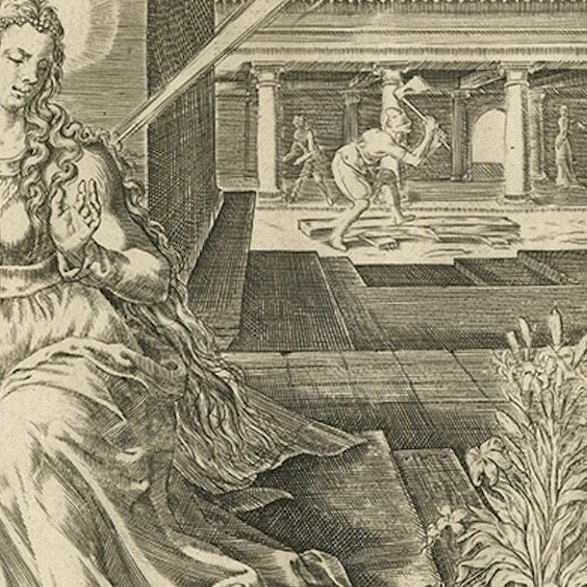
Framed and on the wall
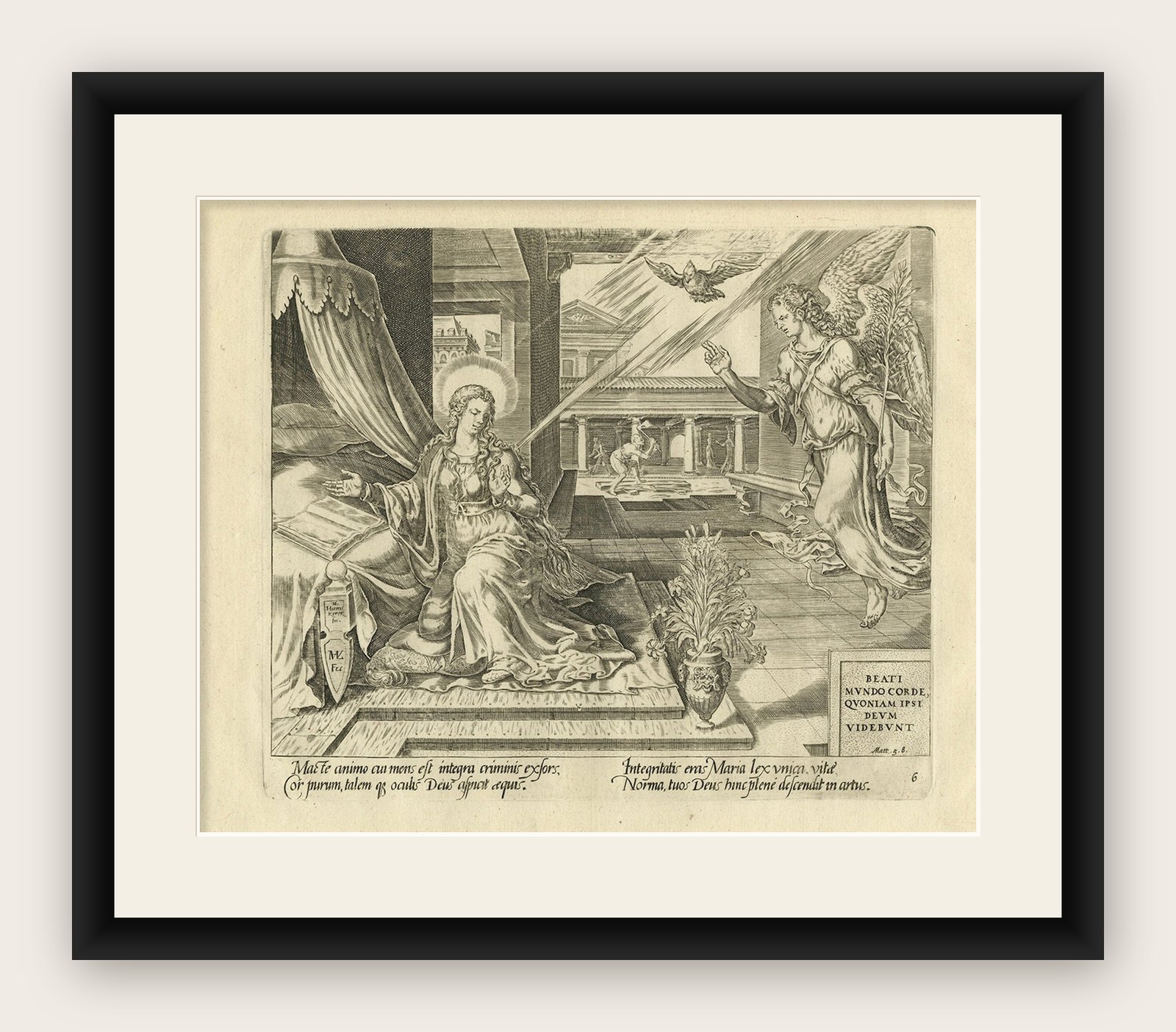
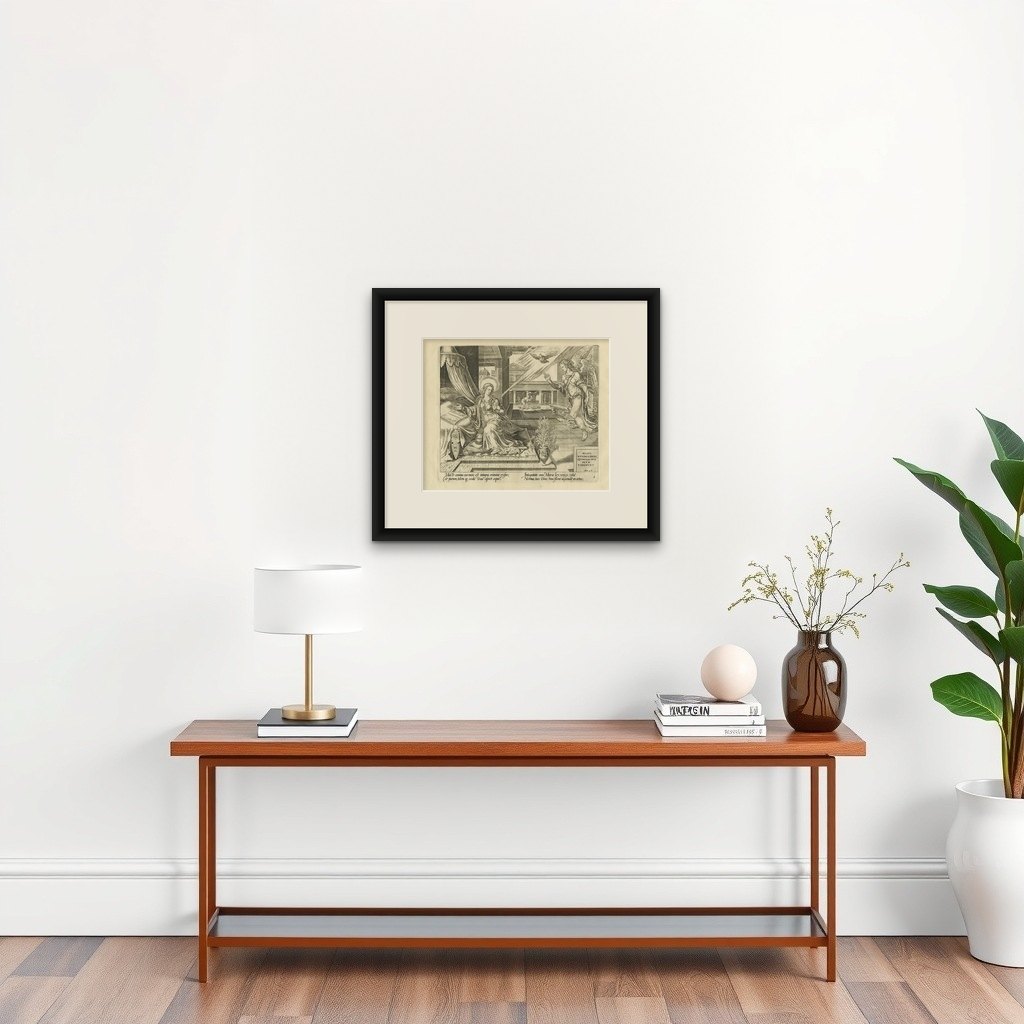

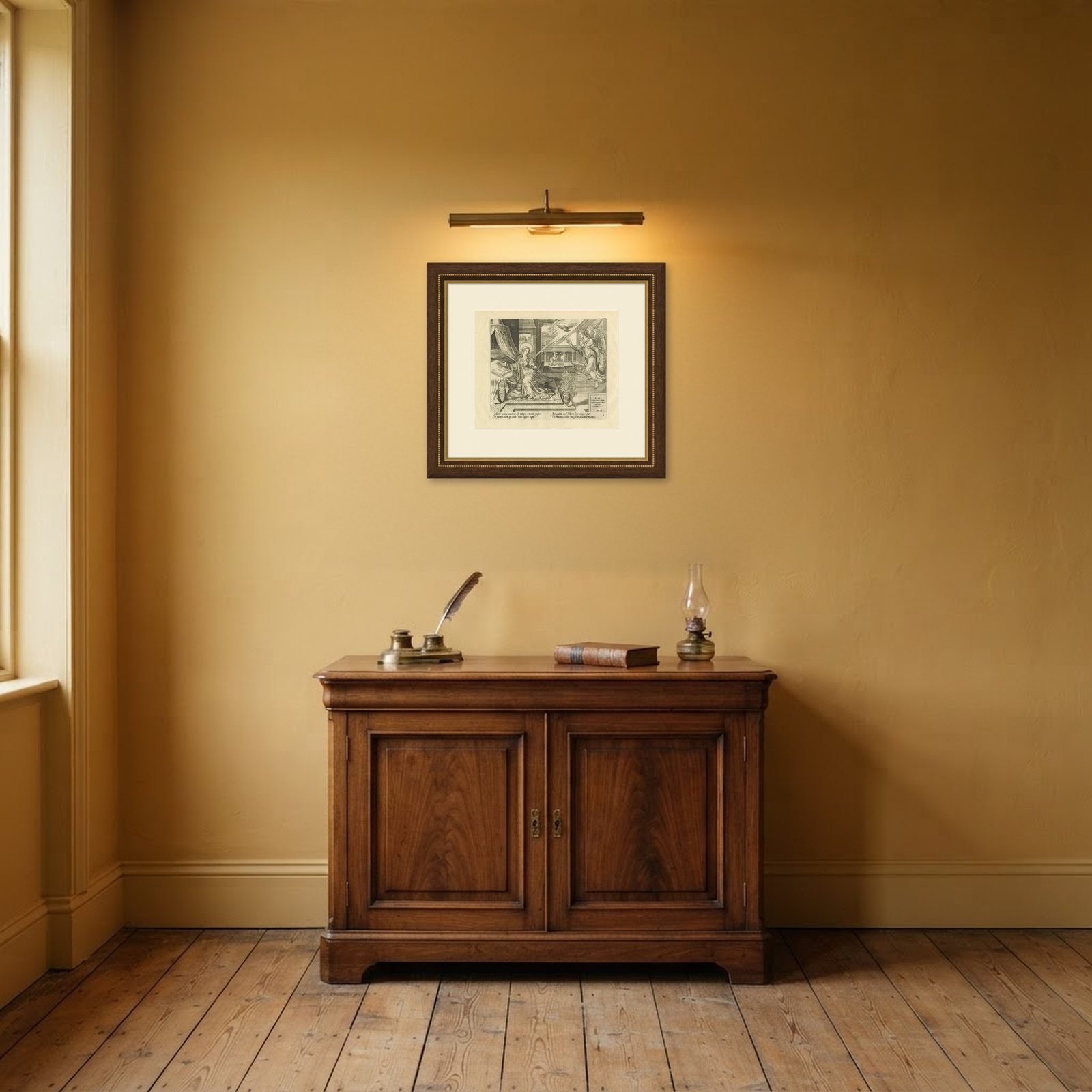
Frame and rooms are illustrations of how the print could look, drawn to its real size; it is sold unframed unless the description says otherwise.
Scripture
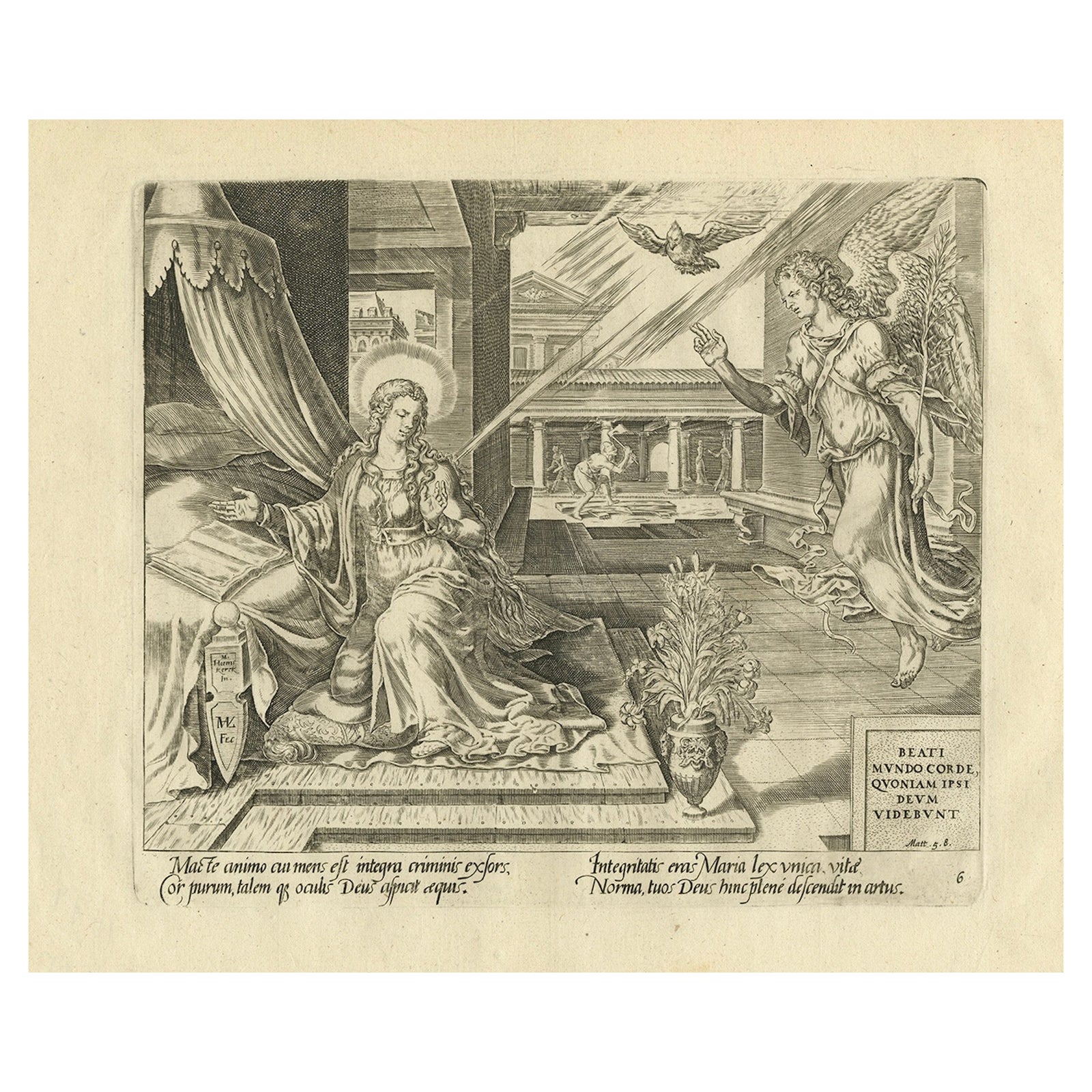
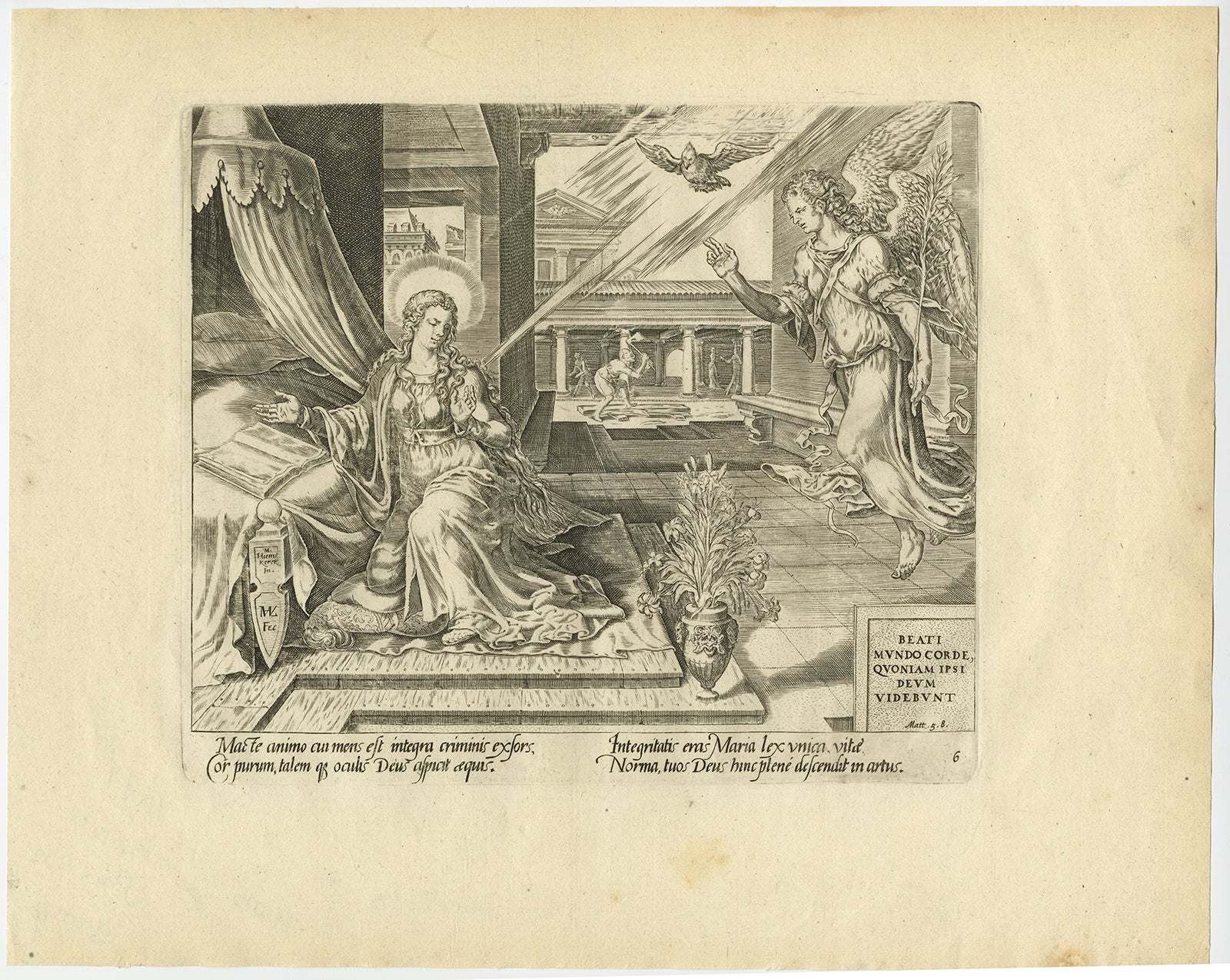
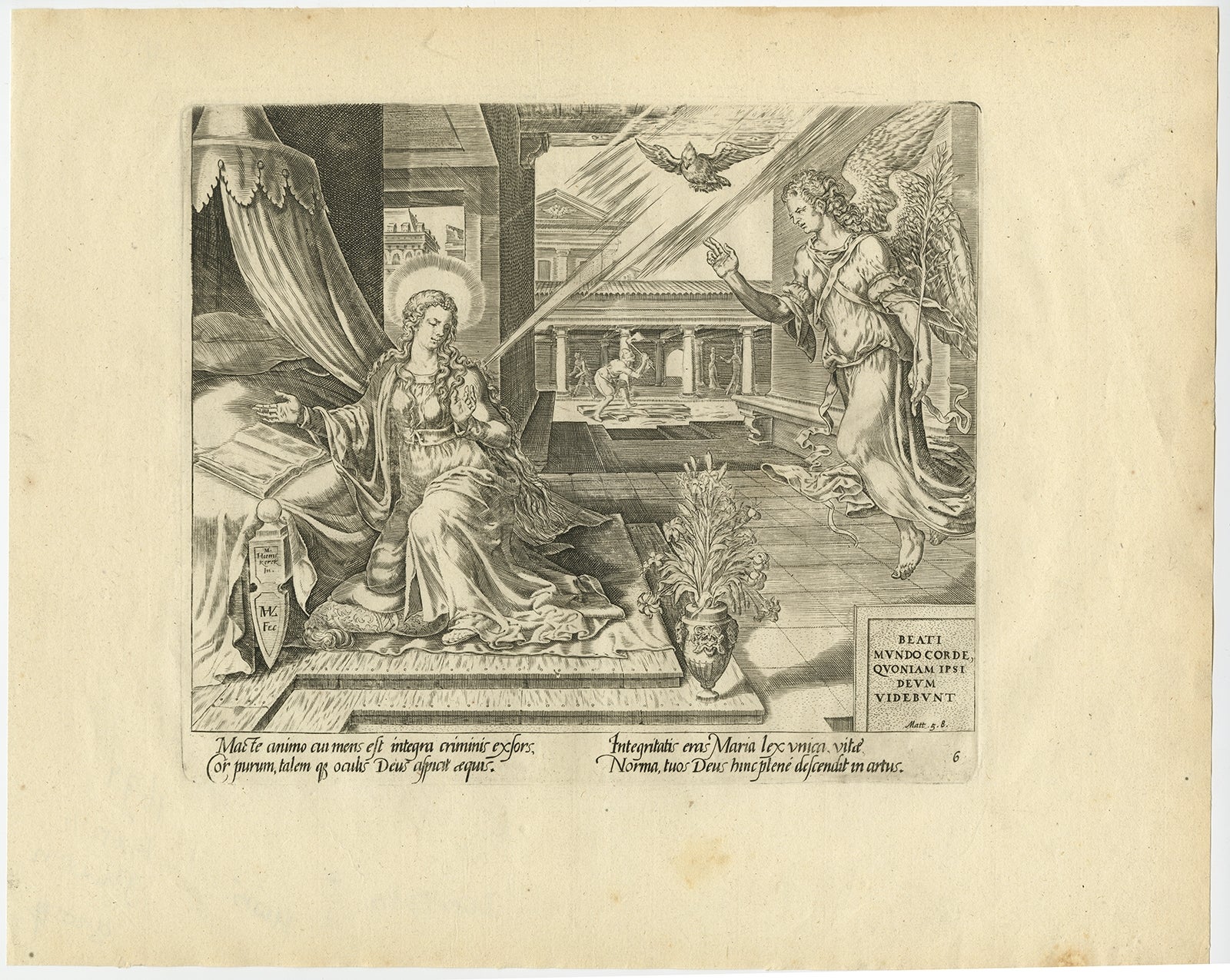
Mary Visited by an Angel, Antique Biblical Engraving, Visscher, 1674
Anno Domini MDCLXXIV1674
£410£28530% off
$375 · €343
Original print, not a reproduction
Ships worldwide from the Netherlands, flat or rolled, insured and tracked. 14-day returns.
- Date
- 1674
- Sheet size
- 11.9 × 14.8 in (30.2 × 37.5 cm)
- Condition
- Very good impression with wide margins. Some light toning and faint age spots in the margins, consistent with age. Plate mark clearly visible.
- Faith
- Christianity
- Collection
- Scripture
- Era
- Before 1700, Woodcuts and the great atlases
- Stock no.
- PCT-62757
What the condition grades mean
- Excellent
- Bright and clean, with no faults worth mentioning.
- Very good
- Only light signs of age, such as faint toning.
- Good
- Normal signs of age for a sheet of this period: toning, some foxing, small marks or neat old repairs.
- Fair
- Clear faults such as staining, tears or repairs, priced to match.
Every fault we see is written in the condition note, and the whole sheet is shown uncropped in the photos.
Mary Visited by an Angel, Antique Biblical Engraving, Visscher, 1674
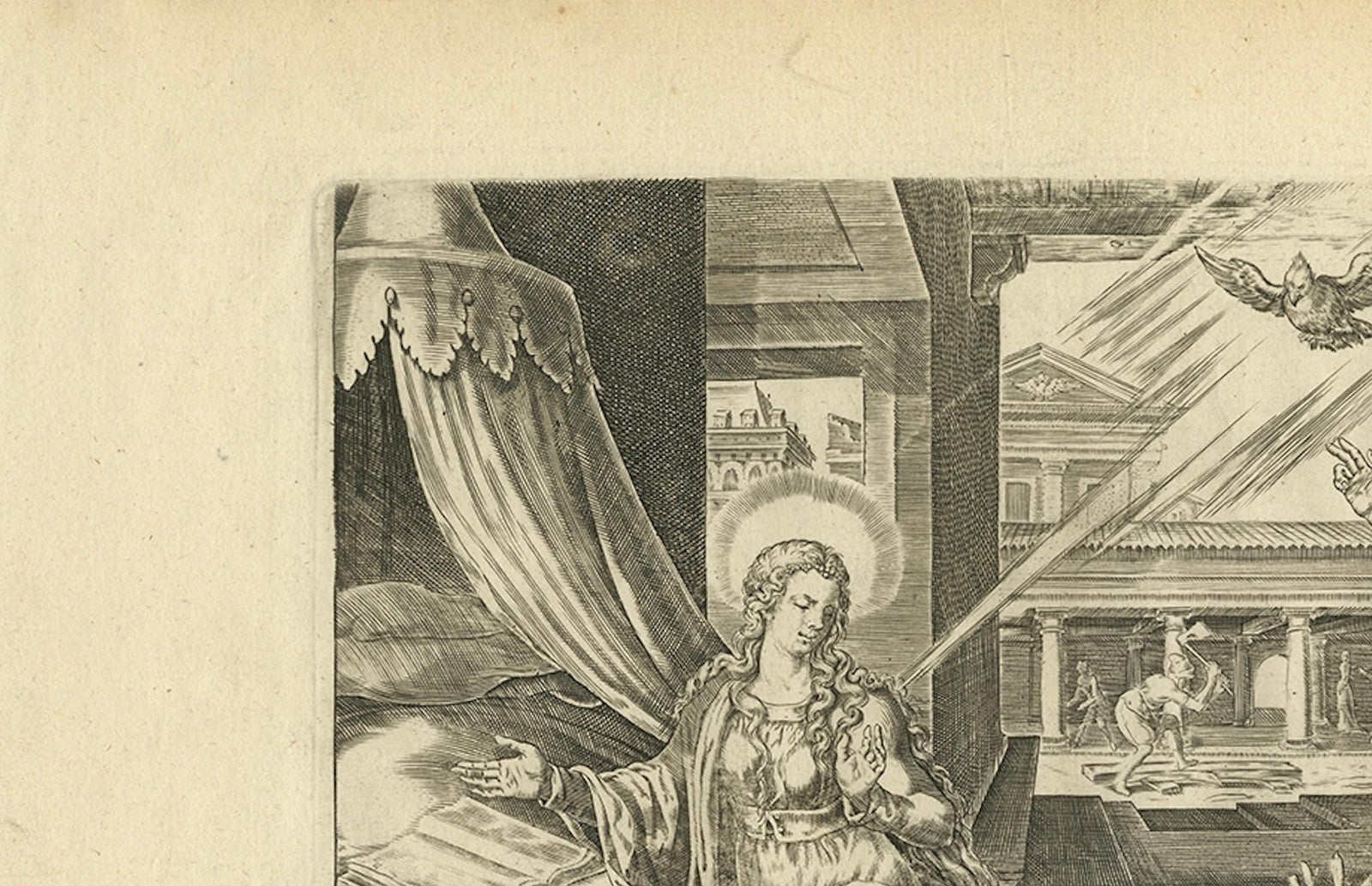
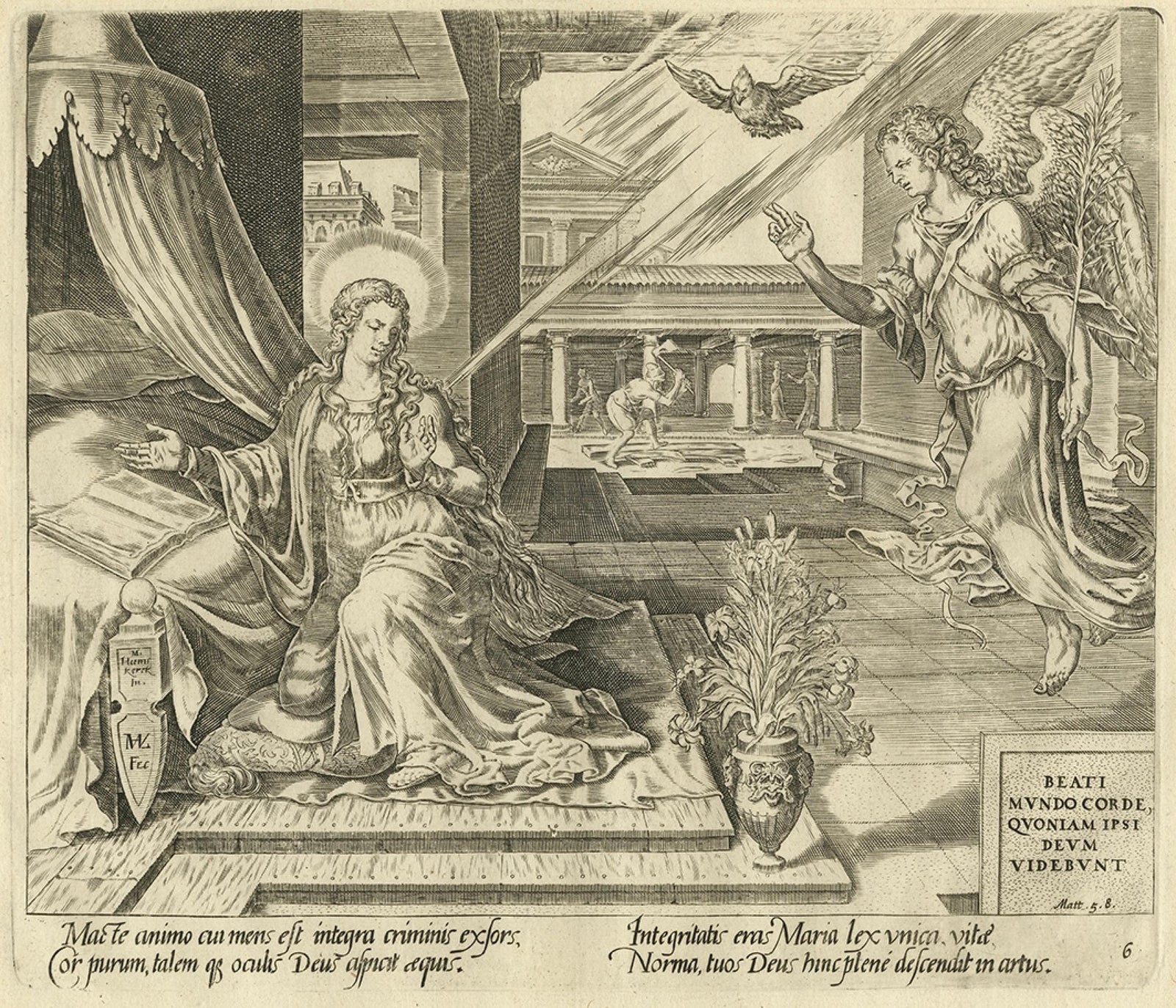
This fine 17th-century engraving depicts the Annunciation, the biblical moment when the angel Gabriel visits the Virgin Mary to announce that she will conceive and bear the Son of God. Mary is shown seated, her hand lifted in humility and acceptance, while the angel appears in flowing robes, holding a palm branch. A dove descends above, symbolizing the Holy Spirit, and rays of divine light flood the composition. An ornamental vase with lilies at the center emphasizes purity, a traditional Marian symbol.
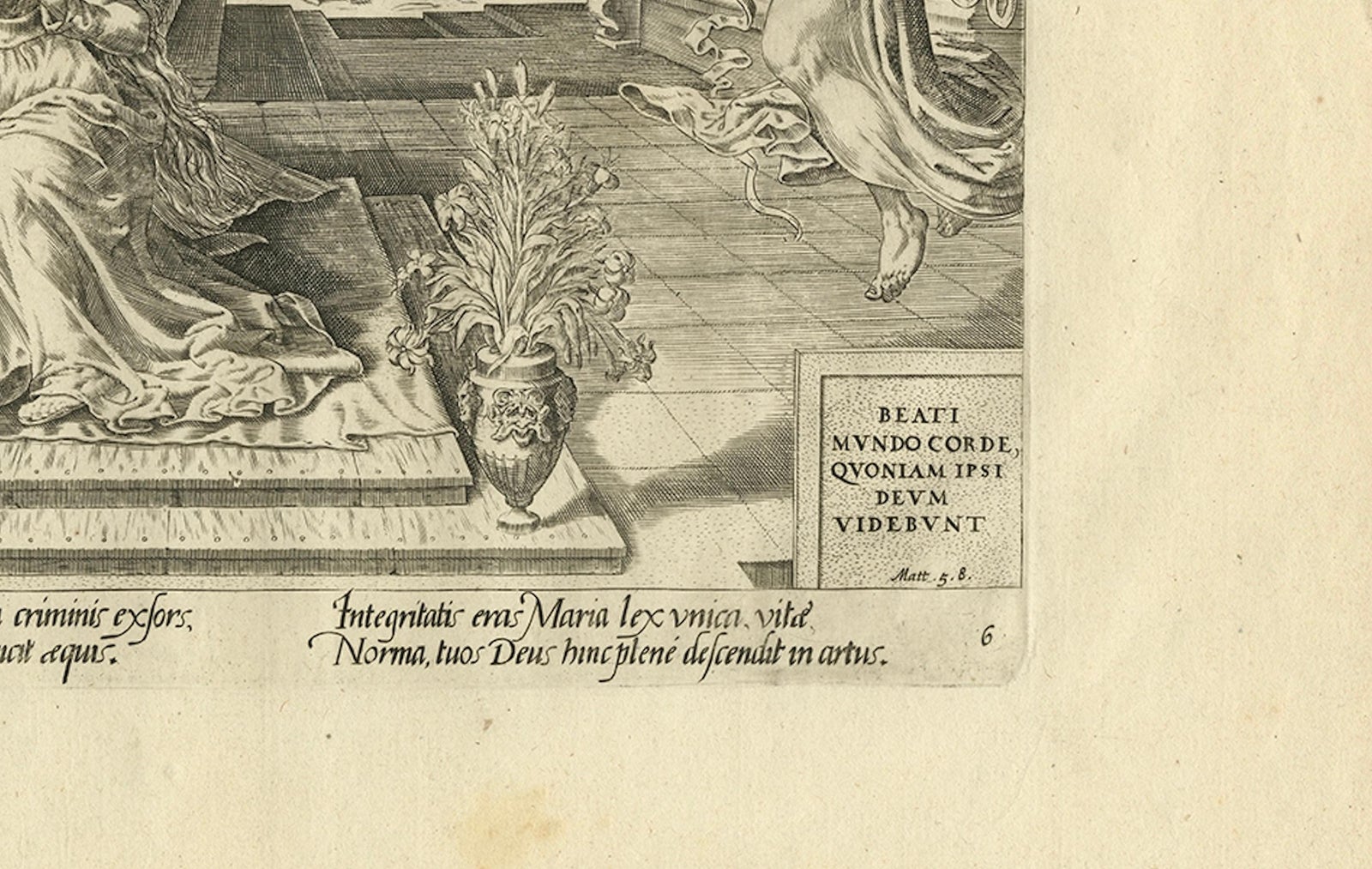
The Latin inscription “Beati mundo corde: quoniam ipsi Deum videbunt” (Blessed are the pure in heart, for they shall see God) frames the moral and spiritual lesson of the scene. Additional verses below the image reinforce the connection between Mary’s purity and divine grace.
This print originates from the Theatrum Biblicum hoc est historiae Sacrae veteris et novi testamenti tabulis aeneis expressae, published by Nicolaus Visscher in Amsterdam in 1674. This monumental illustrated Bible brought together Old and New Testament stories in detailed copper engravings, intended both as devotional imagery and as a grand artistic statement of Dutch Baroque religious publishing.
Nicolaes Visscher I (1618 to 1679) was a prominent engraver, cartographer, and publisher from Amsterdam, continuing the legacy of his father Claes Janszoon Visscher. Alongside maps and atlases, the Visscher family also published richly illustrated religious works such as this one. Their prints are known for their strong line work, decorative flourishes, and clarity of biblical narrative.
Framing tips: A gilt or silver frame paired with a cream mount will emphasize the divine radiance of the scene, while a dark wood frame adds a solemn, devotional tone fitting to the subject.
Explore