Close-ups
Framed and on the wall
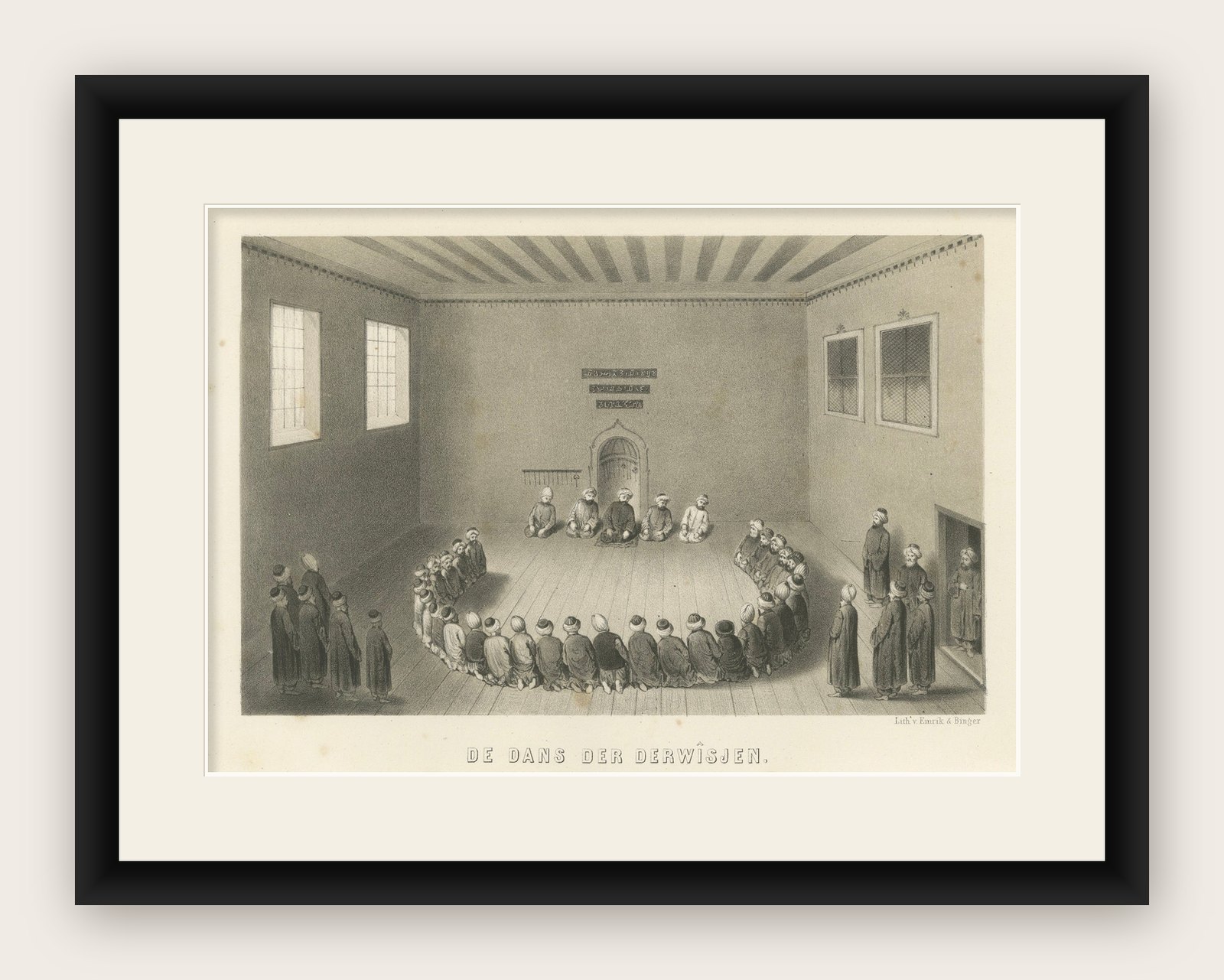


Frame and rooms are illustrations of how the print could look, drawn to its real size; it is sold unframed unless the description says otherwise.
Rites of the World
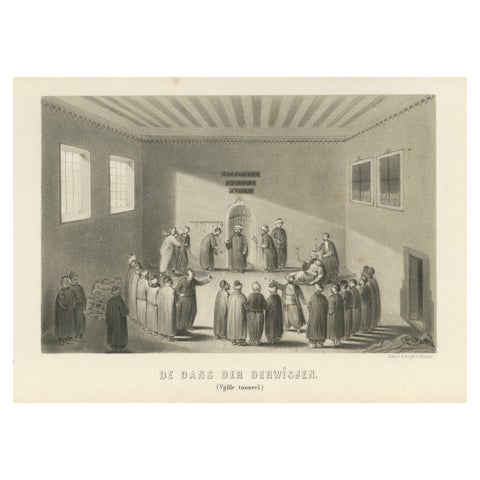
Islamic Ritual Print Dance of the Dervishes Ceremony, 1863 Dutch Lithograph
Anno Domini MDCCCLXIII1863
£195
$260 · €230
Original print, not a reproduction
Ships worldwide from the Netherlands, flat, insured and tracked. 14-day returns. To buy, use Ask a question (info@antiquesacredprints.com) and we will reserve it for you.
- Date
- 1863
- Sheet size
- 6.9 × 10.6 in (17.5 × 27 cm)
- Condition
- Good. Very good condition with minimal foxing in the margins. Please study the images carefully.
- Faith
- Islam
- Collection
- Rites of the World
- Era
- 1850 and after, Chromolithographs and devotional prints
- Stock no.
- f_45317272
Islamic Ritual Print Dance of the Dervishes Ceremony, 1863 Dutch Lithograph
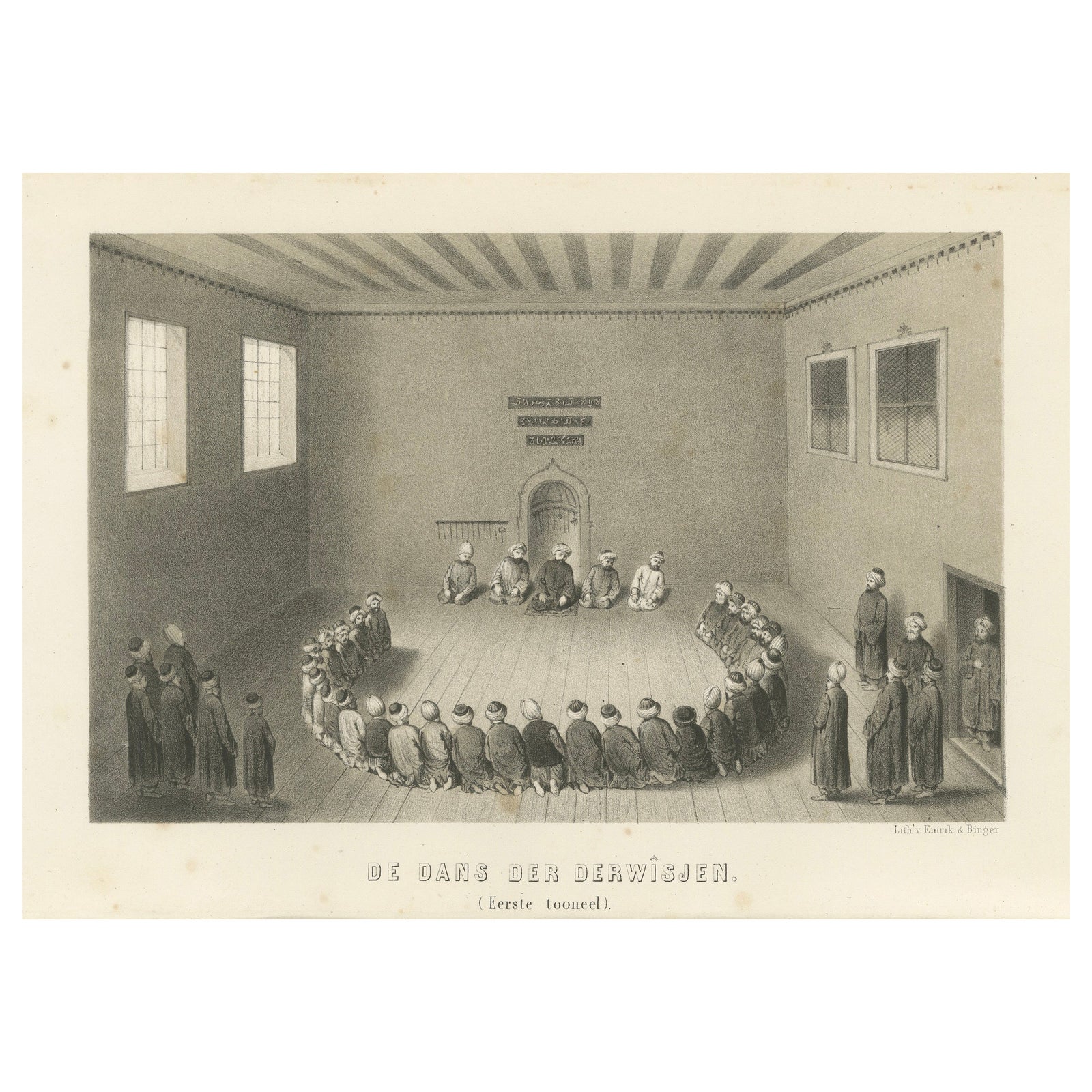
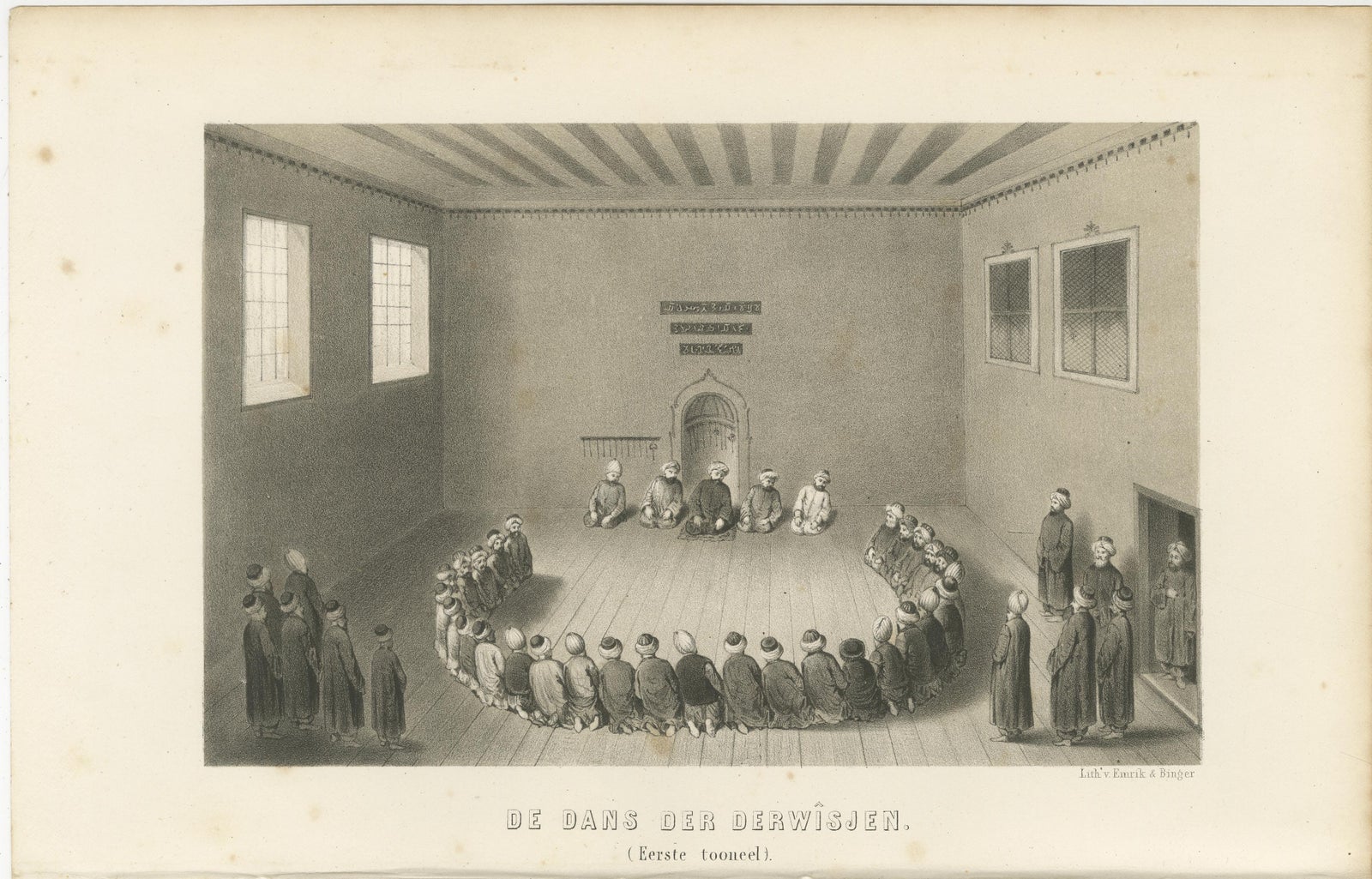
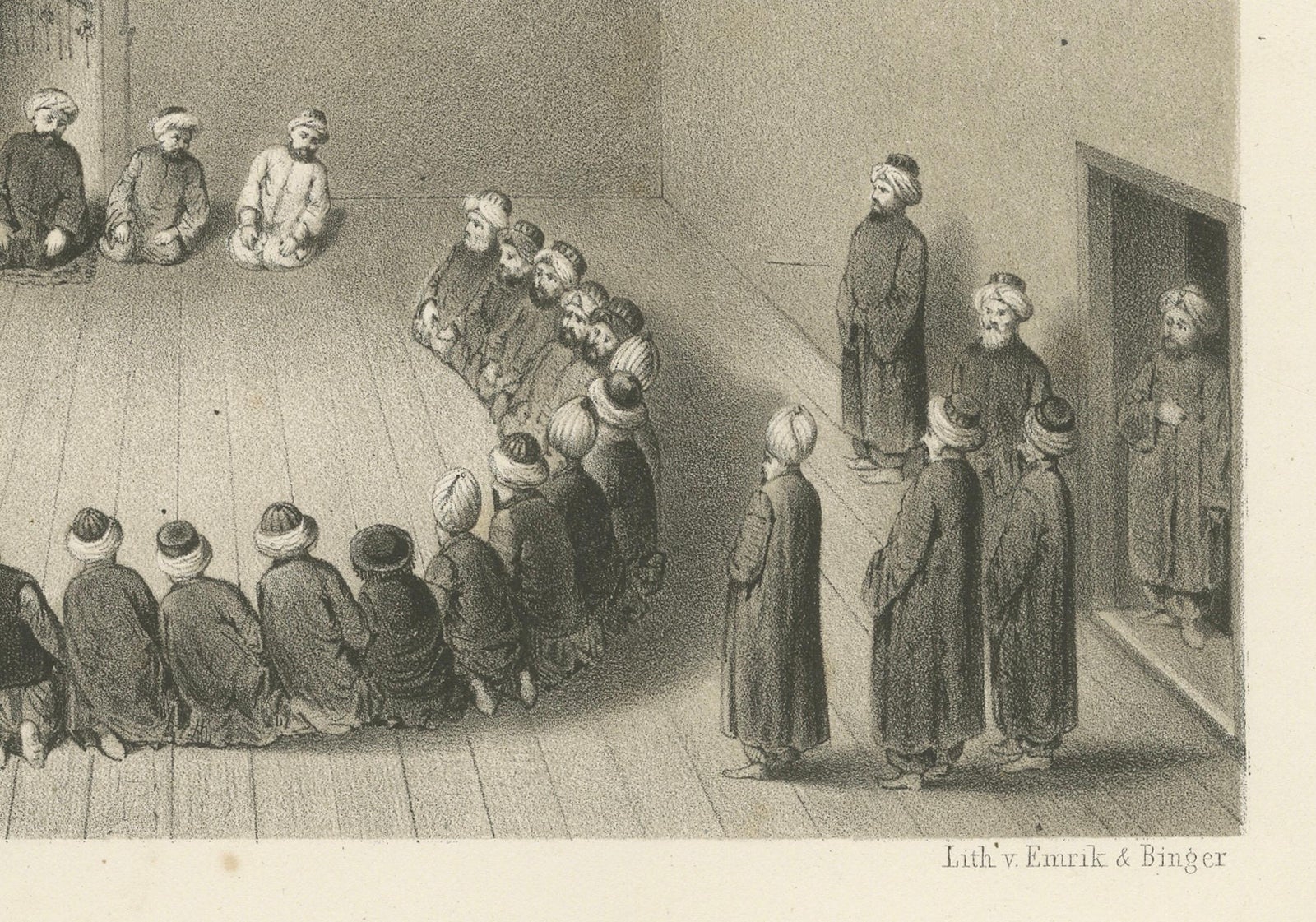
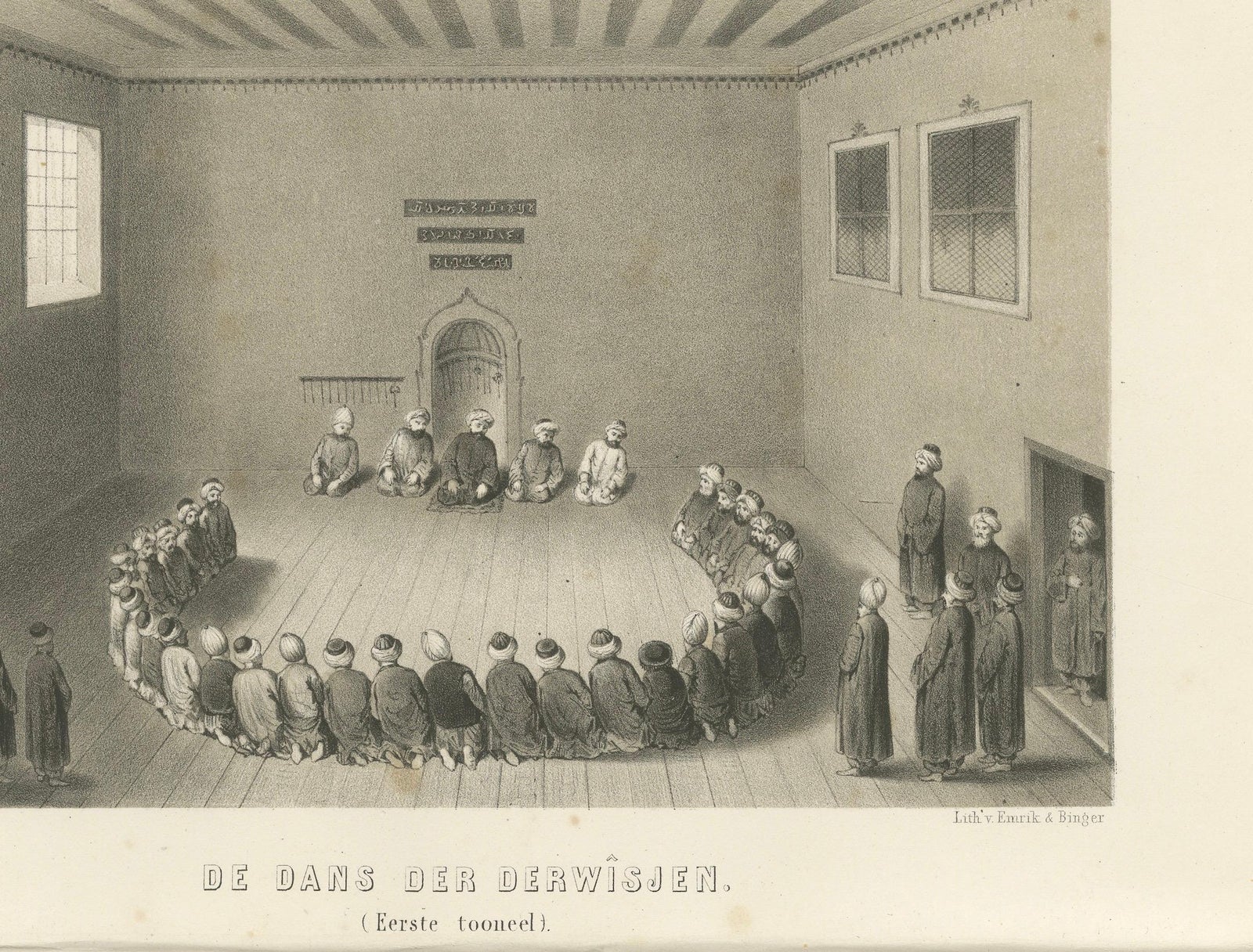
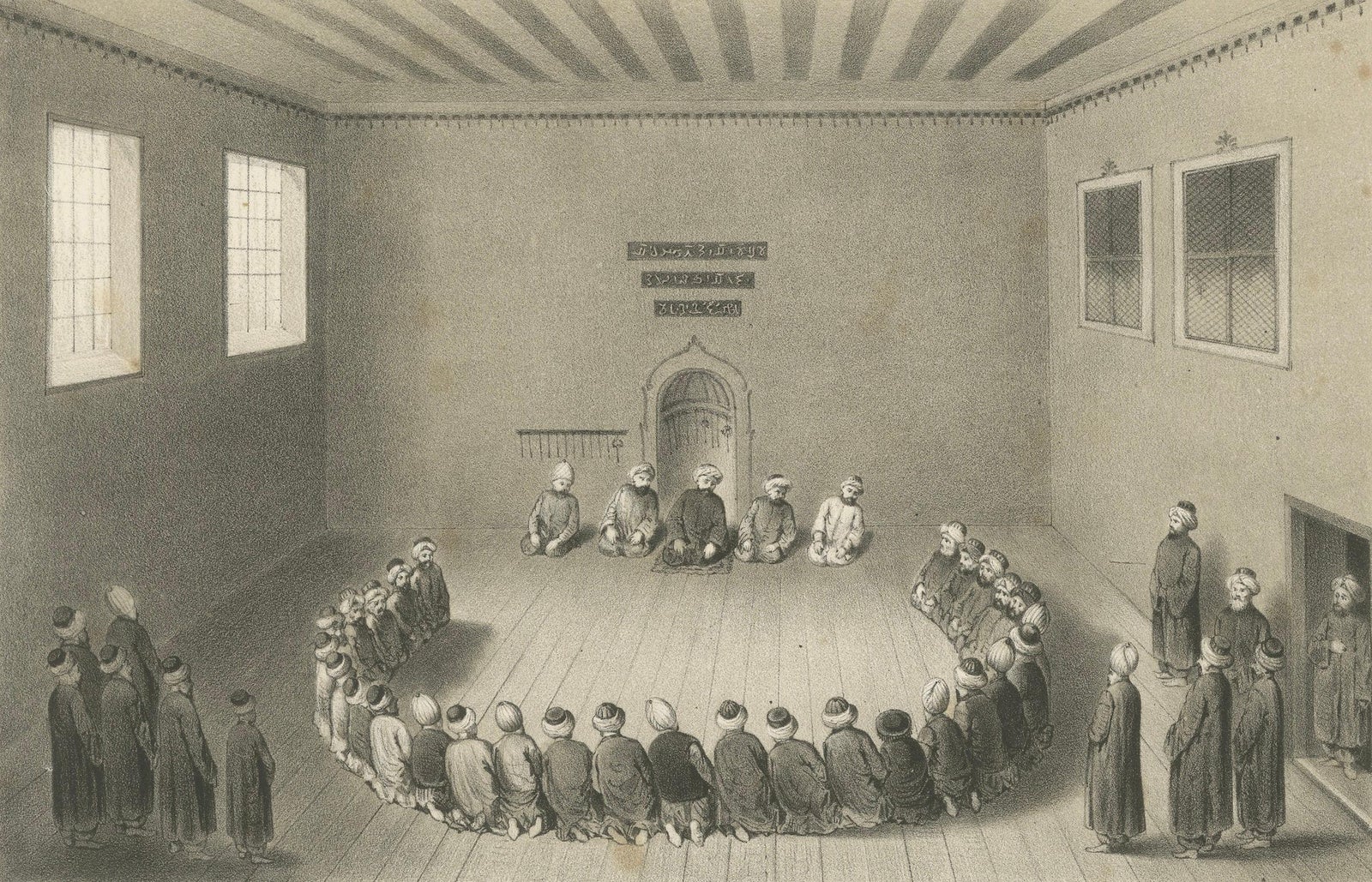
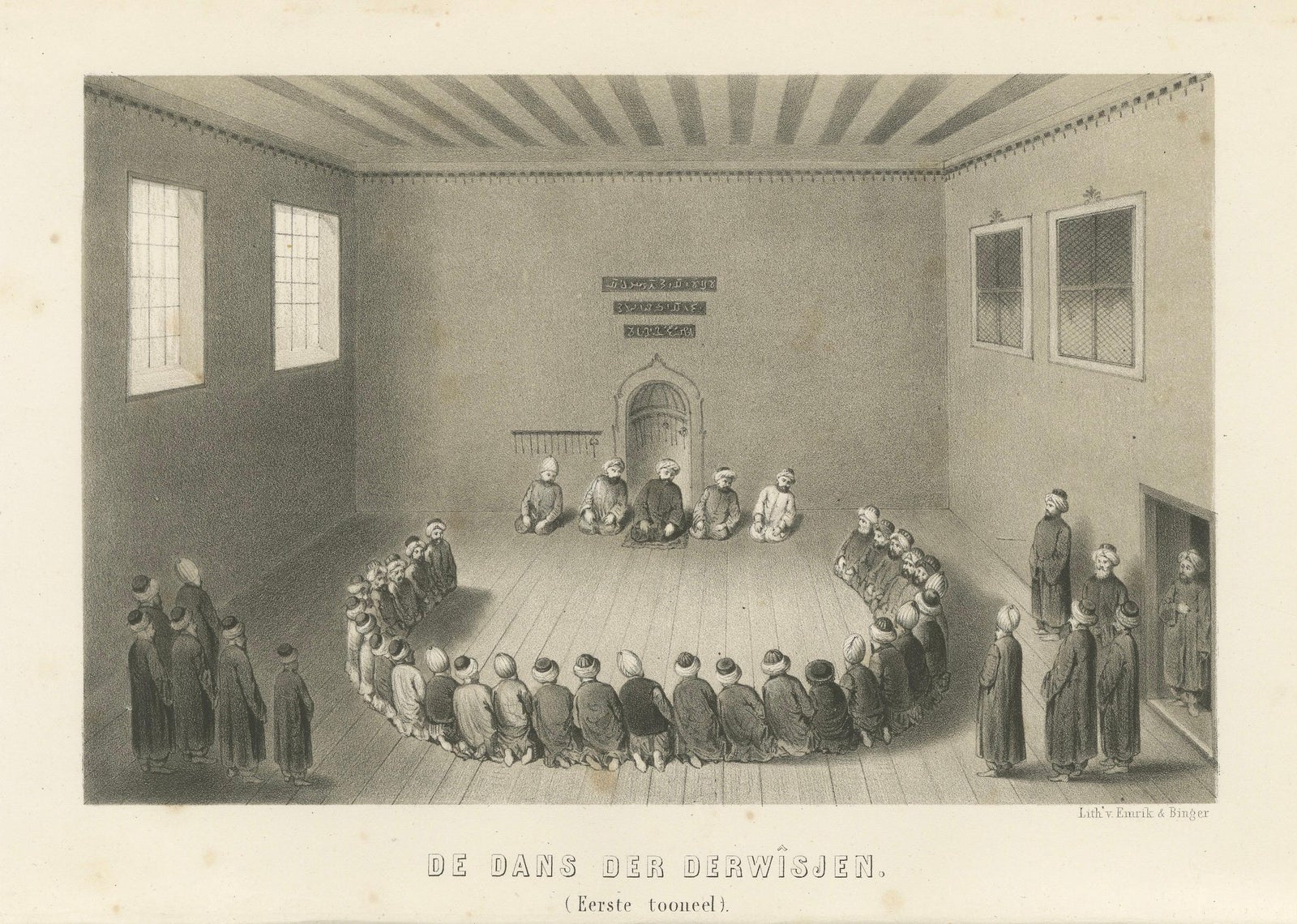
This atmospheric lithograph titled “De Dans der Derwîsjen (Eerste tooneel)” or “The Dance of the Dervishes (First Scene)” captures the initial stage of a Sufi ritual performed by the Mevlevi Order, often referred to in the West as the Whirling Dervishes. The scene is set within a modest but orderly prayer hall, where a large group of men, dressed in traditional long robes and turbans, form a semicircle on the polished wooden floor.
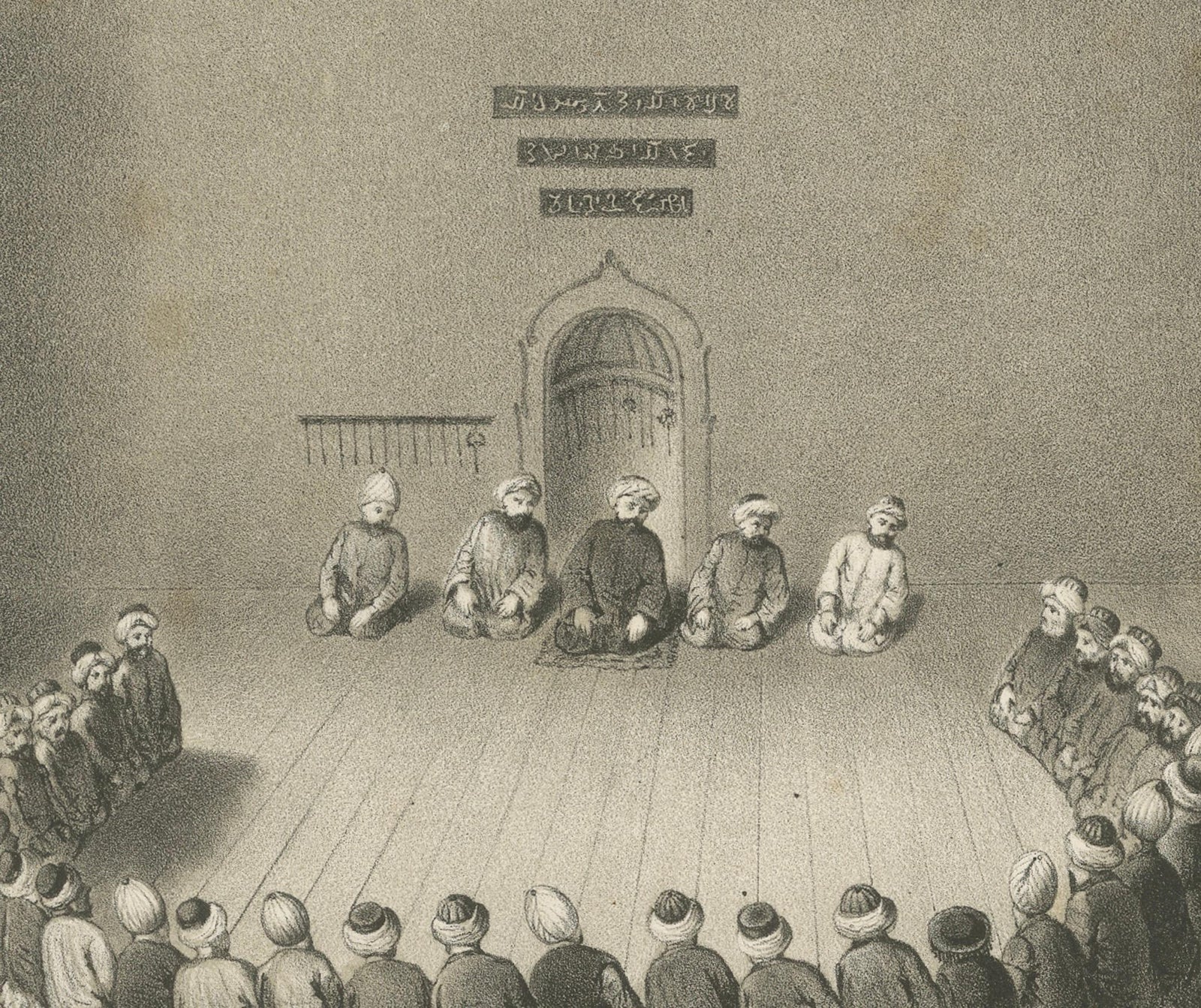
At the far end of the room, a row of seated senior dervishes faces the rest of the group, presiding over the solemn beginning of the mystical ceremony. Light streams in through simple paneled windows, creating a spiritual and contemplative atmosphere. The hall’s understated decoration and geometric ceiling lines emphasize the focus on inner devotion rather than architectural grandeur. On the wall, framed Arabic inscriptions provide a visual and spiritual anchor.
The dervish dance is a deeply symbolic practice rooted in Sufism, the mystical branch of Islam, where repetition, rhythm, and movement aim to transcend the self and approach divine unity. This particular image is part of a multi-scene cycle that attempts to faithfully document this sacred and meditative practice for a 19th-century European audience.
Published in 1863 in the Dutch educational and cultural series *De Voornaamste Godsdiensten* (The Principal Religions), this lithograph appears in the volume *Het Islamisme*, written by the eminent Dutch Orientalist Dr. Reinhart Pieter Anne Dozy. As a professor at Leiden University, Dozy was a pioneer in Islamic studies, known for his analytical yet respectful approach to Islamic civilization.
The image was lithographed by Emrik & Binger of Haarlem, a leading Dutch firm renowned for their clear and refined lithographic technique. Their sensitivity to mood and detail is evident here in the careful rendering of facial expressions, garment folds, and architectural features, giving the viewer a rare documentary insight into Sufi ceremonial life.
Condition Report:
In very good condition with light foxing to the outer margins.
Tips for Framing:
For framing, pair with a soft ivory or warm grey mat and a dark wood or matte black frame to emphasize the solemn spiritual interior and historic detail of this contemplative 19th-century scene.
Explore