Close-ups
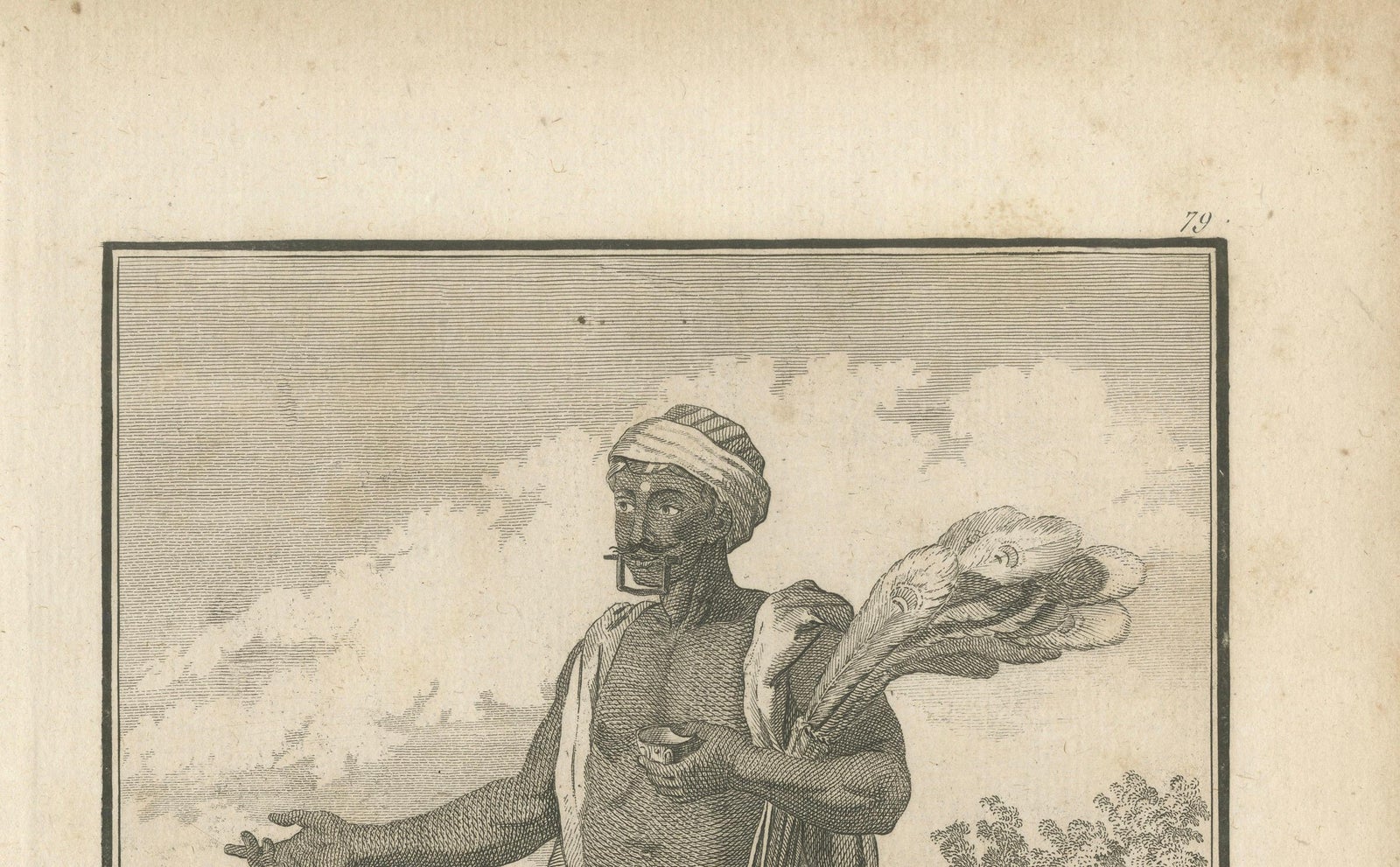
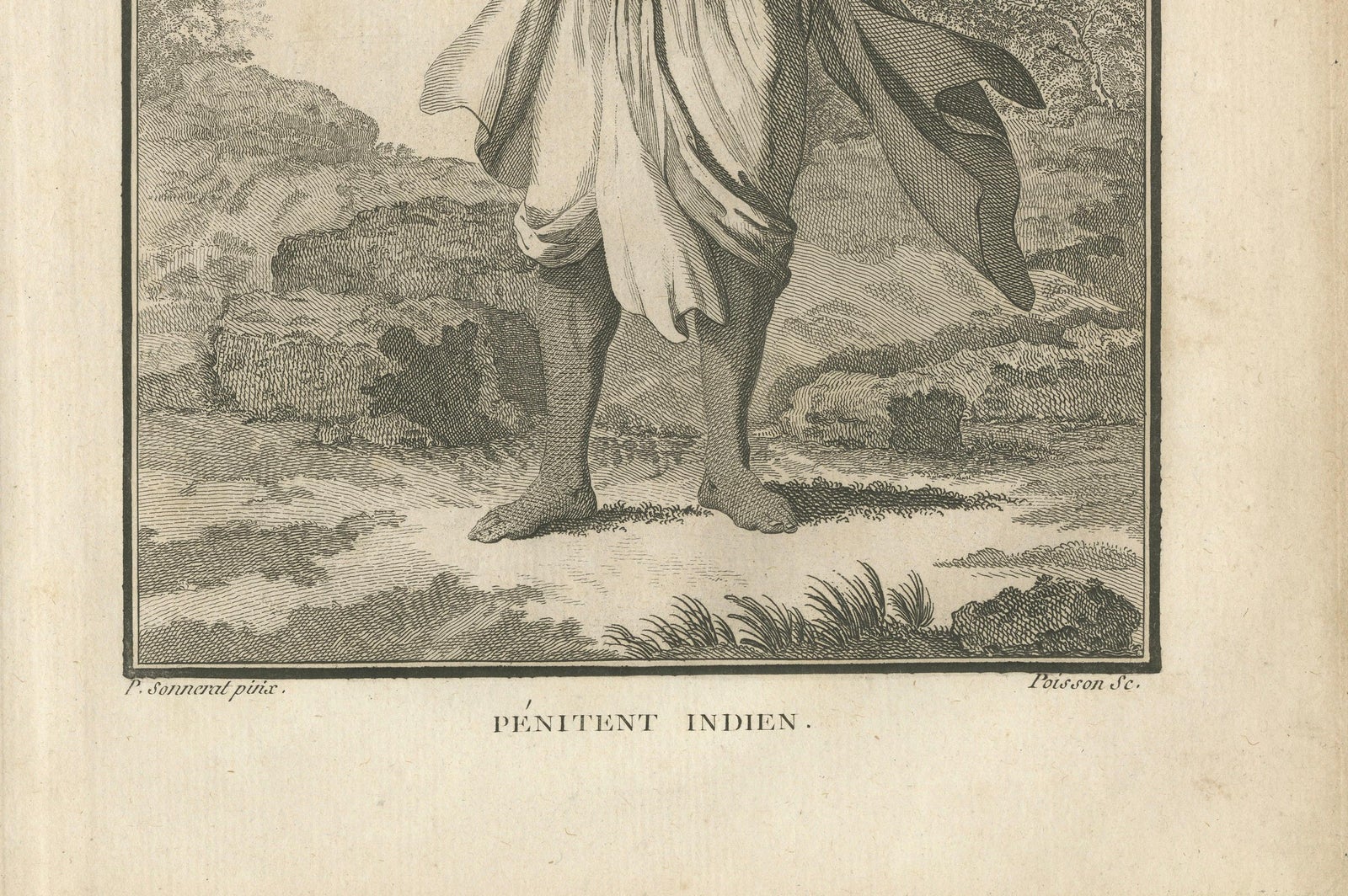
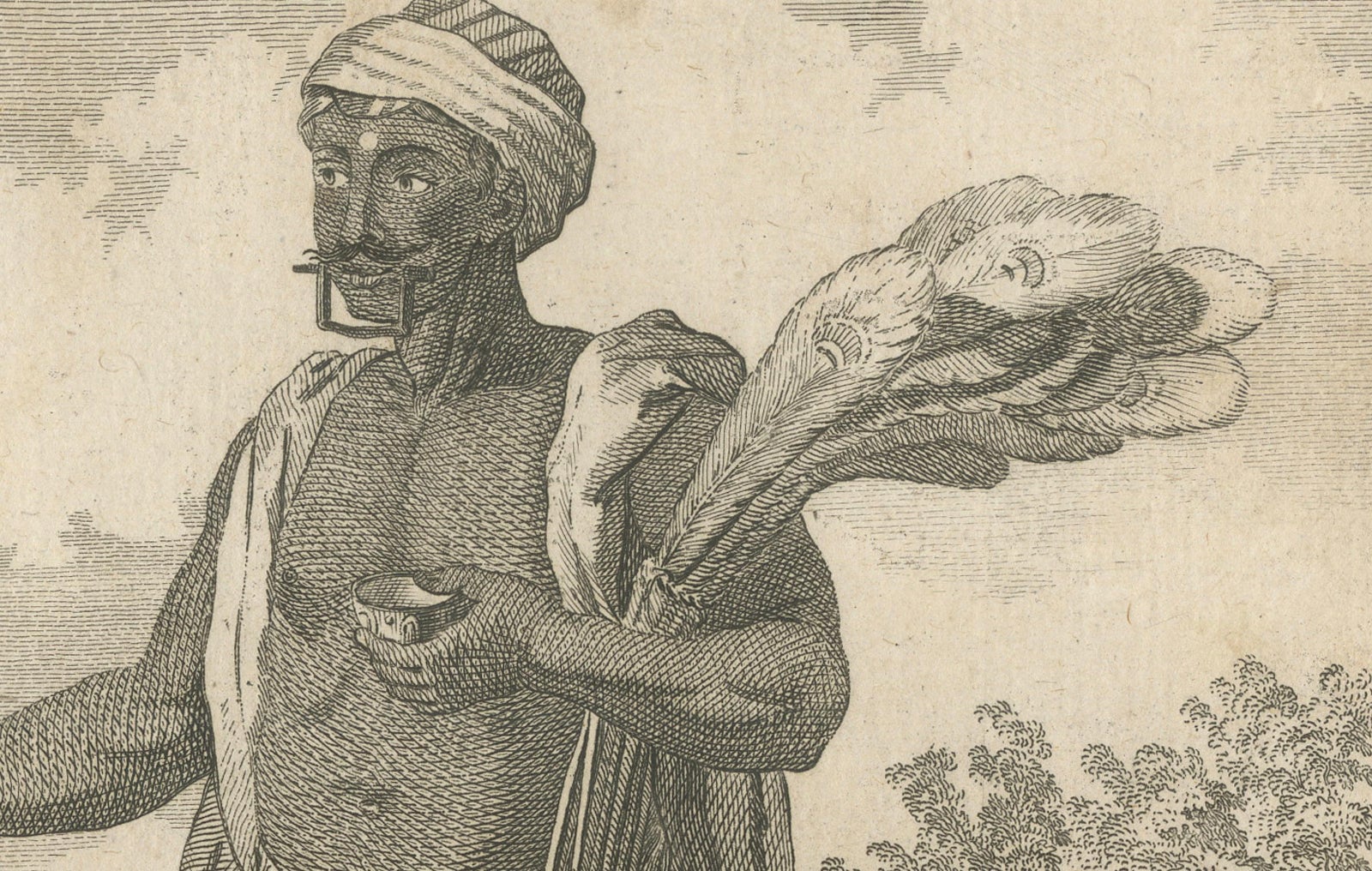
Framed and on the wall
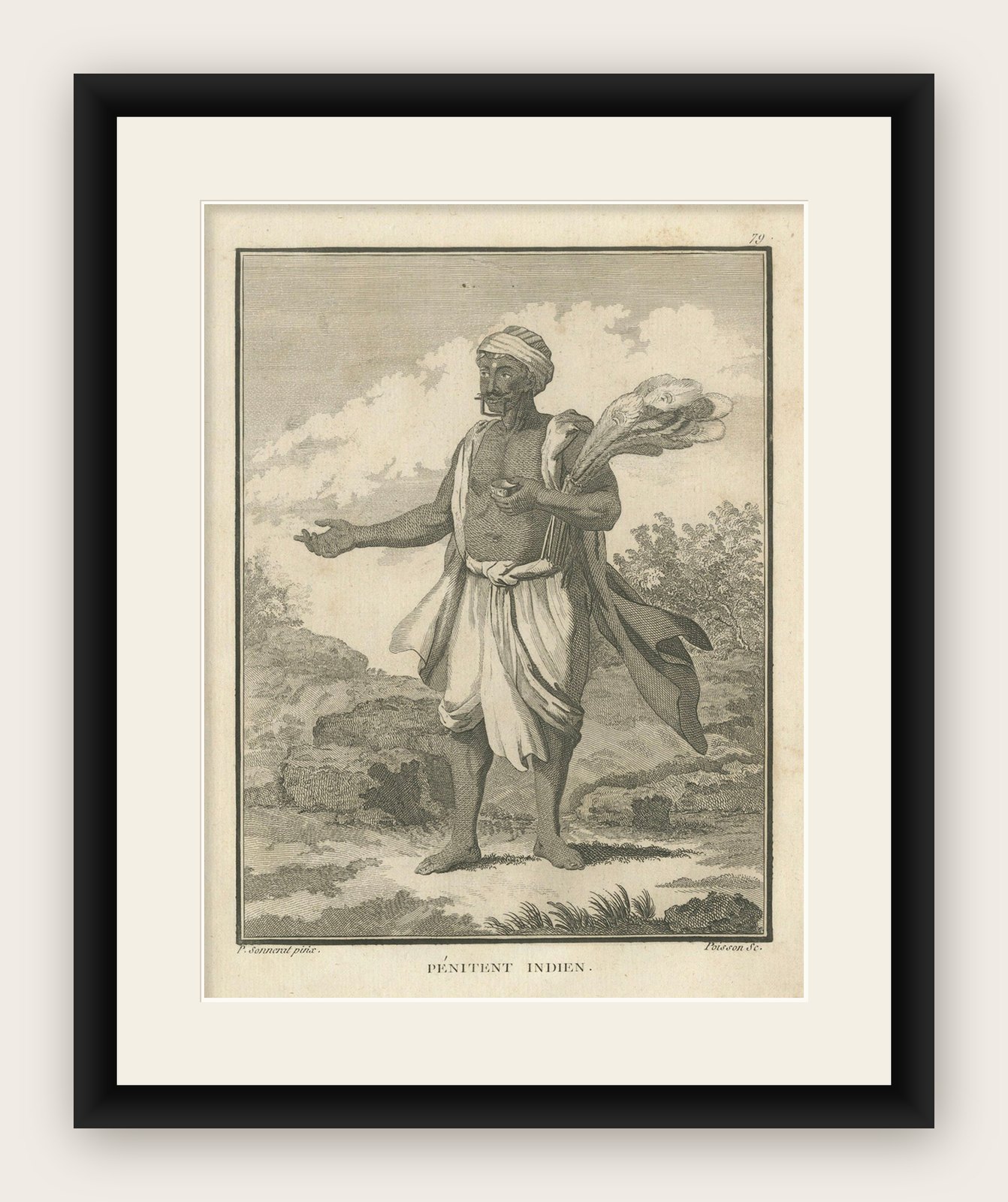

Frame and rooms are illustrations of how the print could look, drawn to its real size; it is sold unframed unless the description says otherwise.
Rites of the World
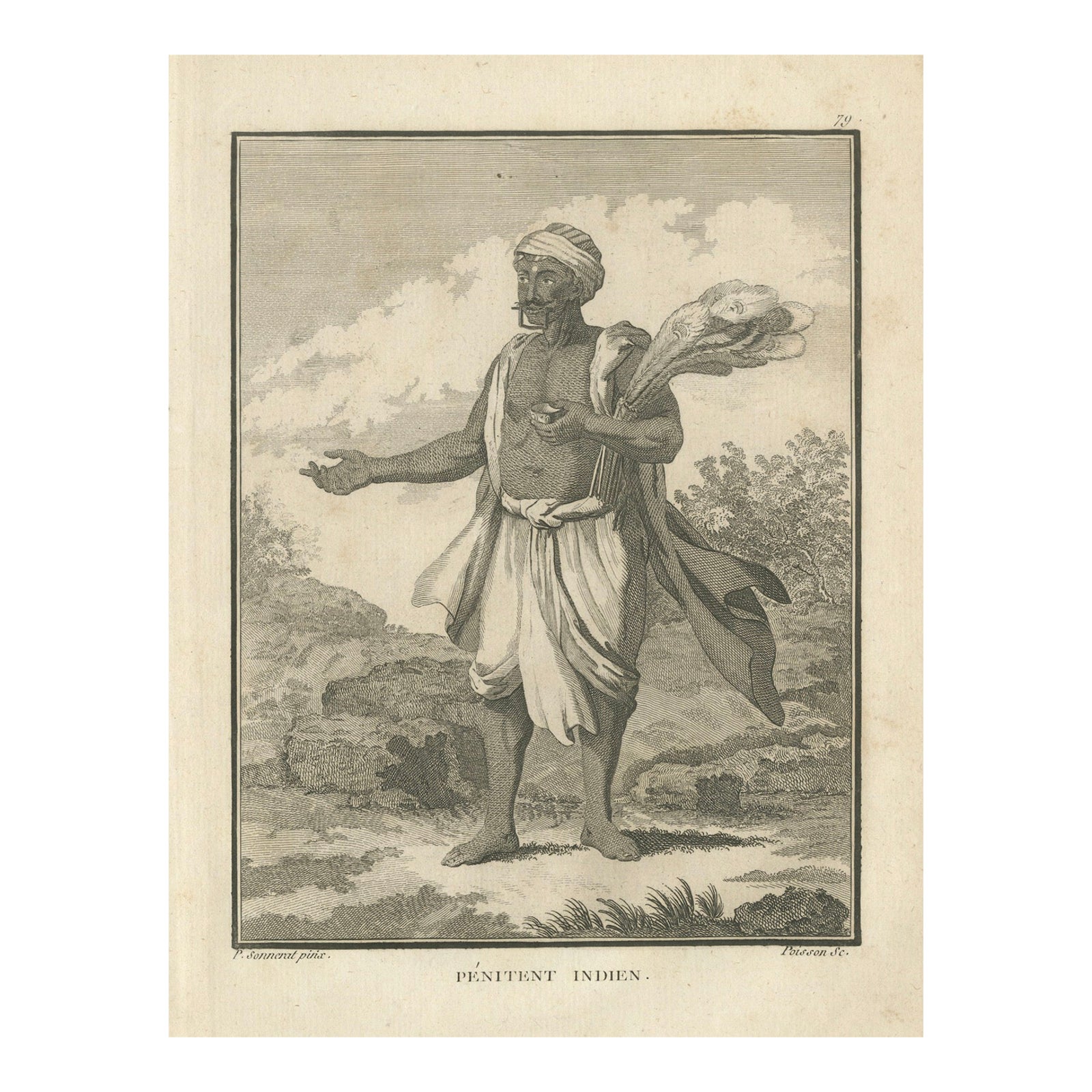
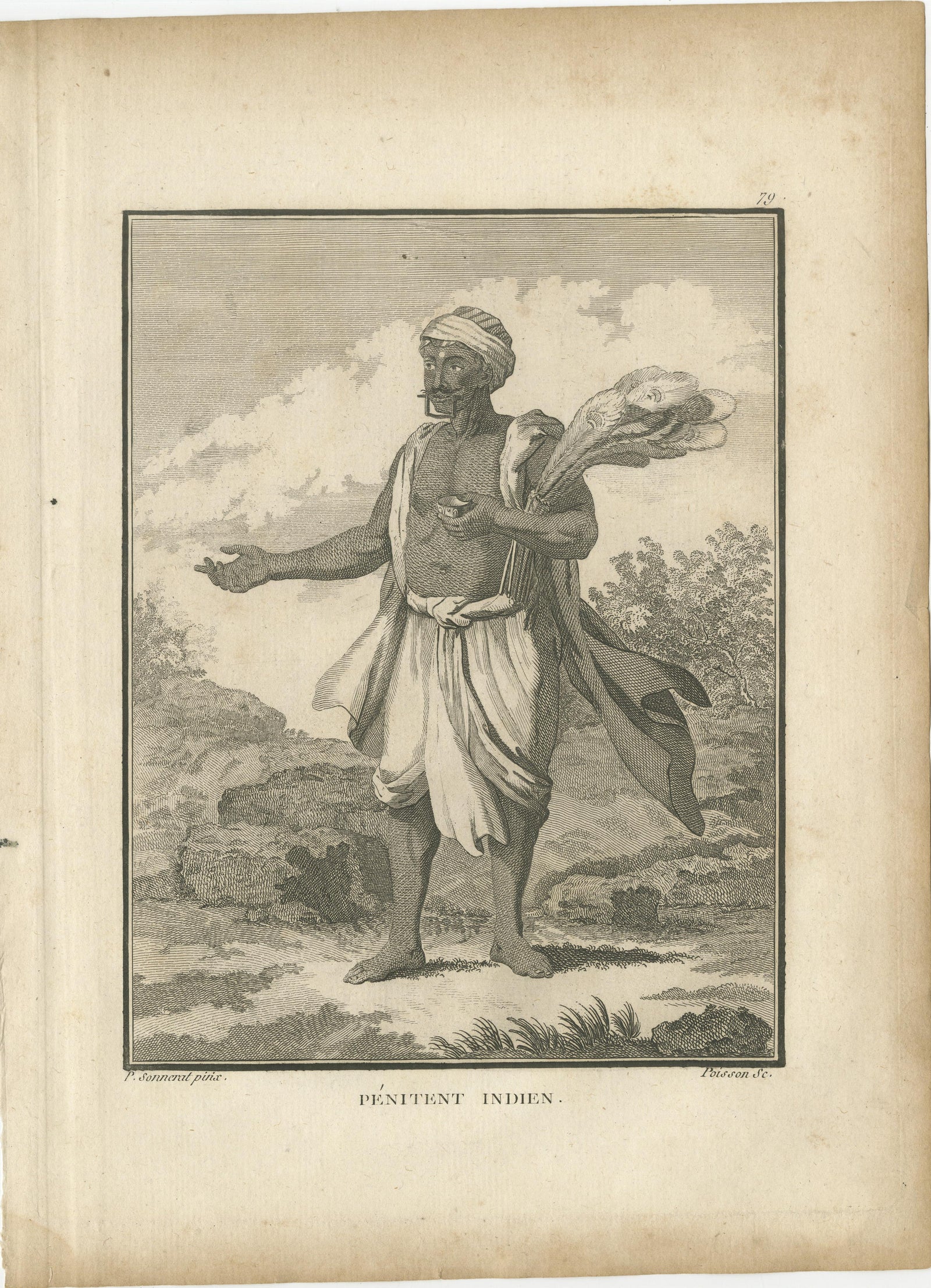
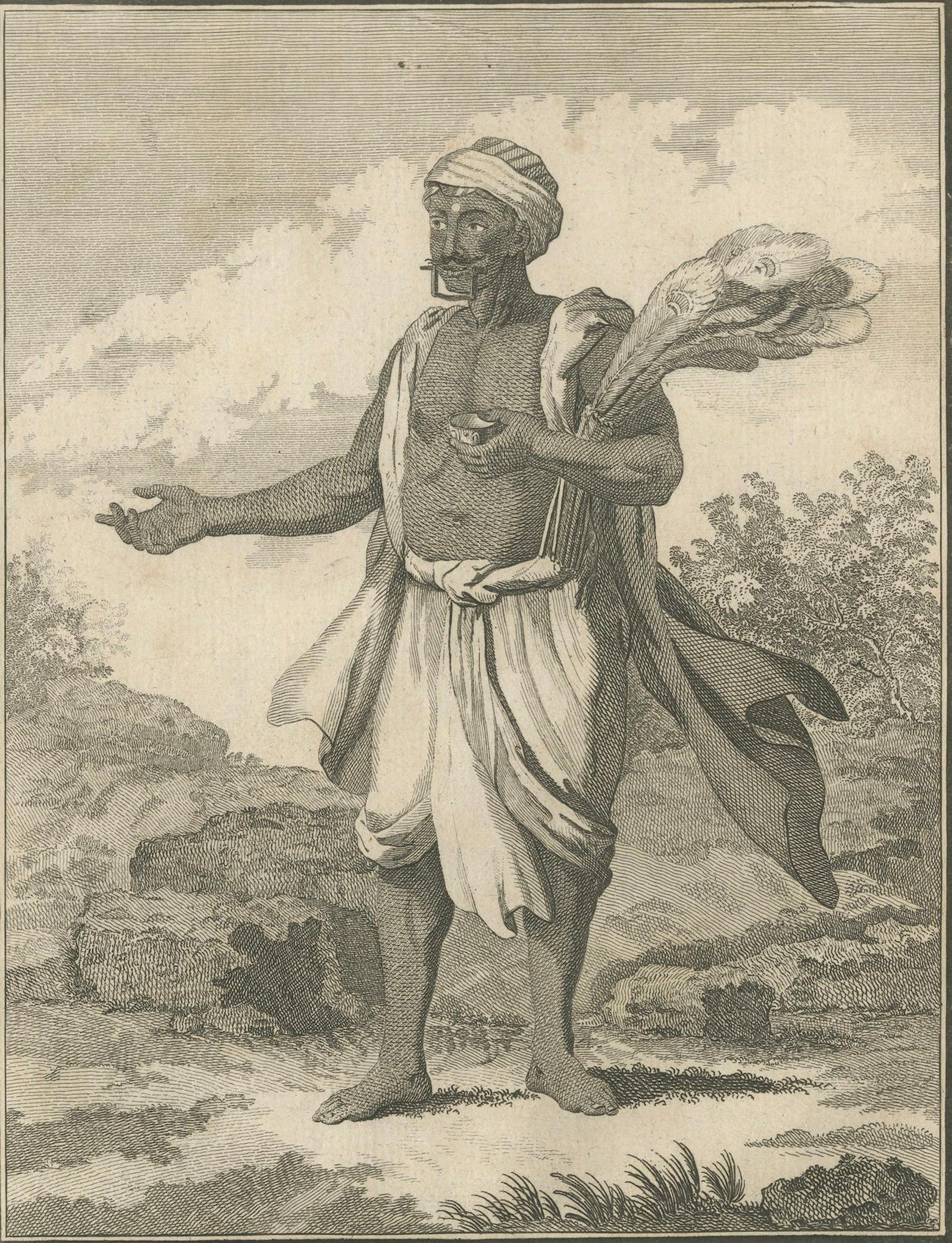
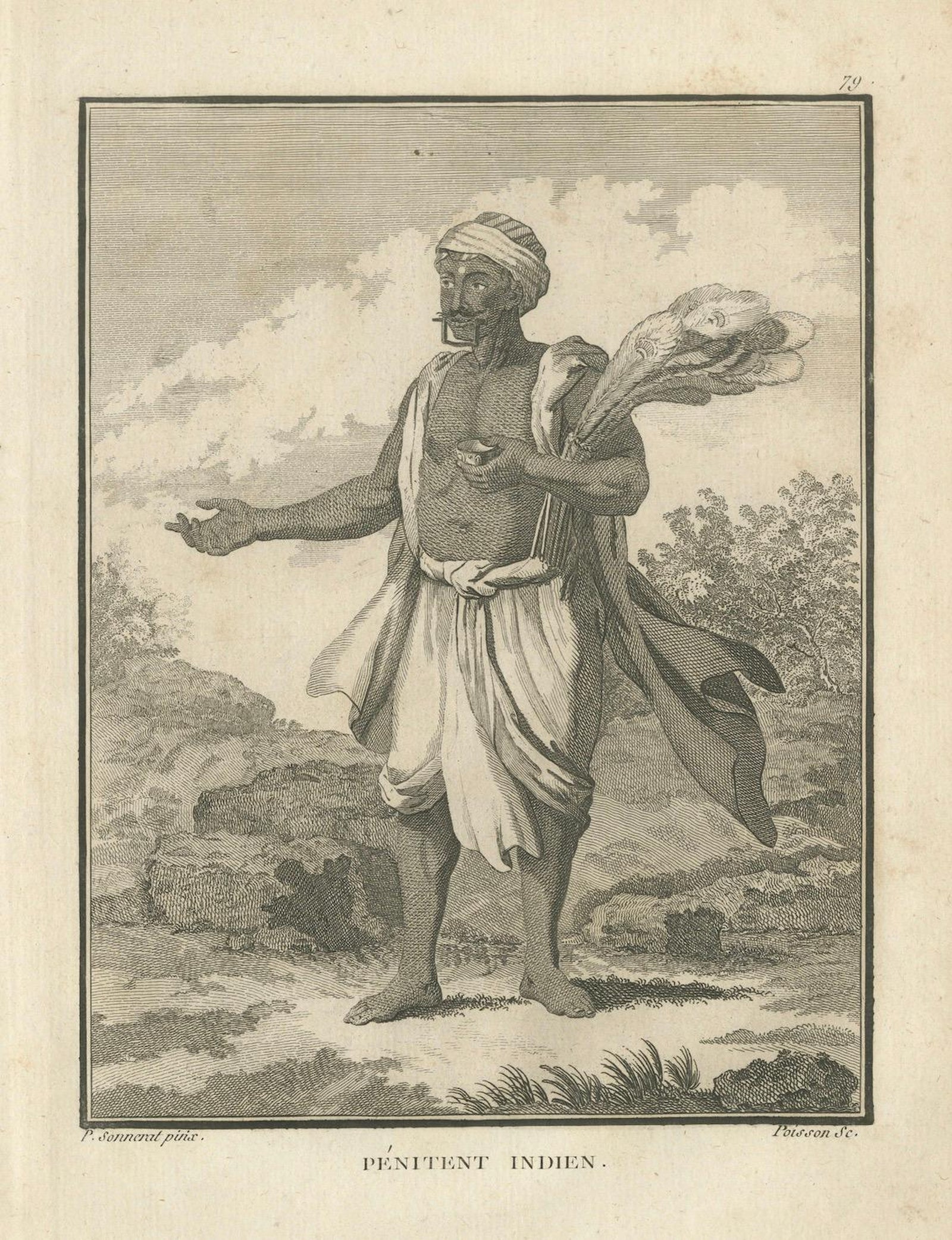
Indian Penitent with Ritual Implements, Engraving after Sonnerat, 1806
Anno Domini MDCCCVI1806
€200
$225 · £170
Original print, not a reproduction
Ships worldwide from the Netherlands, flat, insured and tracked. 14-day returns. To buy, use Ask a question (info@antiquesacredprints.com) and we will reserve it for you.
- Date
- 1806
- Sheet size
- 11.2 × 8.3 in (28.5 × 21 cm)
- Condition
- Good. Good condition. Slight age toning and foxing in margins. Fold line visible near the binding edge. Image well-inked with strong detail throughout.
- Faith
- Hinduism
- Collection
- Rites of the World
- Era
- 1800 to 1849, Travellers and the costume books
- Stock no.
- f_46092952
Indian Penitent with Ritual Implements, Engraving after Sonnerat, 1806
This striking antique engraving titled Pénitent Indien (Indian Penitent) portrays a barefoot ascetic figure standing in a natural landscape, dressed in a simple dhoti and turban. He holds ritual items in both hands: a small bowl in one and a bundle of peacock feathers or ceremonial fronds in the other. His chest is bare, and his expression calm yet focused. A notable feature is the pierced rod or ritual instrument extending through his cheeks or jaw, an act of self-mortification associated with certain religious practices in South India.
This figure likely represents a devotee engaged in vows of penance or public expressions of religious endurance, often observed during processions, pilgrimages, or festivals. The practice of body piercing, particularly cheek or tongue piercing, is historically associated with Tamil Hindu traditions, especially in devotion to deities like Murugan. These acts were seen as demonstrations of personal sacrifice and spiritual resolve.
Drawn by Pierre Sonnerat (1745 to 1814), a French naturalist and explorer, and engraved by Jean-Baptiste-Marie Poisson (1747 to 1820), the image was published in the 1806 edition of *Voyage aux Indes Orientales et à la Chine*. Sonnerat aimed to document the customs, religious practices, and appearances of Indian people during his extensive travels. This particular image stands out for its sensitive depiction of ritual intensity, capturing both the stillness and spiritual gravity of the figure.
This print is a valuable artifact for those interested in the history of Hindu ritual, colonial-era visual ethnography, or Orientalist art. It offers a rare early 19th-century European interpretation of practices that were both revered and misunderstood in Western accounts.
Condition report:
Good condition. Slight age toning and foxing in margins. Fold line visible near the binding edge. Image well-inked with strong detail throughout.
Framing tips:
Best suited to a dark wood or ebonized frame with a wide off-white or soft gray mat. This will highlight the figure’s form and enhance the contrast of the engraved lines.
Technique: Engraving
Maker: J.-B.-M. Poisson after Pierre Sonnerat, Paris, 1806