Close-ups
Framed and on the wall
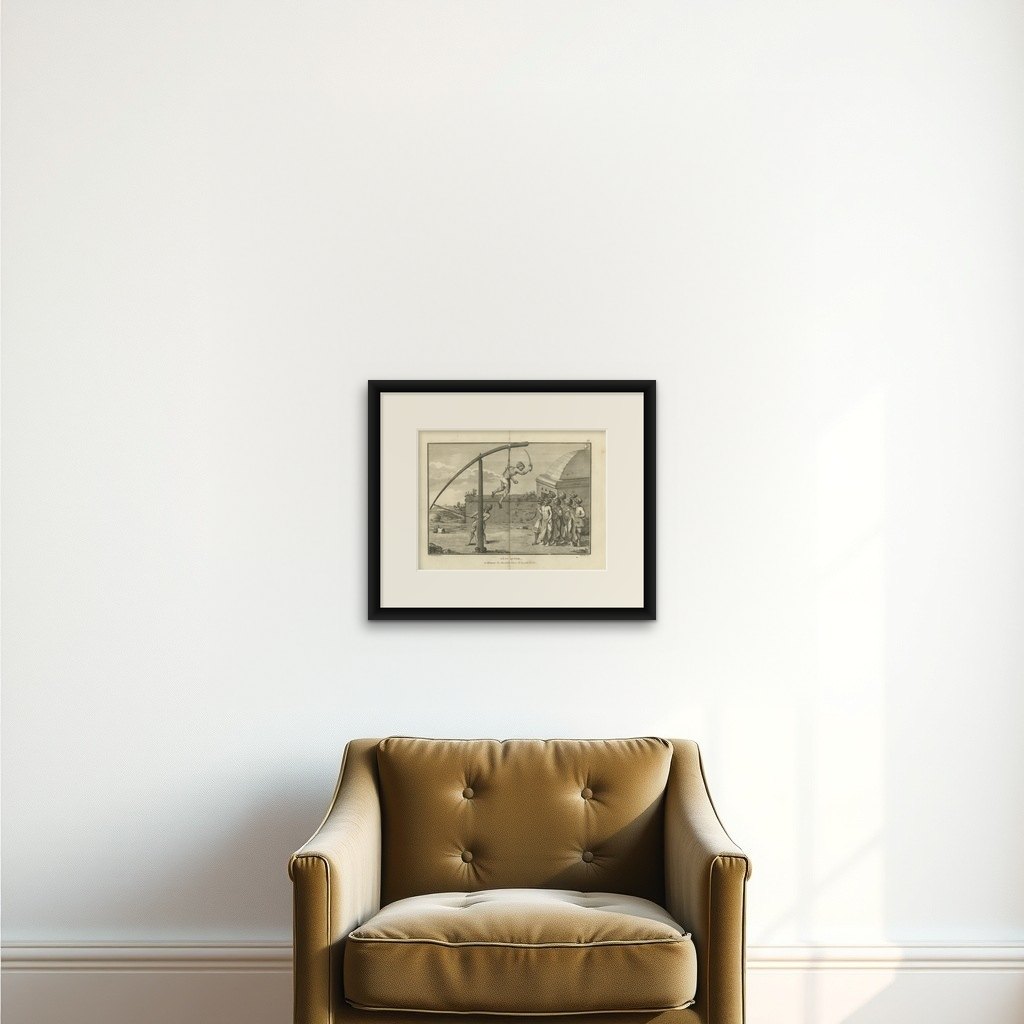

Frame and rooms are illustrations of how the print could look, drawn to its real size; it is sold unframed unless the description says otherwise.
Rites of the World
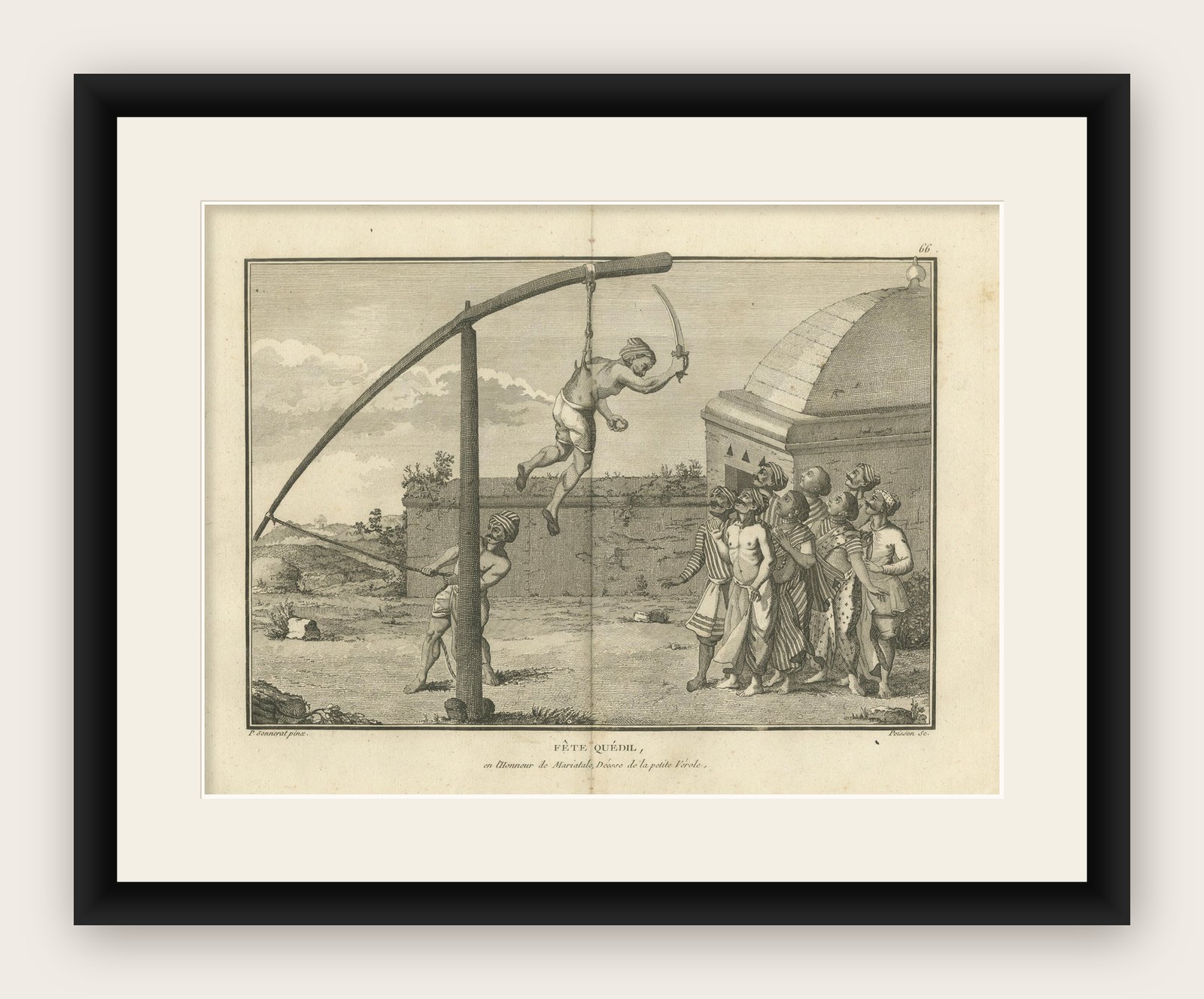
Hindu Hook-Swinging Ceremony in Honor of Mariamman, Engraving, 1806
Anno Domini MDCCCVI1806
$325
€290 · £245
Original print, not a reproduction
Ships worldwide from the Netherlands, flat, insured and tracked. 14-day returns. To buy, use Ask a question (info@antiquesacredprints.com) and we will reserve it for you.
- Date
- 1806
- Sheet size
- 11.2 × 15.4 in (28.5 × 39 cm)
- Condition
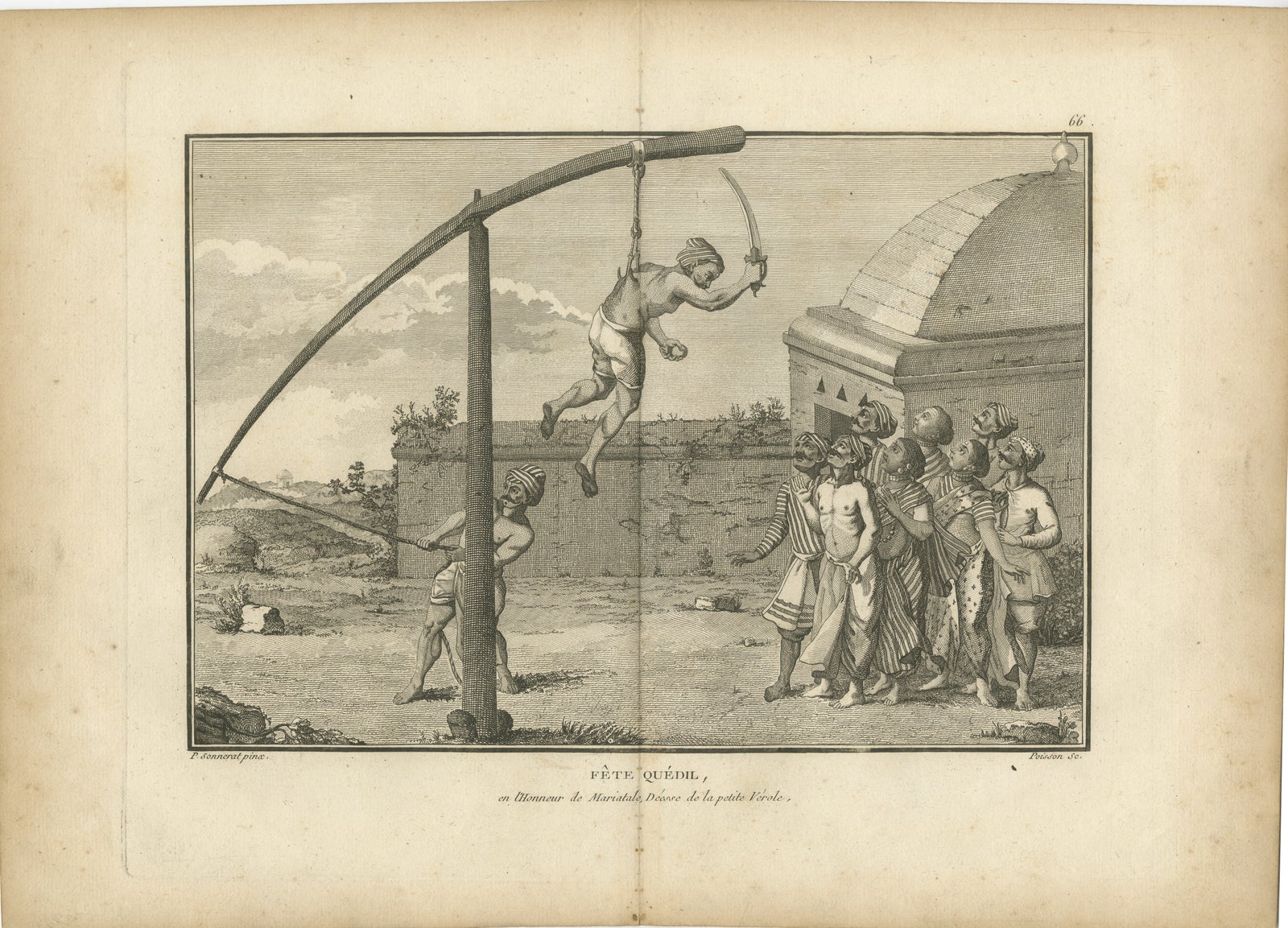
- Good. Good condition overall. Fold at center as issued, with some darkening and small stains along the crease. Light age-related toning and spotting, mostly in the margins. Strong plate impression.
- Faith
- Hinduism
- Collection
- Rites of the World
- Era
- 1800 to 1849, Travellers and the costume books
- Stock no.
- f_46087272
Hindu Hook-Swinging Ceremony in Honor of Mariamman, Engraving, 1806
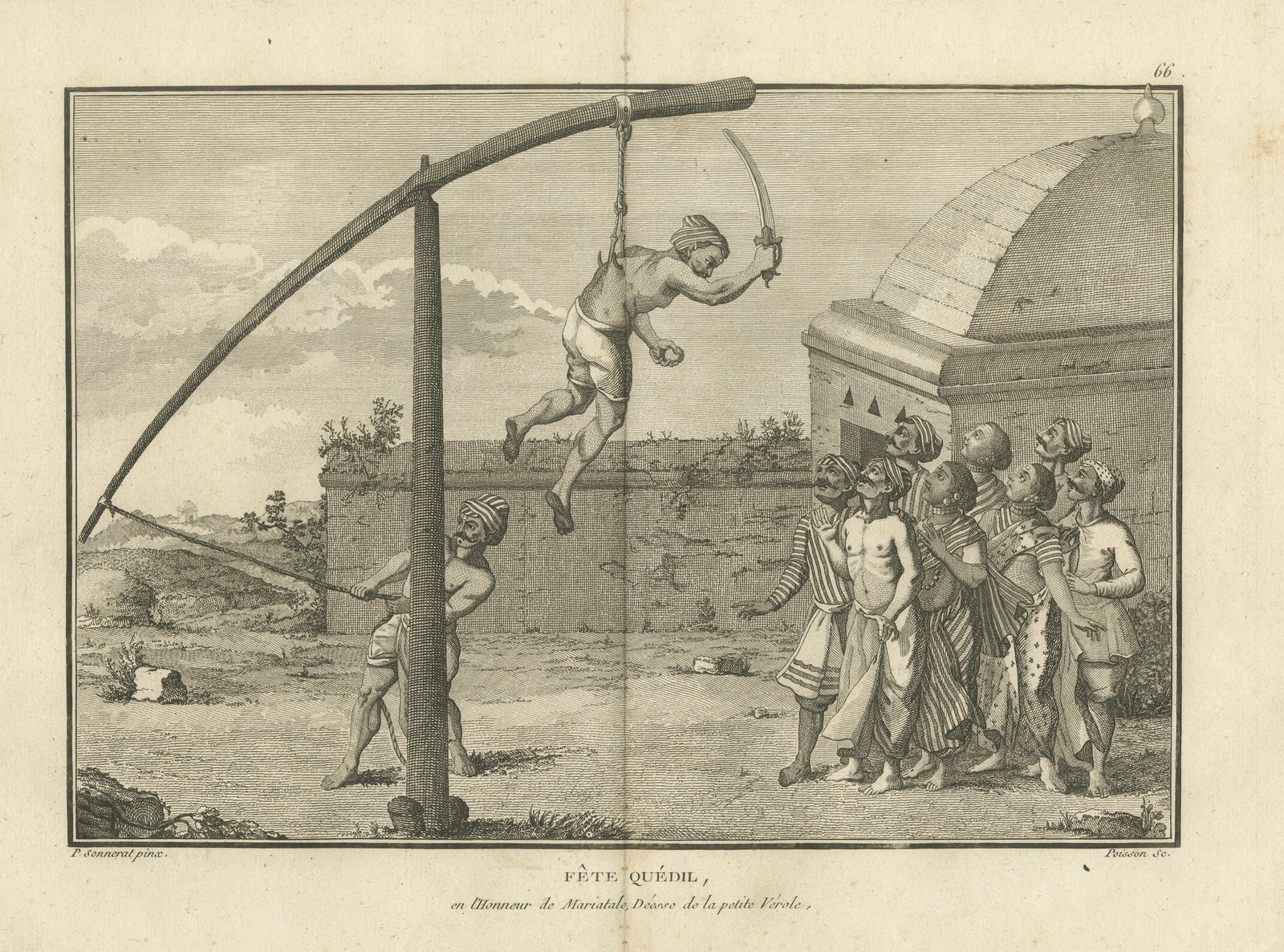
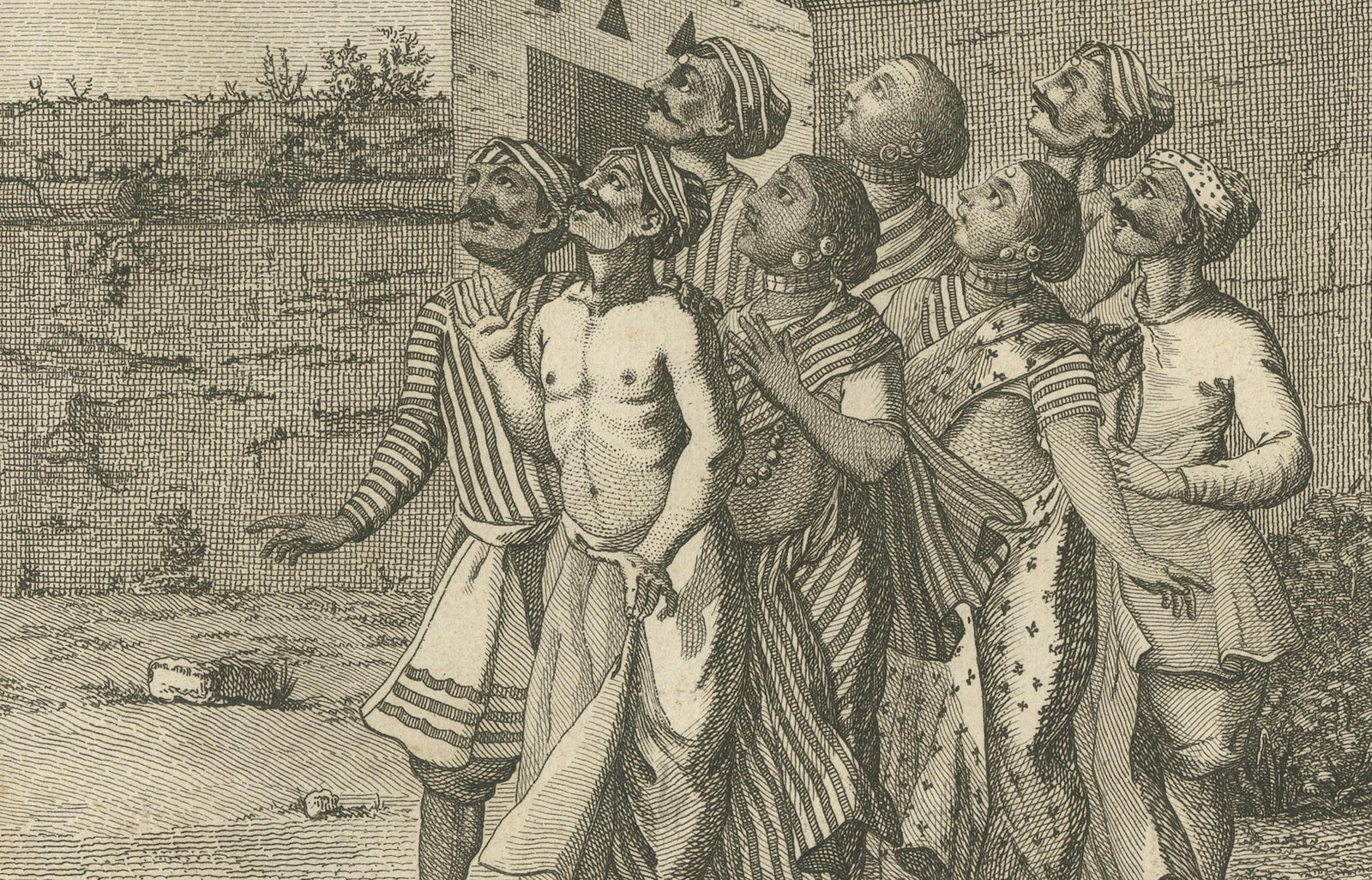
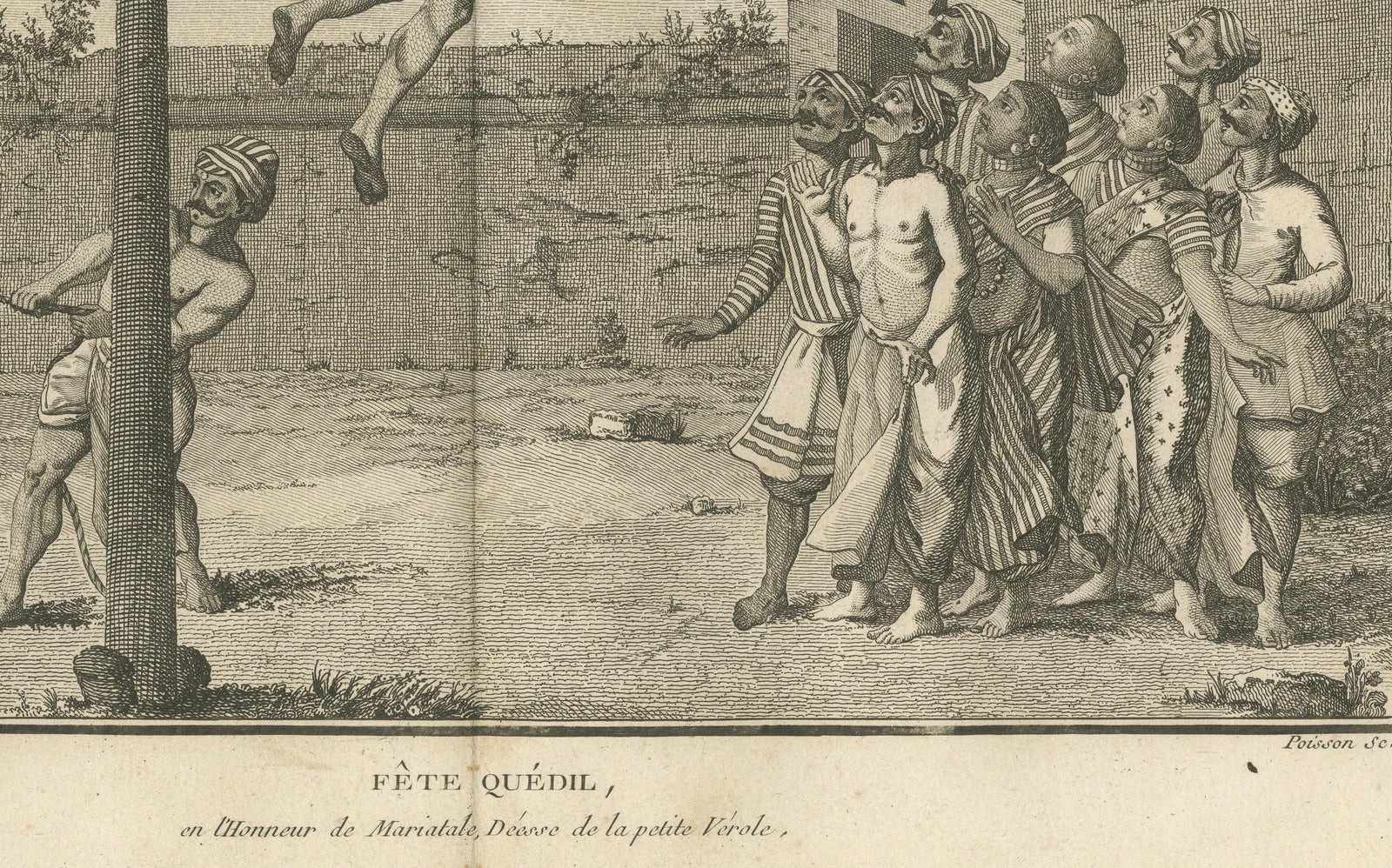
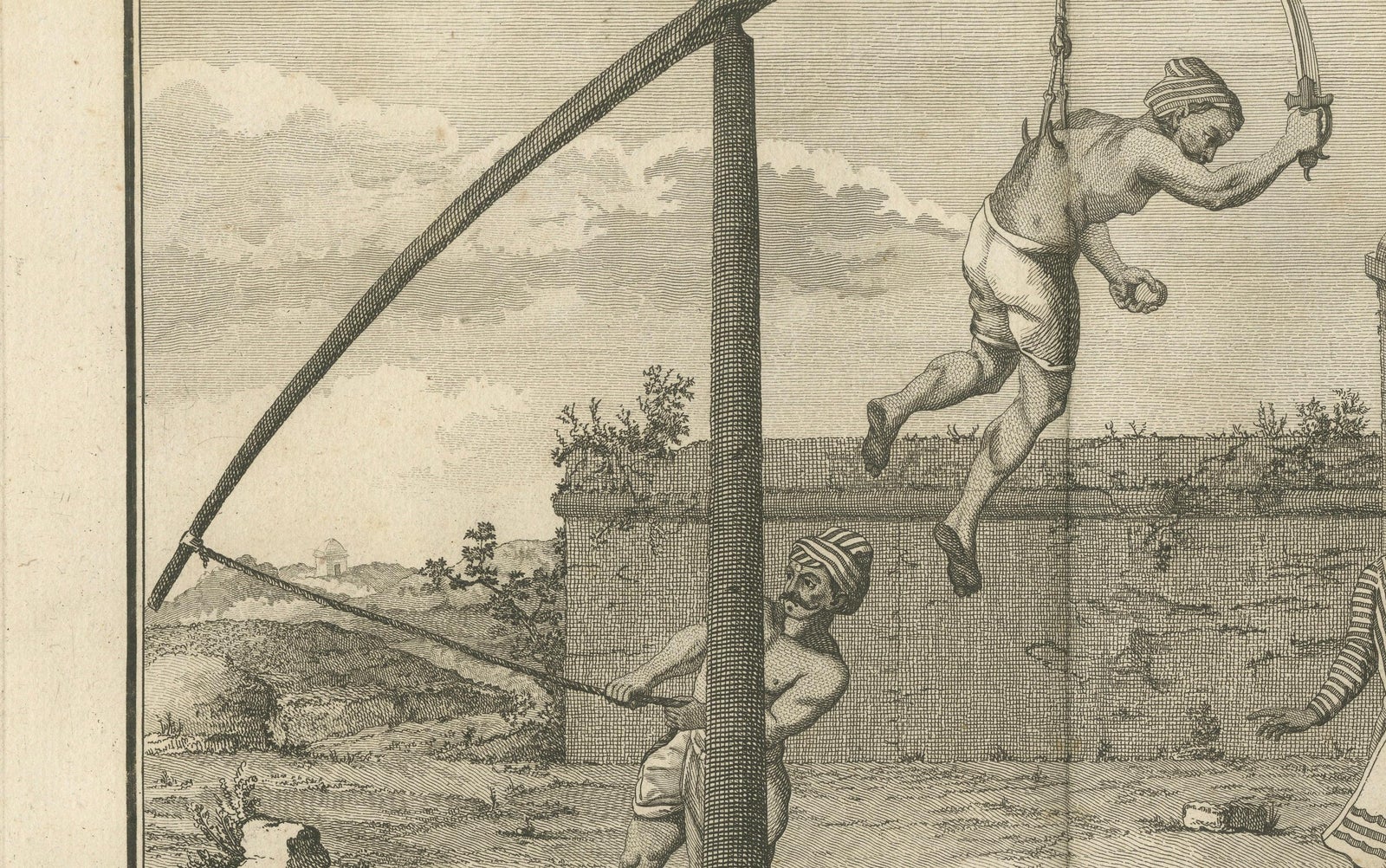
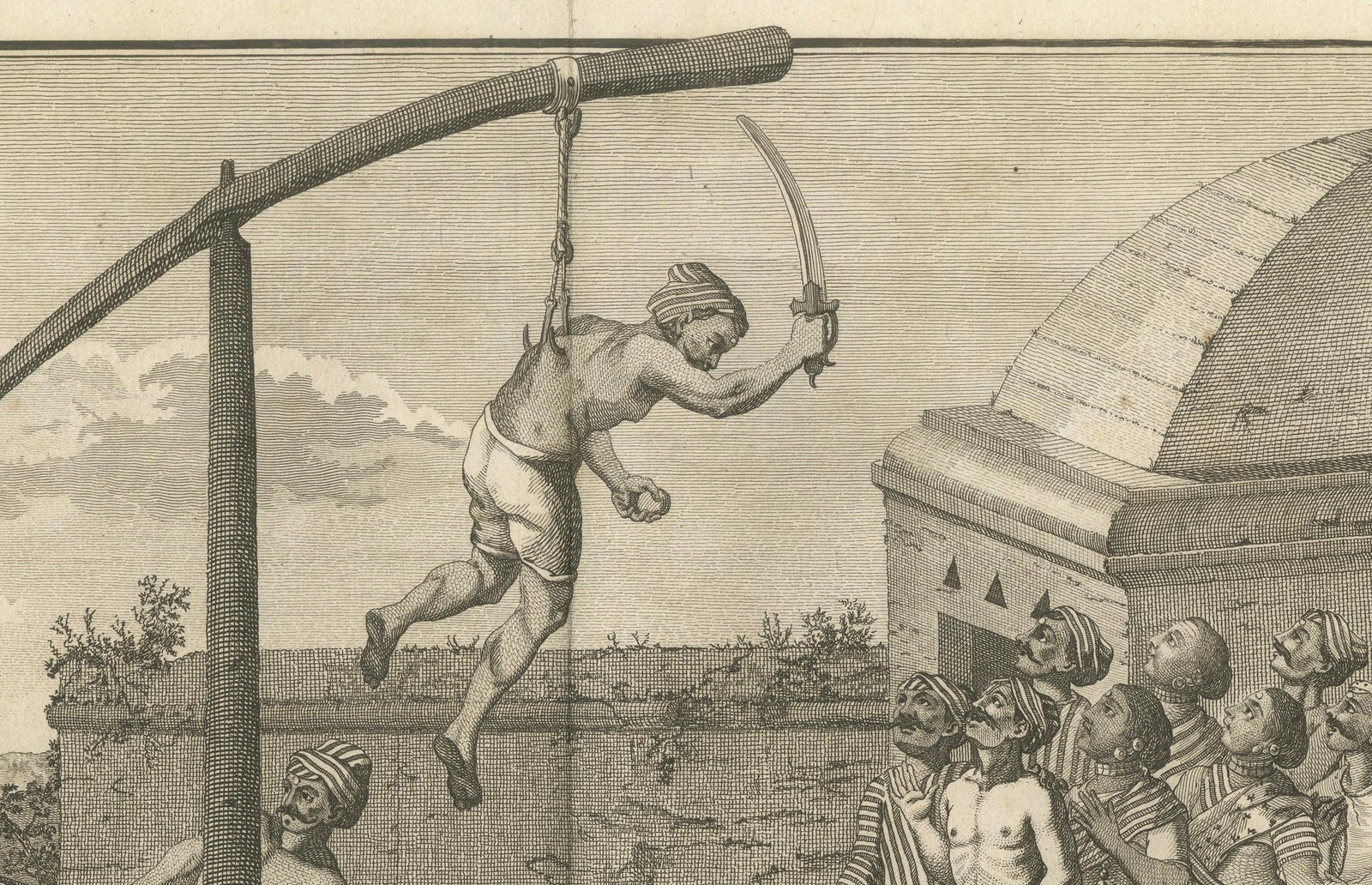
This dramatic engraving titled “Fête Quédi, en Honneur de Mariatal, Déesse de la petite Vérole” portrays an intense religious ritual in South India known as hook-swinging, performed in honor of the goddess Mariamman. At the center of the scene, a devotee is suspended in mid-air by hooks pierced into the skin of his back and attached to a large pivoted beam. He swings in a circular motion above the ground, holding a curved blade and a ritual object, while a group of onlookers dressed in traditional attire observes with reverence.
The ceremony depicted here is linked to the worship of Mariamman, a South Indian folk deity associated with protection against diseases like smallpox. Such festivals involved acts of physical endurance and ritual pain, offered in devotion or penance. The practice of hook-swinging, though later outlawed during colonial rule, was once widespread in Tamil Nadu and surrounding regions, particularly during temple festivals.
The engraving originates from the 1806 edition of *Voyage aux Indes Orientales et à la Chine* by Pierre Sonnerat (1745 to 1814), a French naturalist and explorer who documented Indian customs, religious practices, and everyday life during his travels. The engraving was executed by Jean-Baptiste-Marie Poisson (1747 to 1820), based on Sonnerat’s original drawings.
This powerful and rare early Western depiction of a now-defunct ritual offers valuable insight into regional religious expression and early European ethnographic interest. It is a compelling piece for collectors of South Indian iconography, colonial-era documentation, or cultural anthropology in visual art.
Condition report:
Good condition overall. Fold at center as issued, with some darkening and small stains along the crease. Light age-related toning and spotting, mostly in the margins. Strong plate impression.
Framing tips:
A simple dark frame with a wide mat in beige or cream will highlight the dramatic central motion of the figure and provide contrast to the aged paper tone.
Technique: Engraving
Maker: J.-B.-M. Poisson after Pierre Sonnerat, Paris, 1806
Explore