Close-ups
Framed and on the wall


Frame and rooms are illustrations of how the print could look, drawn to its real size; it is sold unframed unless the description says otherwise.
Rites of the World
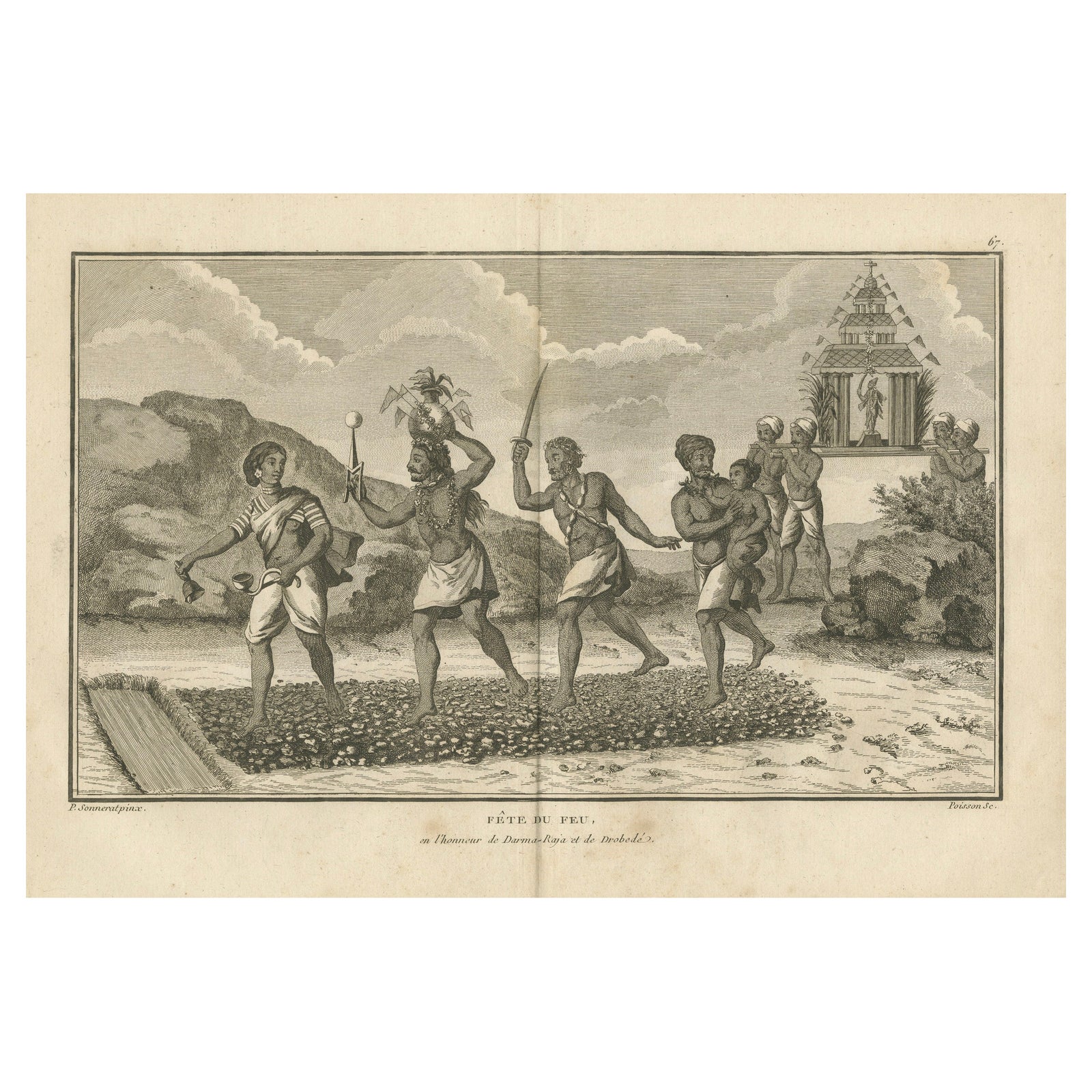
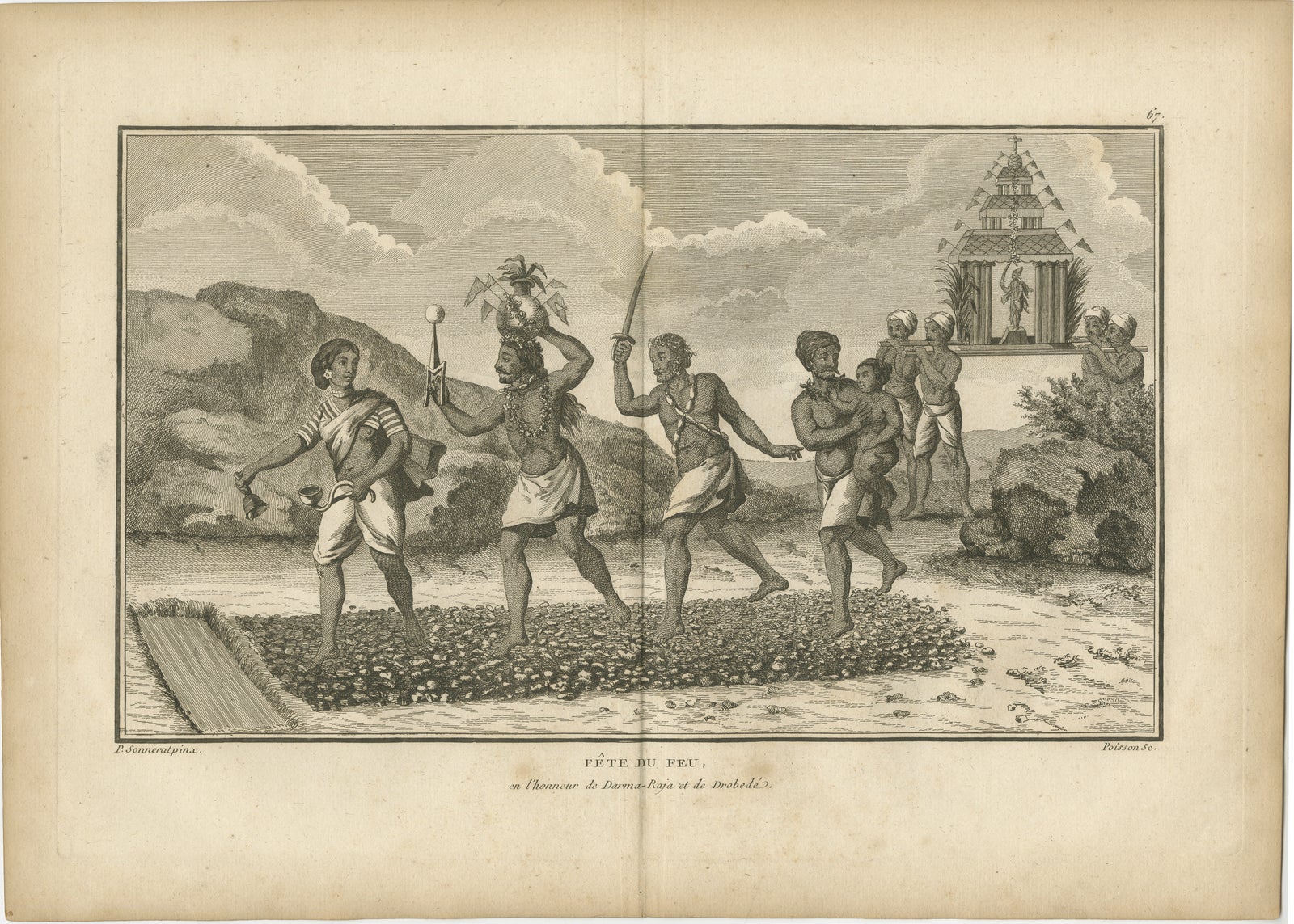
Hindu Fire-Walking Ceremony in Honor of Dharma Raja, Engraving, 1806
Anno Domini MDCCCVI1806
$325
€290 · £245
Original print, not a reproduction
Ships worldwide from the Netherlands, flat, insured and tracked. 14-day returns. To buy, use Ask a question (info@antiquesacredprints.com) and we will reserve it for you.
- Date
- 1806
- Sheet size
- 11.2 × 15.4 in (28.5 × 39 cm)
- Condition
- Good. Good condition. Vertical fold as issued, with some toning and minor foxing along the fold and in the margins. Strong plate impression and detailed shading.
- Faith
- Hinduism
- Collection
- Rites of the World
- Era
- 1800 to 1849, Travellers and the costume books
- Stock no.
- f_46090902
Hindu Fire-Walking Ceremony in Honor of Dharma Raja, Engraving, 1806
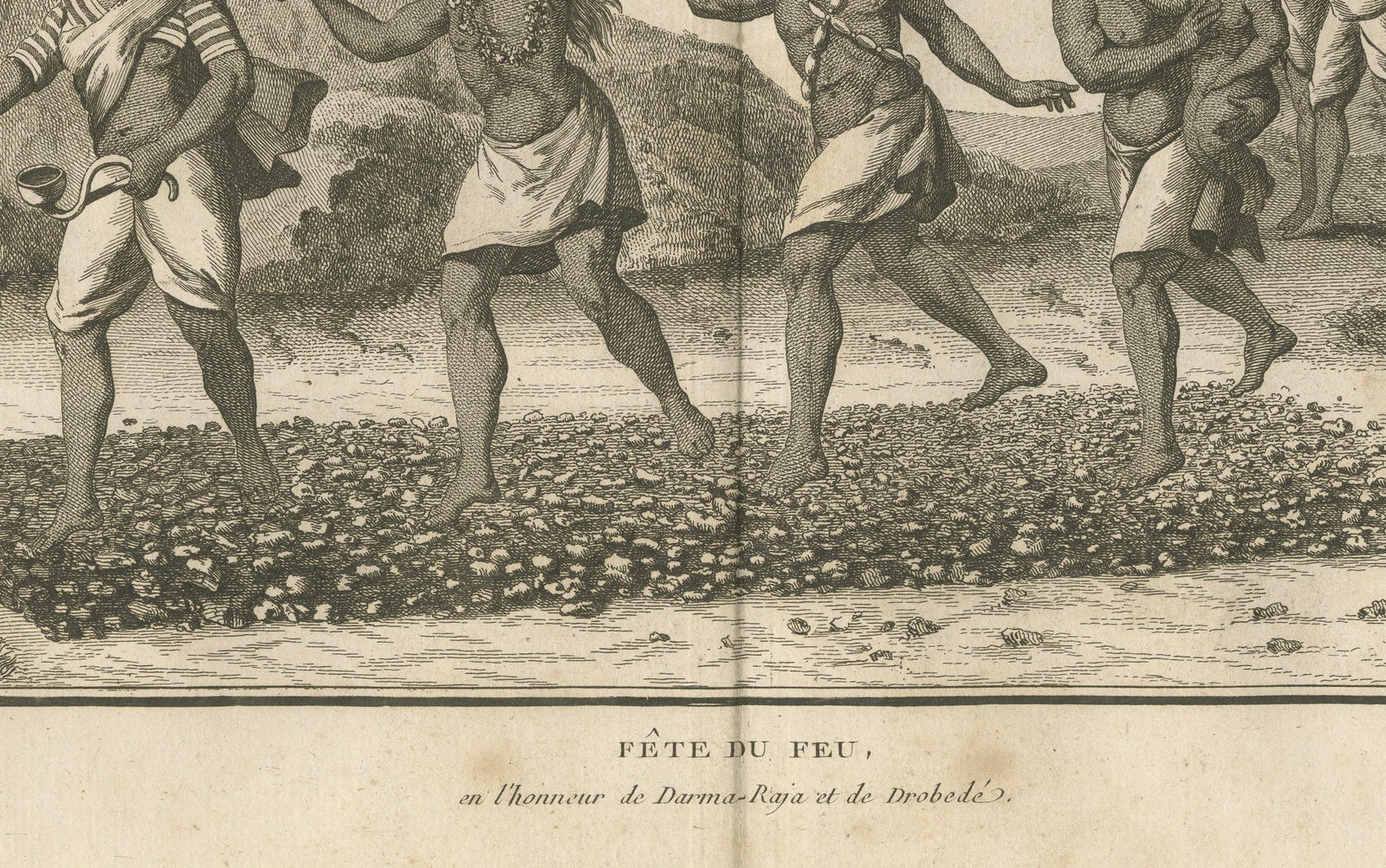
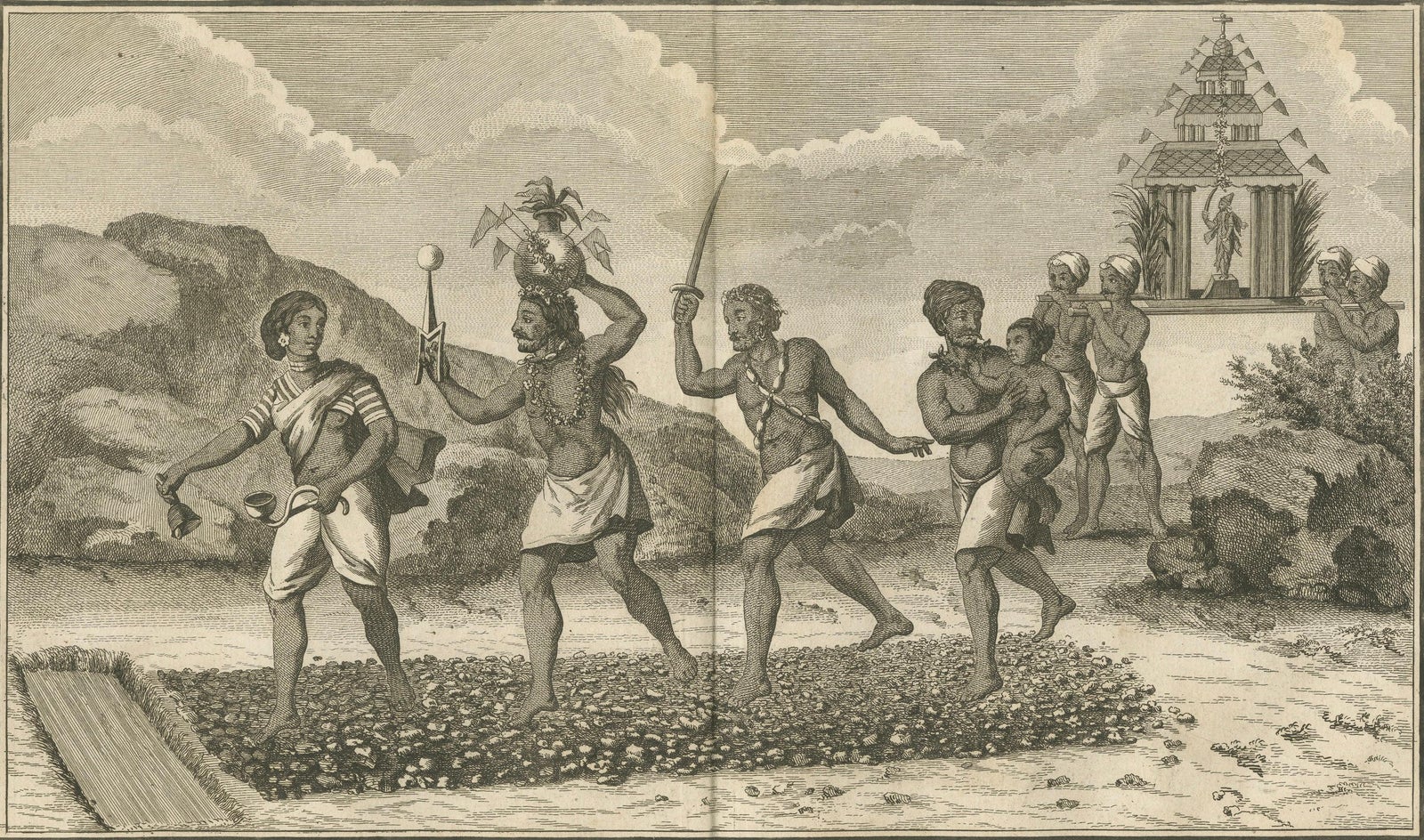
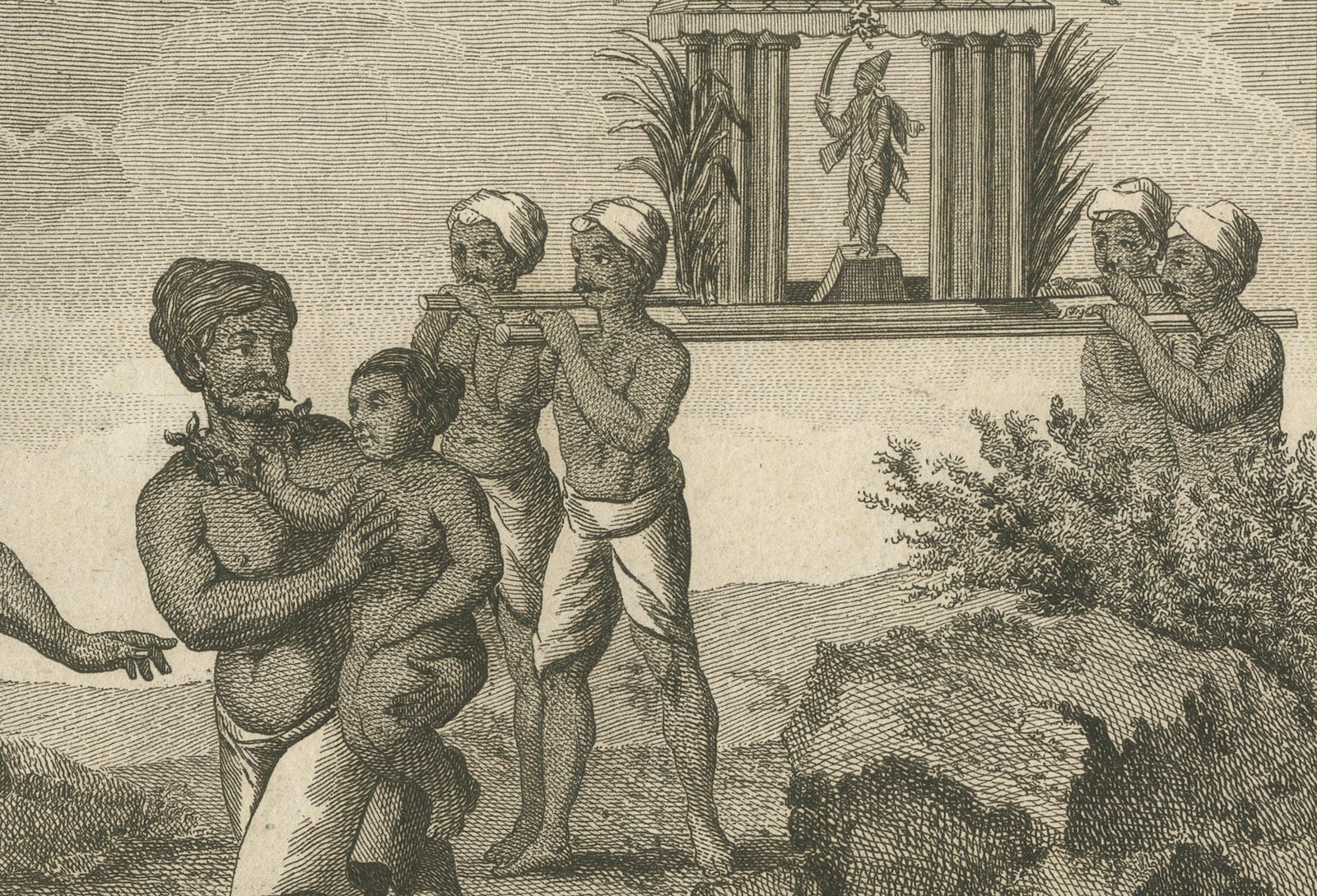
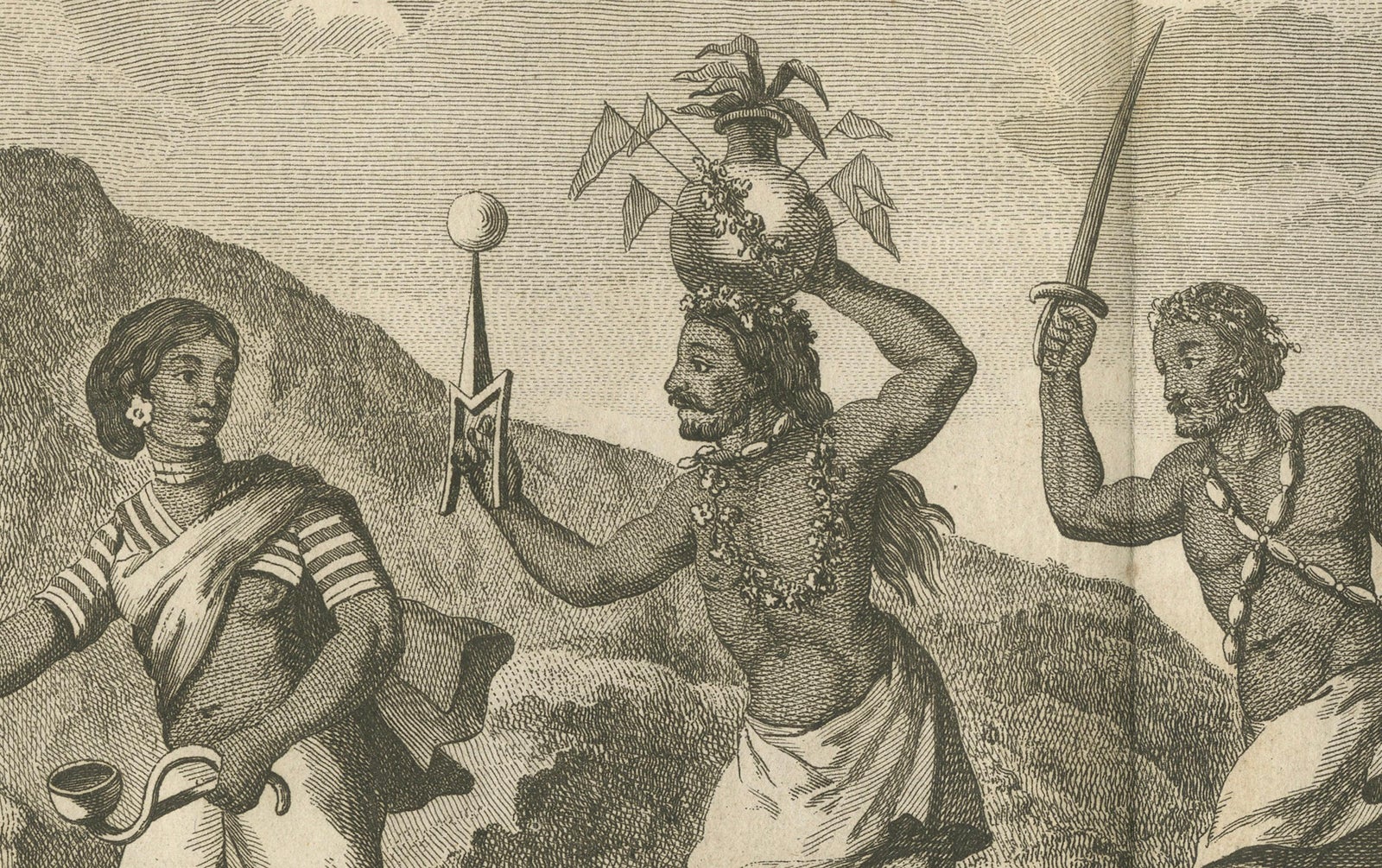
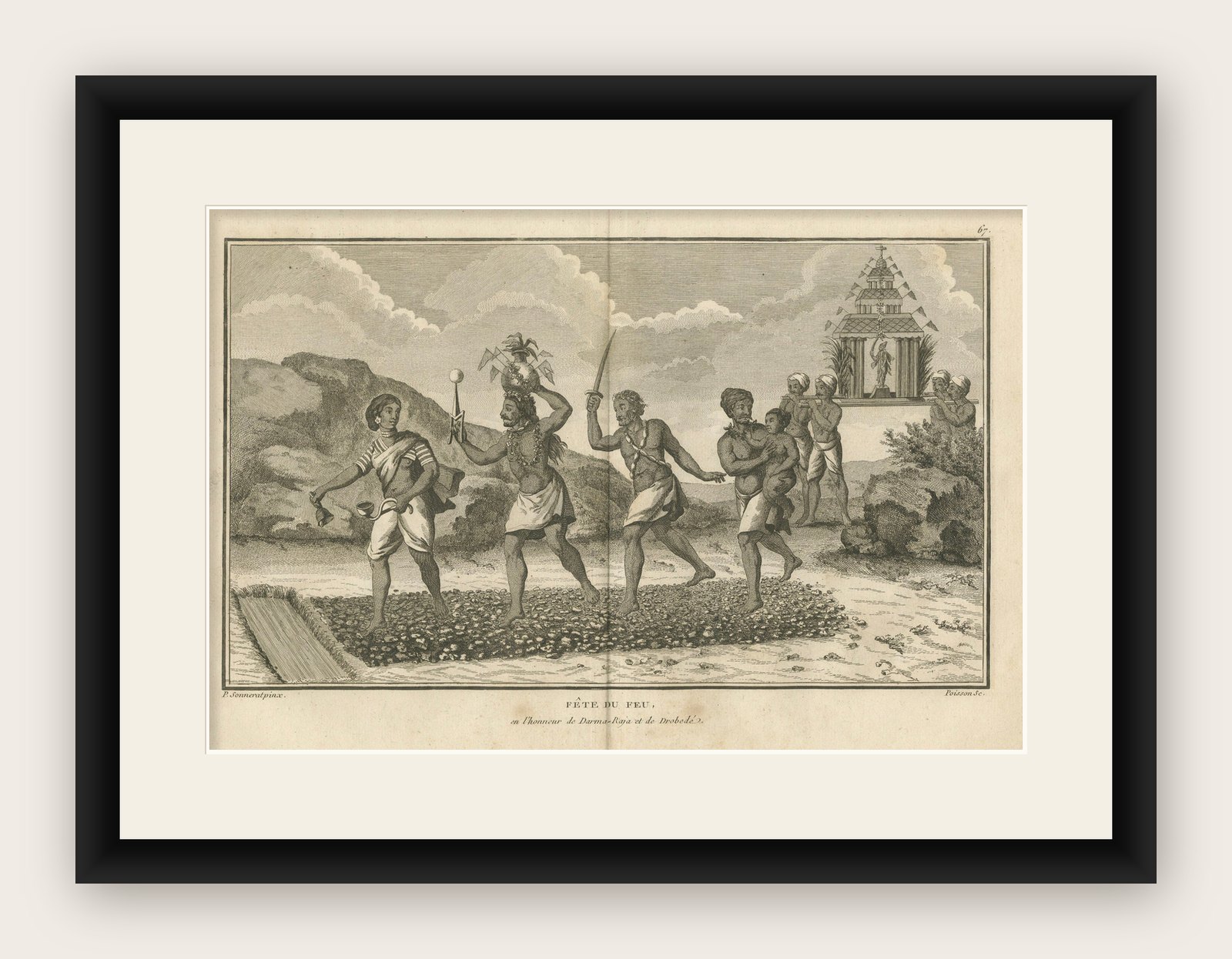
This antique engraving, titled “Fête du Feu, en l’Honneur de Dharma Raja et de Drobédé,” depicts a traditional South Indian fire-walking ritual. In the foreground, several men walk barefoot across a bed of glowing embers, their movements poised and ceremonial. One of the participants carries a decorated pot on his head, while another brandishes a sword, adding to the sense of ritual intensity and devotion. To the right, a man carries a child across the fire, symbolizing protection and blessing. In the background, priests or attendants carry a small portable shrine containing a deity, framed by palm fronds and temple-like ornaments.
The ceremony is held in honor of Dharma Raja, a revered figure in Tamil traditions, and Drobédé (likely Draupadi), a goddess associated with fire and purity. Fire-walking rituals, still practiced in parts of South India and Sri Lanka today, are acts of devotion, penance, and thanksgiving, reflecting deep-rooted cultural and religious beliefs.
The engraving originates from the 1806 edition of *Voyage aux Indes Orientales et à la Chine*, written by the French naturalist and explorer Pierre Sonnerat (1745 to 1814). It was executed by Jean-Baptiste-Marie Poisson (1747 to 1820), whose skillful rendering captures both the drama and solemnity of the event. Sonnerat’s work remains an important source for early European observations of Indian cultural and religious practices.
This engraving offers not only an artistic depiction but also historical insight into rituals that fascinated European travelers during the 18th and early 19th centuries. It is particularly appealing for collectors of Orientalist art, early travel accounts, and cultural history.
Condition report:
Good condition. Vertical fold as issued, with some toning and minor foxing along the fold and in the margins. Strong plate impression and detailed shading.
Framing tips:
A dark wooden frame with a wide cream or light beige mat will highlight the contrast of the figures and enhance the ceremonial atmosphere of the image.
Technique: Engraving
Maker: J.-B.-M. Poisson after Pierre Sonnerat, Paris, 1806
Explore