Close-ups
Framed and on the wall
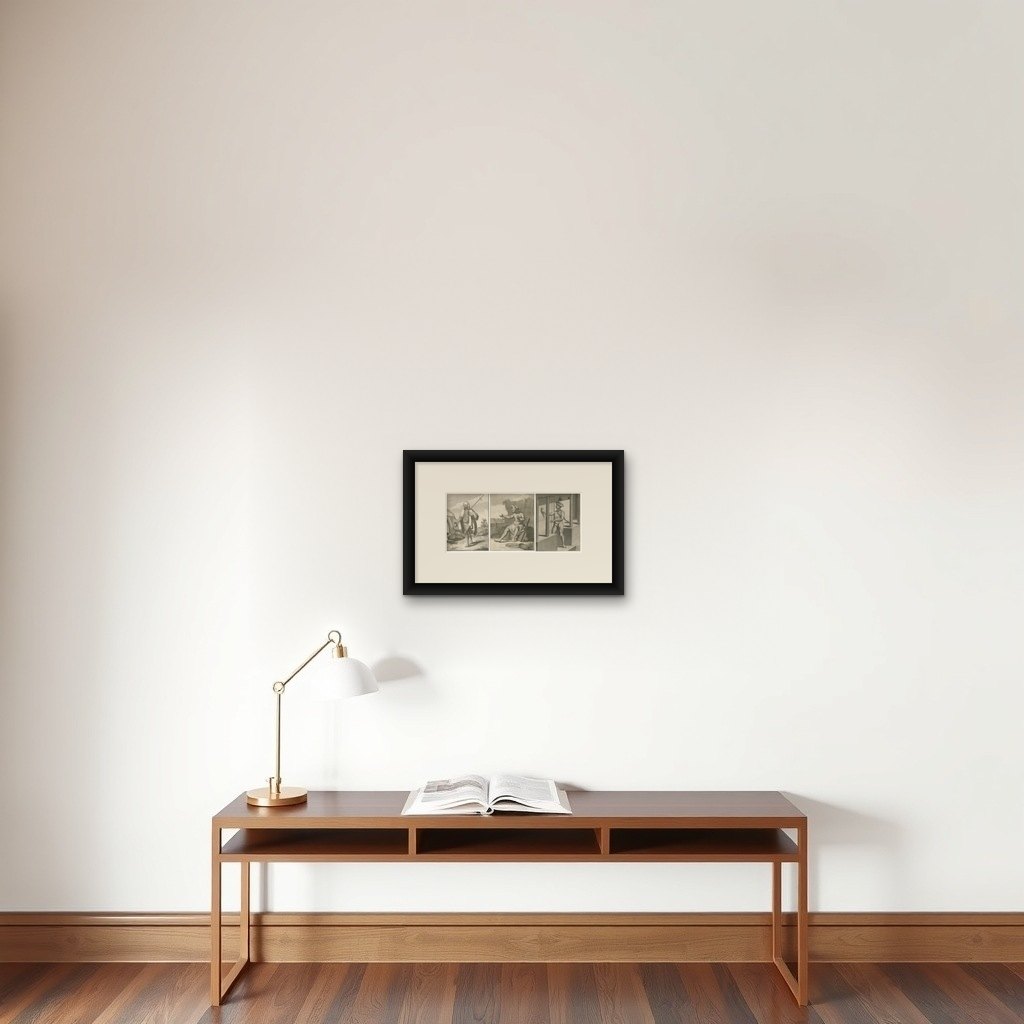

Frame and rooms are illustrations of how the print could look, drawn to its real size; it is sold unframed unless the description says otherwise.
Rites of the World
Hindu Ascetics and Priest, Saniassi, Pandaron, and Carepatré, 1806
Anno Domini MDCCCVI1806
£200£14030% off
$185 · €168
Original print, not a reproduction
Ships worldwide from the Netherlands, flat or rolled, insured and tracked. 14-day returns.
- Date
- 1806
- Sheet size
- 11.2 × 8.3 in (28.5 × 21 cm)
- Condition
- Good. Good overall condition. Sheet trimmed with light toning and some minor foxing, especially in the lower margins. Plates are clean and impressions remain strong.
- Faith
- Hinduism
- Collection
- Rites of the World
- Era
- 1800 to 1849, Travellers and the costume books
- Stock no.
- BG-13429-67, -68, -69
What the condition grades mean
- Excellent
- Bright and clean, with no faults worth mentioning.
- Very good
- Only light signs of age, such as faint toning.
- Good
- Normal signs of age for a sheet of this period: toning, some foxing, small marks or neat old repairs.
- Fair
- Clear faults such as staining, tears or repairs, priced to match.
Every fault we see is written in the condition note, and the whole sheet is shown uncropped in the photos.
Title: Hindu Ascetics and Priest, Saniassi, Pandaron, and Carepatré, 1806
Description:
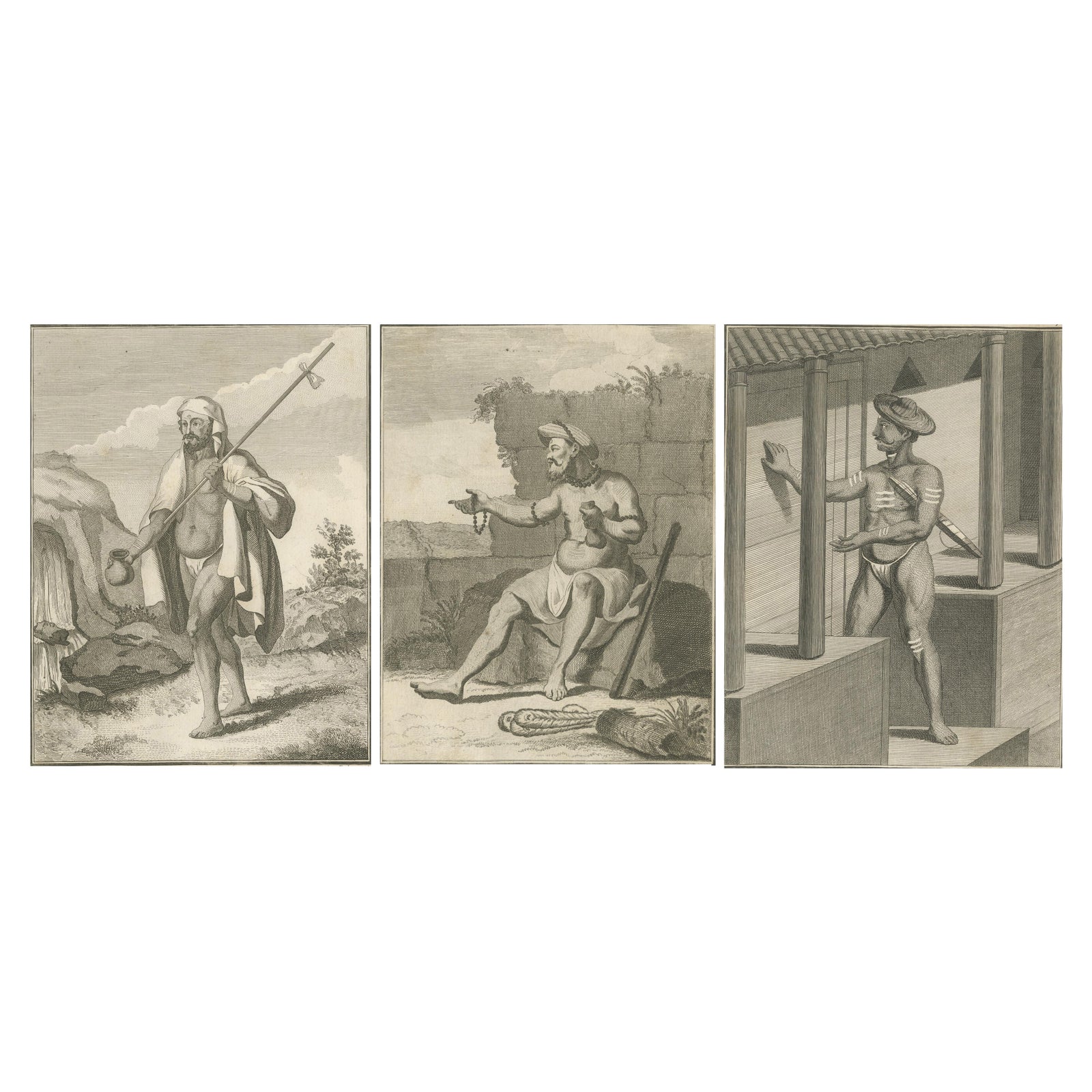
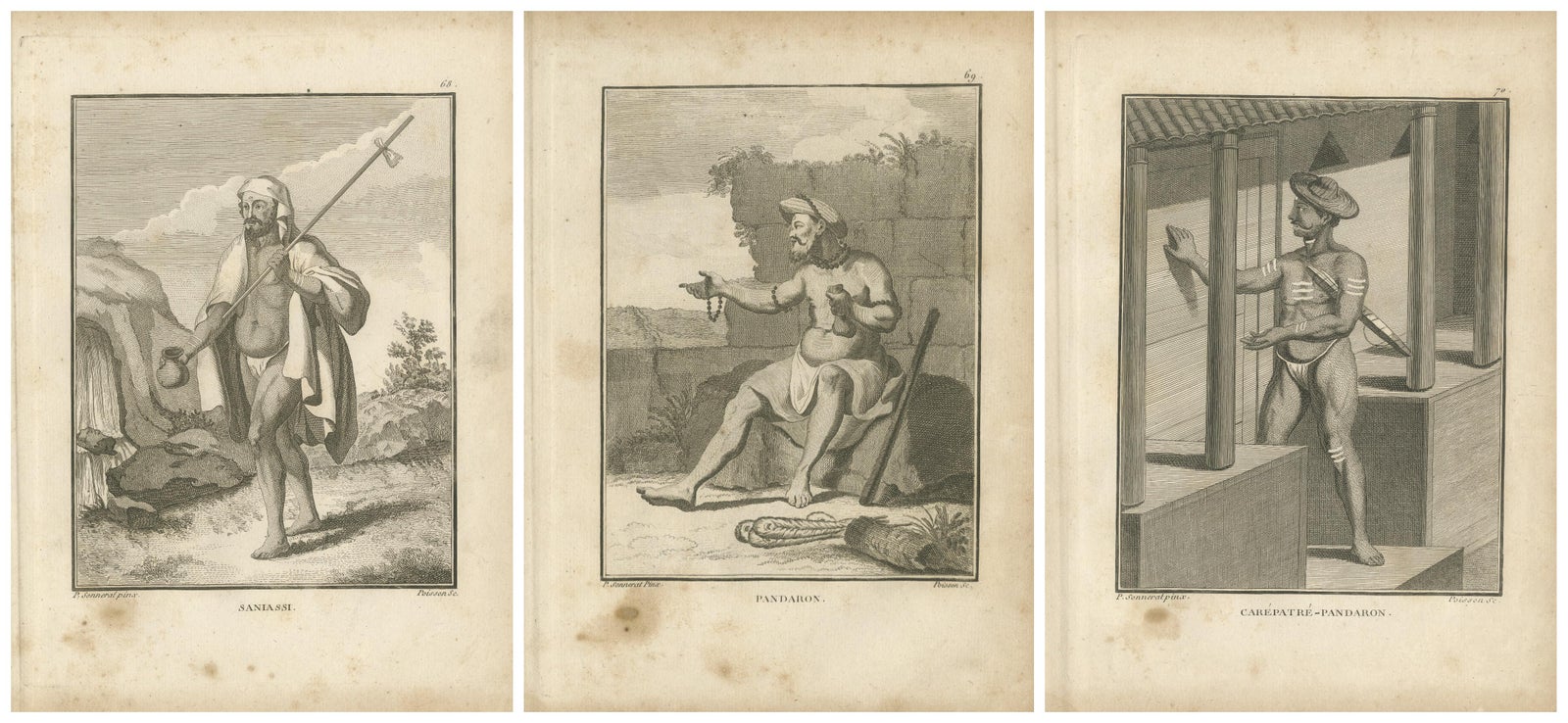
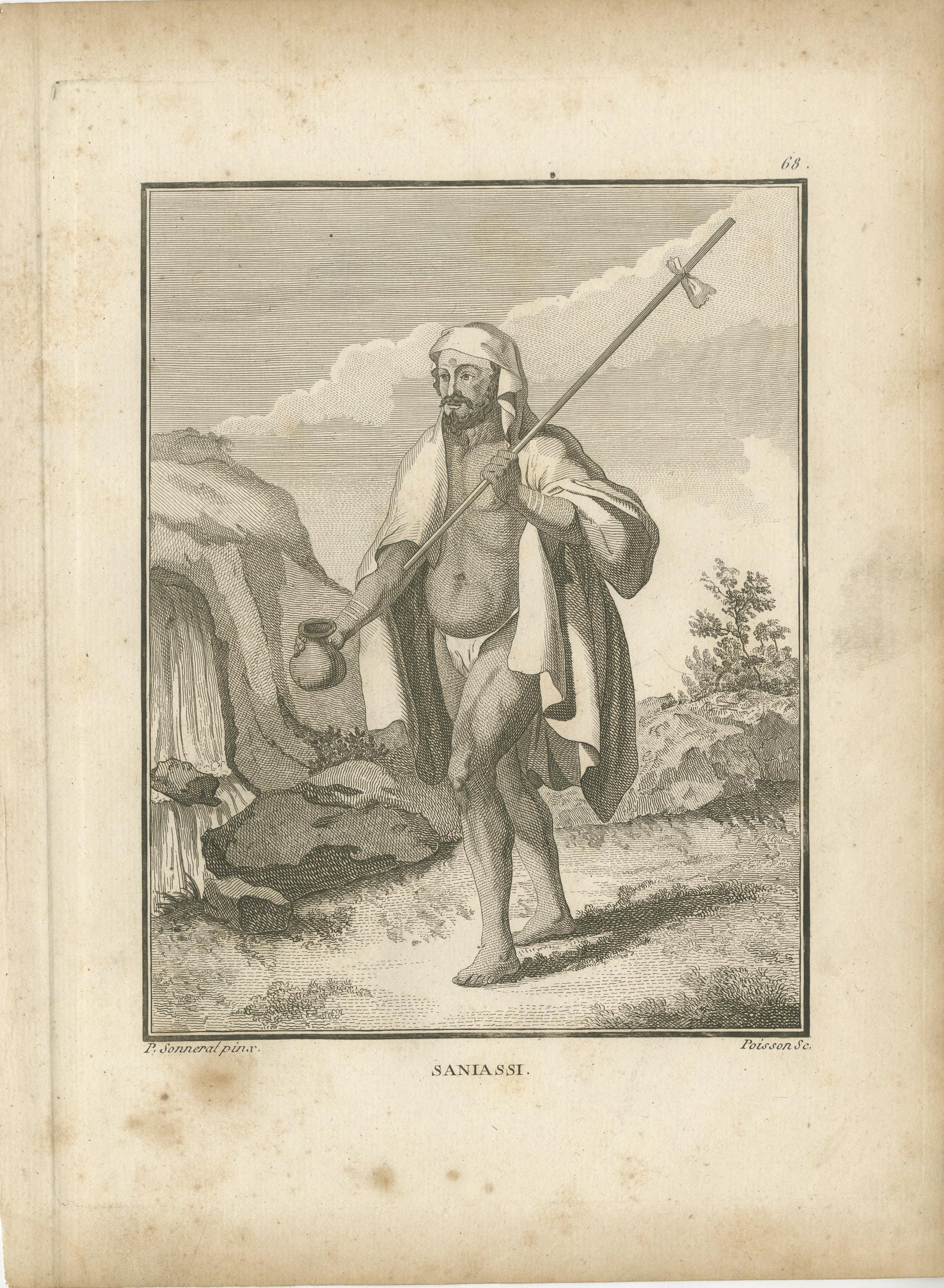
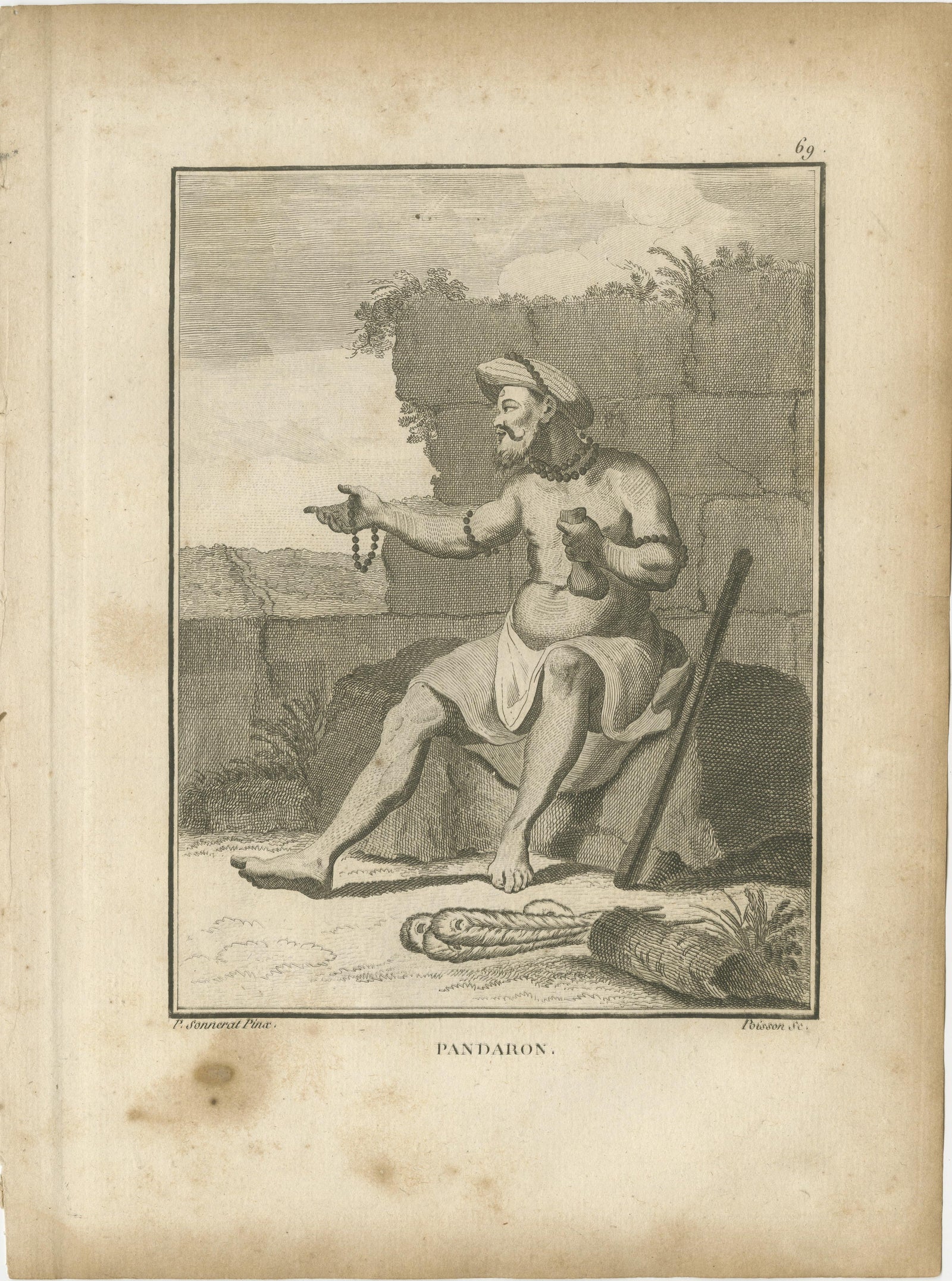
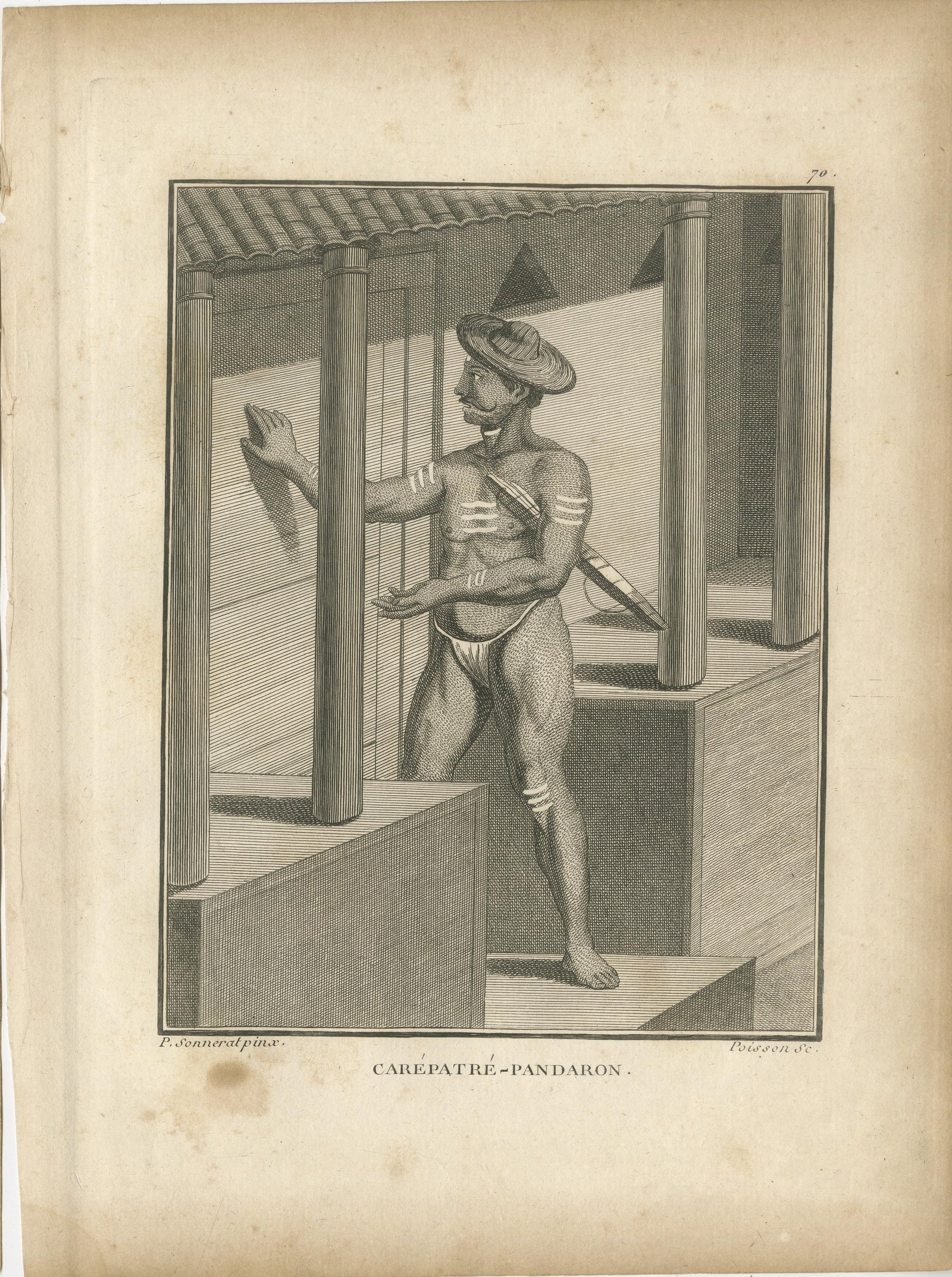
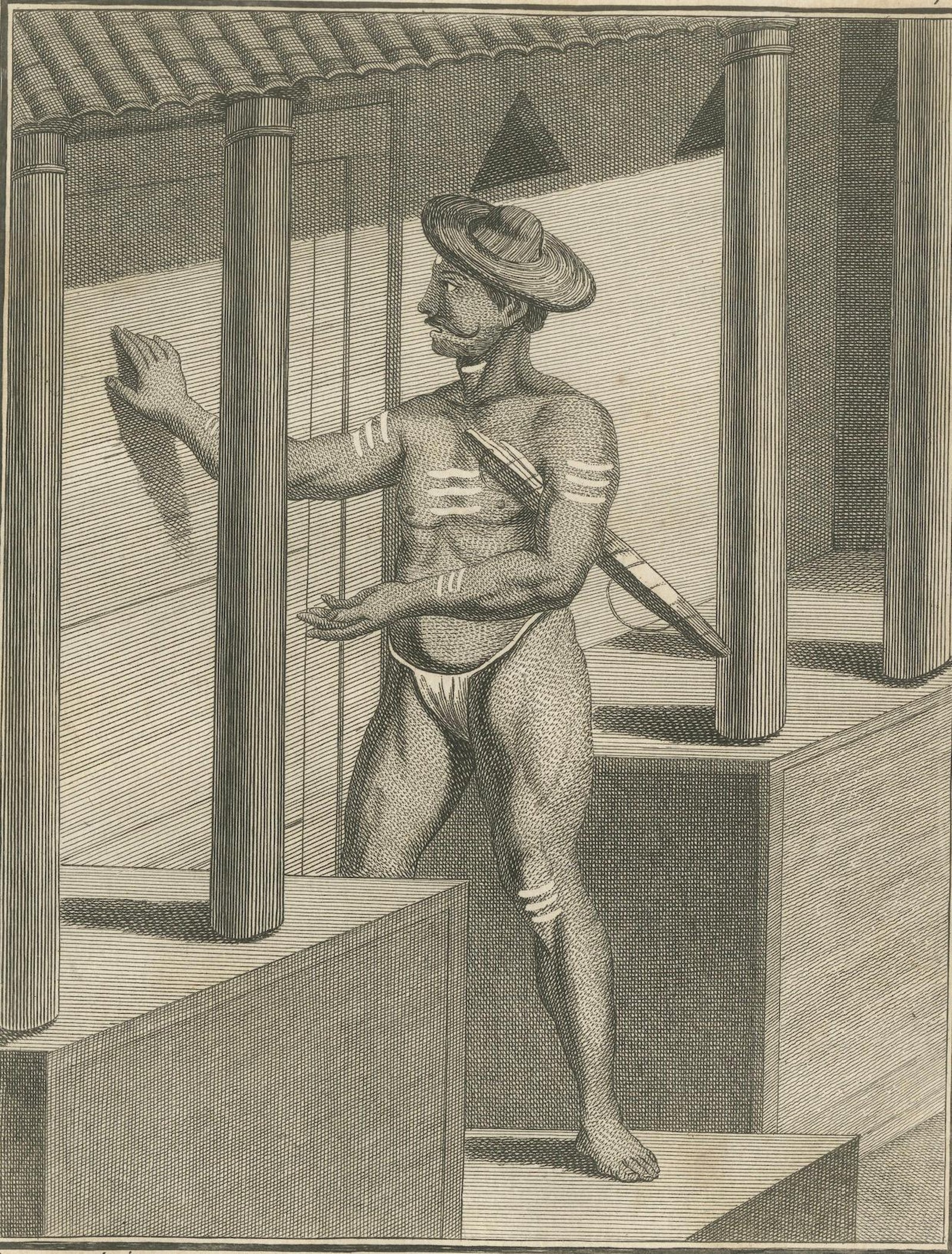
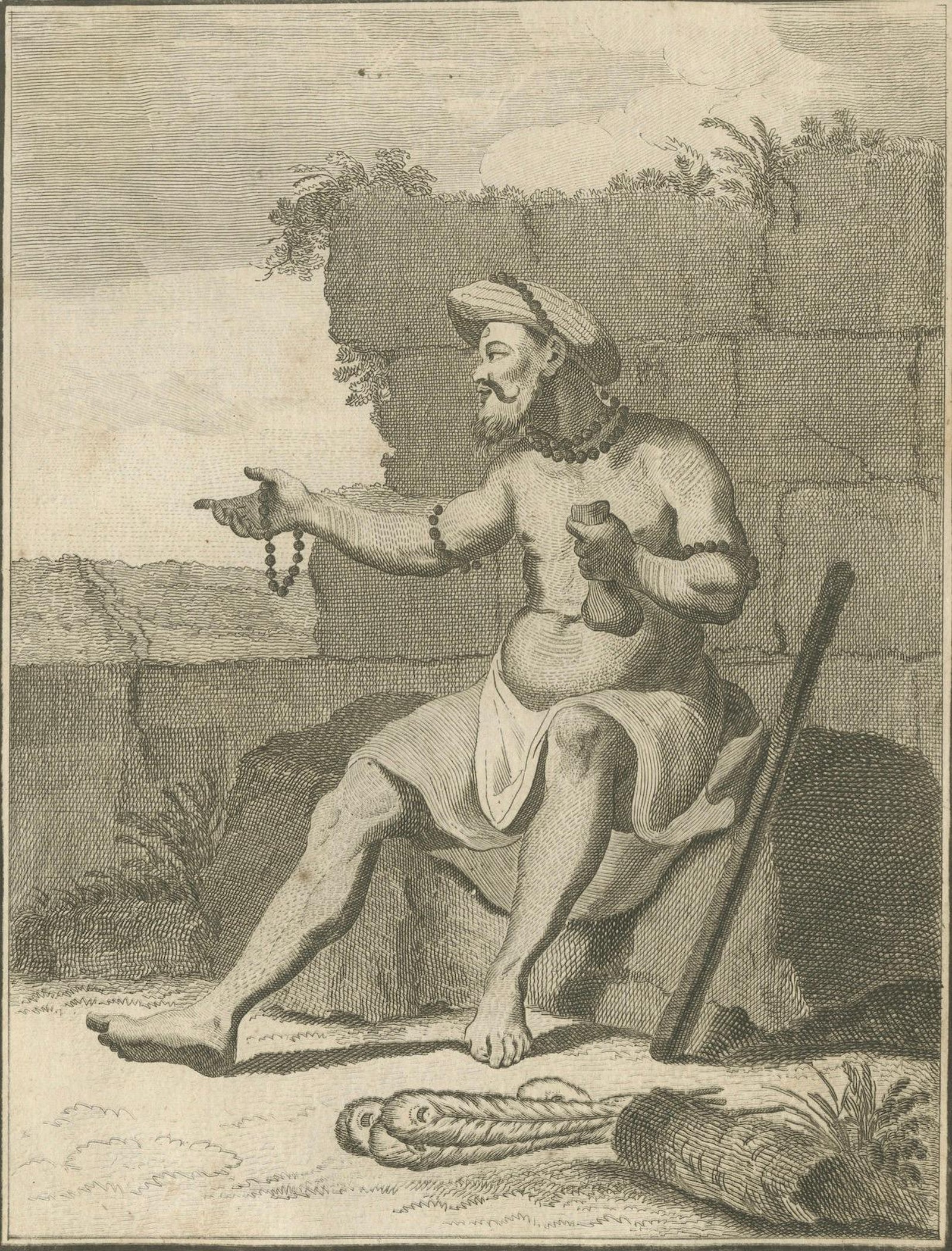
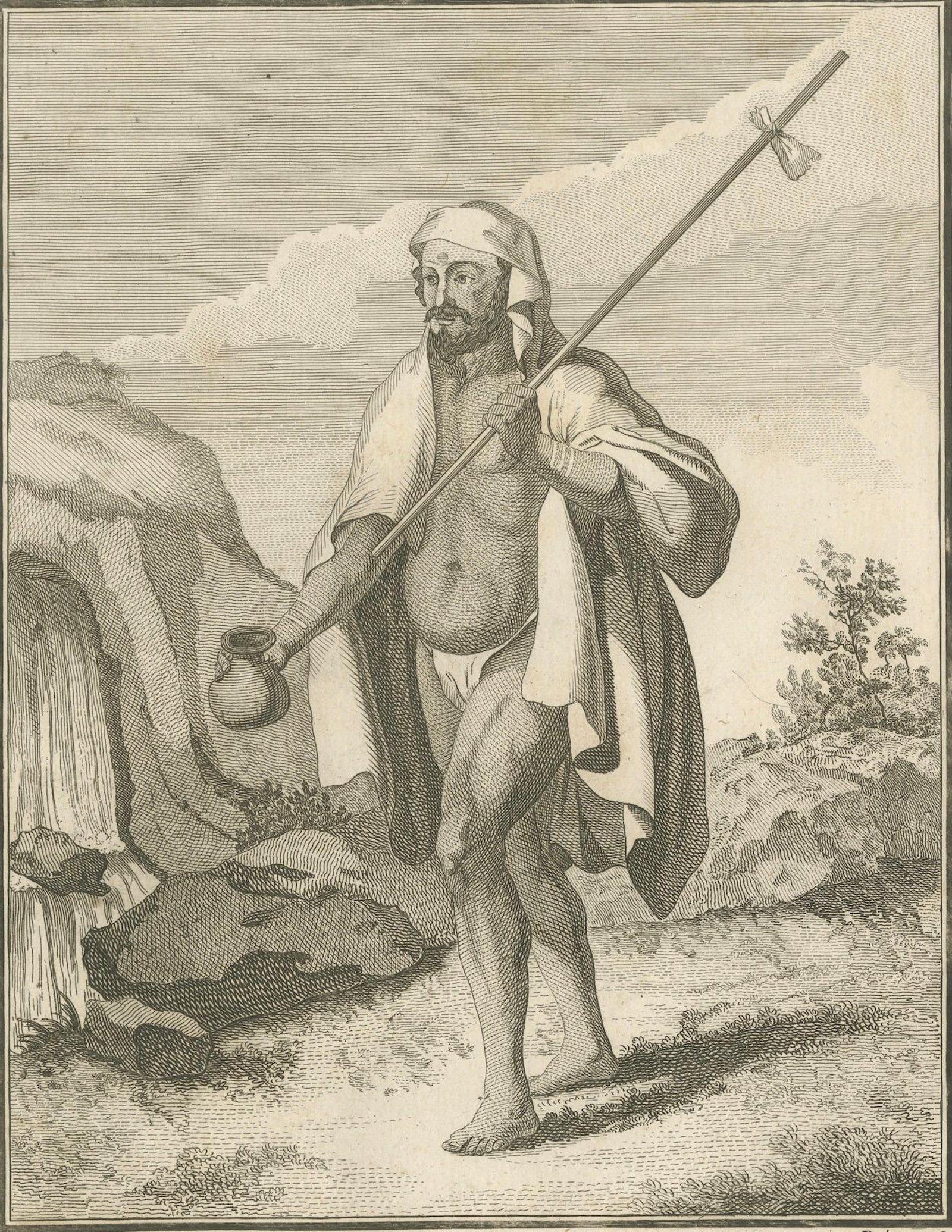
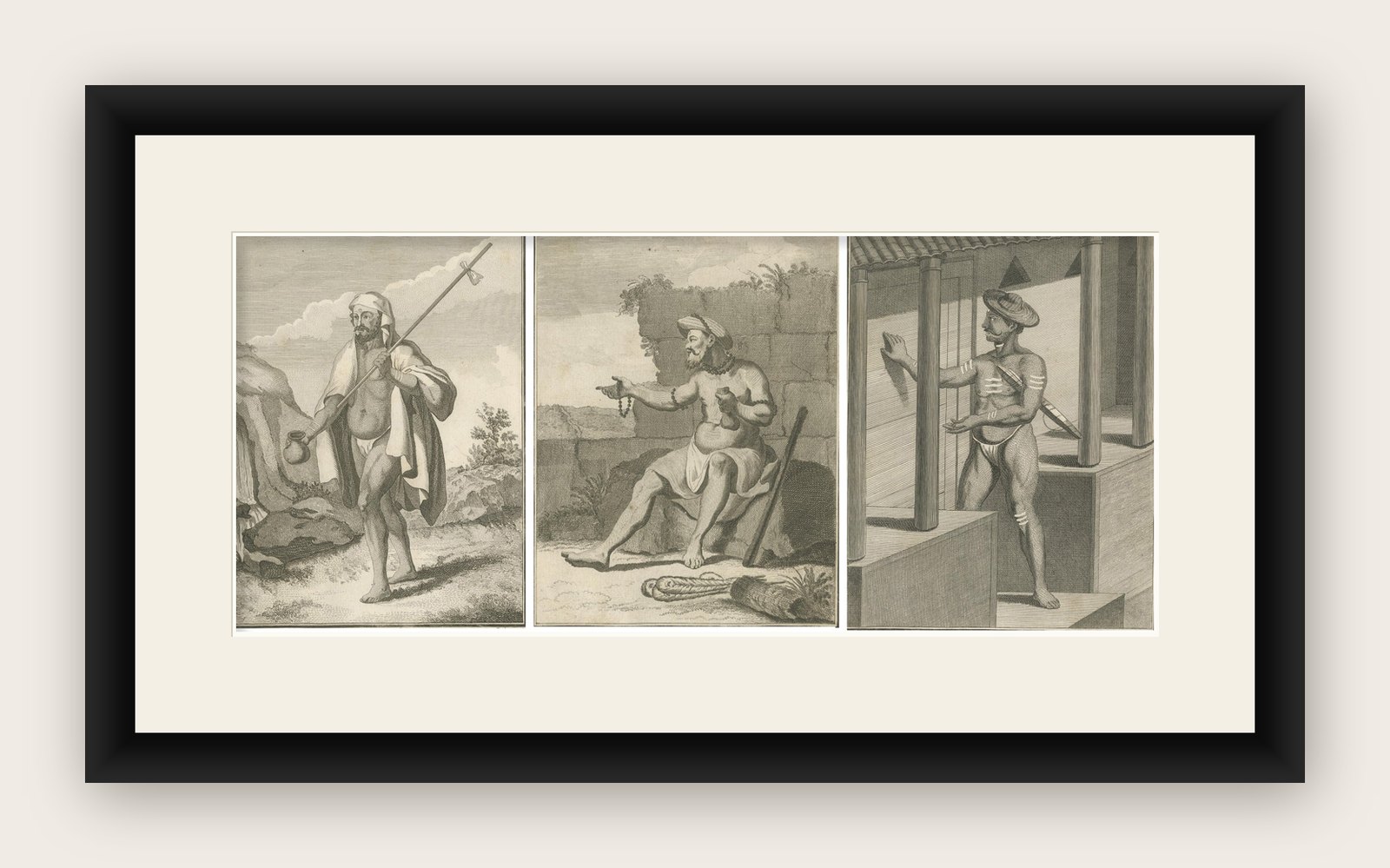
This composite engraving presents three distinct depictions of Hindu spiritual figures, each portrayed in a separate frame with individualized titles: Saniassi, Pandaron, and Carépatré-Pandaron. These figures reflect various aspects of asceticism, devotion, and priesthood in South Indian religious life as observed by European travelers in the 18th century.
On the left, the Saniassi is shown as a wandering ascetic, barefoot and draped in a simple cloth, holding a staff and water pot. He appears near a cave dwelling, suggesting a life of renunciation and meditation. Sannyasis (or sadhus) are respected spiritual seekers in Hindu tradition who renounce worldly attachments to pursue spiritual enlightenment.
The central image depicts the Pandaron, likely representing a type of seated ascetic or temple mendicant. He is shown in a relaxed yet attentive posture, holding a string of prayer beads and seated near ritual tools, possibly indicating his role in temple-related religious practices or public preaching.
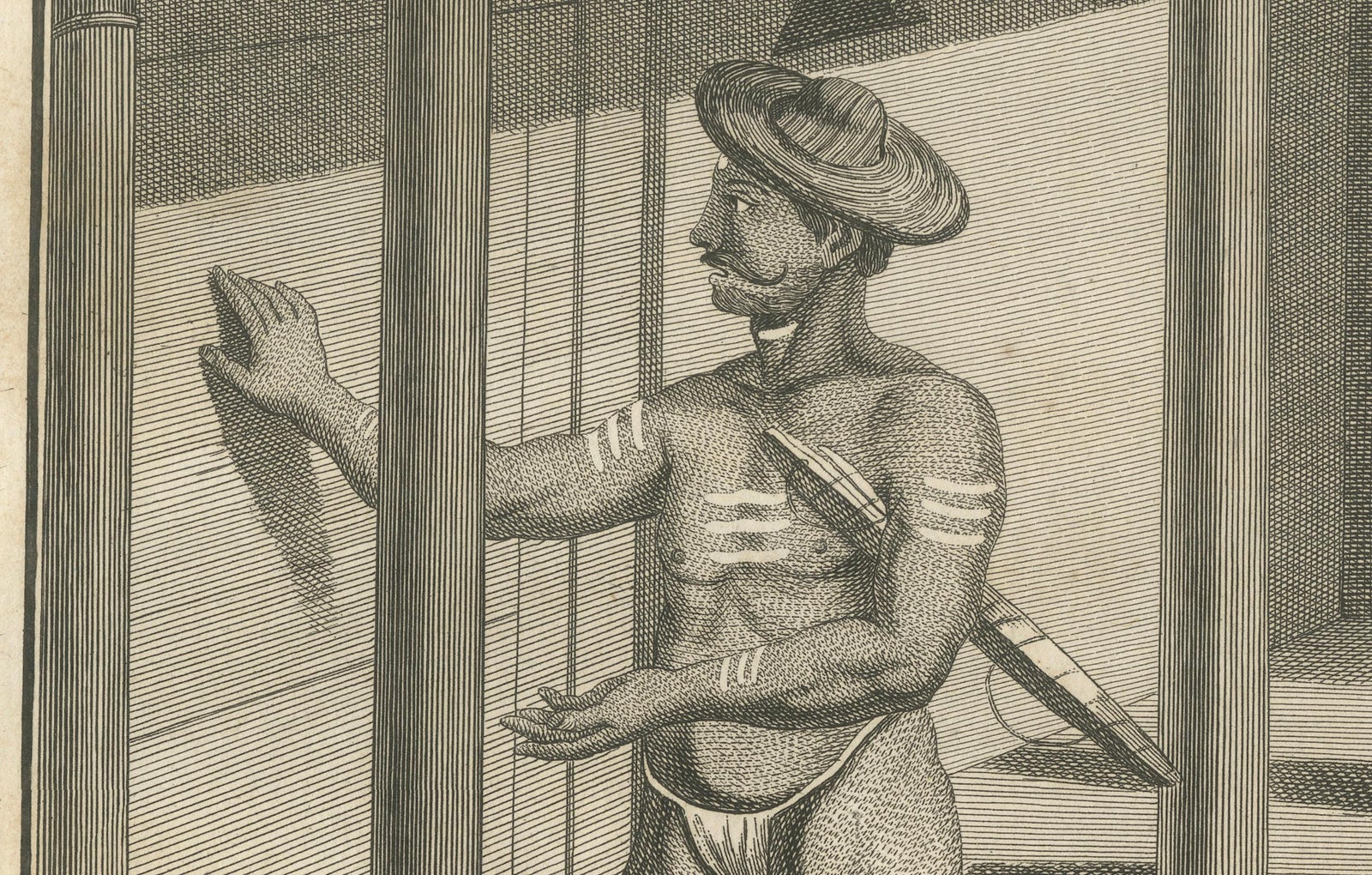
The right panel shows the Carépatré-Pandaron, a priest or devotee within a temple colonnade, actively engaged in worship or ritual. He is partially marked with religious body paint and gestures with one hand, possibly mid-chant or in prayer. His upright, attentive stance and temple setting suggest he holds a ritual officiant role.
All three scenes are drawn from Pierre Sonnerat’s travels in South India and were engraved by Jean-Baptiste-Marie Poisson for the 1806 edition of Voyage aux Indes Orientales et à la Chine. The engravings reflect a European attempt to classify and visually document the religious diversity and practices of India during the colonial period.
Together, the plates offer insight into early 19th-century interpretations of Hindu spirituality and provide a valuable visual reference for students of religion, anthropology, and colonial history.
Condition report:
Good overall condition. Sheet trimmed with light toning and some minor foxing, especially in the lower margins. Plates are clean and impressions remain strong.
Framing tips:
This triptych-style engraving would be well suited to a single wide frame with a neutral mat, allowing each figure to be individually appreciated while preserving the unity of the composition.
Technique: Engraving
Maker: J.-B.-M. Poisson after Pierre Sonnerat, Paris, 1806
Explore