Close-ups
Framed and on the wall
Frame and rooms are illustrations of how the print could look, drawn to its real size; it is sold unframed unless the description says otherwise.
Houses of Worship
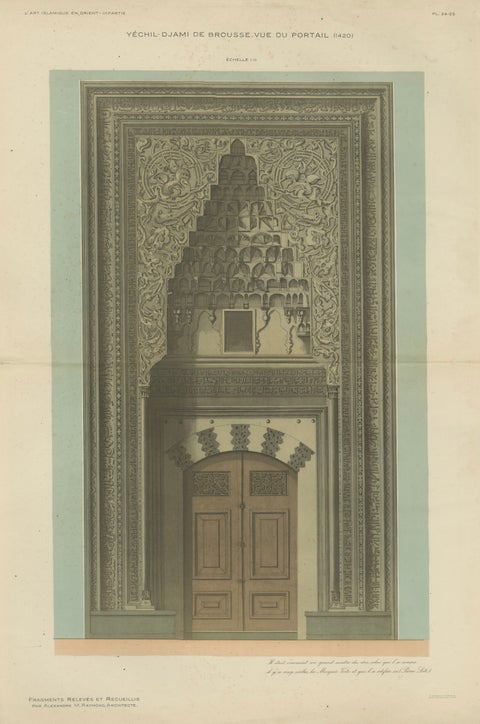
Green Mosque Window with Arabesques, Bursa Ottoman Architecture Print, 1924
Anno Domini MCMXXIV1924
£400£30025% off
$390 · €357
Original print, not a reproduction
Ships worldwide from the Netherlands, flat or rolled, insured and tracked. 14-day returns.
- Date
- 1924
- Sheet size
- 19.7 × 14.2 in (50 × 36 cm)
- Condition
- Good. Good antique condition with age-related toning, occasional light foxing, and minor handling wear consistent with age. The image remains clean, decorative, and well preserved. Please study the images carefully.
- Faith
- Islam
- Collection
- Houses of Worship
- Era
- 1850 and after, Chromolithographs and devotional prints
- Stock no.
- BG-14306-4
What the condition grades mean
- Excellent
- Bright and clean, with no faults worth mentioning.
- Very good
- Only light signs of age, such as faint toning.
- Good
- Normal signs of age for a sheet of this period: toning, some foxing, small marks or neat old repairs.
- Fair
- Clear faults such as staining, tears or repairs, priced to match.
Every fault we see is written in the condition note, and the whole sheet is shown uncropped in the photos.
Green Mosque Window with Arabesques, Bursa Ottoman Architecture Print, 1924
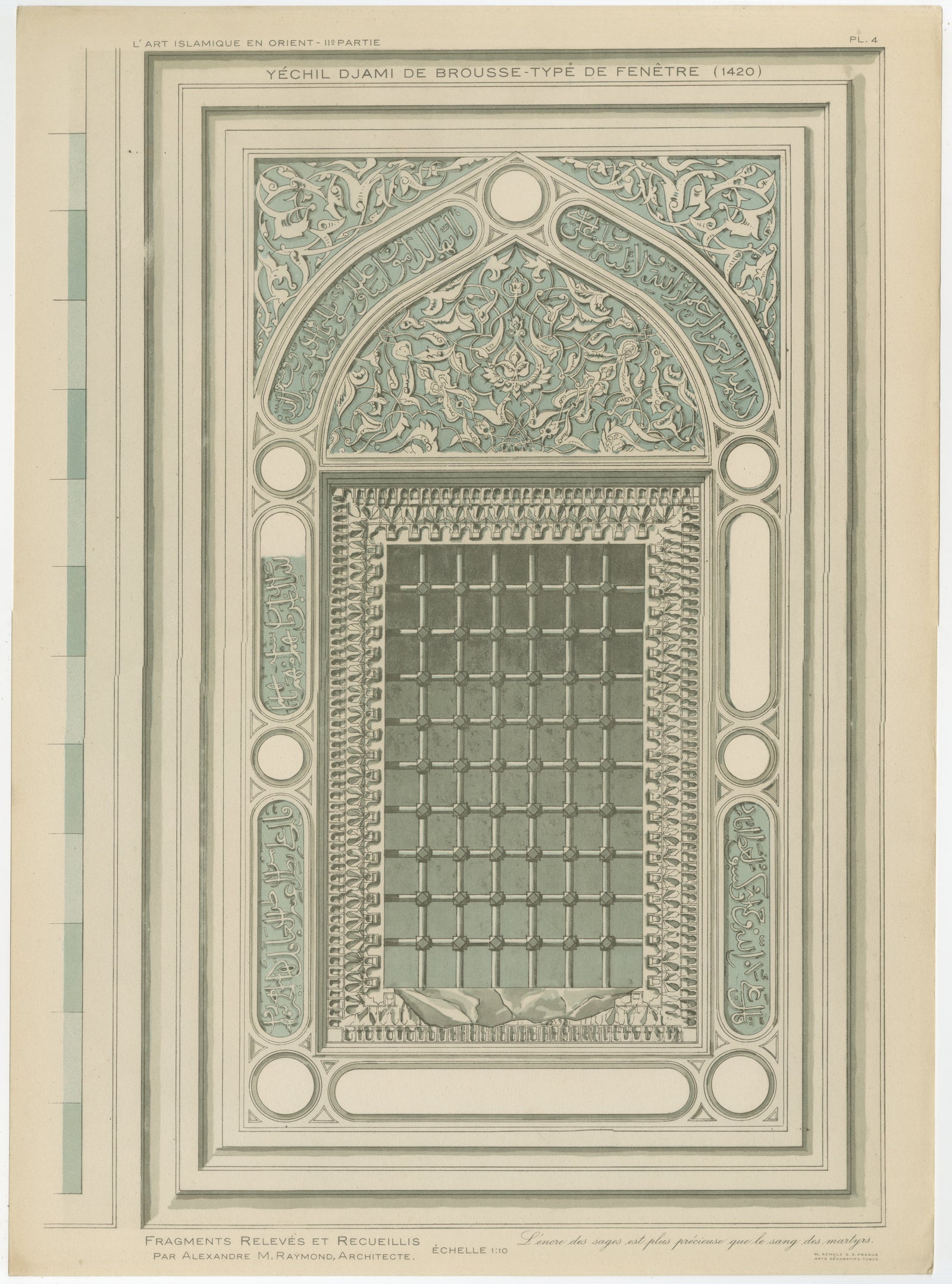
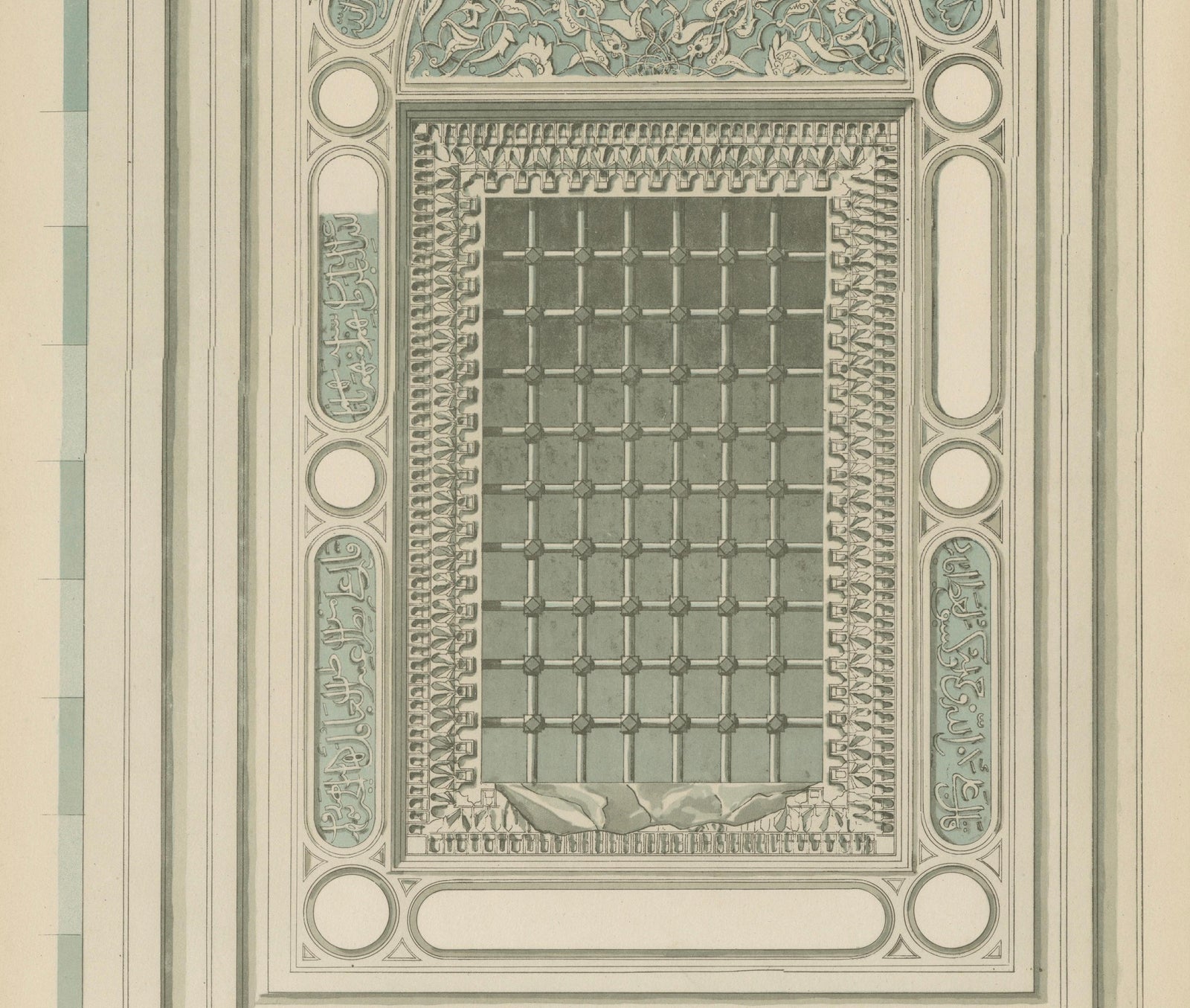
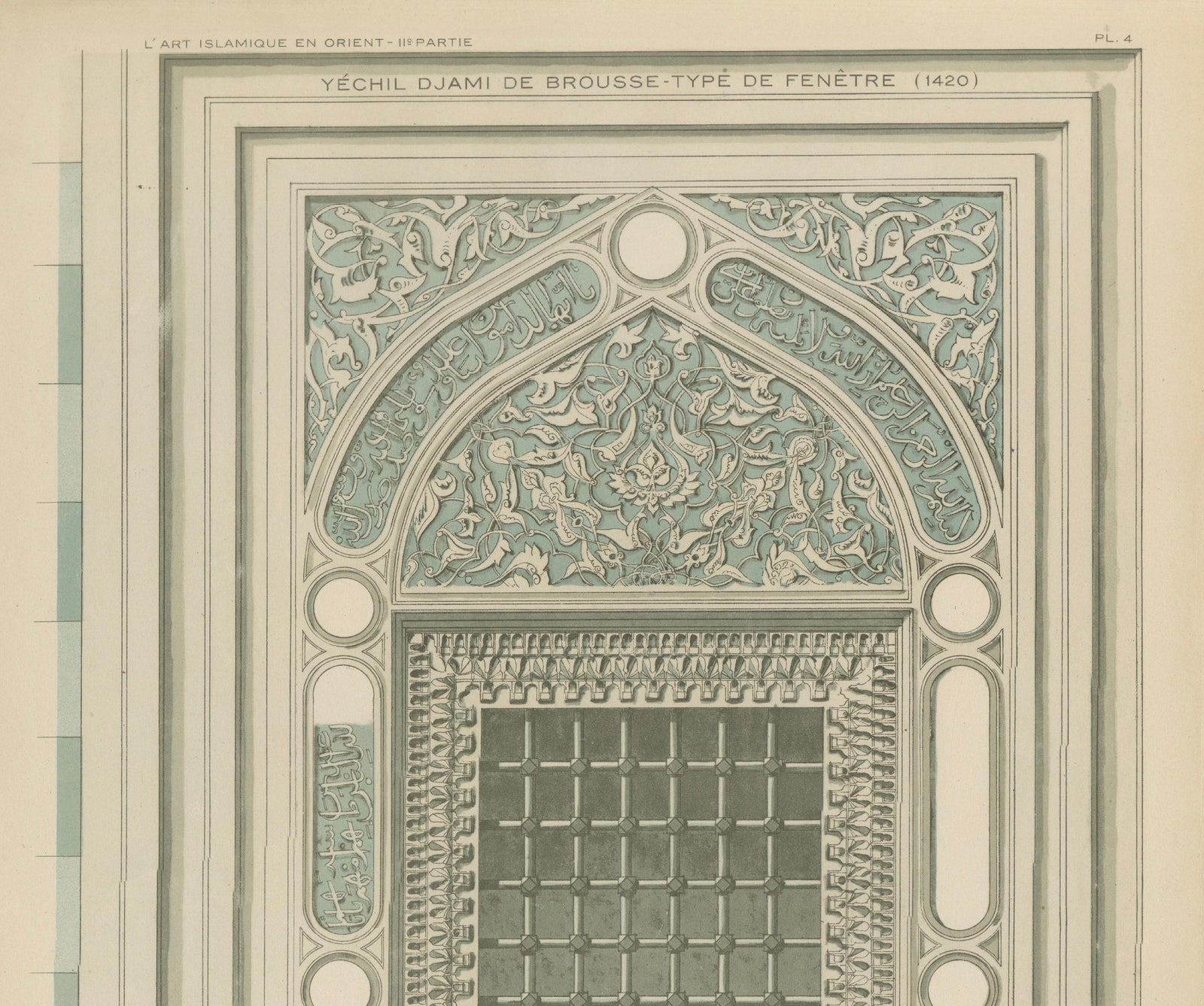
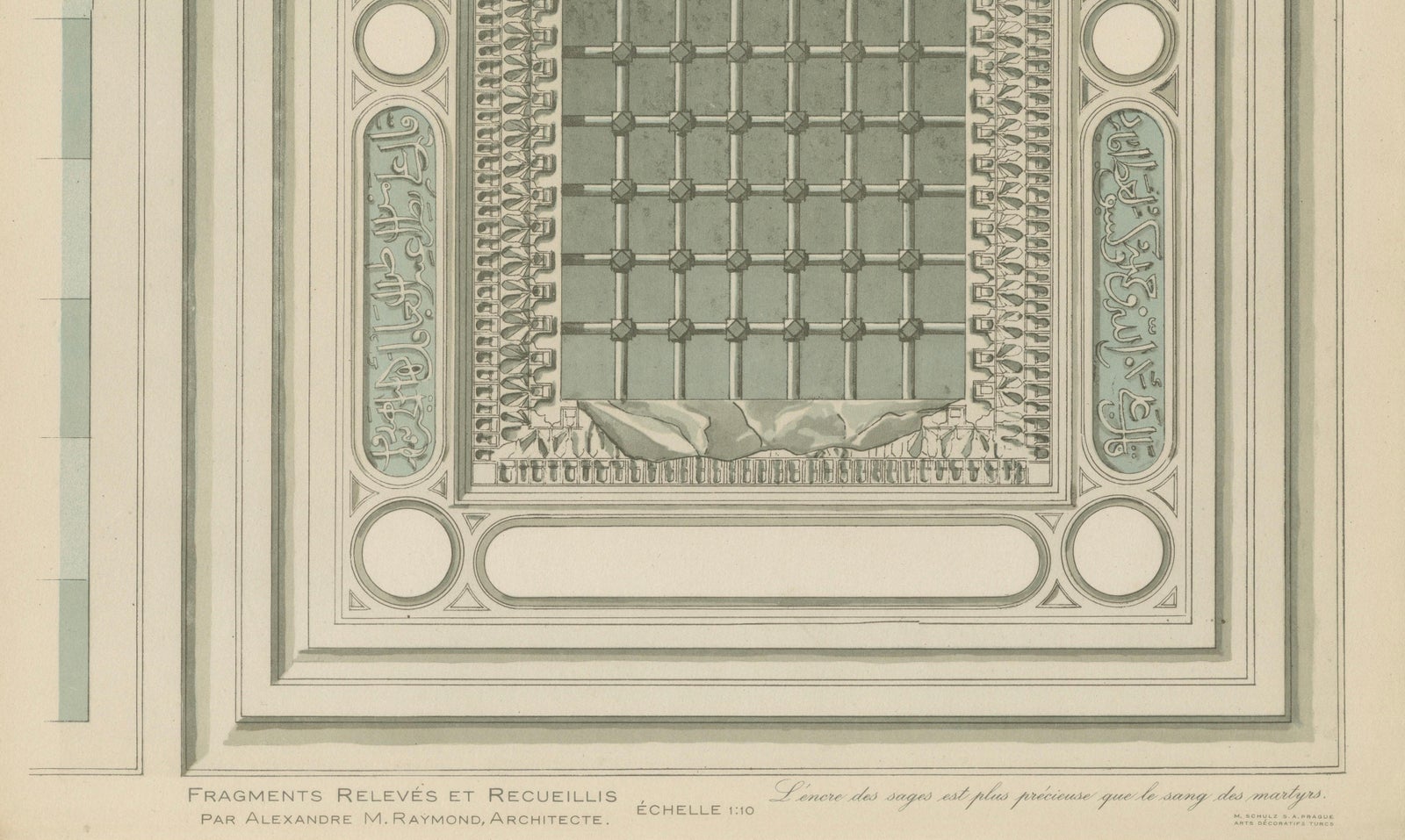
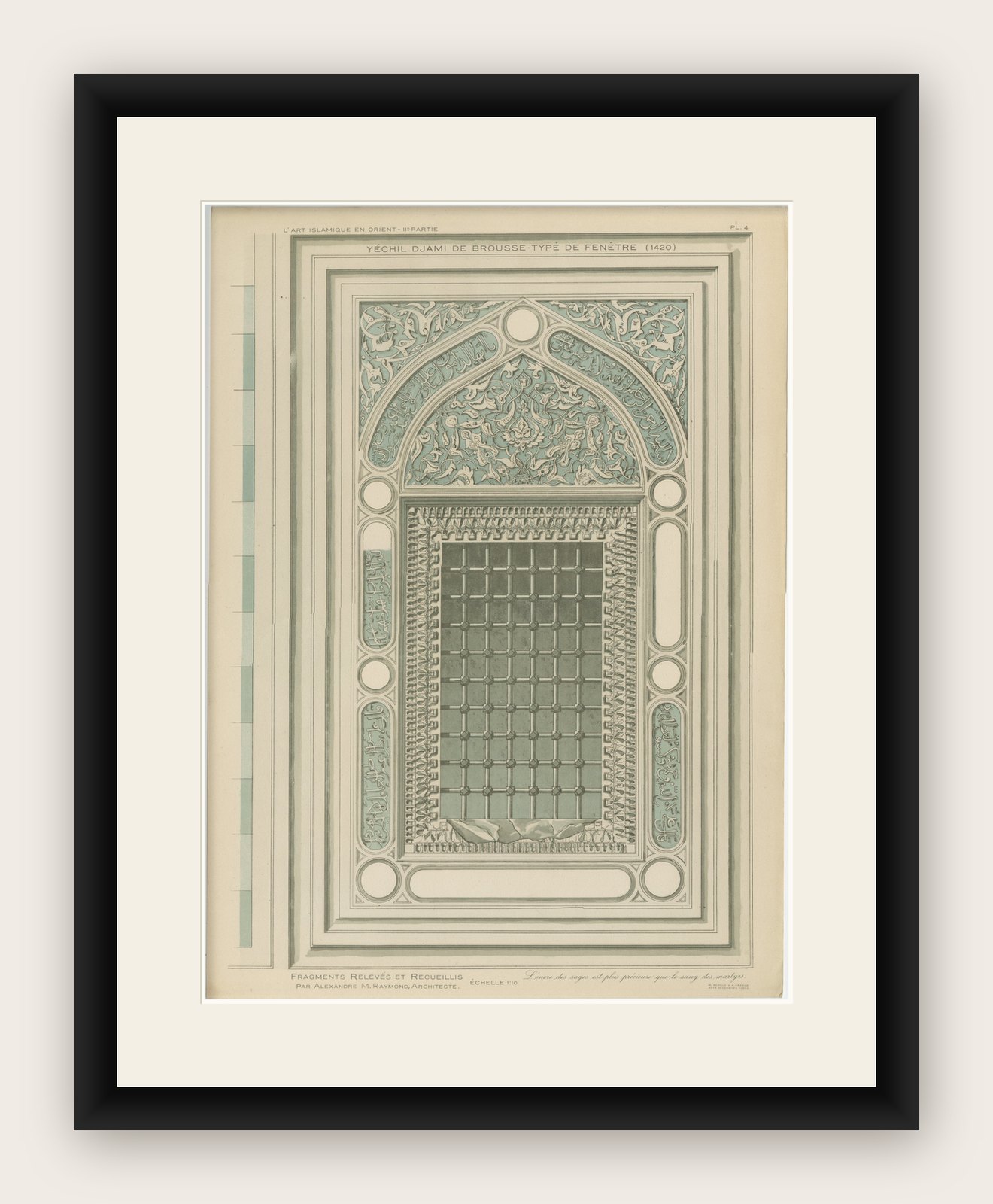
This original chromolithograph illustrates one of the most decorative window designs from the celebrated Yeşil Camii (Green Mosque) in Bursa, Turkey. Published in 1924 in Alexandre M. Raymond's monumental folio L'Art Islamique en Orient, IIe Partie, the print records an architectural detail dating to approximately 1420, during the formative period of Ottoman artistic development.
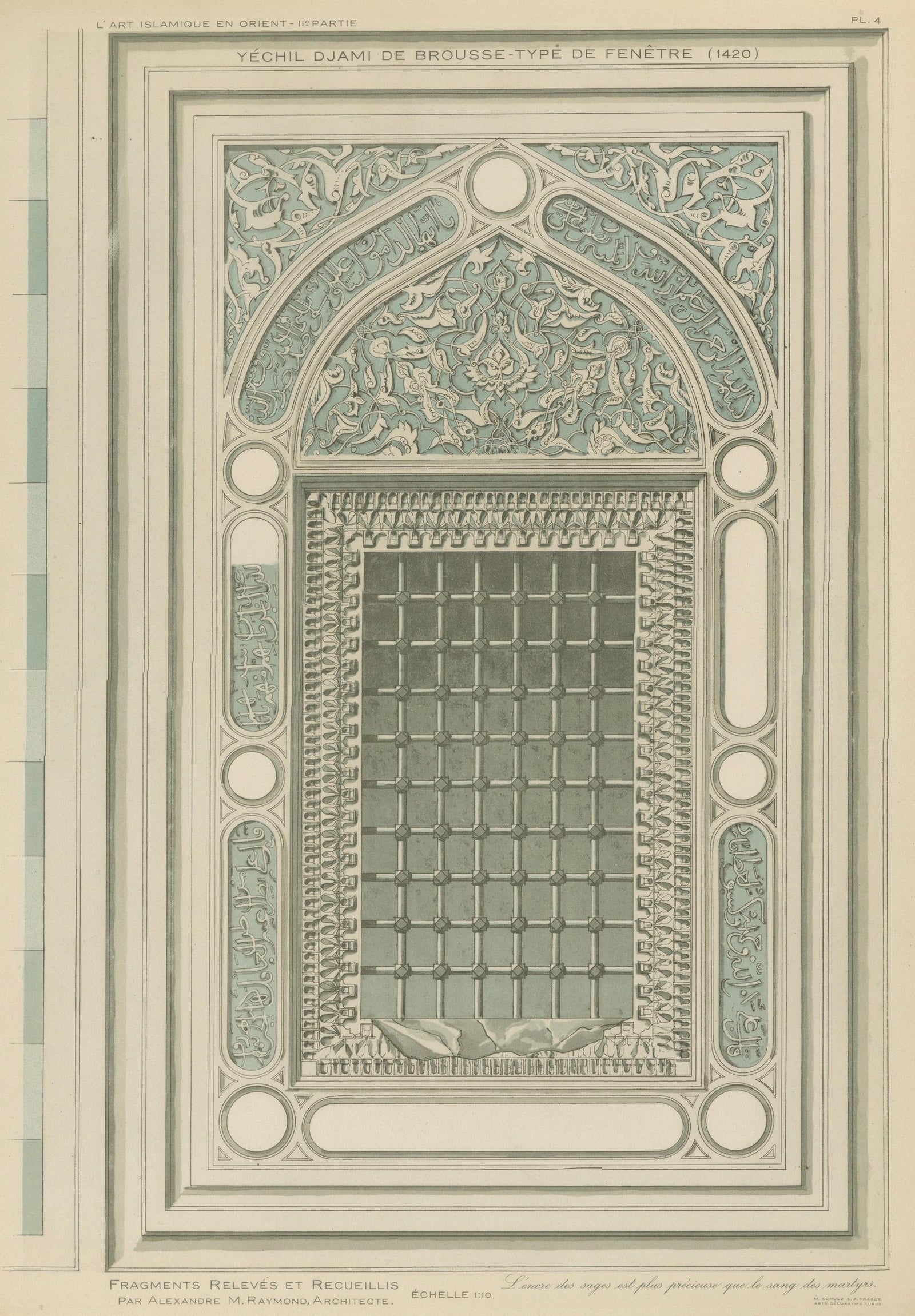
The composition depicts a richly ornamented window surrounded by an elegant architectural framework incorporating Arabic inscriptions, floral arabesques, geometric motifs, and finely modeled decorative moldings. Particularly striking is the upper spandrel section, where flowing vegetal ornament unfolds beneath a pointed Ottoman arch. The combination of calligraphy, geometry, and floral decoration reflects the sophisticated artistic language that distinguished early Ottoman architecture and decorative arts.
The Yeşil Camii, commissioned by Sultan Mehmed I, remains one of the most important monuments of Bursa, the first great capital of the Ottoman Empire. Its architecture and decoration mark the transition from Seljuk influences to the mature Ottoman style that would later flourish in Istanbul. Raymond's publication sought to document these masterpieces of Islamic art for future generations, making each plate both a valuable architectural record and a decorative work of art.
The subtle palette of pale turquoise, soft gray-green, and ivory gives the print an unusually refined appearance. The design works beautifully as wall art and appeals to collectors of Islamic architecture, Ottoman design, Turkish history, decorative arts, architectural ornament, and historic prints.
This is an original 1924 chromolithograph, not a reproduction. We sell the print unframed.
Framing tips: This print displays particularly well in a dark walnut, ebonized, or antiqued gilt frame with a warm ivory museum mat. The soft turquoise and stone-gray palette complements both contemporary interiors and traditional Ottoman, Mediterranean, or Middle Eastern-inspired settings.
Technique: Chromolithograph
Maker: Alexandre M. Raymond, Constantinople (Istanbul), 1924