Close-ups
Framed and on the wall
Frame and rooms are illustrations of how the print could look, drawn to its real size; it is sold unframed unless the description says otherwise.
Houses of Worship
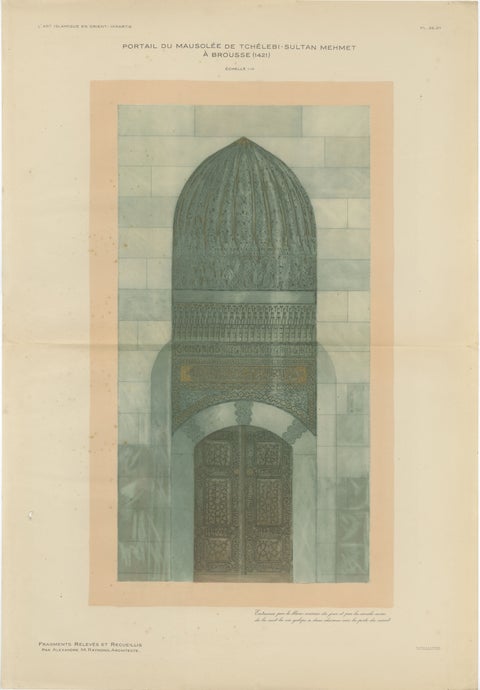
Green Mosque Portal of Bursa, Ottoman Islamic Architecture, Raymond 1924
Anno Domini MCMXXIV1924
£1,250£1,00020% off
$1,310 · €1,192
Original print, not a reproduction
Ships worldwide from the Netherlands, flat or rolled, insured and tracked. 14-day returns.
- Date
- 1924
- Sheet size
- 28 × 19.3 in (71 × 49 cm)
- Condition
- Good. Good antique condition with age-related toning, scattered foxing, and minor handling wear to the margins. A horizontal fold line is visible across the lower middle section of the sheet, with light creasing consistent with age.
- Faith
- Islam
- Collection
- Houses of Worship
- Era
- 1850 and after, Chromolithographs and devotional prints
- Stock no.
- BG-14306-24 & -25
What the condition grades mean
- Excellent
- Bright and clean, with no faults worth mentioning.
- Very good
- Only light signs of age, such as faint toning.
- Good
- Normal signs of age for a sheet of this period: toning, some foxing, small marks or neat old repairs.
- Fair
- Clear faults such as staining, tears or repairs, priced to match.
Every fault we see is written in the condition note, and the whole sheet is shown uncropped in the photos.
Title: Green Mosque Portal of Bursa, Ottoman Islamic Architecture, Raymond 1924
Description:
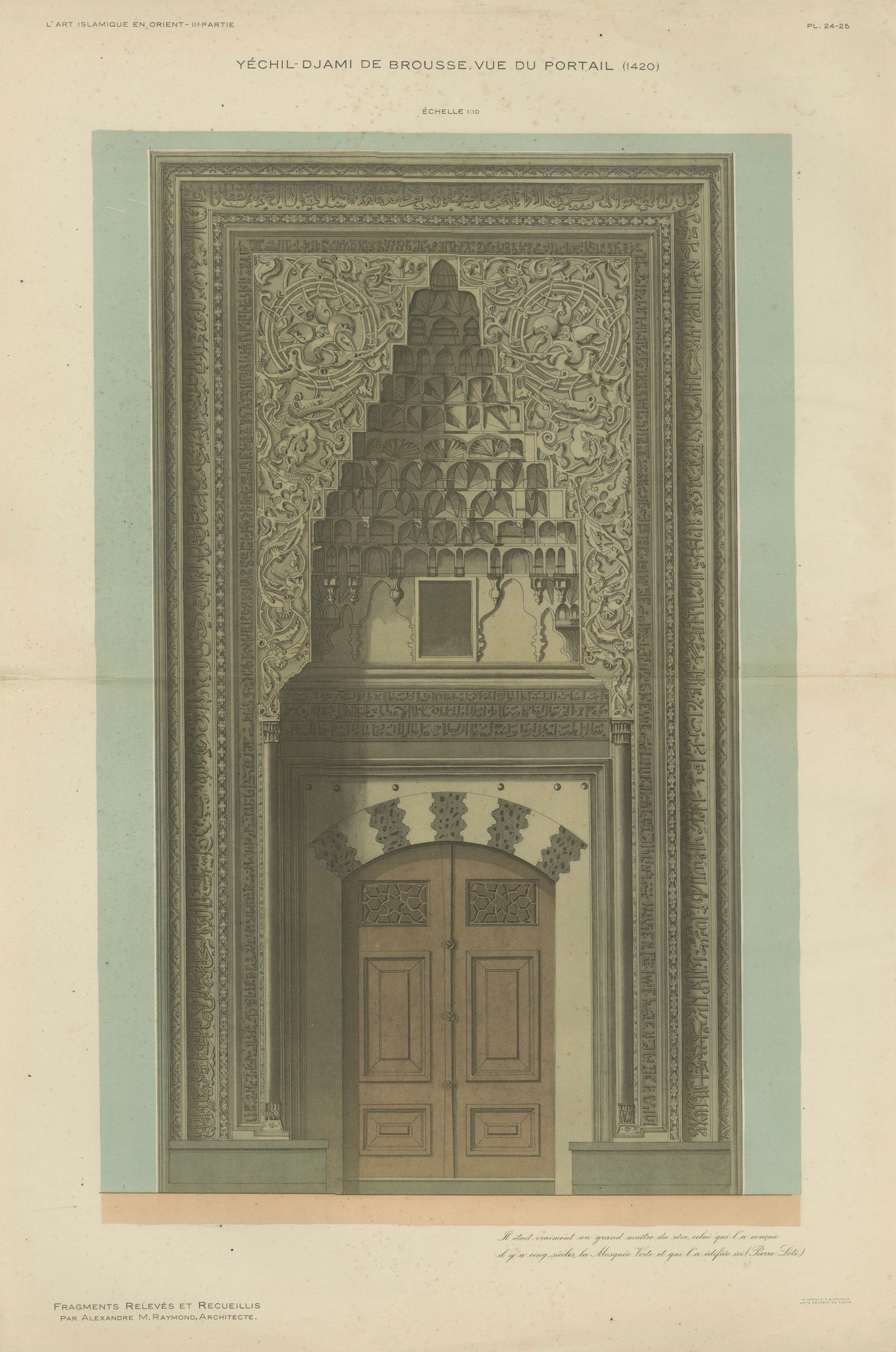
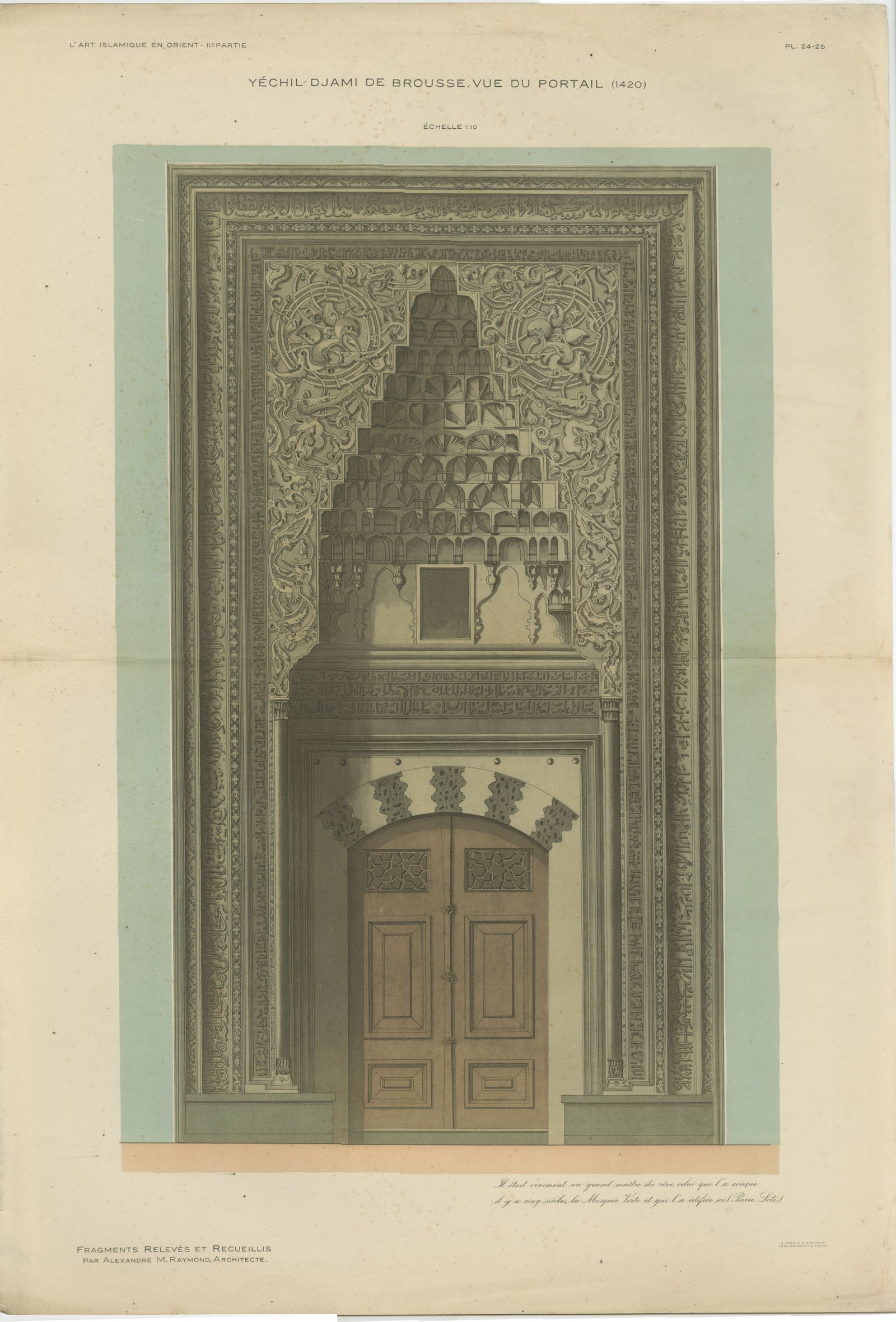
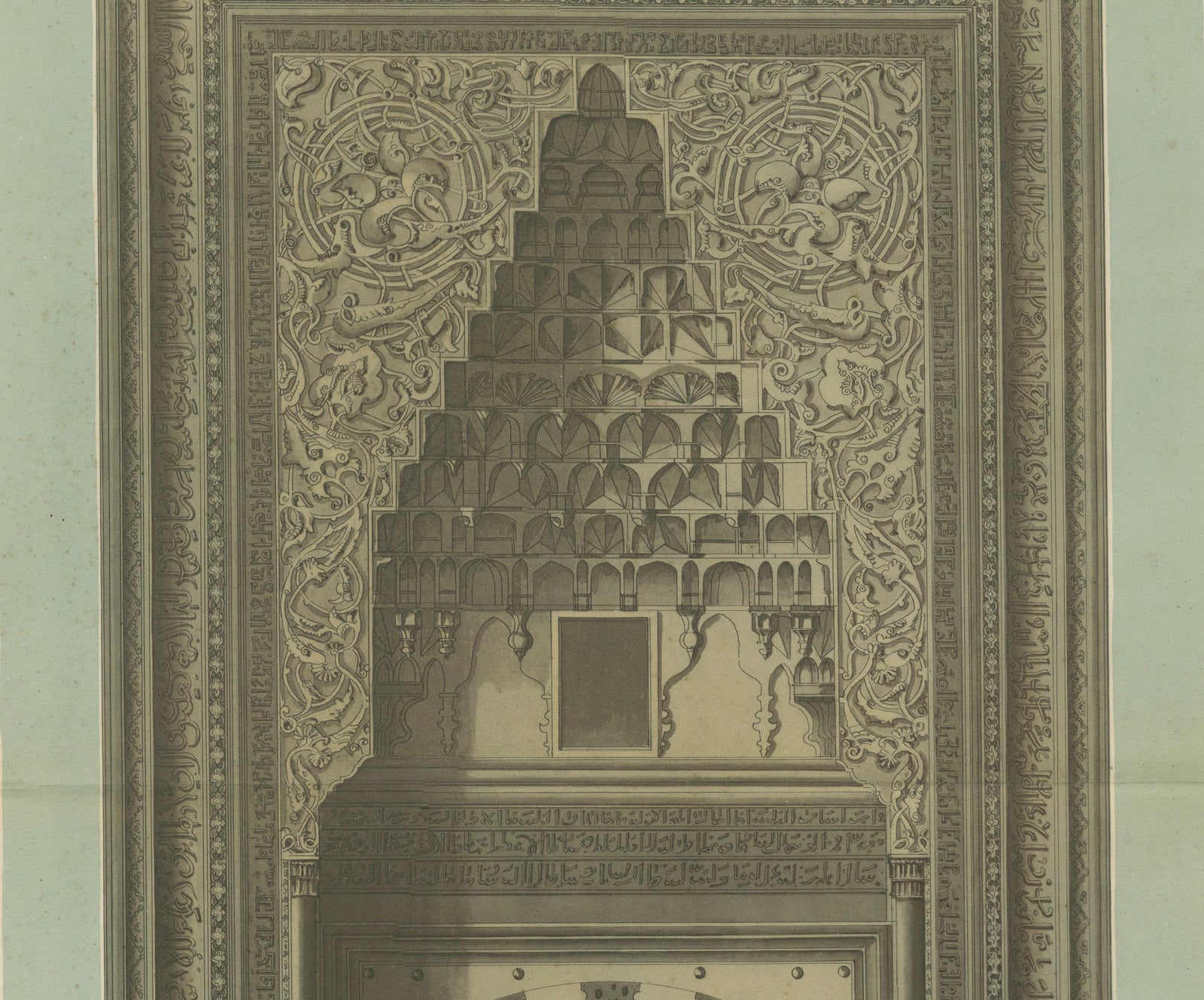
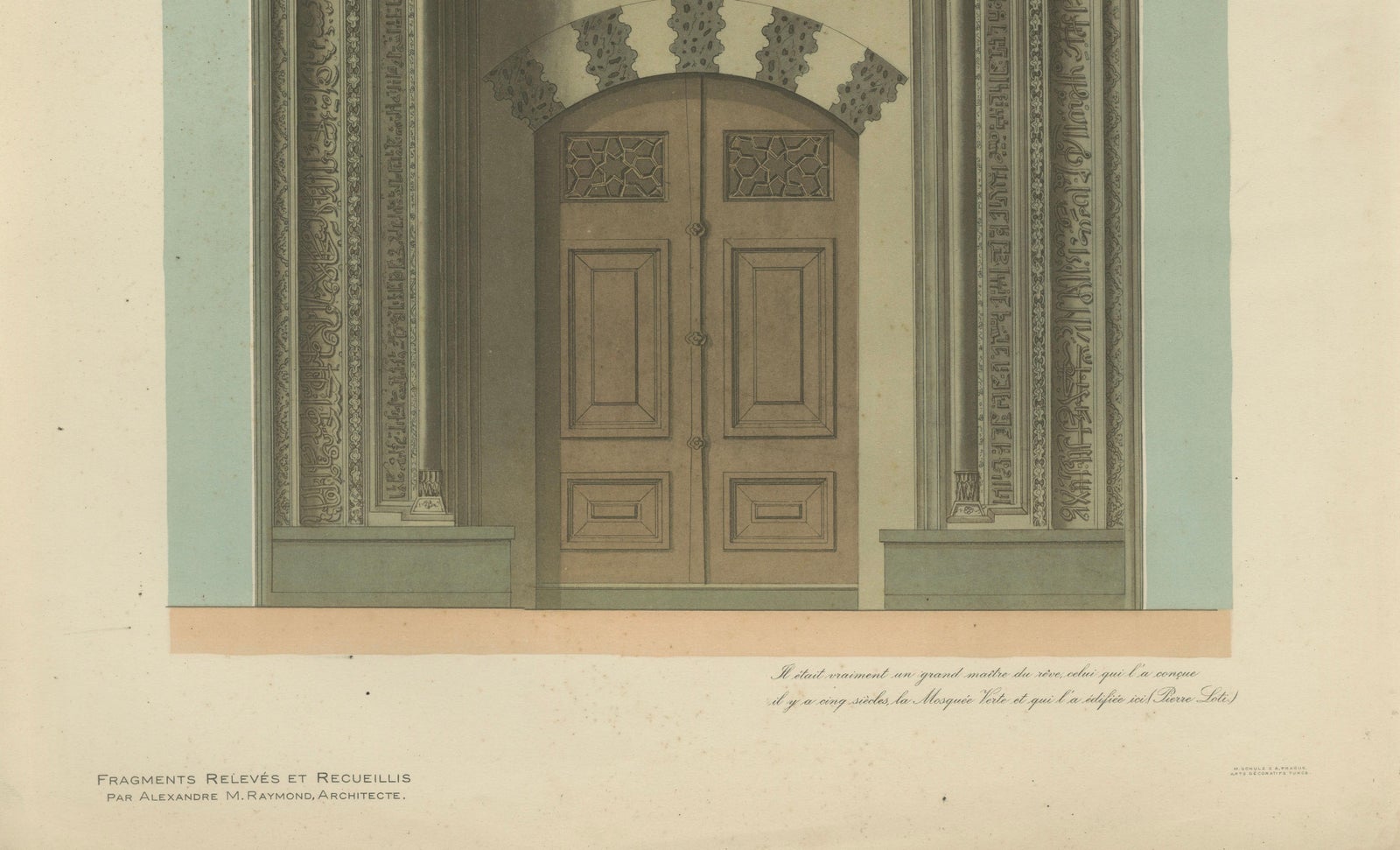
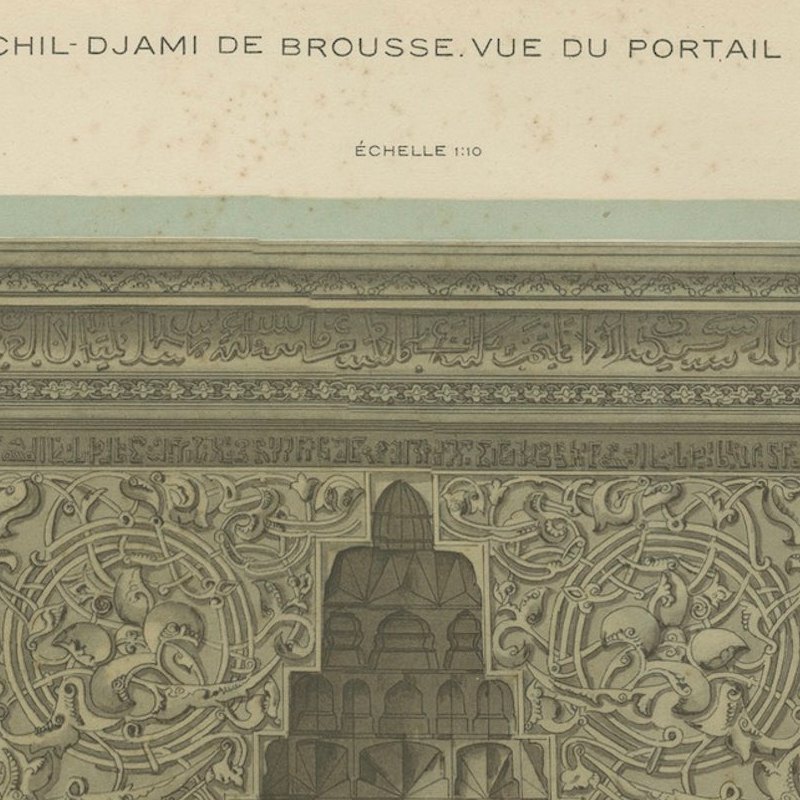
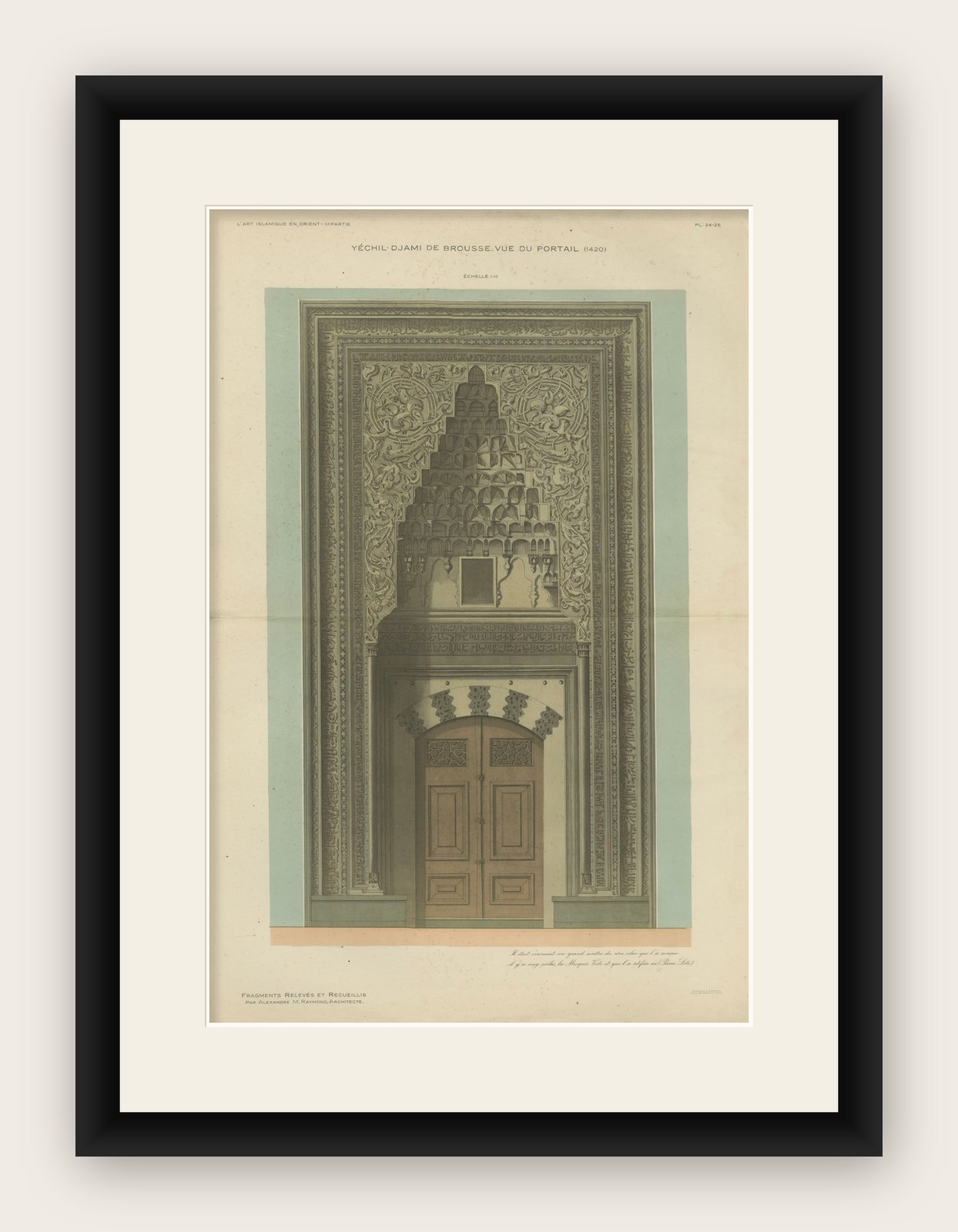
An original color lithographic architectural plate from Alexandre M. Raymond's celebrated folio L'Art Islamique en Orient, IIe Partie, published in 1924. This impressive sheet depicts the monumental portal of the Yeşil Djami (Green Mosque) in Bursa, dated to 1420, one of the supreme masterpieces of early Ottoman architecture and decorative art.
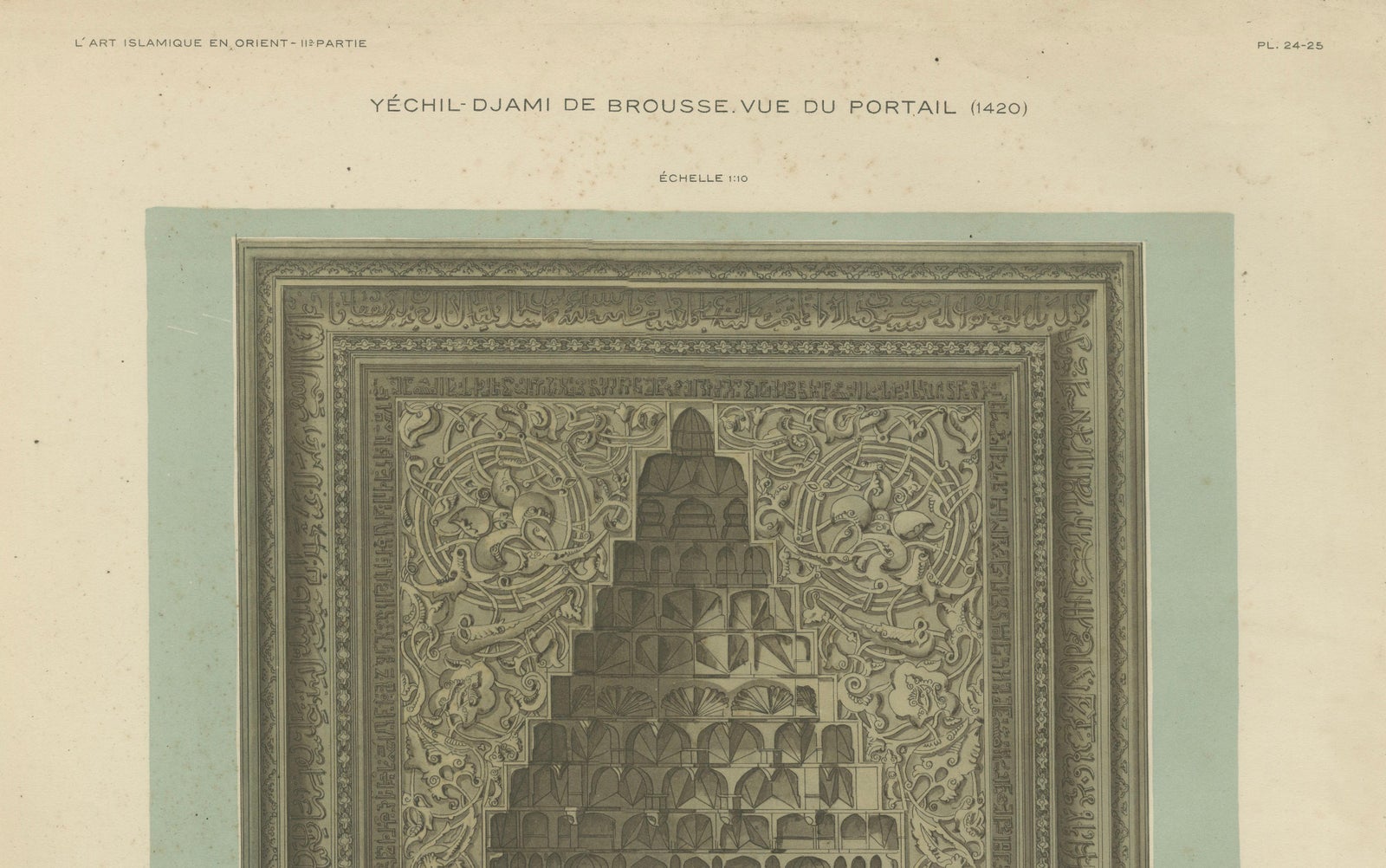
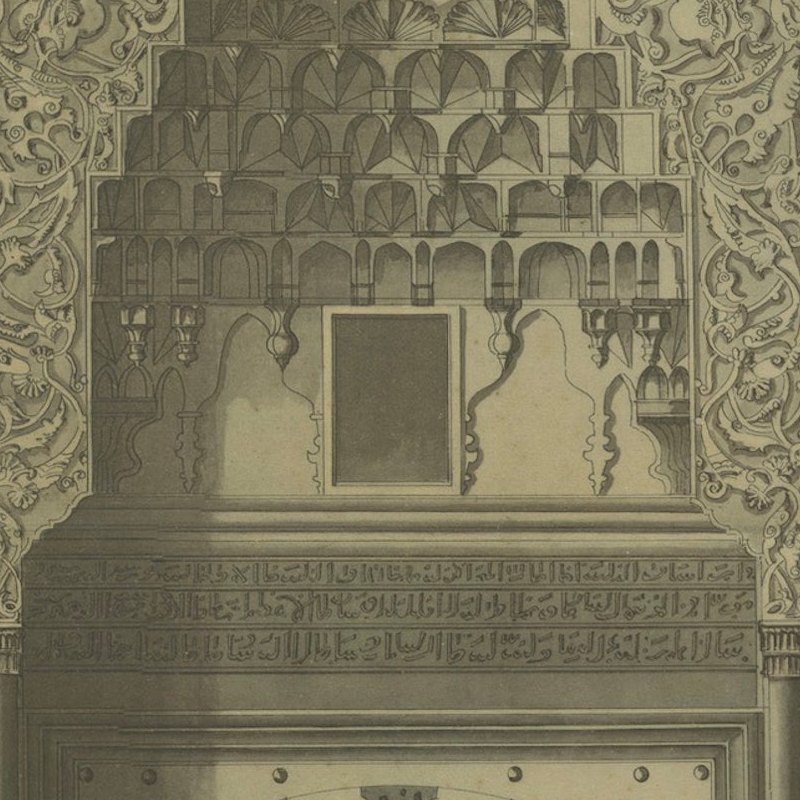
The composition records the richly ornamented entrance in remarkable detail, combining monumental calligraphic borders, arabesque carving, geometric ornament, and the celebrated muqarnas niche that rises above the doorway in a dramatic cascade of sculptural forms. Every surface is animated with intricate decoration, reflecting the extraordinary craftsmanship that flourished during the formative period of the Ottoman Empire.
Commissioned by Sultan Mehmed I following the Ottoman Interregnum, the Green Mosque became a symbol of imperial renewal and artistic achievement. The building introduced a refined decorative vocabulary that blended Seljuk traditions with emerging Ottoman aesthetics. Its portal, represented here with scholarly precision, is among the most celebrated architectural ensembles in Turkey and remains one of Bursa's greatest historic monuments.
The towering frame of Quranic inscriptions surrounding the entrance exemplifies the integration of calligraphy and architecture that defines Islamic art. The magnificent muqarnas canopy above the door creates a visual transition between earthly and celestial space, while the alternating voussoirs of the arched opening echo decorative traditions inherited from earlier Anatolian and Persian models.
Alexandre Marcel Raymond (1872 to 1941), a French architect born in Constantinople, dedicated his career to documenting the architectural heritage of the Ottoman world. His monumental publications remain indispensable references for historians, architects, and collectors. Printed by M. Schulz in Prague, the plates combine archaeological rigor with exceptional lithographic artistry, preserving important monuments in exquisite detail.
The restrained palette of pale green, warm stone tones, and delicate grays lends the work a refined and timeless decorative quality. Equally suited to contemporary interiors and scholarly collections, the print stands as both a work of art and a significant historical document.
This is an original antique print from 1924 and not a modern reproduction. It is sold unframed.
Good antique condition with age-related toning, scattered foxing, and minor handling wear to the margins. A horizontal fold line is visible across the lower middle section of the sheet, with light creasing consistent with age. The image itself remains strong, attractive, and highly decorative.
Framing Tips:
Sold unframed. This monumental architectural composition benefits from a wide ivory museum mat within an ebonized, dark walnut, or antique bronze frame. Museum glass is recommended to preserve the subtle tonal variations and intricate details of the lithograph.
Technique: Color lithograph
Maker: Alexandre M. Raymond, France/Constantinople, 1924