Close-ups
Framed and on the wall

Frame and rooms are illustrations of how the print could look, drawn to its real size; it is sold unframed unless the description says otherwise.
Houses of Worship
Green Mosque Bursa Window Arch Ornament, Ottoman Islamic Design Print, 1924
Anno Domini MCMXXIV1924
€325€24425% off
$270 · £205
Original print, not a reproduction
Ships worldwide from the Netherlands, flat or rolled, insured and tracked. 14-day returns.
- Date
- 1924
- Sheet size
- 14.2 × 19.7 in (36 × 50 cm)
- Condition
- Good. Good antique condition with age-related toning, occasional light foxing, and minor handling wear consistent with age. The image remains clean, decorative, and well preserved. Please study the images carefully.
- Faith
- Islam
- Collection
- Houses of Worship
- Era
- 1850 and after, Chromolithographs and devotional prints
- Stock no.
- BG-14306-5
What the condition grades mean
- Excellent
- Bright and clean, with no faults worth mentioning.
- Very good
- Only light signs of age, such as faint toning.
- Good
- Normal signs of age for a sheet of this period: toning, some foxing, small marks or neat old repairs.
- Fair
- Clear faults such as staining, tears or repairs, priced to match.
Every fault we see is written in the condition note, and the whole sheet is shown uncropped in the photos.
Green Mosque Bursa Window Arch Ornament, Ottoman Islamic Design Print, 1924
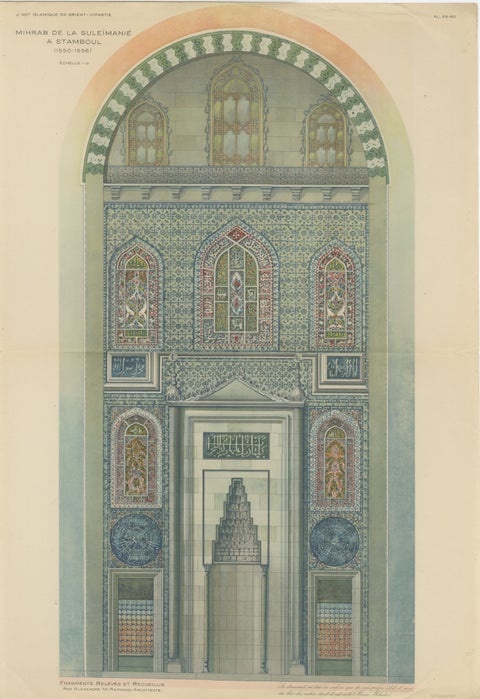
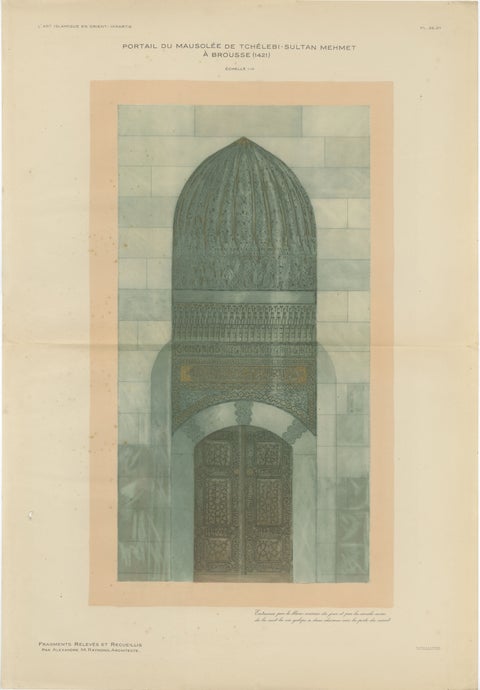
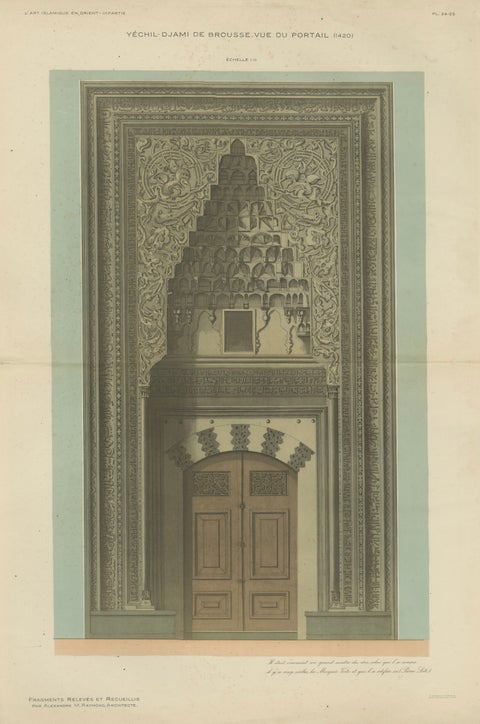
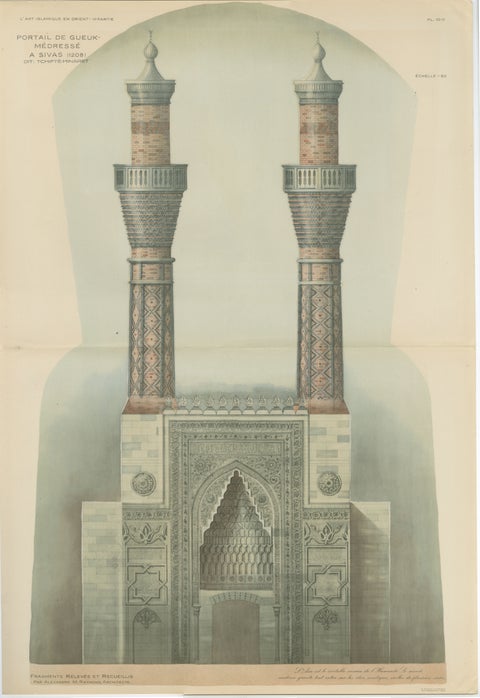
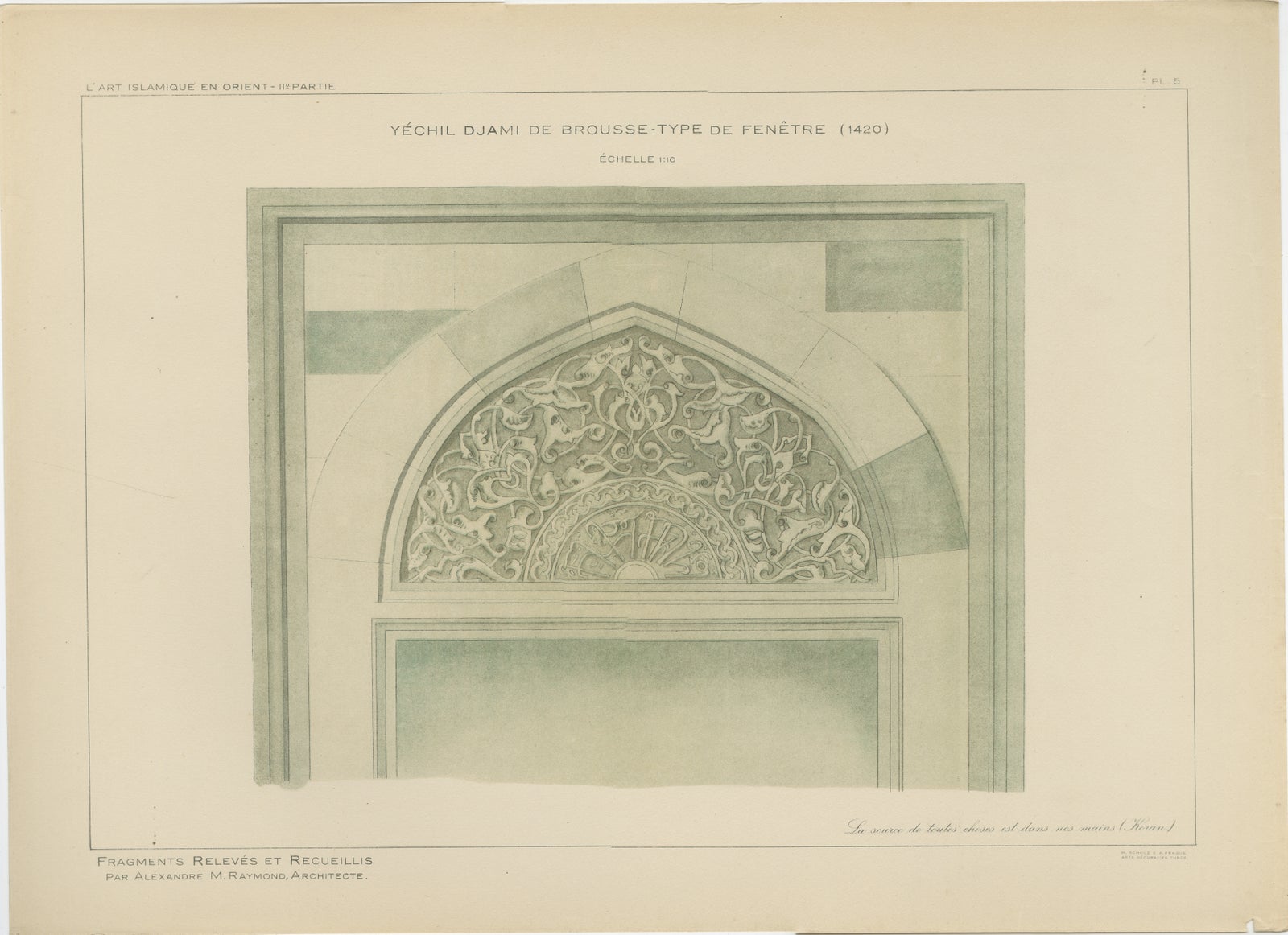
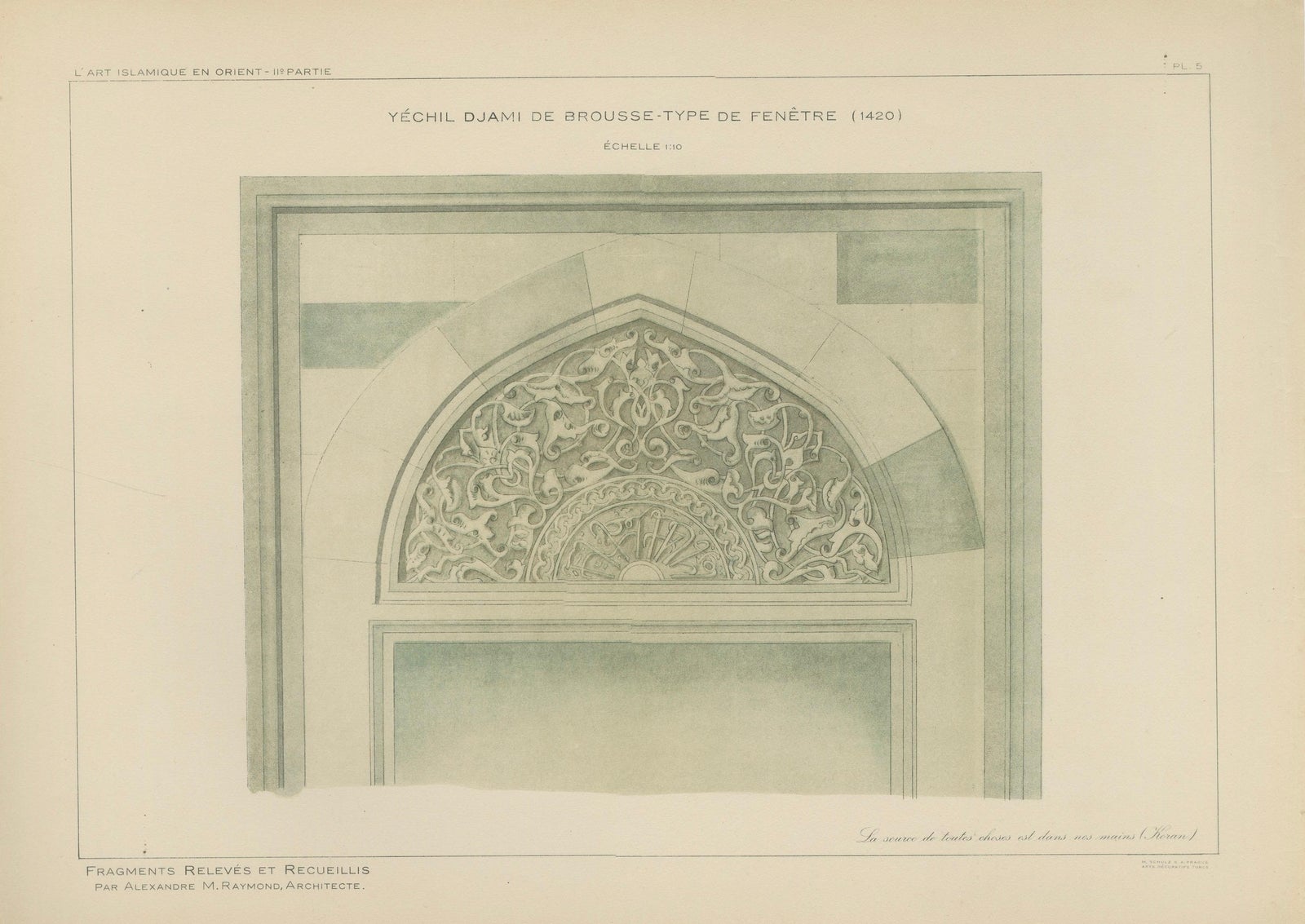
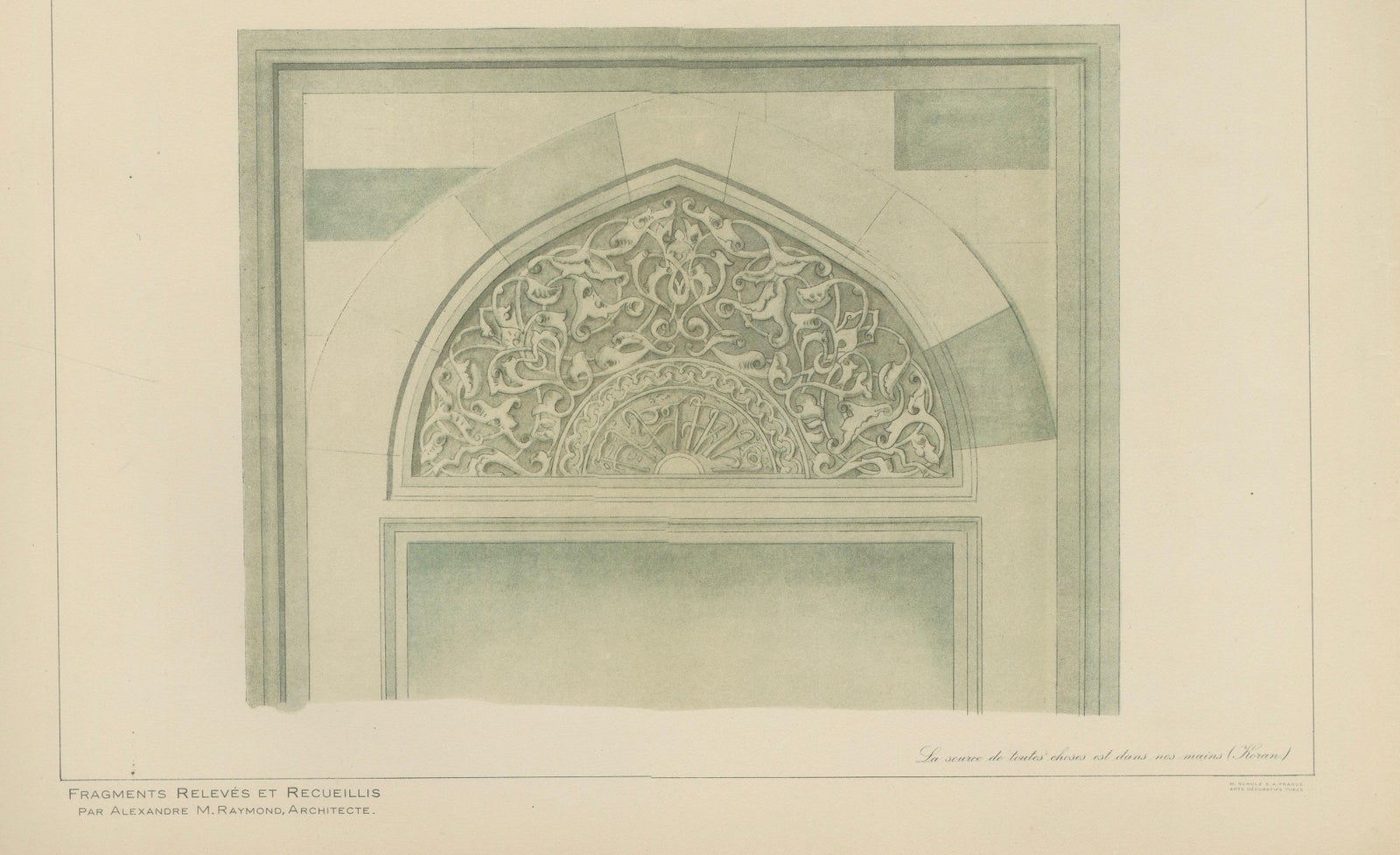
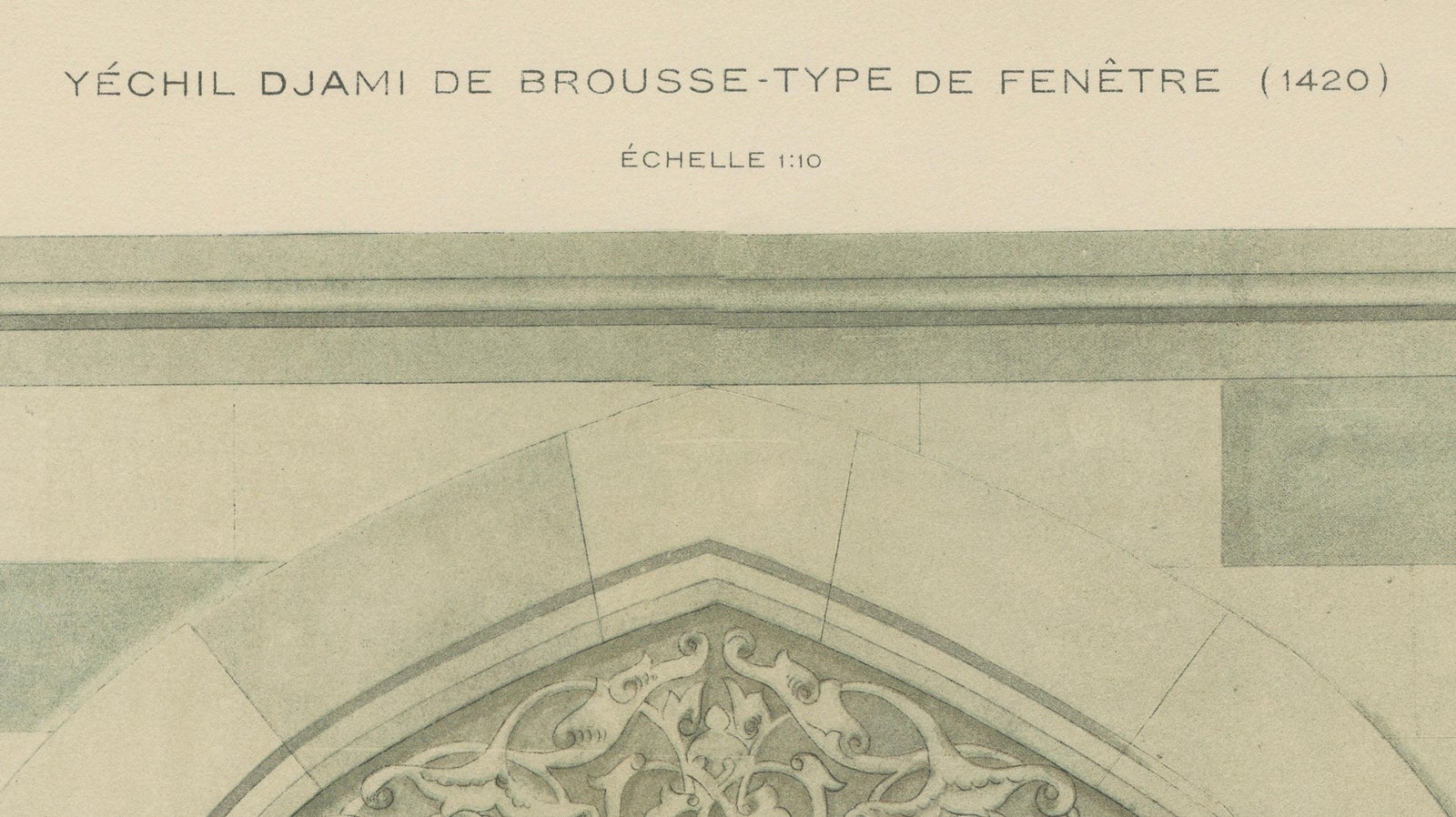
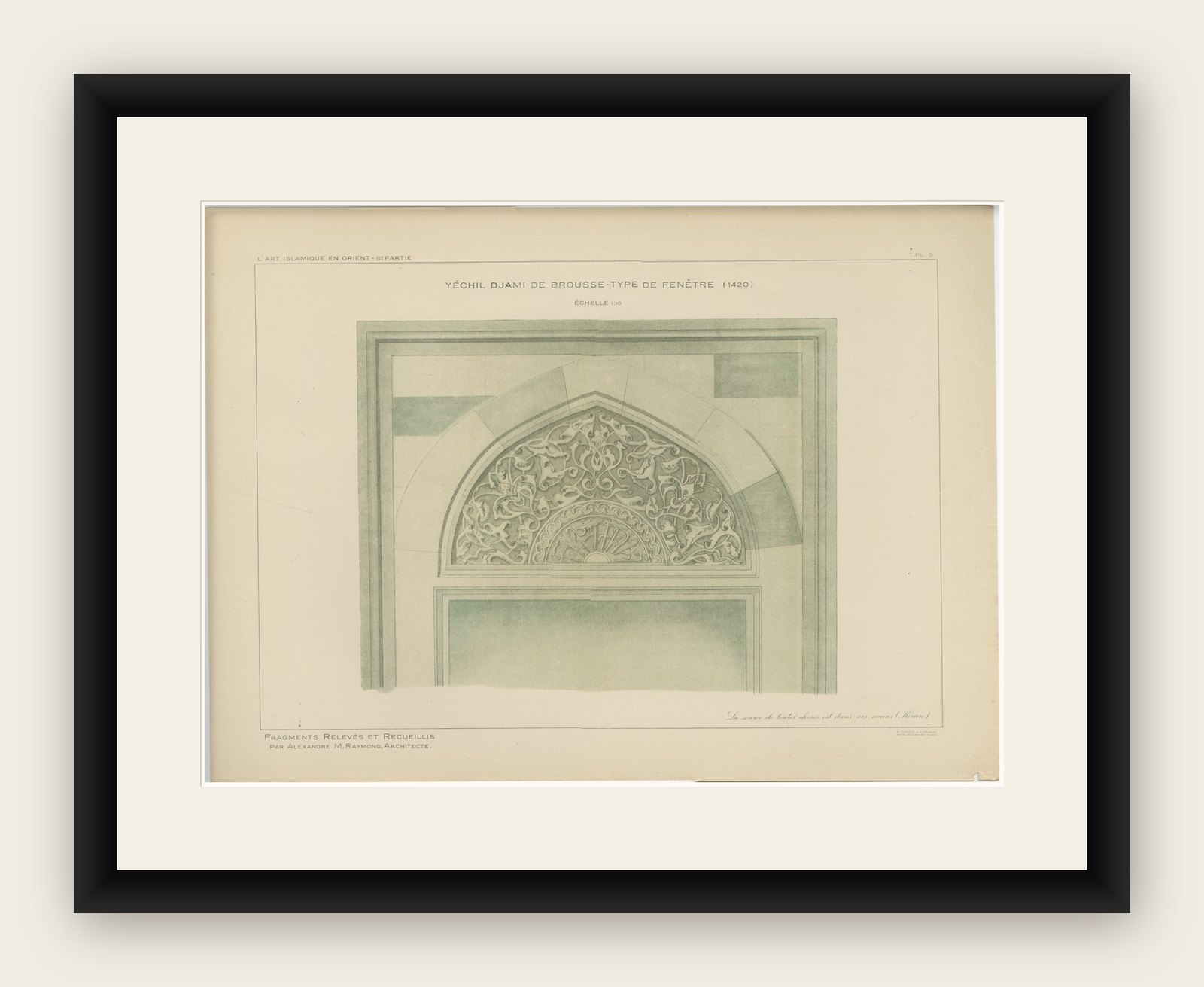
This original chromolithograph depicts an architectural detail from the celebrated Yeşil Camii (Green Mosque) in Bursa, Turkey, one of the masterpieces of early Ottoman architecture. Published in 1924 in Alexandre M. Raymond's important folio L'Art Islamique en Orient, IIe Partie, the print records a decorative window arch dating to approximately 1420.
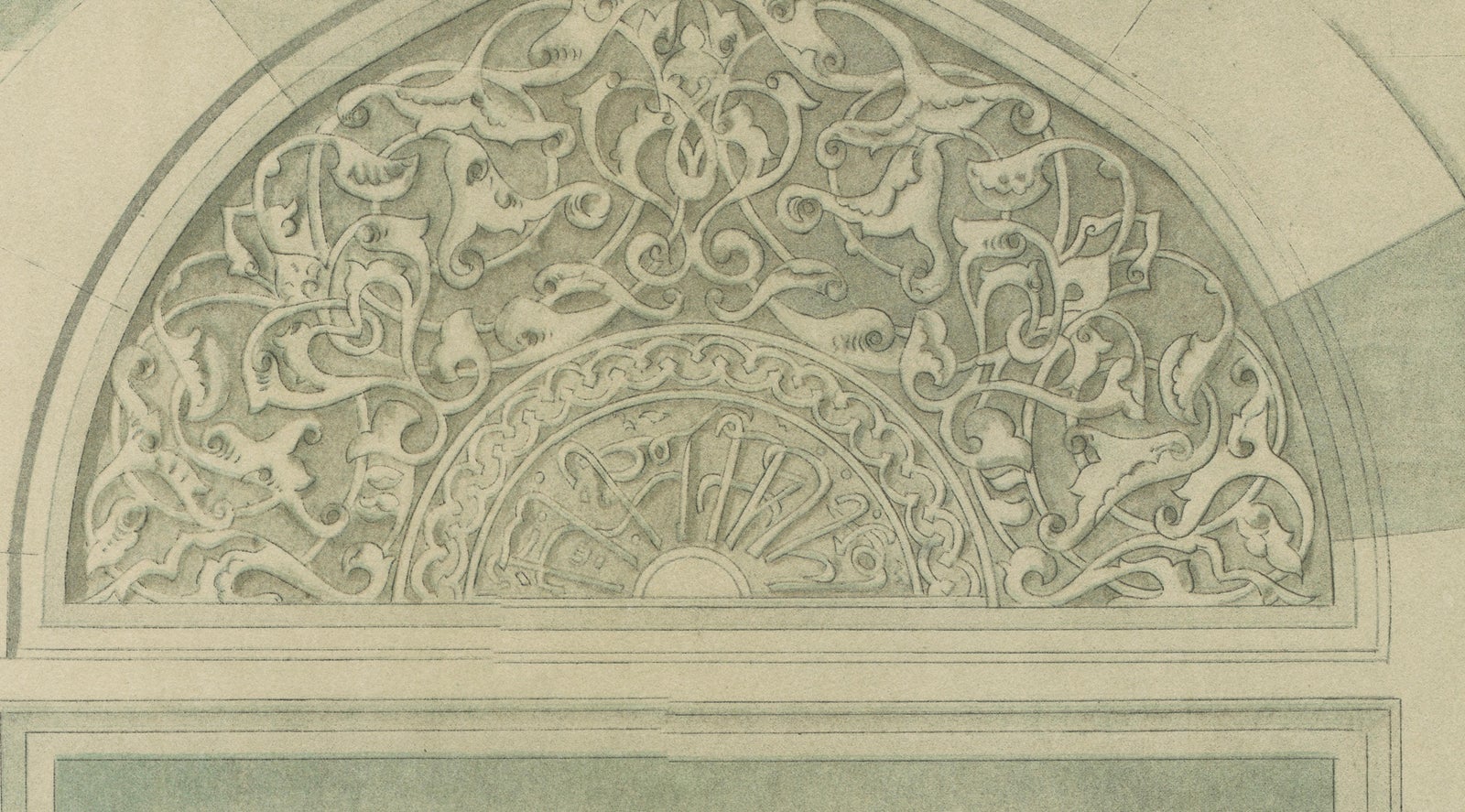
The composition focuses on the elegant upper section of a window opening, showcasing the refined decorative vocabulary that made the Green Mosque famous. Within the pointed Ottoman arch unfolds an intricate arrangement of scrolling arabesques, stylized foliage, and geometric ornament radiating from a central medallion. The design demonstrates the remarkable balance between architectural structure and decorative richness that characterizes the finest Ottoman monuments.
The Yeşil Camii was commissioned by Sultan Mehmed I and forms part of the renowned Green Complex in Bursa, the first major capital of the Ottoman Empire. Constructed during a pivotal period in Ottoman artistic development, the mosque combines Seljuk influences with emerging Ottoman aesthetics that would later flourish throughout the empire. Raymond's publication sought to preserve these important architectural details through accurate chromolithographic reproductions, creating both valuable scholarly records and highly decorative works of art.
Unlike the more elaborate window studies from the same series, this plate isolates the ornamental arch itself, allowing collectors to appreciate the subtle rhythm of the floral carving and geometric composition. The restrained palette of pale celadon green, ivory, and soft gray lends the print a calm and sophisticated appearance suited to both contemporary and traditional interiors.
This is an original 1924 chromolithograph, not a reproduction. We sell the print unframed.
Framing tips: This print works particularly well in a dark walnut, ebonized, or lightly gilded frame with an ivory museum mat. The subtle green-gray tones complement both modern interiors and Ottoman, Mediterranean, or Islamic-inspired settings.
Technique: Chromolithograph
Maker: Alexandre M. Raymond, Constantinople (Istanbul), 1924