Close-ups
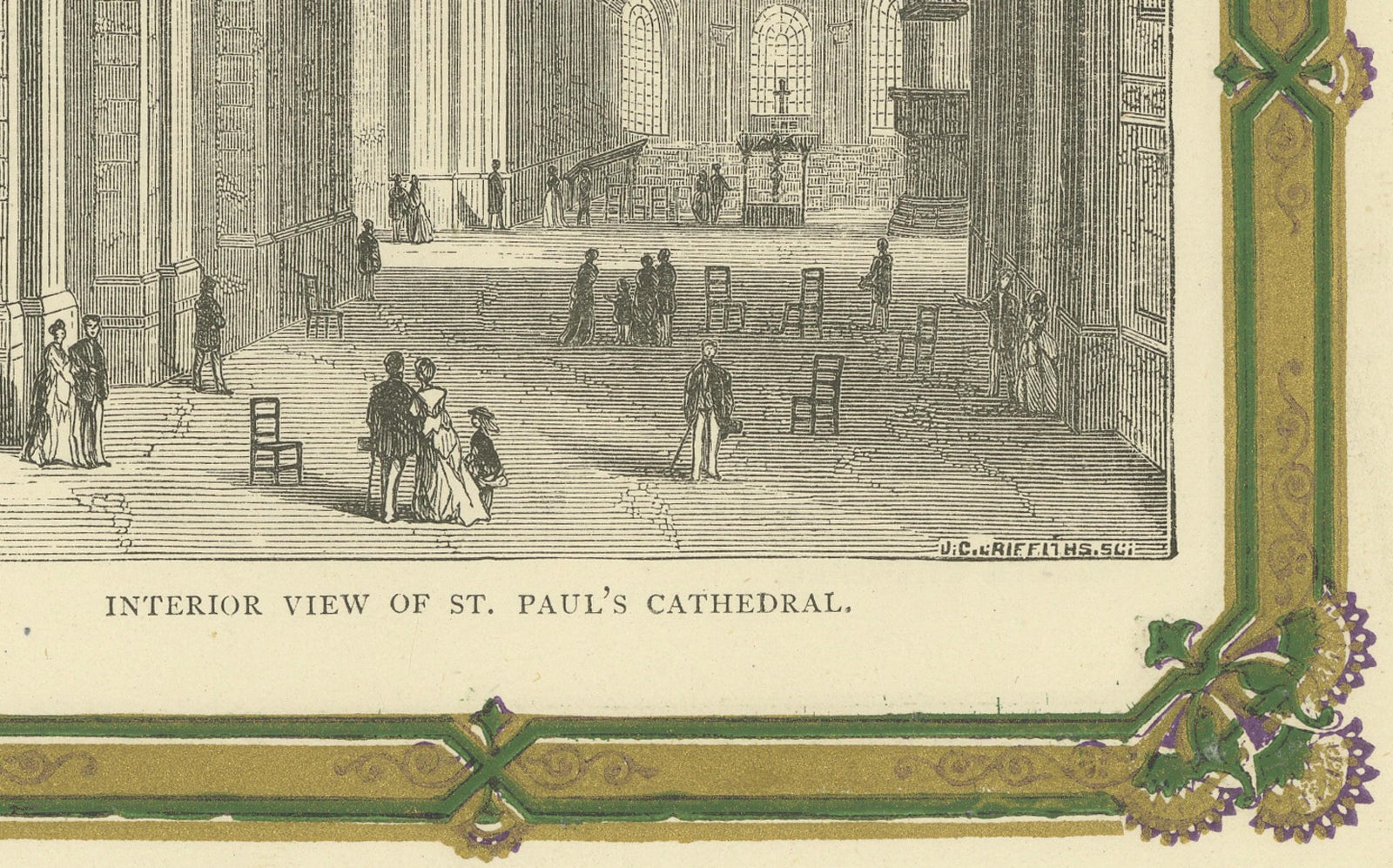
Framed and on the wall
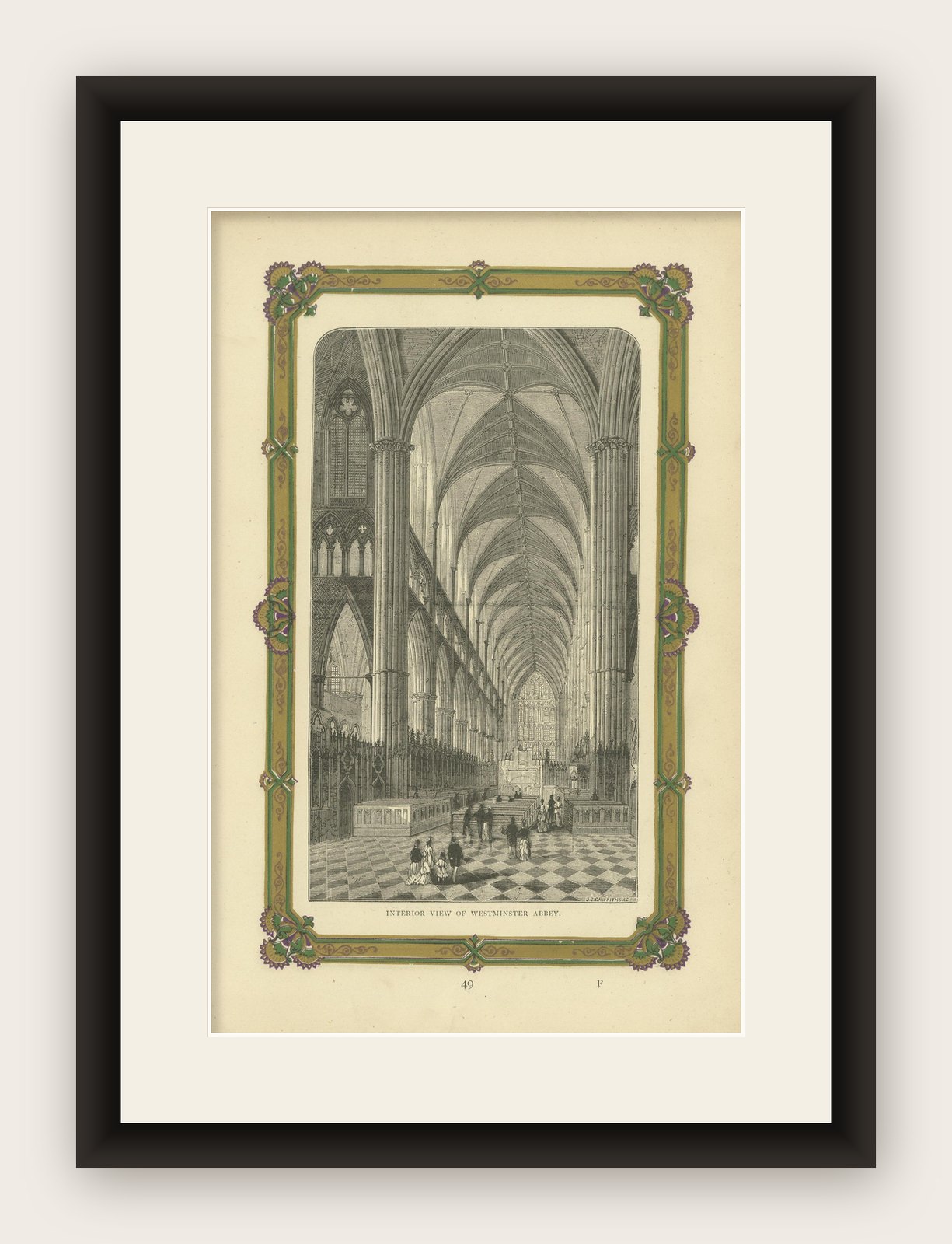

Frame and rooms are illustrations of how the print could look, drawn to its real size; it is sold unframed unless the description says otherwise.
Houses of Worship
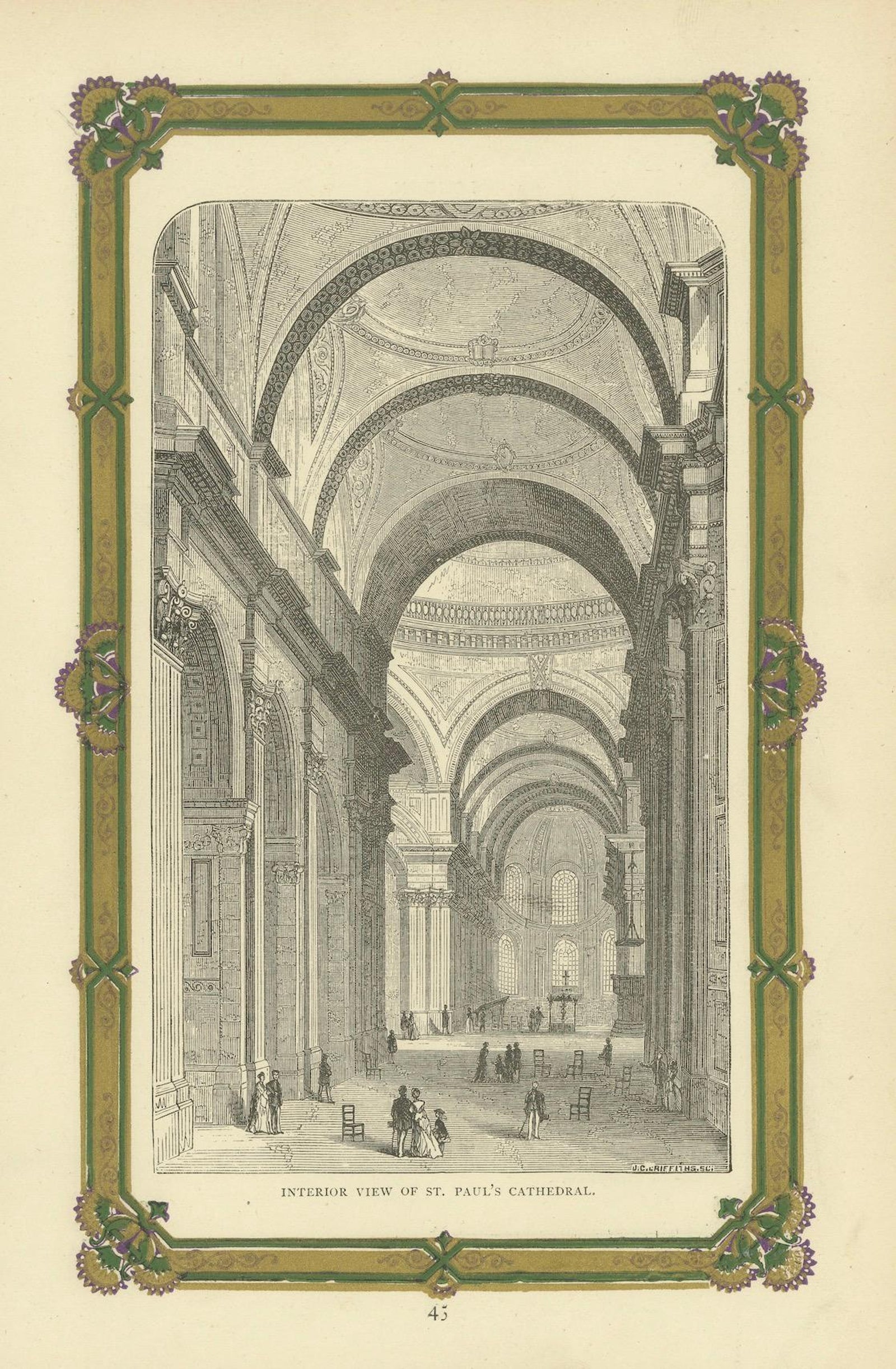
Engraved Interior of St. Paul's Cathedral: A Victorian Architectural Masterpiece
$135
€120 · £100
Original print, not a reproduction
Ships worldwide from the Netherlands, flat, insured and tracked. 14-day returns. To buy, use Ask a question (info@antiquesacredprints.com) and we will reserve it for you.
- Date
- Not stated
- Sheet size
- 10 × 6.6 in (25.5 × 16.8 cm)
- Condition
- Good, given age. General age-related toning and/or occasional minor defects from handling. Please study scan carefully.
- Faith
- Christianity
- Collection
- Houses of Worship
- Stock no.
- f_41563342
This print is an engraving of the Interior View of St. Paul's Cathedral, executed by J. C. Griffiths, an active 19th-century engraver known for his detailed architectural depictions.
The scene captures the expansive and majestic interior of one of London's most iconic landmarks, St. Paul's Cathedral. The use of fine lines and cross-hatching to define the architectural features suggests it was created through the engraving technique, which was highly popular during the Victorian era for producing detailed, reproducible images for serials and periodicals.
The print is framed by an ornate decorative border, a typical feature of high-quality illustrated works from the time, which indicates it was intended for a more prestigious publication. The publication is likely associated with Henry Herbert, a London-based publisher active in the latter part of the 19th century, beginning around 1872. The work appears to have been part of a periodical or serial publication focused on English architecture or travel, as these types of prints were often included in such works to appeal to a literate and cultured Victorian audience interested in famous landmarks.
Engraving as a technique involves the incising of a design onto a hard surface, typically a metal plate, which is then inked and pressed onto paper. The precision in the rendering of architectural features in this print highlights the engraver's skill in depicting both scale and detail. Given the context, it is likely that this image was published sometime after 1872, fitting into a broader trend of serialized architectural and cultural prints from that period.
Explore