Close-ups
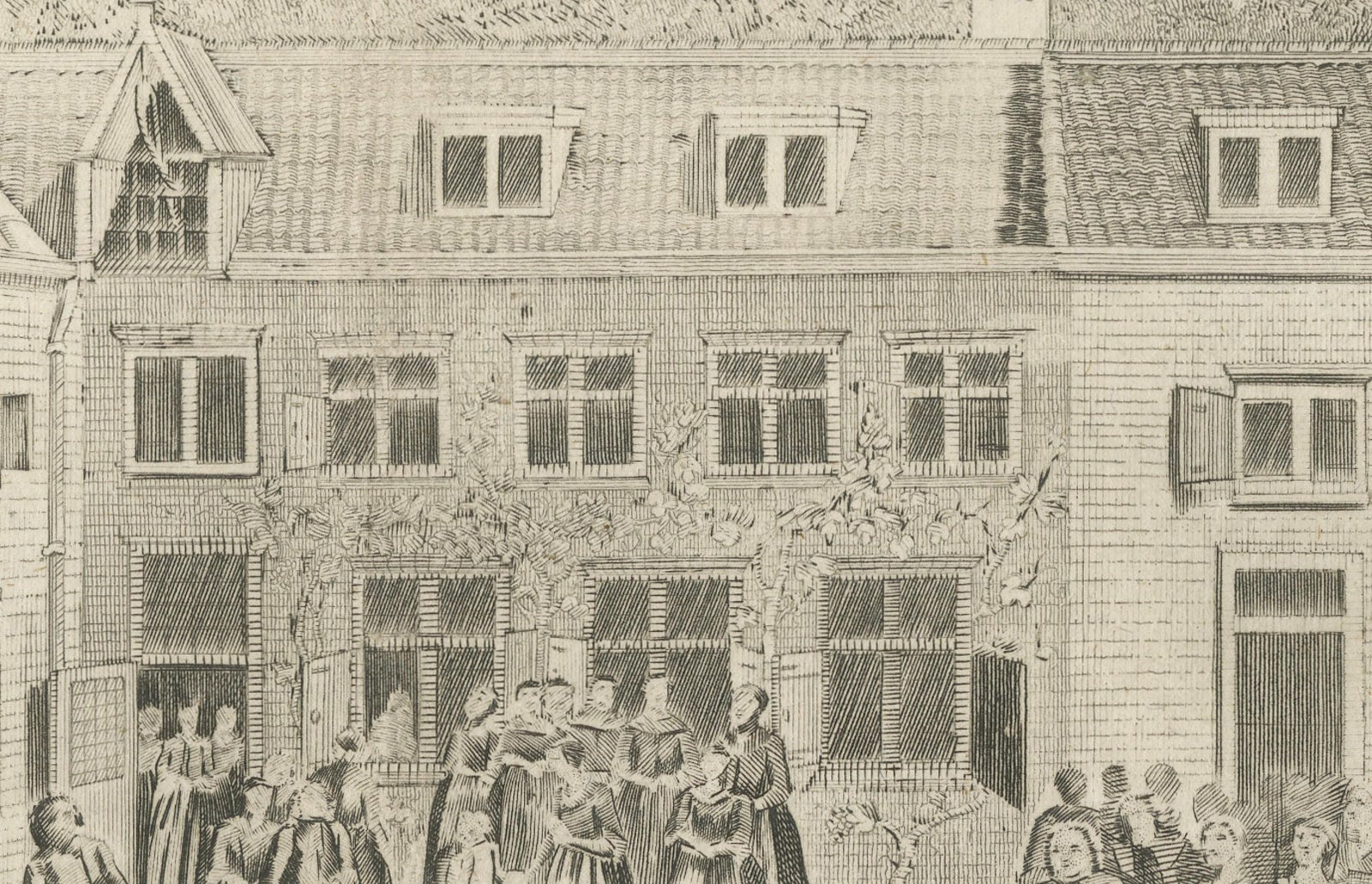
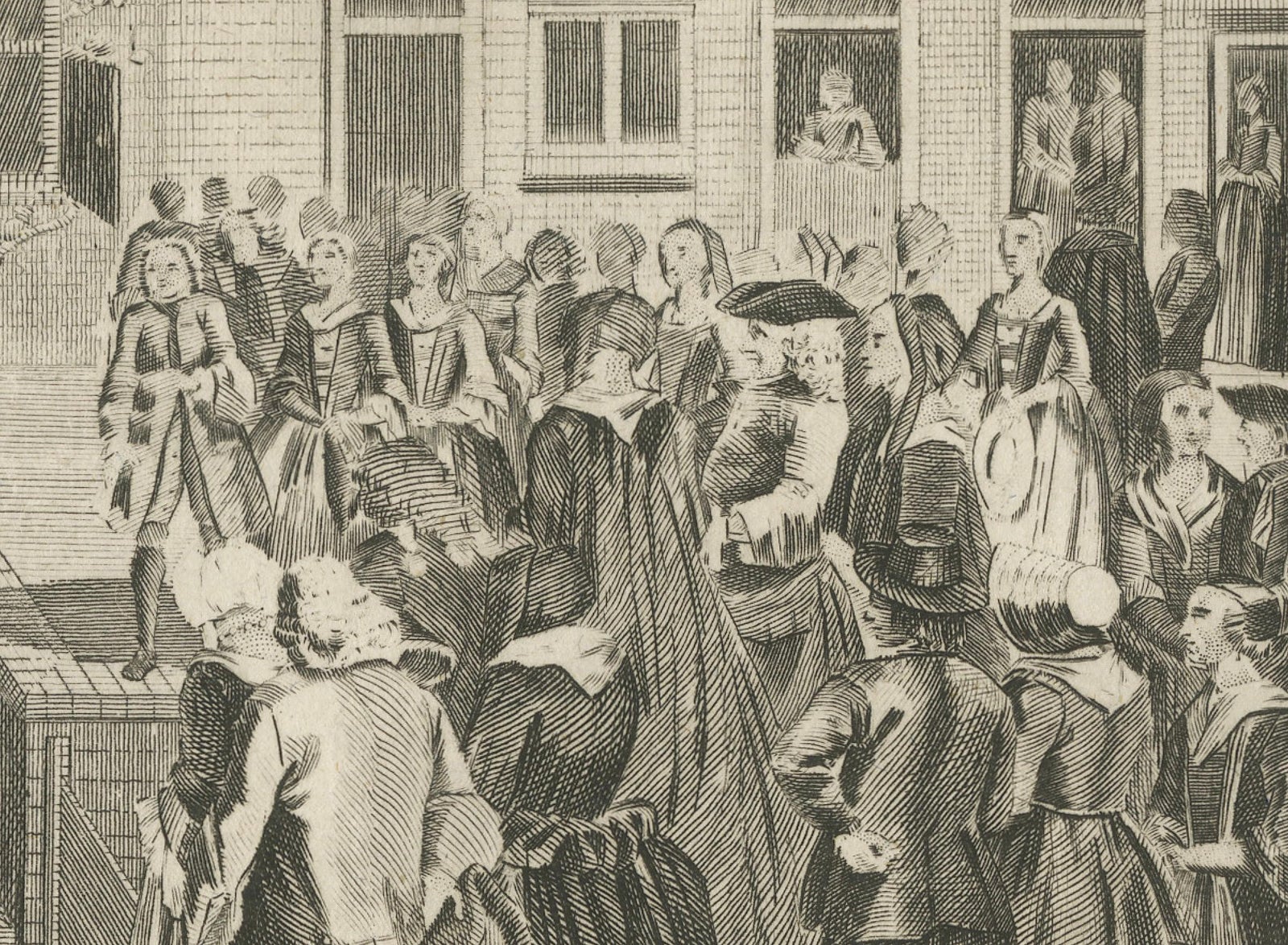
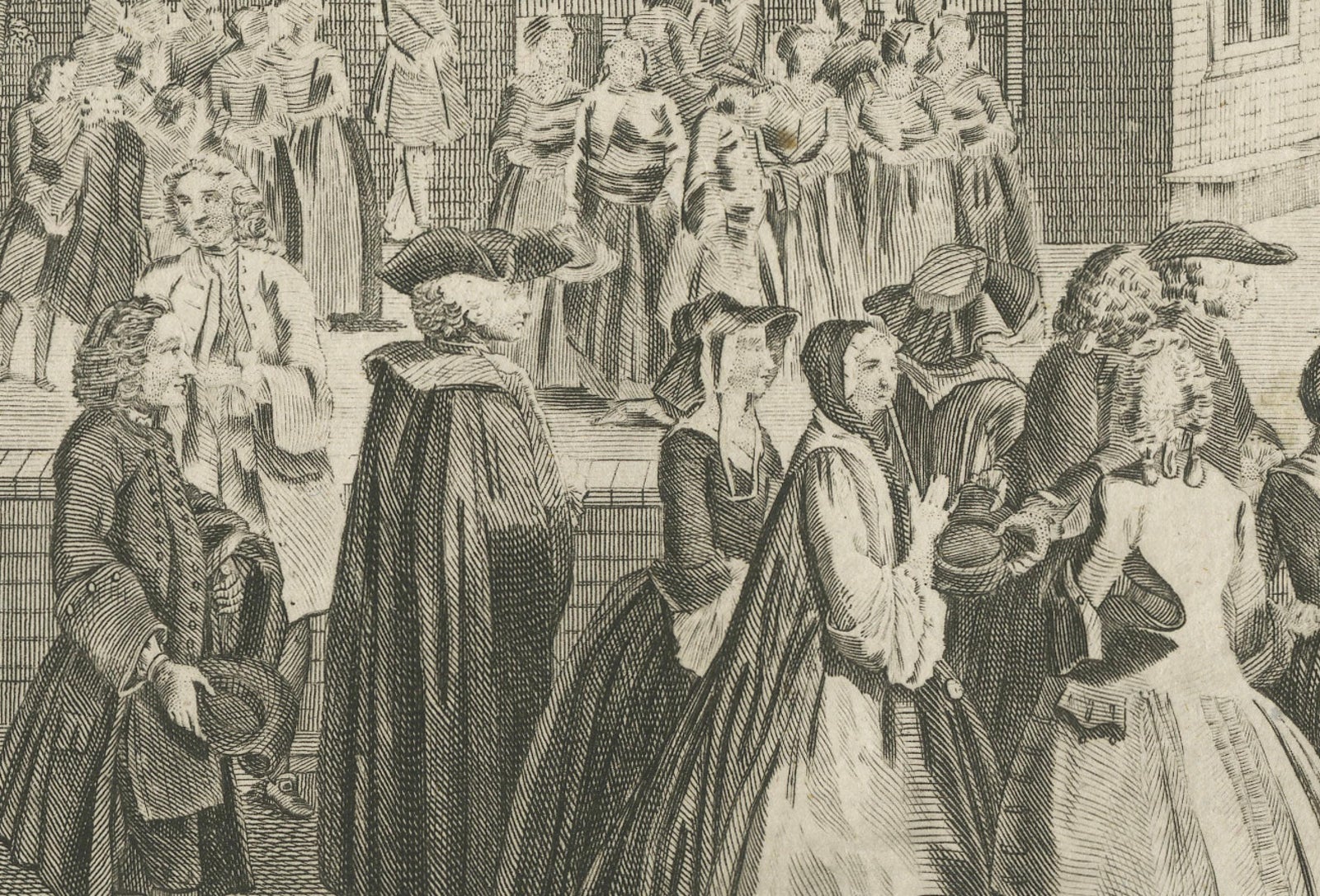
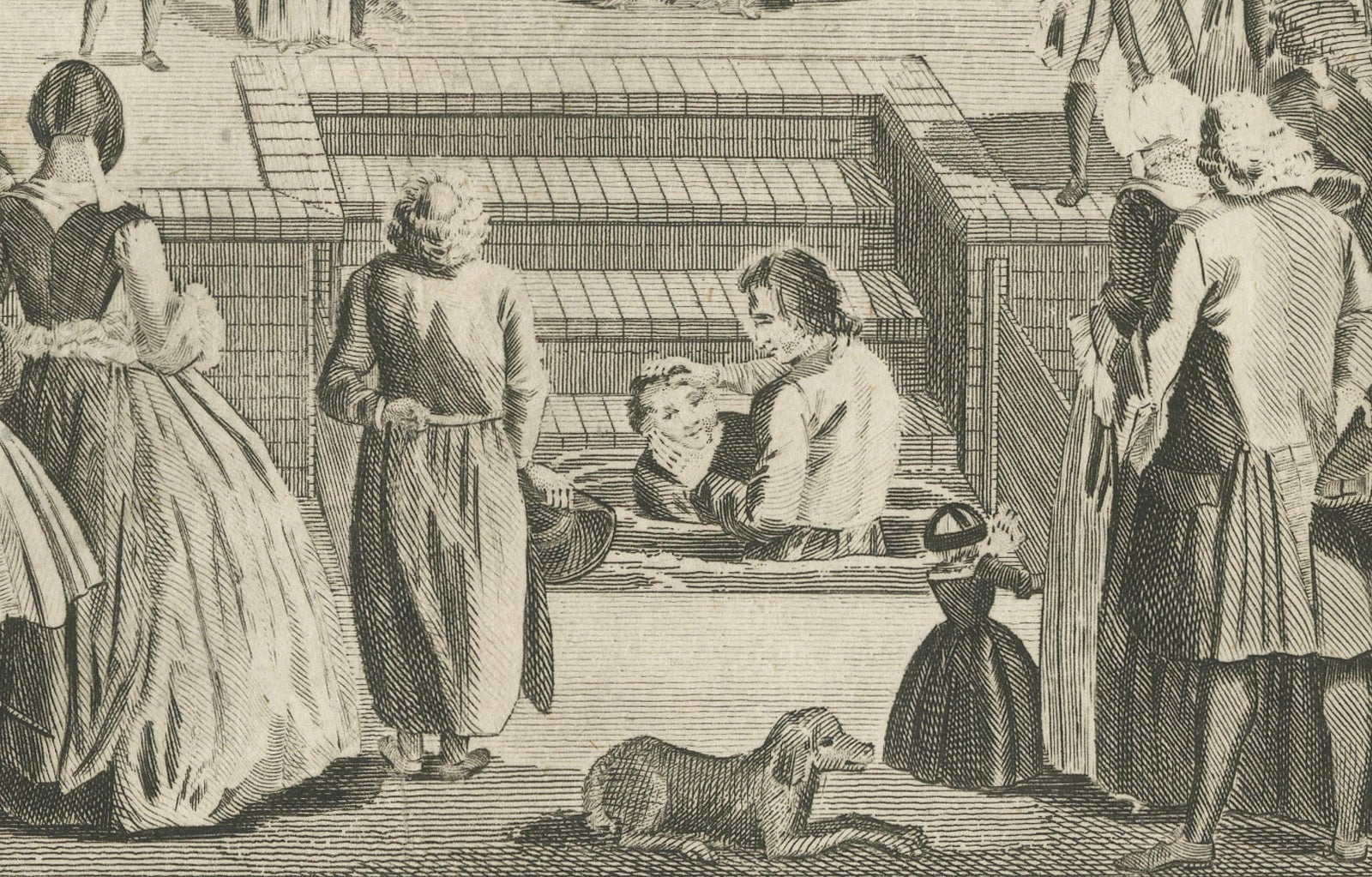
Framed and on the wall

Frame and rooms are illustrations of how the print could look, drawn to its real size; it is sold unframed unless the description says otherwise.
Rites of the World
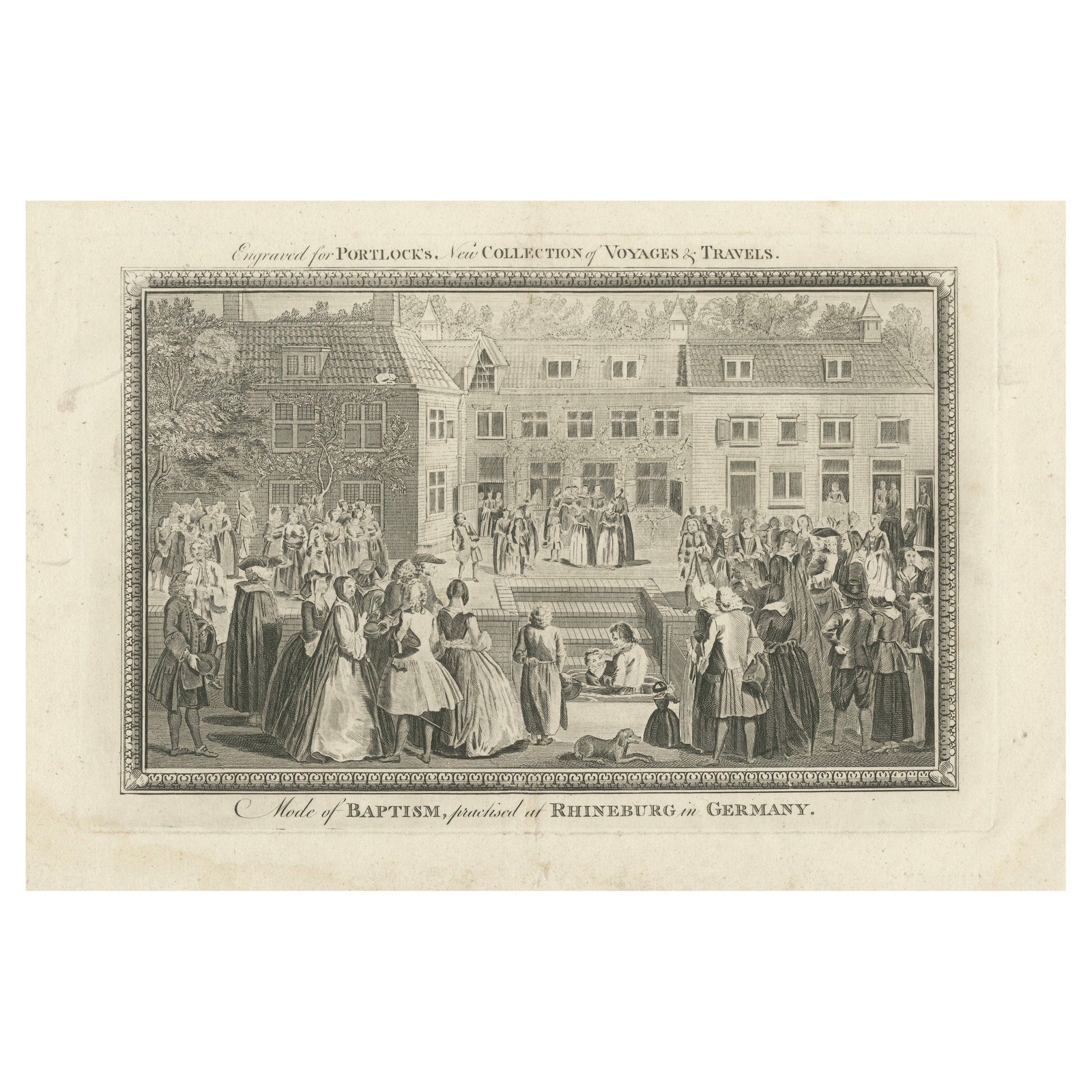
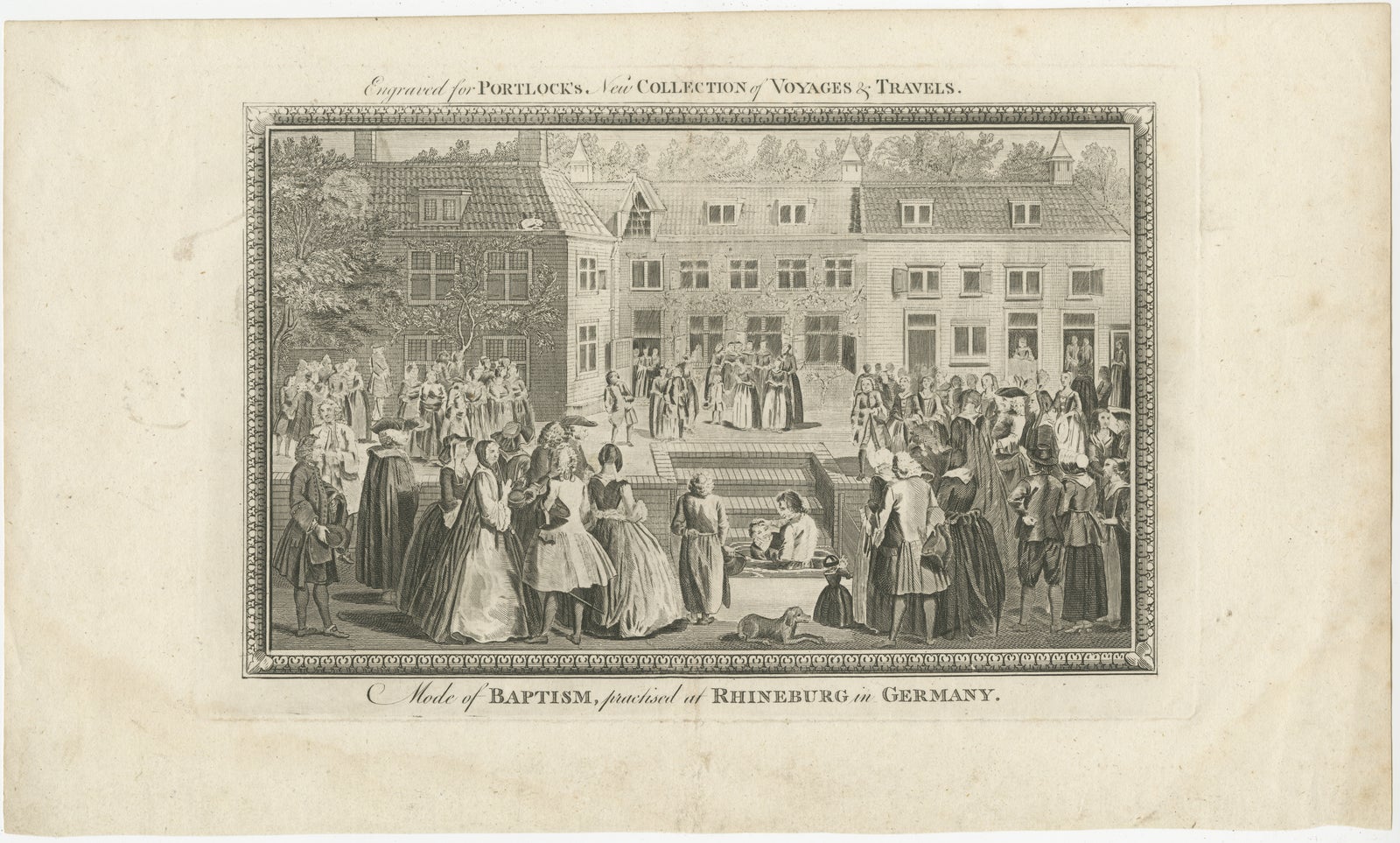
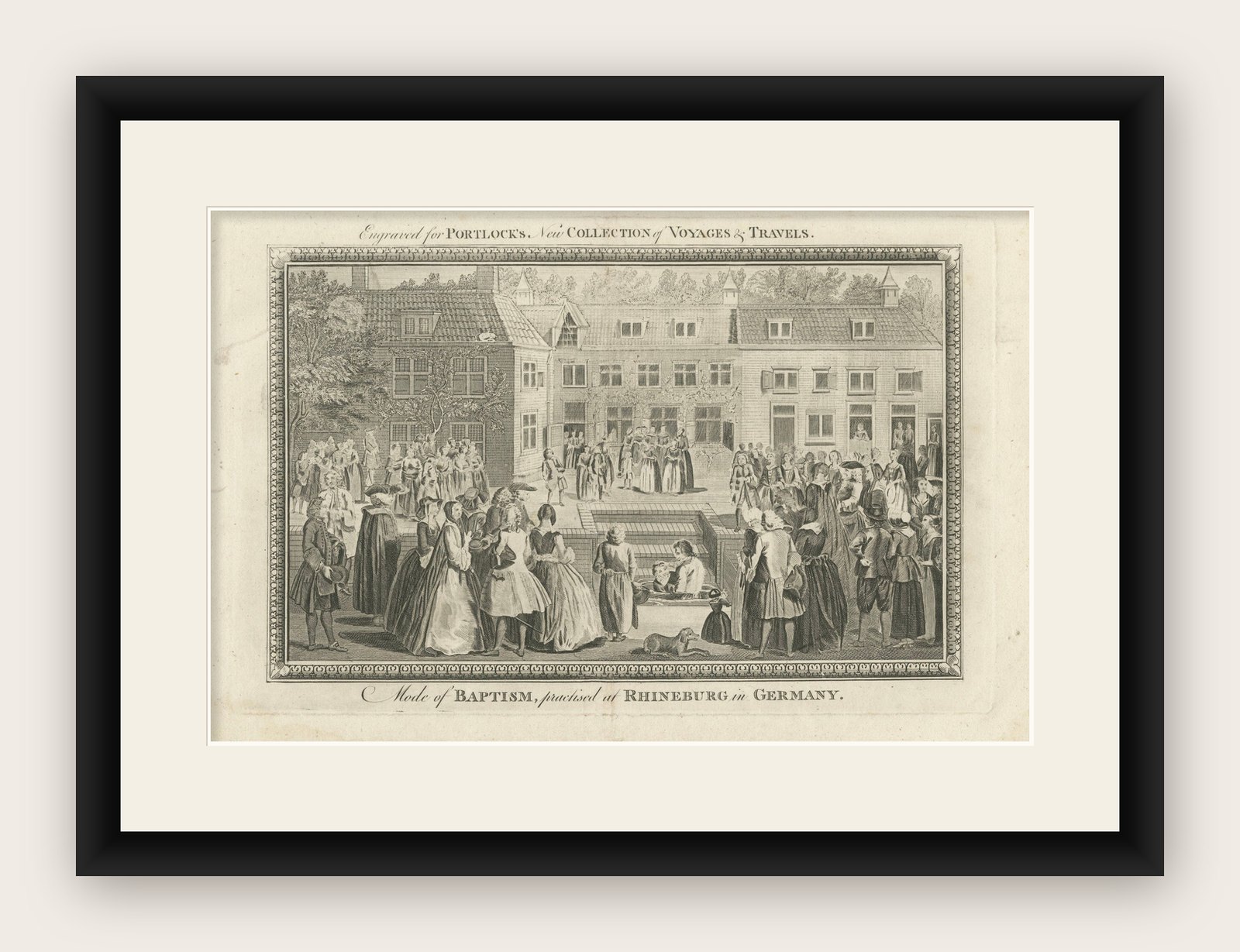
Baptism Ceremony of Rijnsburg Collegiants, Germany, Engraved for Portlock, 1790
Anno Domini MDCCXC1790
€200
$225 · £170
Original print, not a reproduction
Ships worldwide from the Netherlands, flat, insured and tracked. 14-day returns. To buy, use Ask a question (info@antiquesacredprints.com) and we will reserve it for you.
- Date
- 1790
- Sheet size
- 9.1 × 15.4 in (23 × 39 cm)
- Condition
- Good. The engraving is in good condition and clean margins. The paper shows minimal signs of aging, with faint toning consistent with its age and some soiling due to handling and age.
- Faith
- Christianity
- Collection
- Rites of the World
- Era
- 1700 to 1799, Mortier, Picart and the illustrated Bible
- Stock no.
- f_42682682
This copper engraving, titled "Mode of Baptism, Practised at Rhineburg in Germany", was created around 1790 and engraved for "Portlock's New Collection of Voyages and Travels."
The scene illustrates a baptism ceremony performed by the Rijnsburg Collegiants (Rijnsburgse Collegianten) circa 1735, a Christian sect known for their adult baptisms by immersion.
The engraving shows a congregation gathered near the Groot Huis (Great House), with the ceremony taking place in a canal surrounding the building. The carefully detailed depiction highlights men, women, and children dressed in 18th-century attire, emphasizing the communal aspect of this religious ritual. The image is framed within an ornate border, with an inscription at the top denoting its publication source.
This artwork is a fascinating representation of historical Christian practices in the Netherlands, specifically tied to the Rijnsburg Collegiants, who valued simplicity, tolerance, and personal interpretation of scripture. The engraving provides valuable insights into their traditions, community gatherings, and the architectural environment of the period.
Portlock refers to Nathaniel Portlock (c. 1748 to 1817), an English naval officer, fur trader, and author. He is best known for his explorations and voyages in the Pacific Ocean, particularly the northwest coast of North America, during the late 18th century. Portlock served as a lieutenant in the British Royal Navy and participated in Captain James Cook's third voyage (1776 to 1780).
After leaving the Navy, Portlock entered the fur trade, organizing a private expedition with Captain George Dixon to the Pacific Northwest in 1785. This expedition aimed to capitalize on the lucrative fur trade, primarily in sea otter pelts. Upon returning, Portlock published an account of his travels titled *A Voyage Round the World* (1789), which provided valuable geographical, cultural, and commercial insights from his journeys.
Although Portlock was primarily an explorer and naval officer, his name appears on works like *Portlock's New Collection of Voyages and Travels,* which was likely a publication compiling accounts of various historical voyages and explorations. These compilations were common in the 18th century, serving as educational and entertaining reading for an audience eager to learn about distant lands and cultures. This engraving was likely included as an illustrative plate in such a collection.
Condition: The engraving is in good condition and clean margins. The paper shows minimal signs of aging, with faint toning consistent with its age and some soiling due to handling and age. The detailed lines and ornamental framing remain sharp, making this piece a highly collectible and visually striking example of 18th-century printmaking.
Collectors of religious art, European history, or antique engravings will find this piece particularly appealing for its historical and cultural significance, as well as its connection to *Portlock's Collection*.
Explore