Close-ups
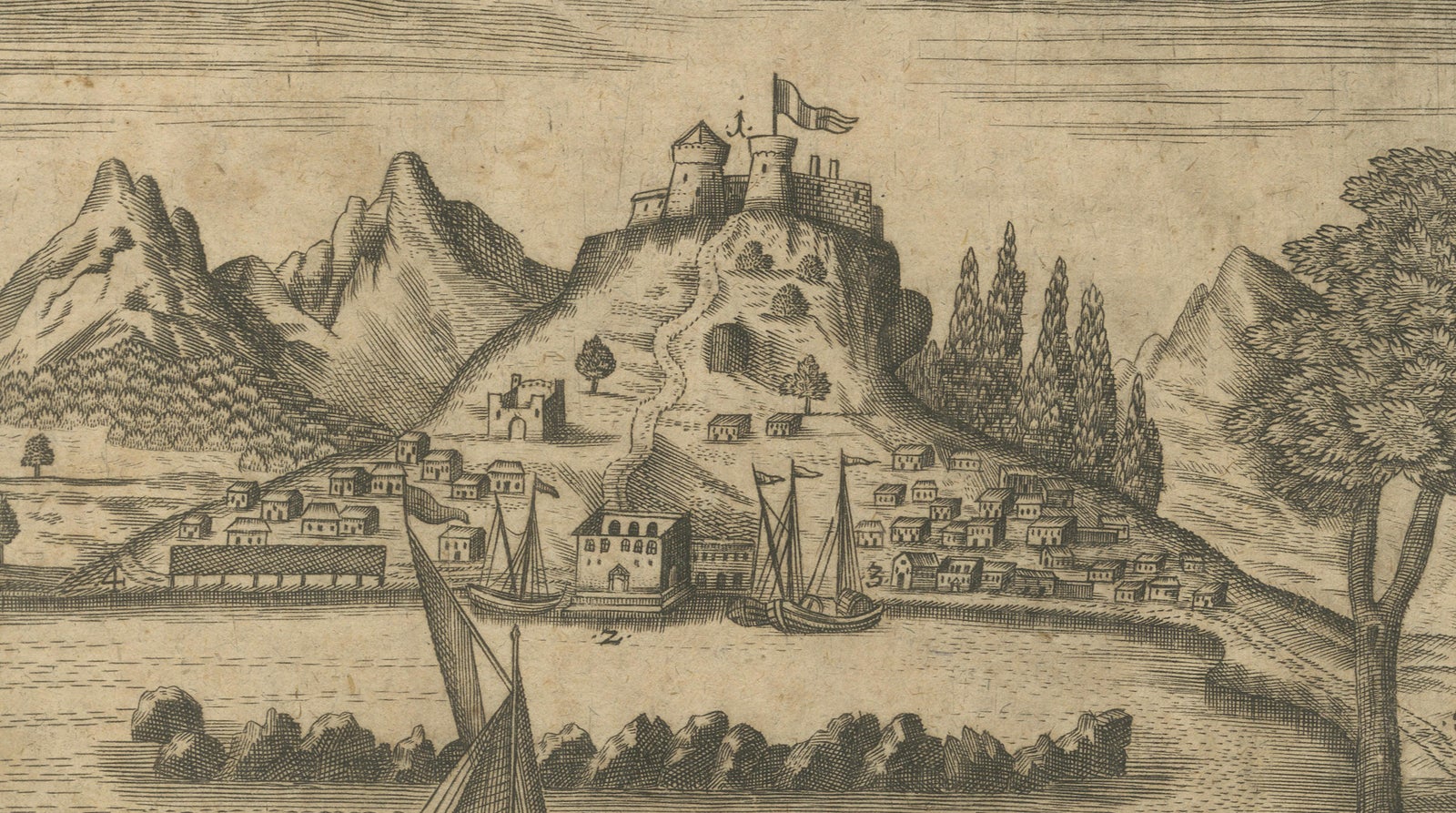
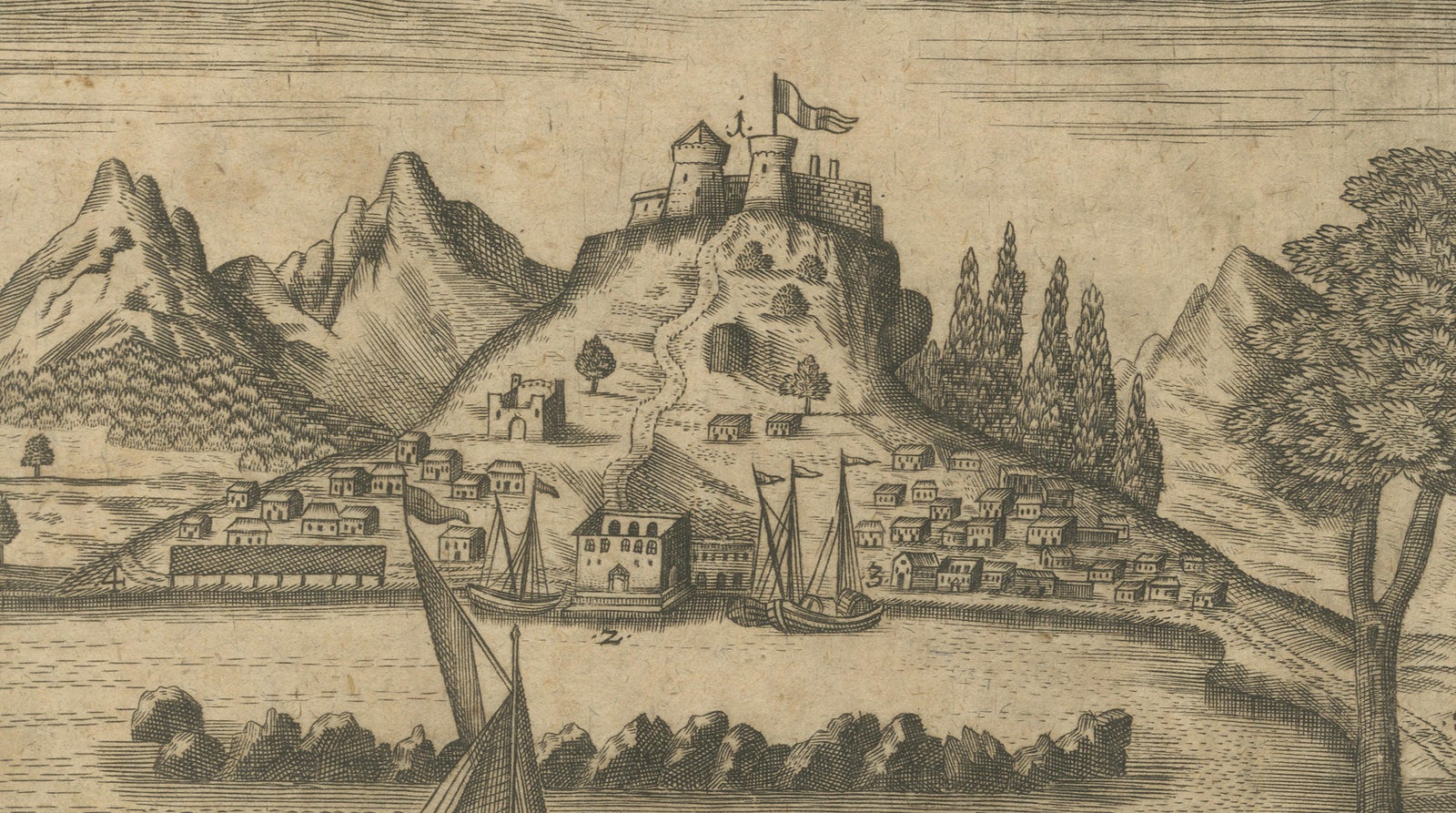
Framed and on the wall
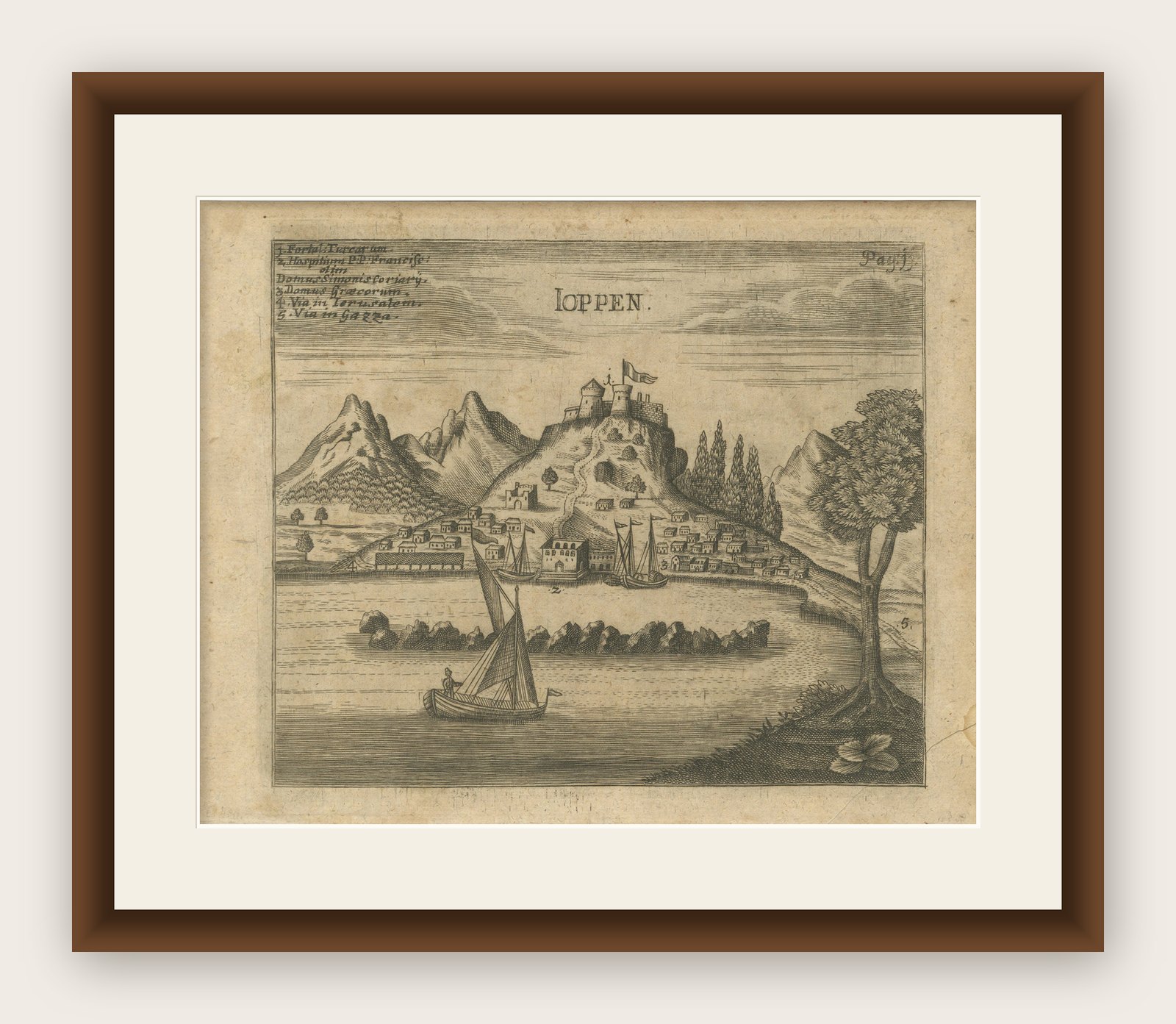
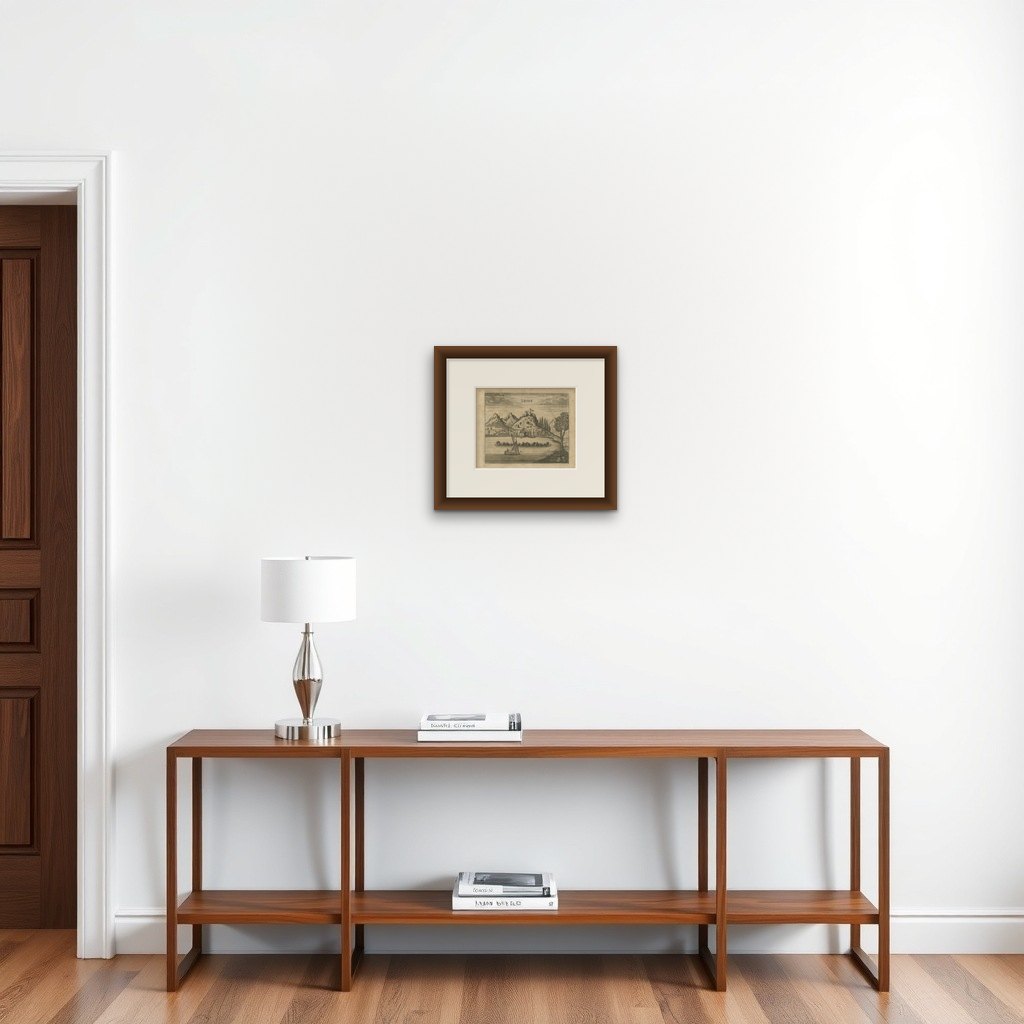

Frame and rooms are illustrations of how the print could look, drawn to its real size; it is sold unframed unless the description says otherwise.
The Holy Land
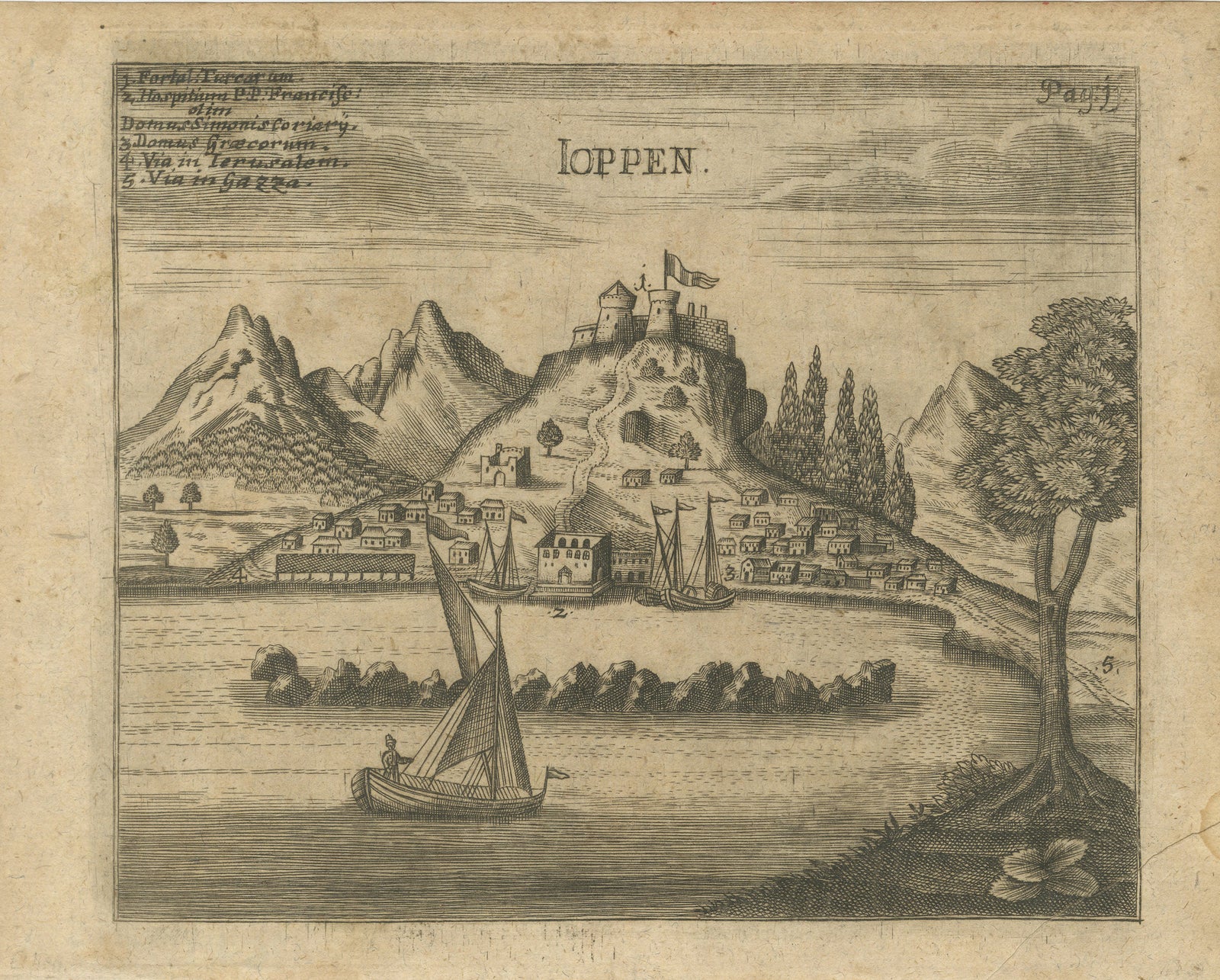
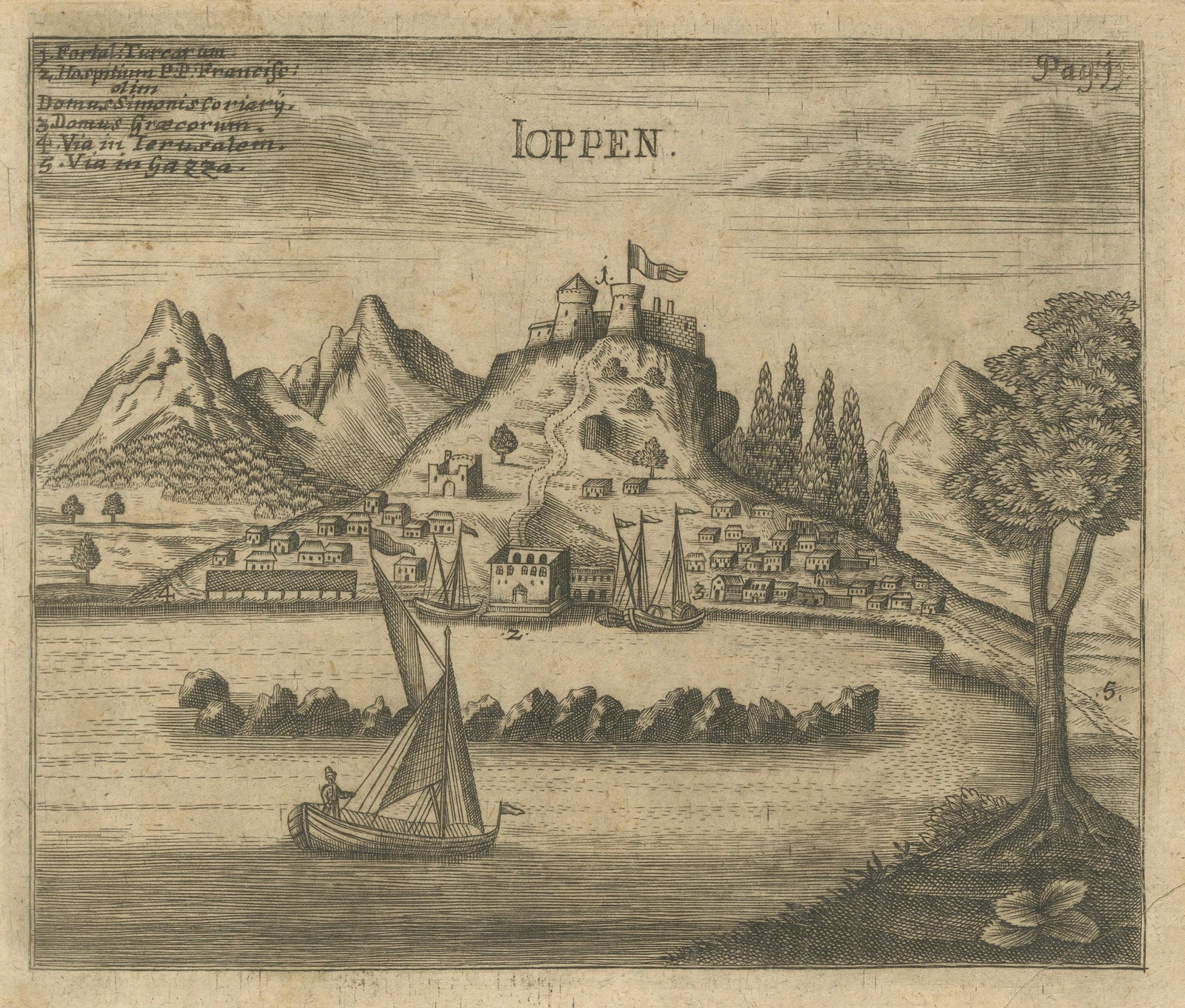
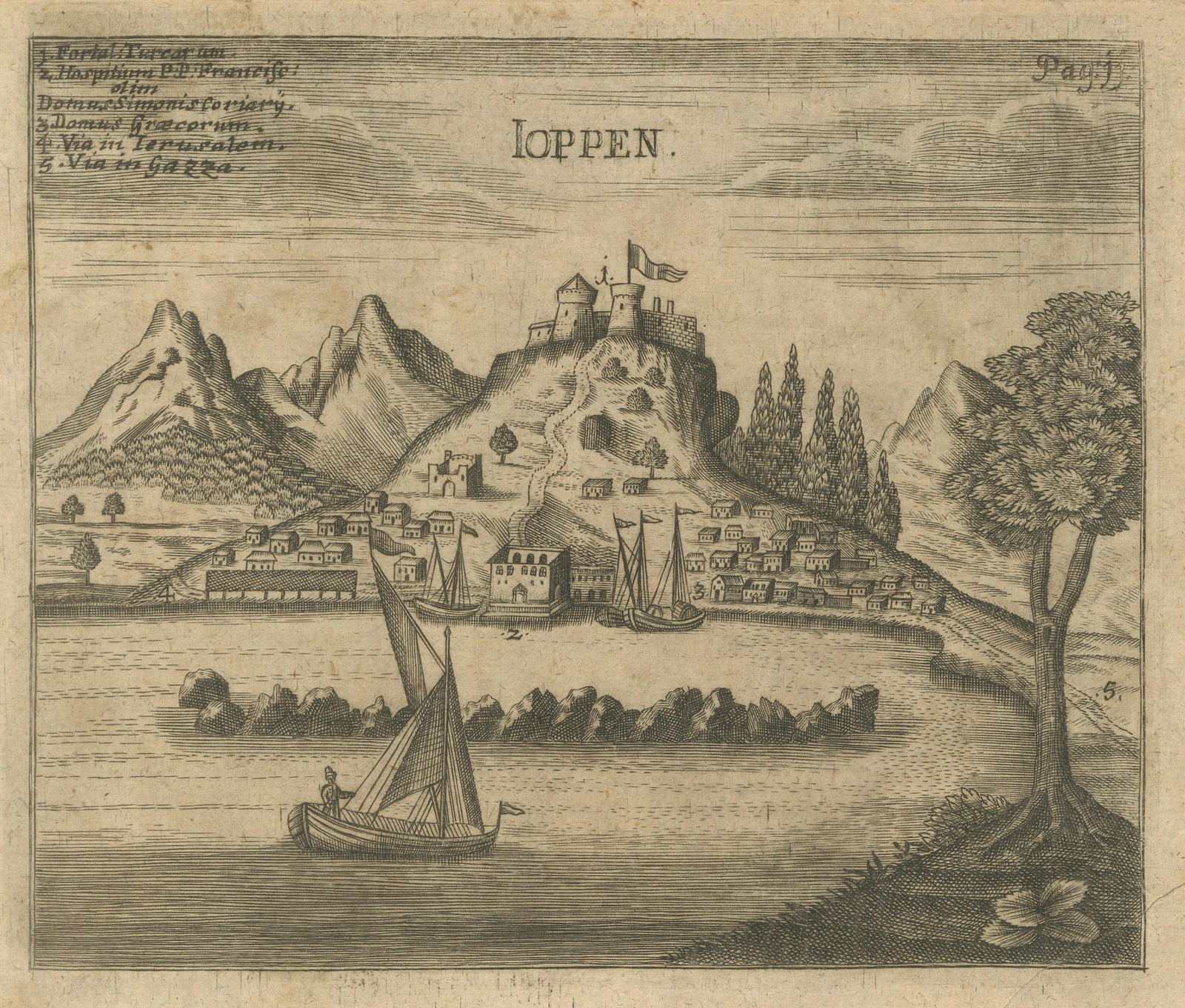
Antique View of Jaffa (Ioppen) Holy Land Engraving, Müller 1735
Anno Domini MDCCXXXV1735
$640
€570 · £485
Original print, not a reproduction
Ships worldwide from the Netherlands, flat, insured and tracked. 14-day returns. To buy, use Ask a question (info@antiquesacredprints.com) and we will reserve it for you.
- Date
- 1735
- Sheet size
- 6.4 × 8.1 in (16.2 × 20.5 cm)
- Condition
- Good. Good antique condition with age toning, minor foxing, and light wear to the margins consistent with age. Strong impression with clear engraved detail.
- Faith
- Christianity, Judaism
- Collection
- The Holy Land
- Era
- 1700 to 1799, Mortier, Picart and the illustrated Bible
- Stock no.
- f_50236072
“View of Jaffa (Ioppen) with the Road to Jerusalem”, Antique Holy Land Copperplate Engraving, 1735
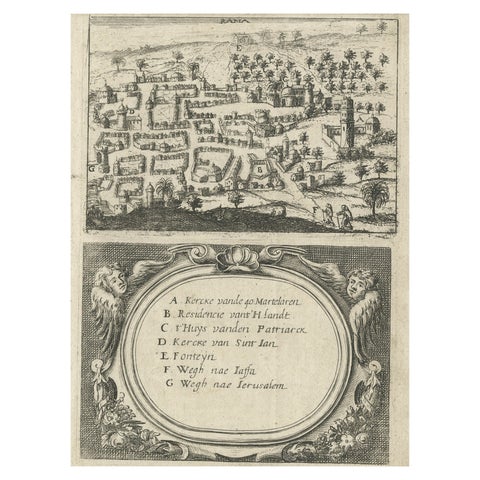
Rare and evocative early copperplate engraving depicting the ancient harbor city of Jaffa (here titled “Ioppen”), published in the second edition of Peregrinus in Jerusalem by Müller, circa 1735. This small but highly atmospheric Holy Land view presents the fortified coastal town rising dramatically above the harbor, with sailing vessels in the foreground and mountainous scenery beyond. The print reflects the fascination of early European pilgrims and travelers with the biblical landscapes of Palestine and the route toward Jerusalem.
The composition is rich in detail despite its intimate format. A fortified castle crowns the hilltop, flying a flag above the city walls, while clusters of buildings descend toward the harbor lined with small ships and merchant boats. The numbered legend in the upper left identifies important landmarks and routes, including the “Porta Turcarum” (Turkish Gate) and the road leading inland toward Jerusalem. Such annotations made the print both decorative and informative for contemporary readers embarking on spiritual or intellectual journeys to the Holy Land.
Views of Jaffa were especially sought after in early pilgrimage literature, as the port served for centuries as the principal gateway for European travelers arriving in Palestine. The city’s biblical and crusader associations gave it enduring importance in Christian travel accounts. This engraving combines topographical observation with the romanticized landscape style typical of early 18th-century continental printmaking.
The engraving is often associated stylistically with the work of Jacques Peeters and related Flemish and German travel illustrators who specialized in city views and pilgrimage imagery. Its restrained monochrome palette and fine engraved linework make it particularly attractive for collectors of Holy Land imagery, early travel books, maritime scenes, or historical views of the Middle East.
A highly decorative and historically interesting early view of Jaffa, ideal for collectors of antique Holy Land prints, biblical imagery, or early travel engravings.
Condition: Good antique condition with age toning, minor foxing, and light wear to the margins consistent with age. Strong impression with clear engraved detail.
Framing tips: Displays exceptionally well in dark walnut, museum black, or lightly gilt frames with a wide ivory or parchment-toned mat. Particularly suitable for libraries, studies, Mediterranean interiors, or collections of Holy Land material.
Technique: Copperplate engraving
Maker: Müller, Germany, ca. 1735
Explore