Framed and on the wall
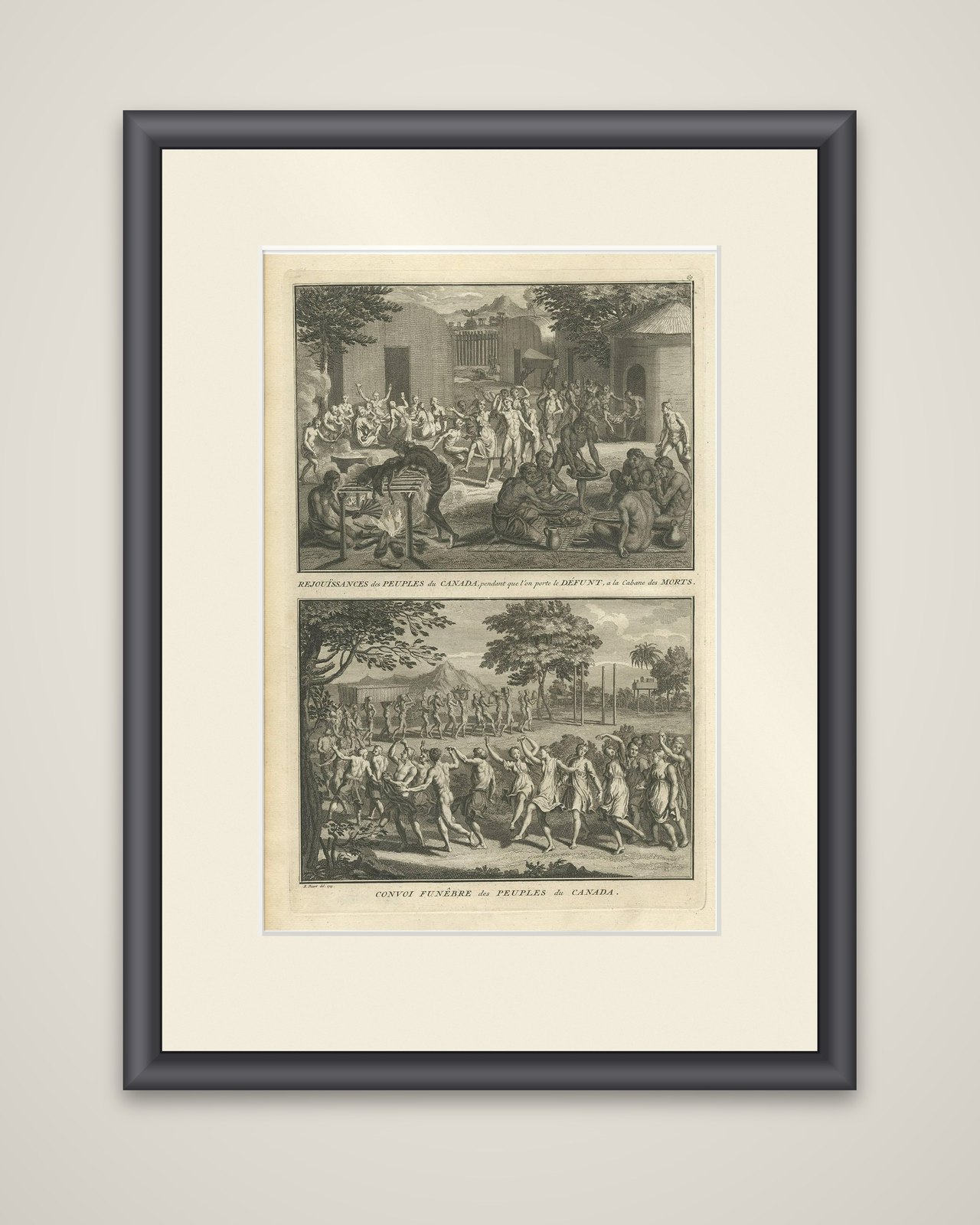


Frame and rooms are illustrations of how the print could look, drawn to its real size; it is sold unframed unless the description says otherwise.
Rites of the World
Antique Print of Funeral Ceremonies of the Canadian People by B. Picart, 1723
Anno Domini MDCCXXIII1723
€125
$140 · £105
Original print, not a reproduction
Ships worldwide from the Netherlands, flat, insured and tracked. 14-day returns. To buy, use Ask a question (info@antiquesacredprints.com) and we will reserve it for you.
- Date
- 1723
- Sheet size
- 13.8 × 9.3 in (35.1 × 23.5 cm)
- Condition
- Good. Please study image carefully.
- Faith
- Indigenous Americas
- Collection
- Rites of the World
- Era
- 1700 to 1799, Mortier, Picart and the illustrated Bible
- Stock no.
- f_9870193
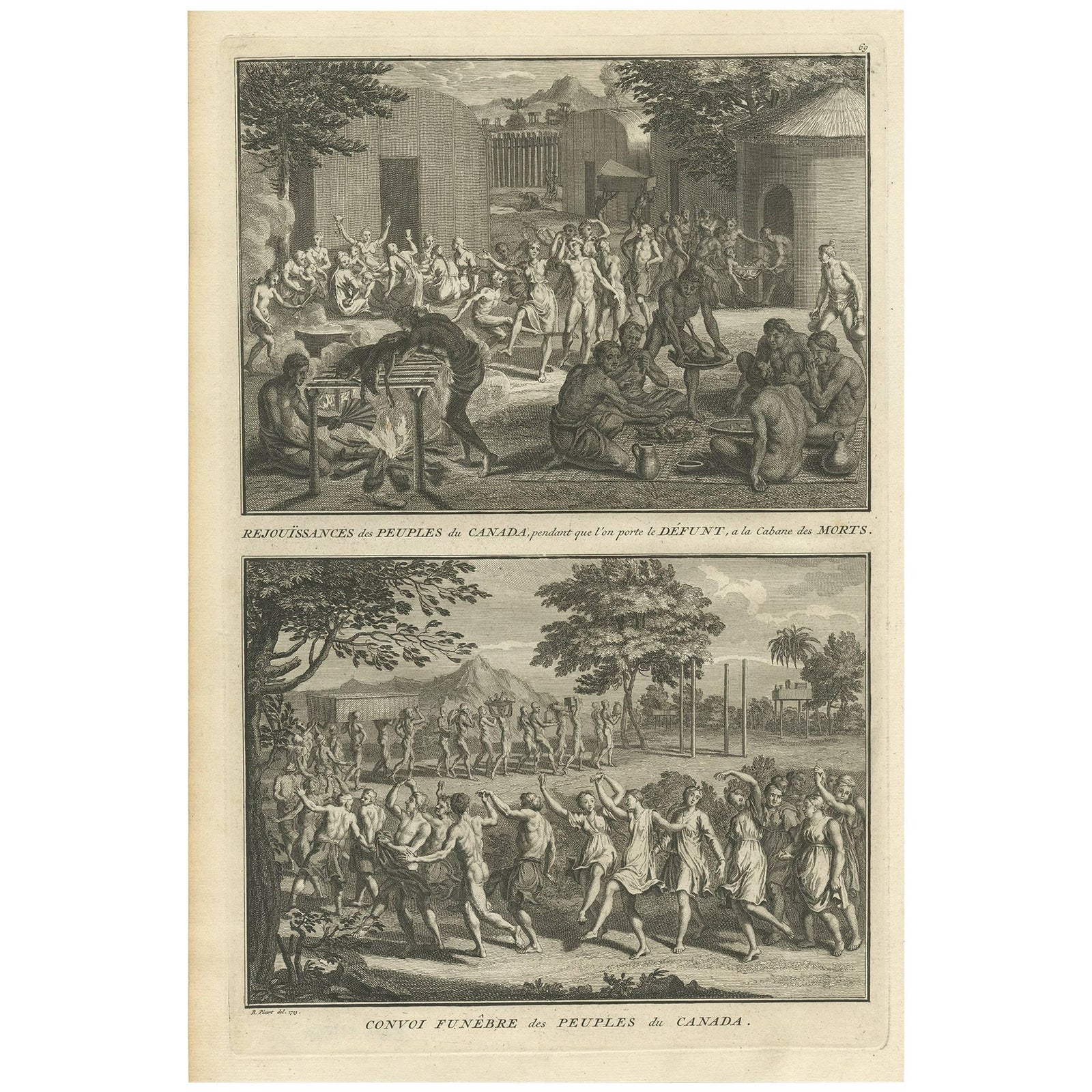
Two scenes of funeral customs of the Canadian peoples on one sheet, an engraving by Bernard Picart dated 1723 in the listing, from the Dutch edition (1727-1738) of "Naaukeurige beschryving der godtsdienst-plichten, kerk-zeden en gewoontens van alle volkeren der waereldt". The captions are in French, and the sheet is credited "B. Picart del." at the lower left.
The upper scene is "Rejouissances des peuples du Canada, pendant que l'on porte le Defunt a la Cabane des Morts". Dancers and feasters crowd a village of cabins, with a figure turning meat on a grill at the center left. The lower scene, "Convoi funebre des peuples du Canada", shows a procession of men and women dancing in file through a wooded landscape toward the cabin in the distance.
The plates belong to Picart's survey of the religious ceremonies and customs of all nations, first issued in French between 1721 and 1725, the most elaborate history of world religion up to that time. They were adapted from earlier sources, including de Bry, so the dancers' classical poses reflect European convention more than observed practice.