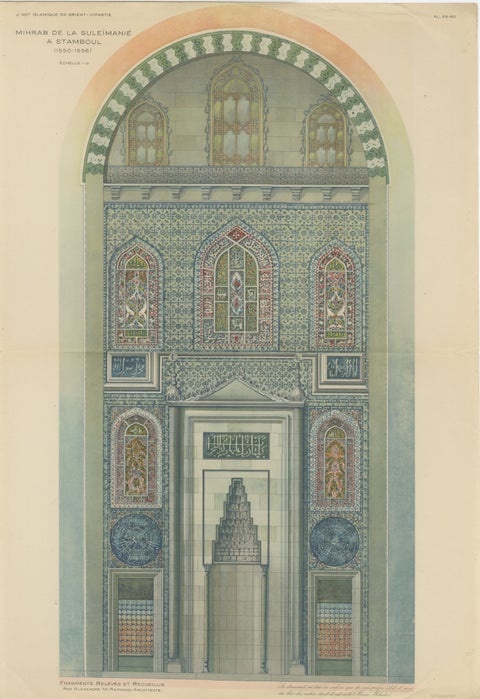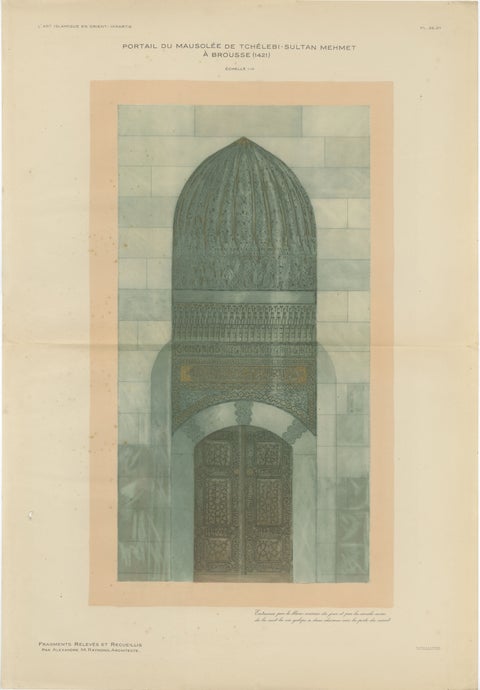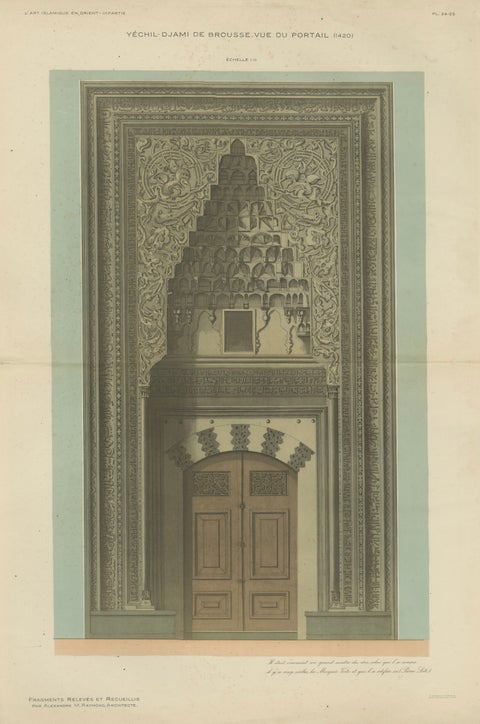
Close-ups
Framed and on the wall
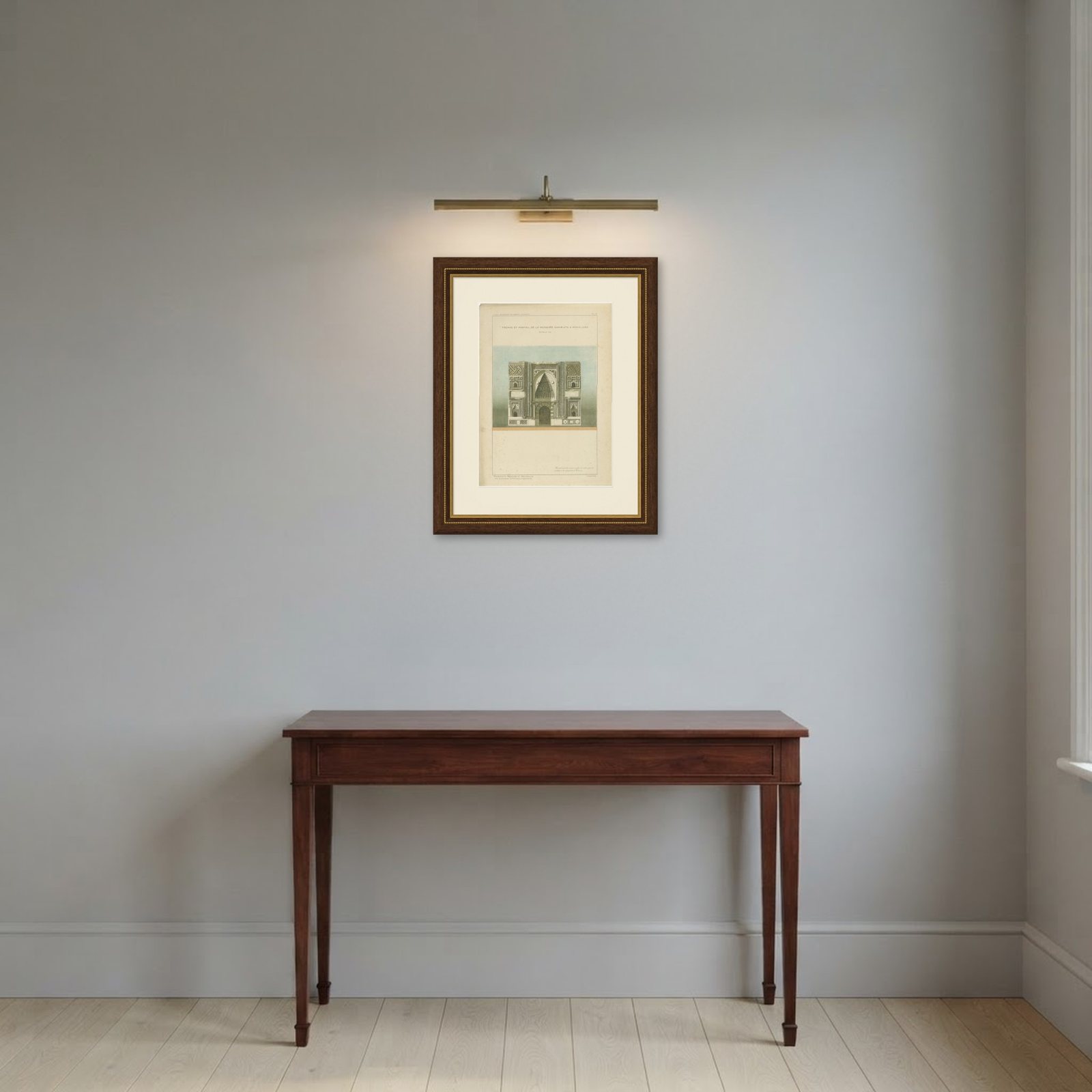
Frame and rooms are illustrations of how the print could look, drawn to its real size; it is sold unframed unless the description says otherwise.
Houses of Worship
Antique Islamic Architecture Print, Sahib Ata Mosque Portal Konya Turkey, 1924
Anno Domini MCMXXIV1924
$520$39025% off
€357 · £300
Original print, not a reproduction
Ships worldwide from the Netherlands, flat or rolled, insured and tracked. 14-day returns.
- Date
- 1924
- Sheet size
- 19.7 × 14.2 in (50 × 36 cm)
- Condition
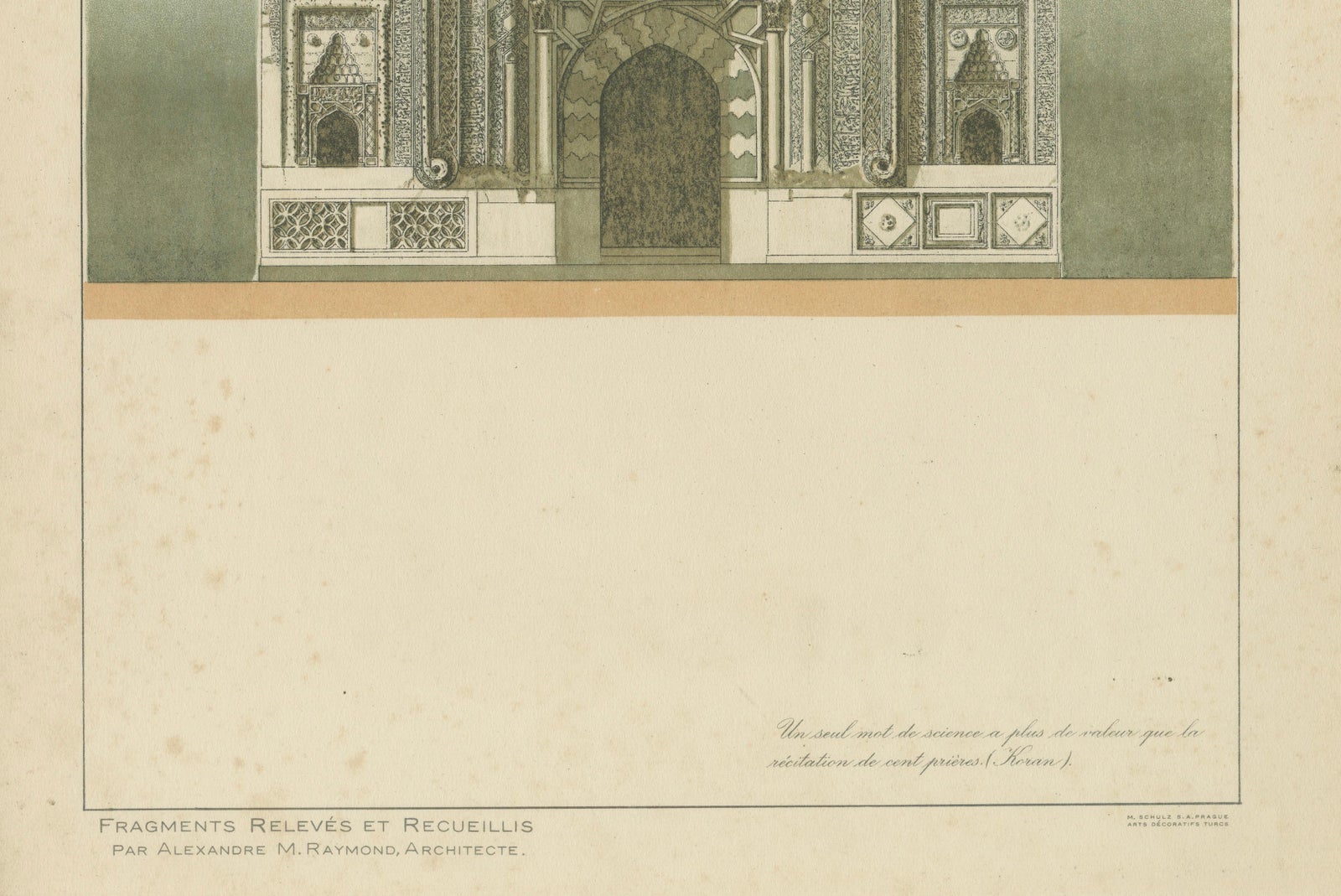
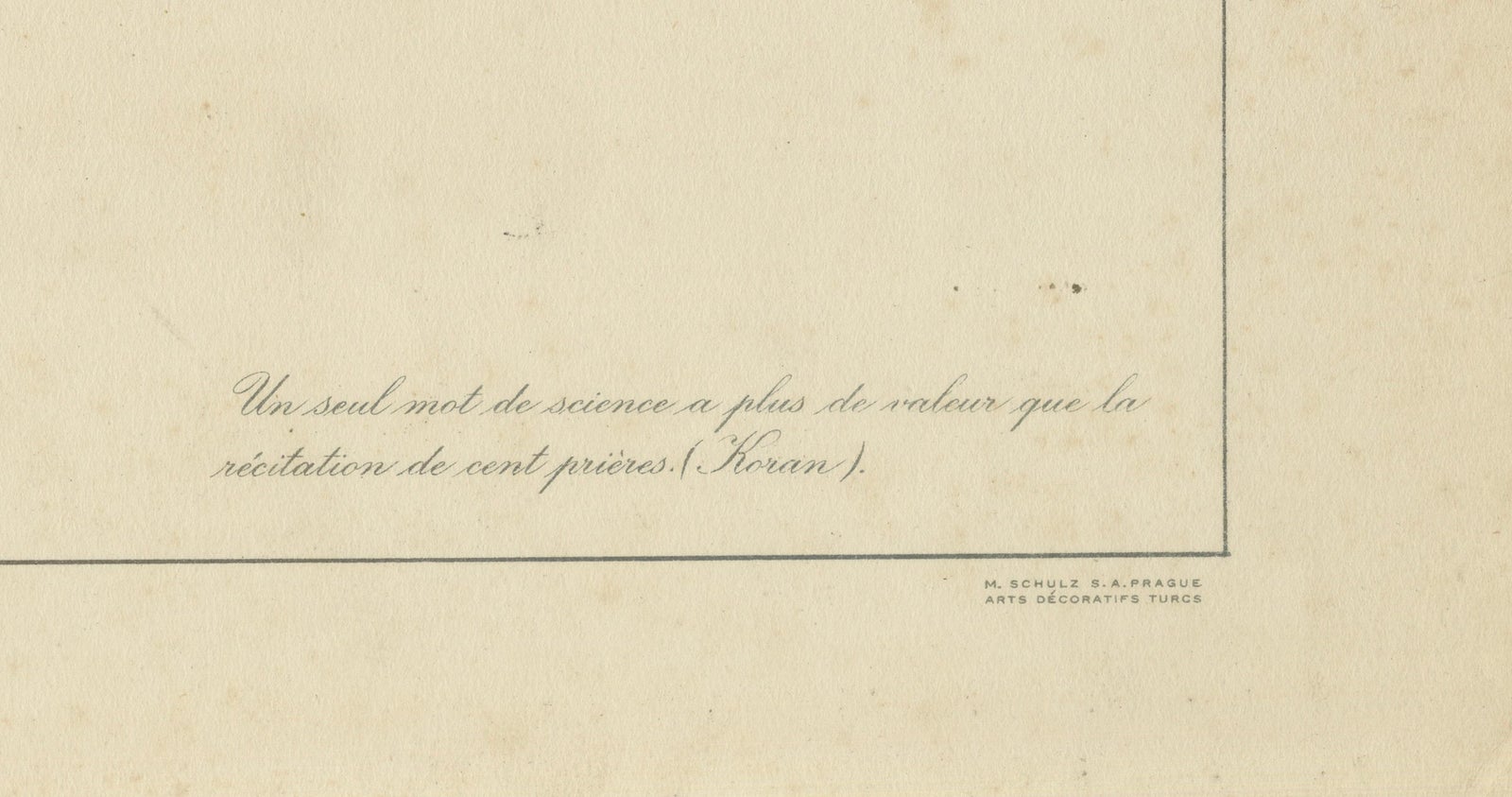
- Good. Good antique condition with age-related toning and scattered foxing, primarily in the margins and lower portion of the sheet. Minor handling wear and light creasing consistent with age. Please study the images carefully.
- Faith
- Islam
- Collection
- Houses of Worship
- Era
- 1850 and after, Chromolithographs and devotional prints
- Stock no.
- BG-14306-14
What the condition grades mean
- Excellent
- Bright and clean, with no faults worth mentioning.
- Very good
- Only light signs of age, such as faint toning.
- Good
- Normal signs of age for a sheet of this period: toning, some foxing, small marks or neat old repairs.
- Fair
- Clear faults such as staining, tears or repairs, priced to match.
Every fault we see is written in the condition note, and the whole sheet is shown uncropped in the photos.
Antique Islamic Architecture Print, Sahib Ata Mosque Portal Konya Turkey, 1924
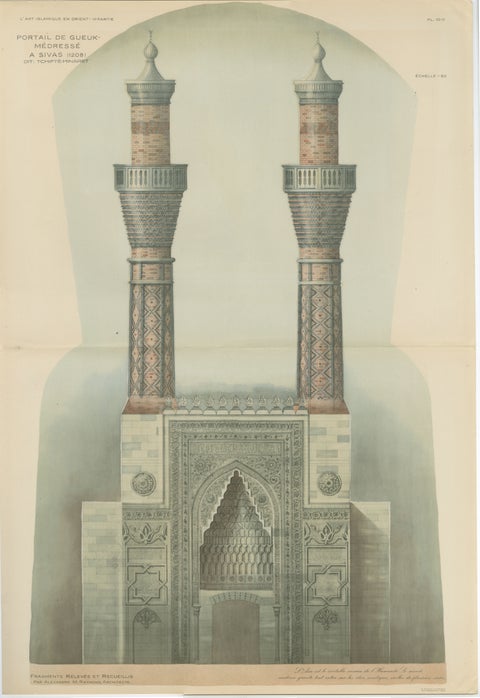
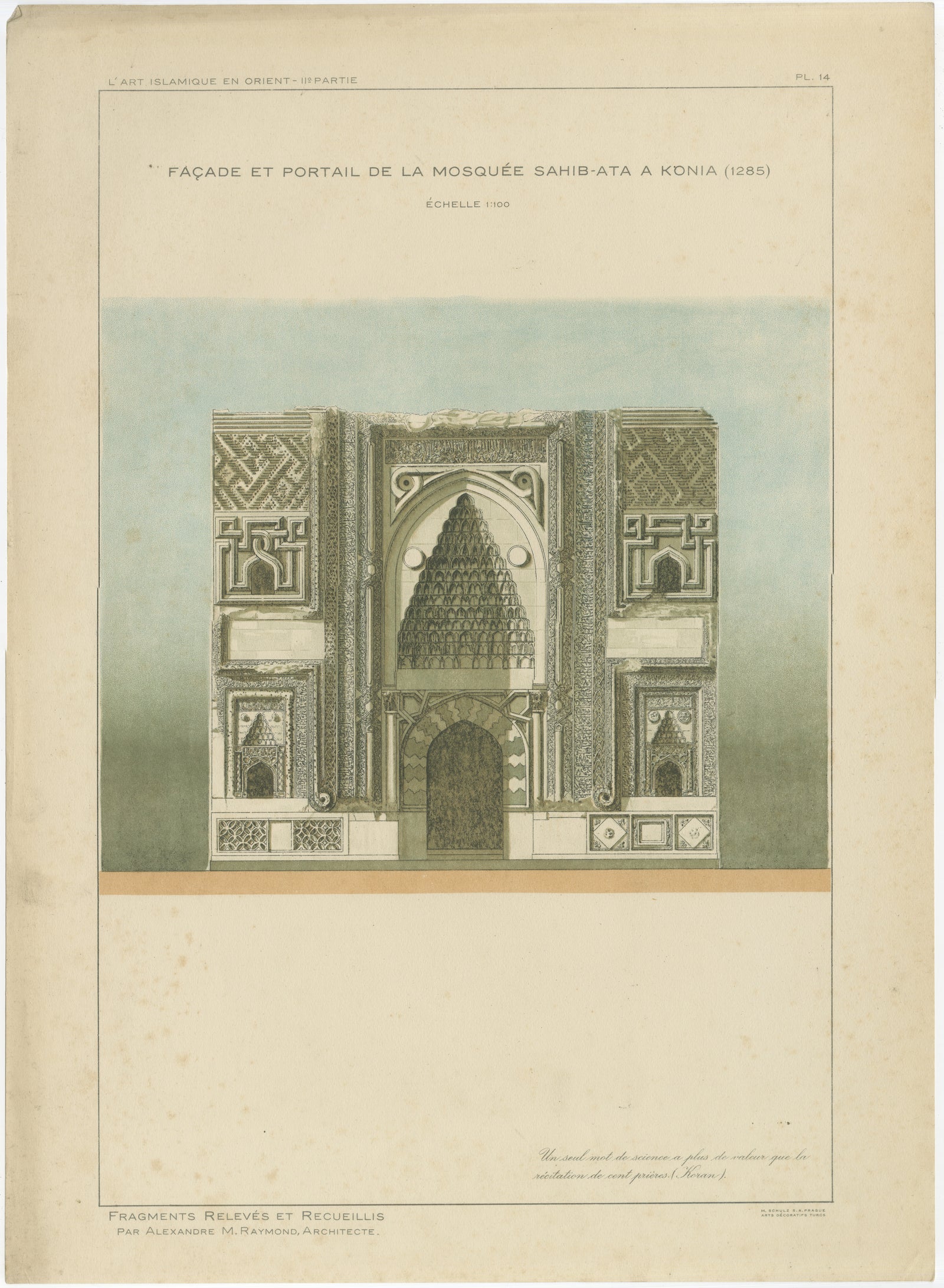
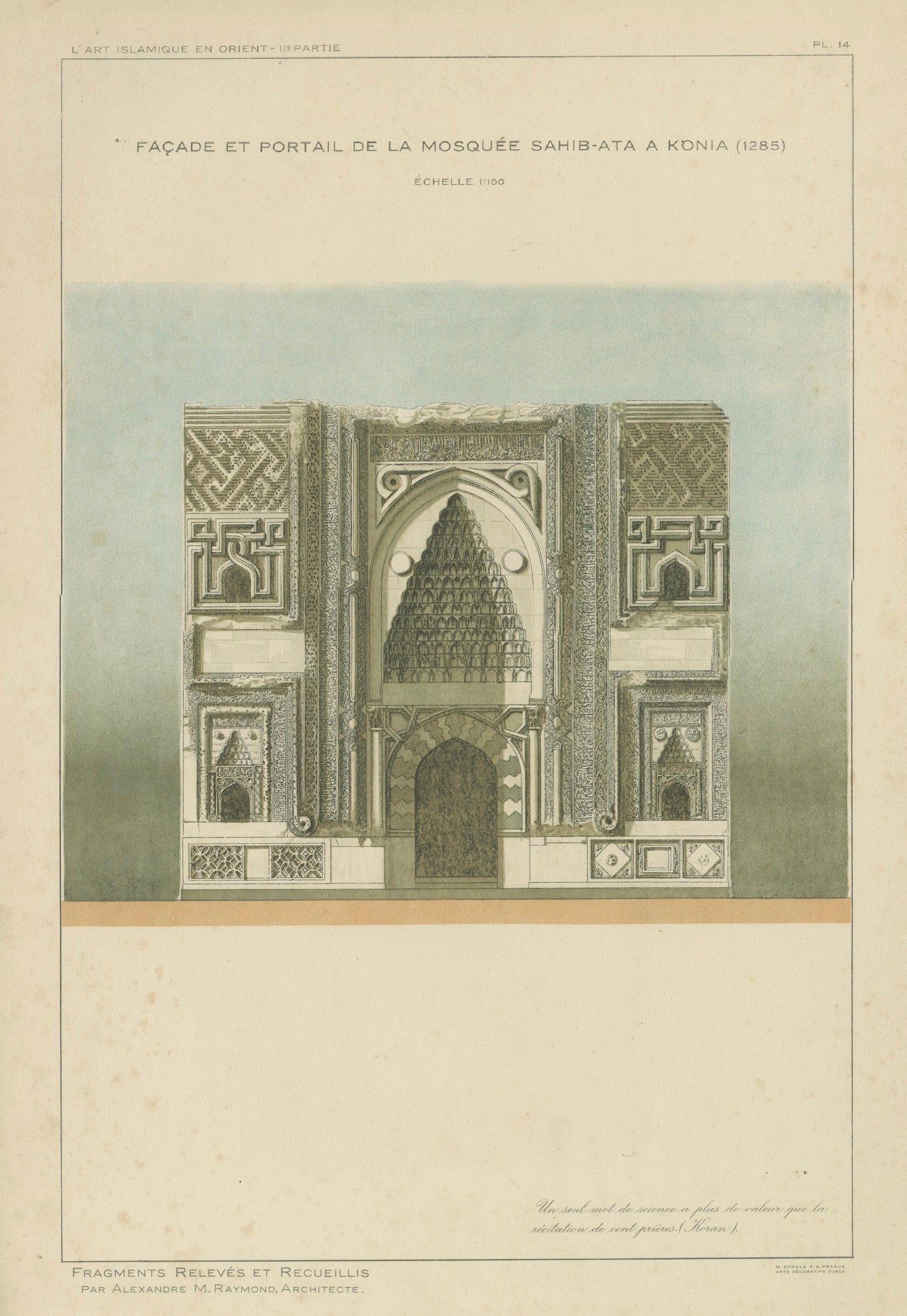
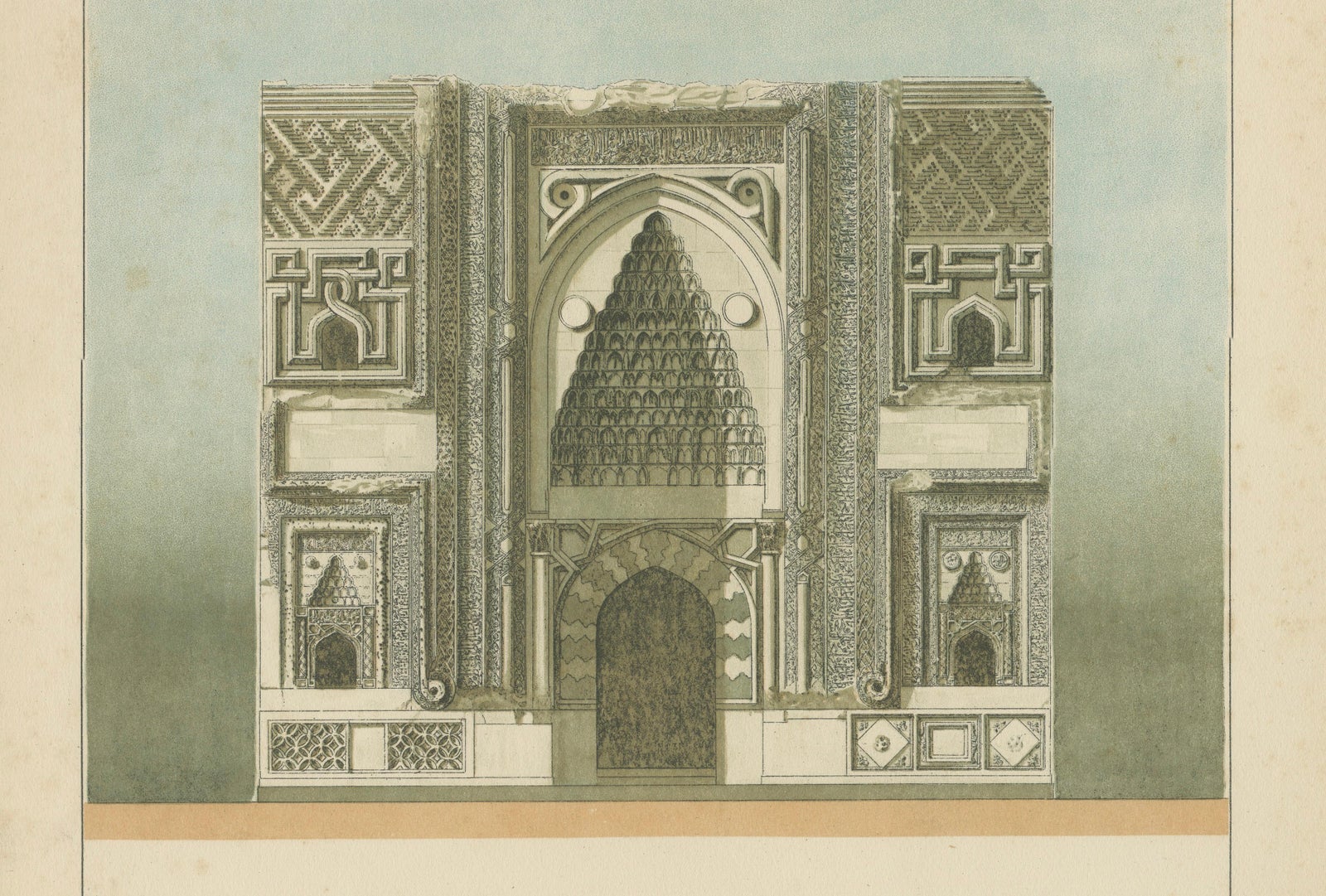
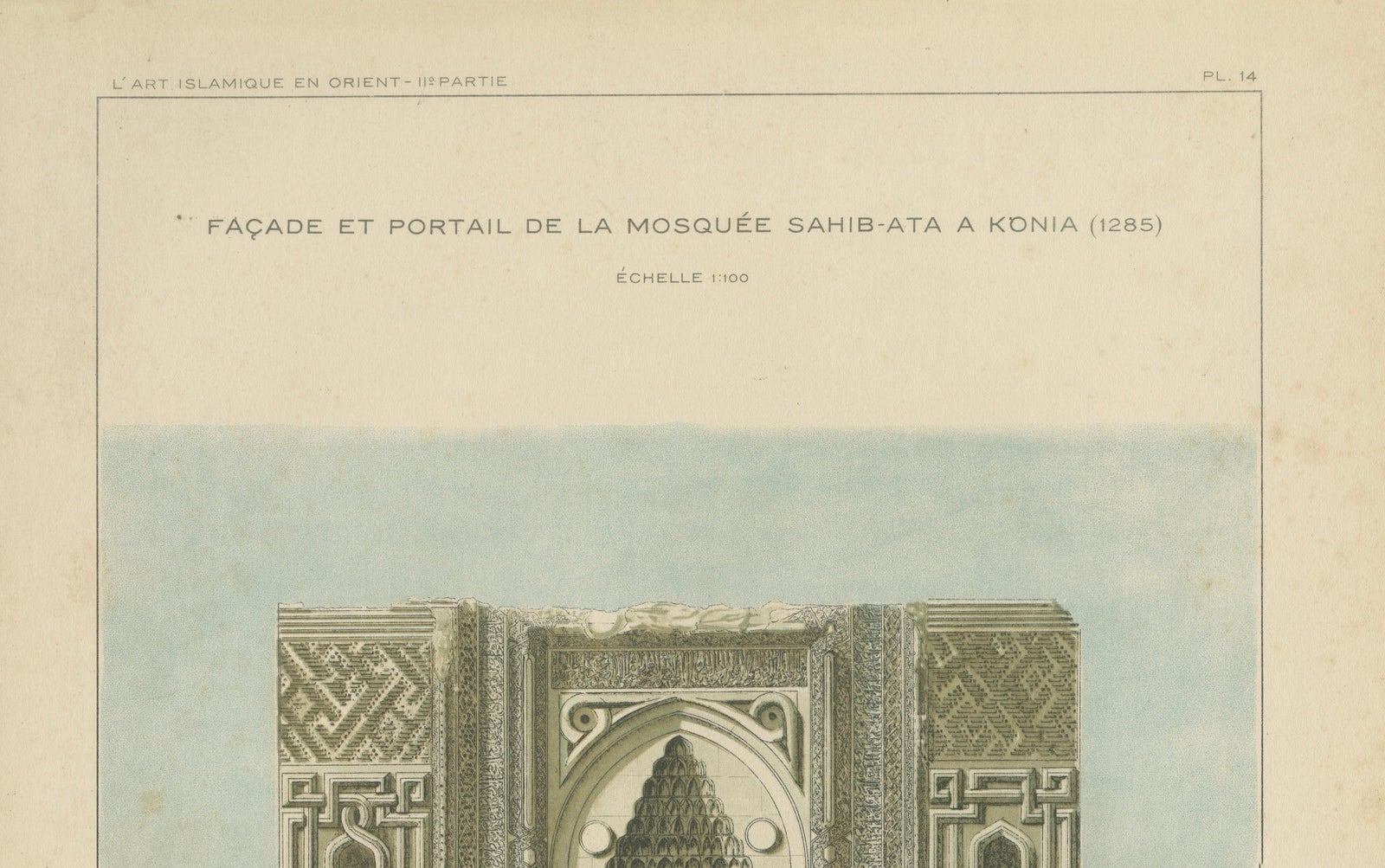
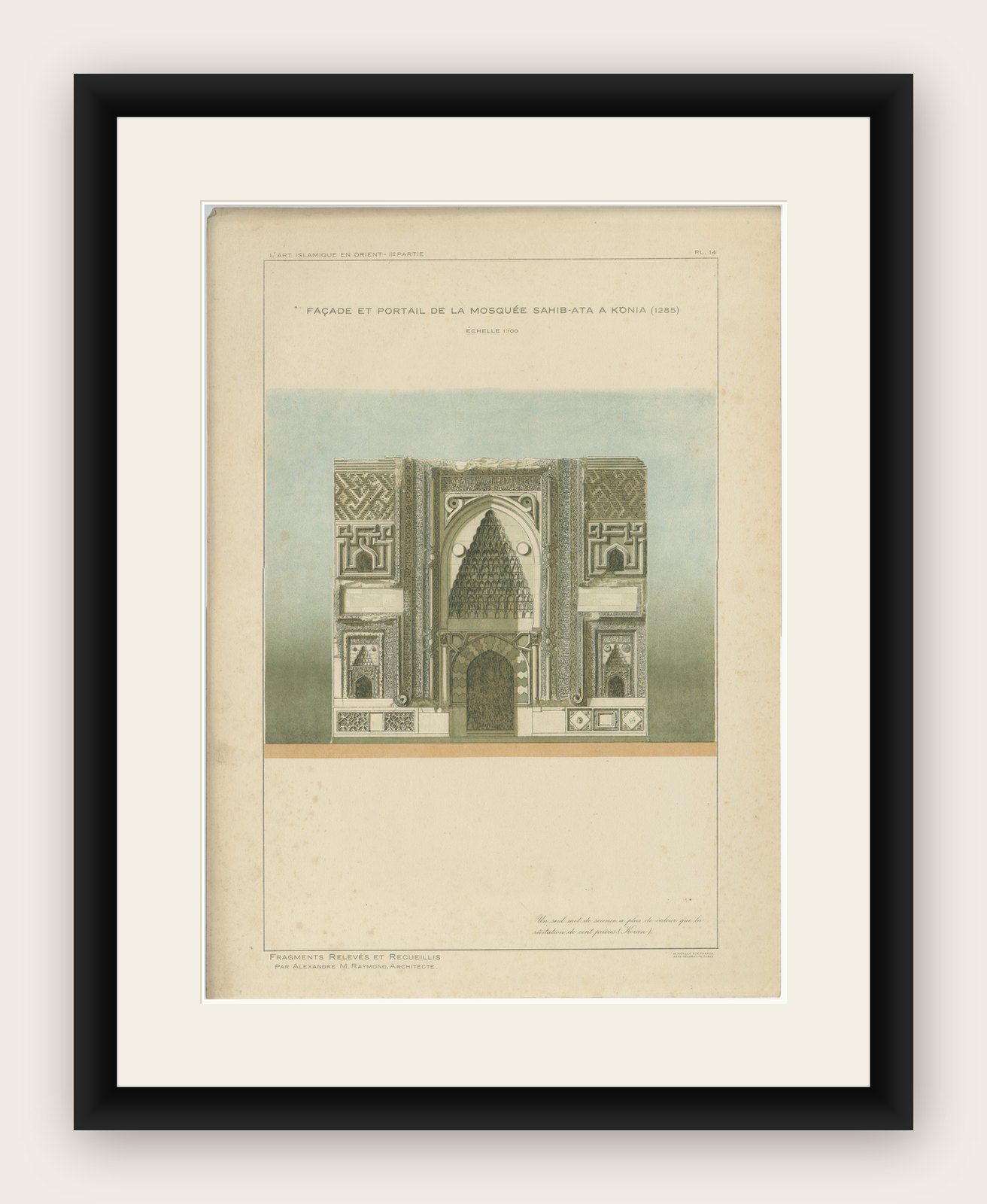
This original antique architectural print depicts the monumental façade and portal of the Sahib Ata Mosque in Konya, Turkey, one of the most important surviving monuments of Seljuk Islamic architecture. Published by the French architect and scholar Alexandre Marcel Raymond in his celebrated work L'Art Islamique en Orient, the plate documents the richly ornamented entrance of the mosque complex commissioned in 1285 by the influential Seljuk statesman Sahib Ata Fahreddin Ali.
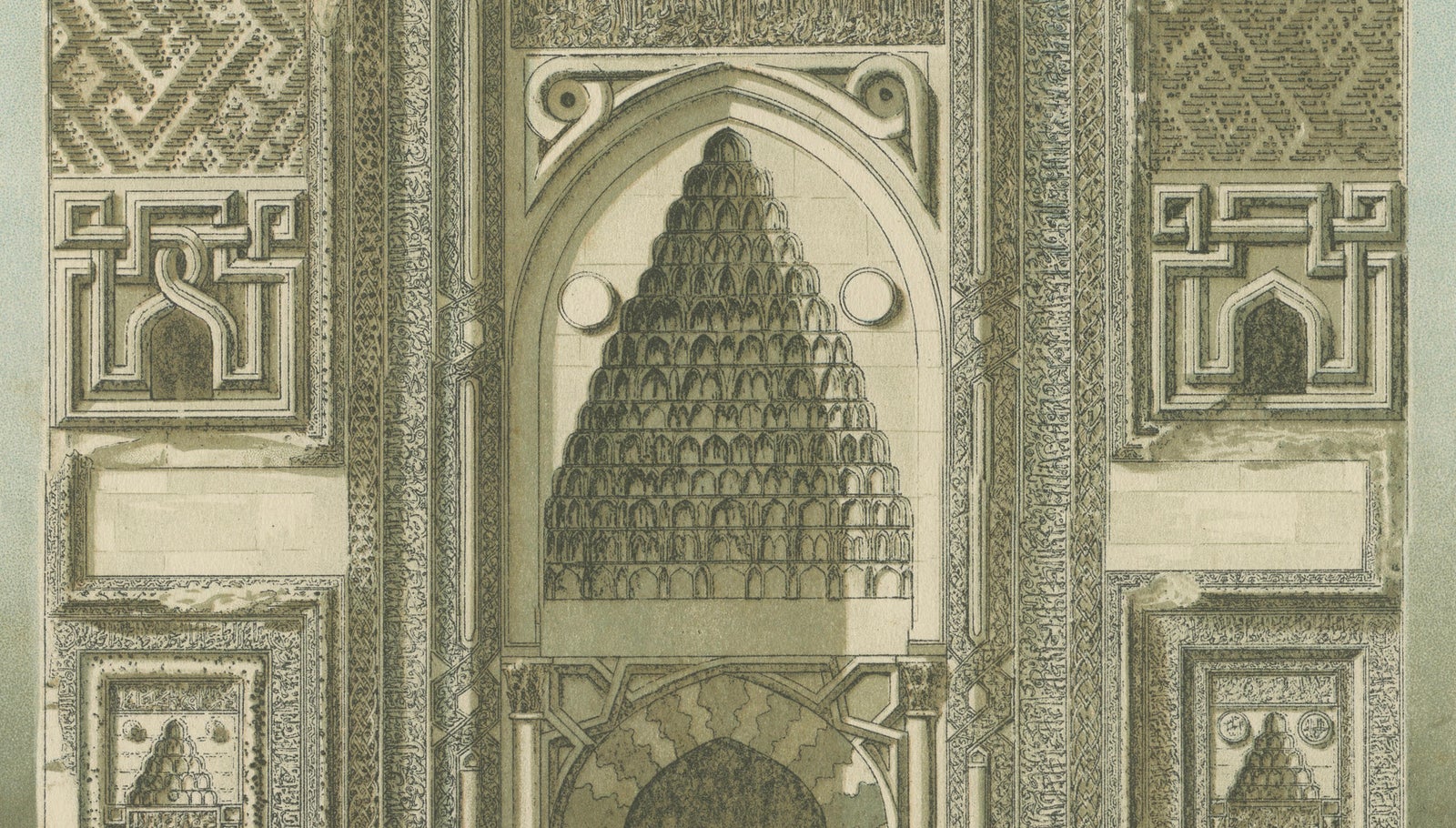
The composition presents the portal as a carefully measured architectural study, revealing the extraordinary sophistication of Anatolian Islamic design during the late Seljuk period. At its center rises a deeply recessed entrance crowned by a magnificent muqarnas niche, the honeycomb-like architectural form that became a hallmark of medieval Islamic architecture. Surrounding the portal are finely rendered geometric patterns, carved stone ornament, and decorative panels inspired by centuries of Islamic artistic tradition.
Konya was the capital of the Seljuk Sultanate of Rum and one of the most important cultural centers of the medieval Islamic world. During the thirteenth century the city flourished as a center of scholarship, architecture, and religious life. The Sahib Ata complex remains one of the city's architectural treasures, and Raymond's publication was among the earliest serious efforts to record and preserve these monuments for Western audiences. His precise drawings were highly influential among architects, designers, and scholars interested in Islamic decorative arts and historic ornament.
The subtle palette of pale blue-gray, warm stone tones, and soft cream gives this print an elegant decorative quality while retaining its scholarly precision. It works equally well as a stand-alone architectural artwork or as part of a collection devoted to Islamic art, Ottoman architecture, Middle Eastern history, or decorative design.
Original plates from L'Art Islamique en Orient have become increasingly desirable among collectors because of their combination of historical significance, artistic quality, and large-format presentation. They are particularly sought after by architects, interior designers, and collectors of Islamic and Ottoman art.
This is an original antique print, not a modern reproduction. The print is sold unframed.
Framing tips: This print works beautifully in a dark walnut, ebonized, or lightly gilded frame with an ivory museum mat. The subtle blue-gray and stone tones complement contemporary, Mediterranean, Ottoman-inspired, Islamic, and traditional interiors alike. A generous mat helps emphasize the architectural composition and creates a museum-quality presentation.
Technique: Lithograph with original color
Maker: Alexandre Marcel Raymond, France, circa 1924