Close-ups
Framed and on the wall

Frame and rooms are illustrations of how the print could look, drawn to its real size; it is sold unframed unless the description says otherwise.
Houses of Worship
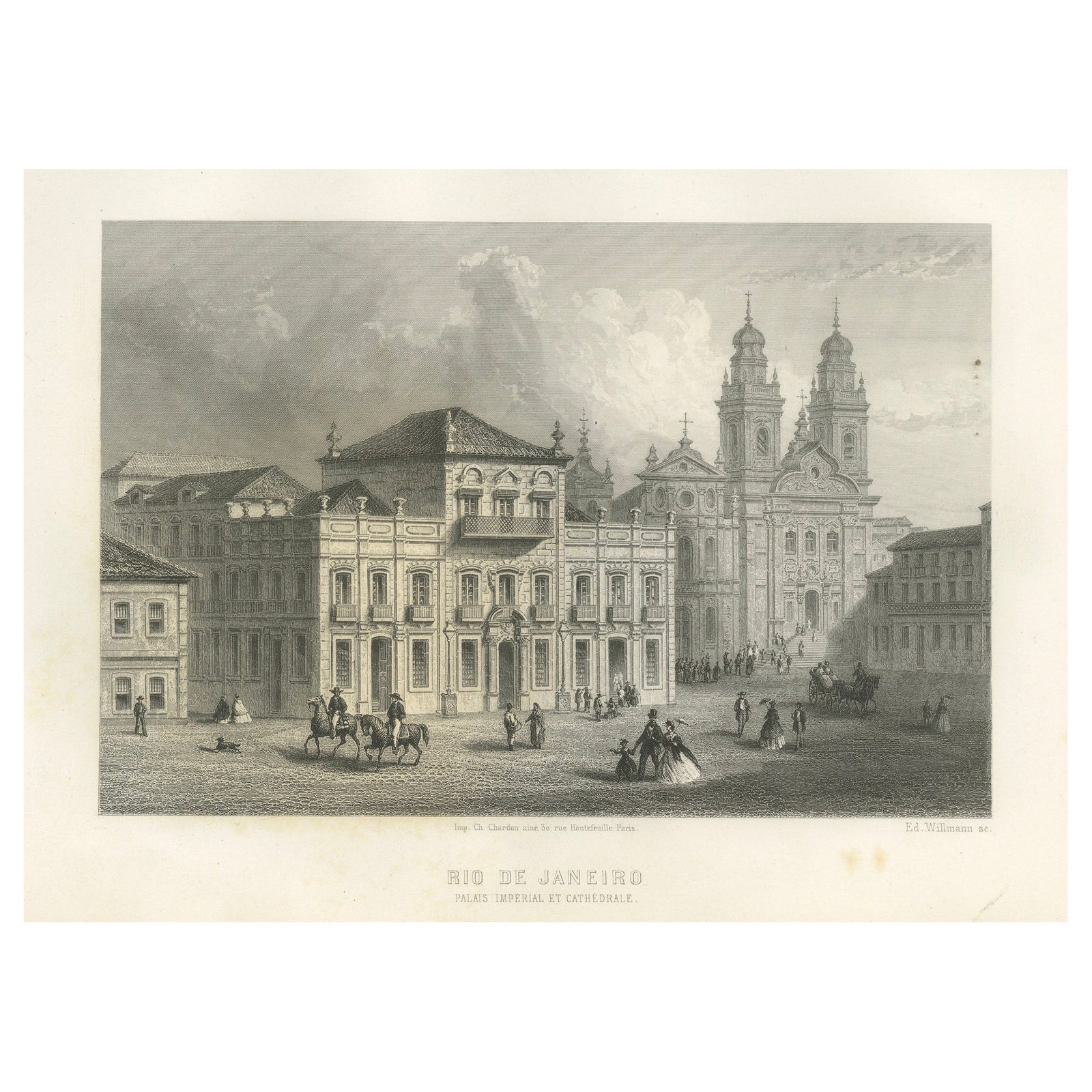
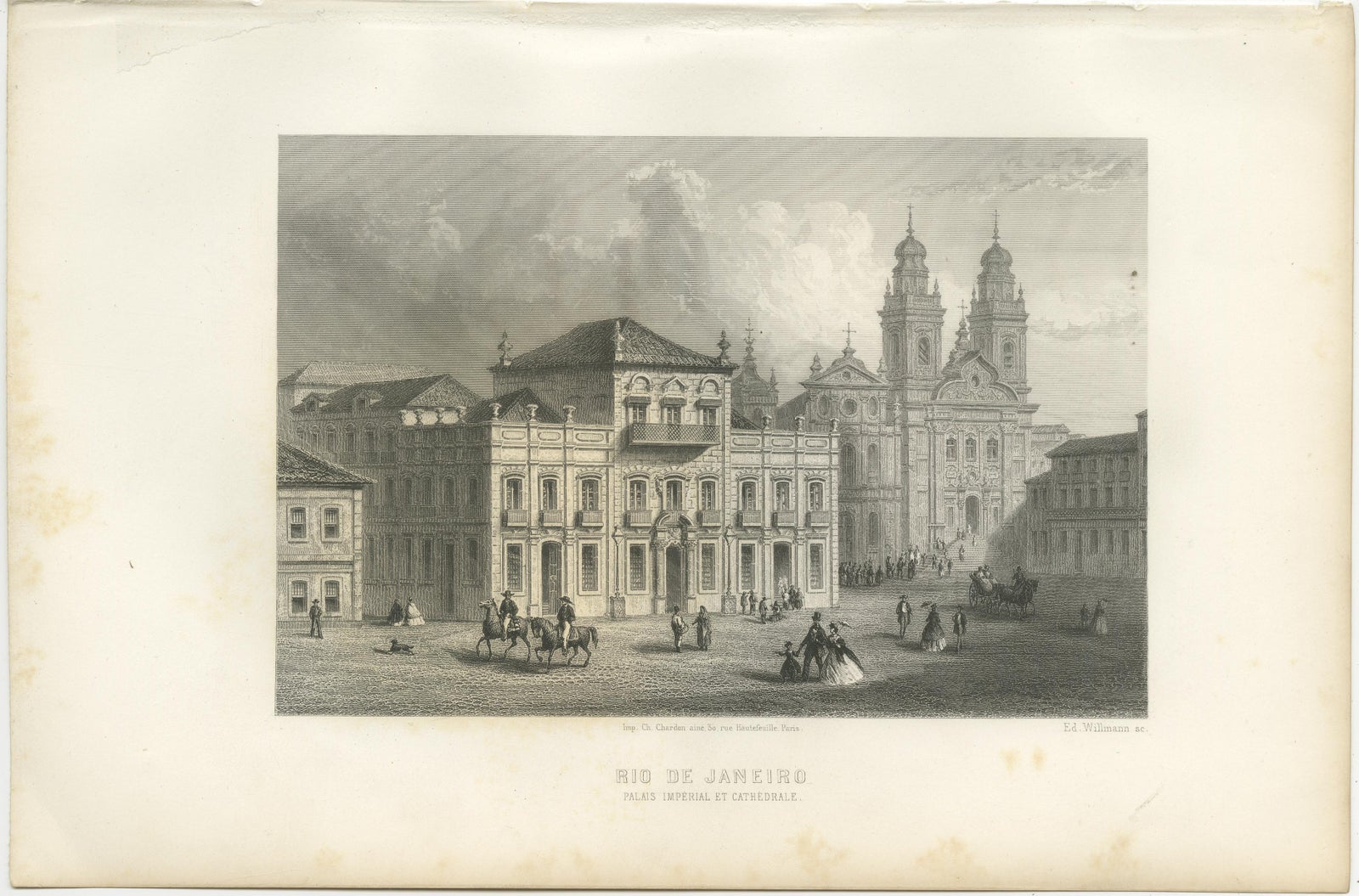
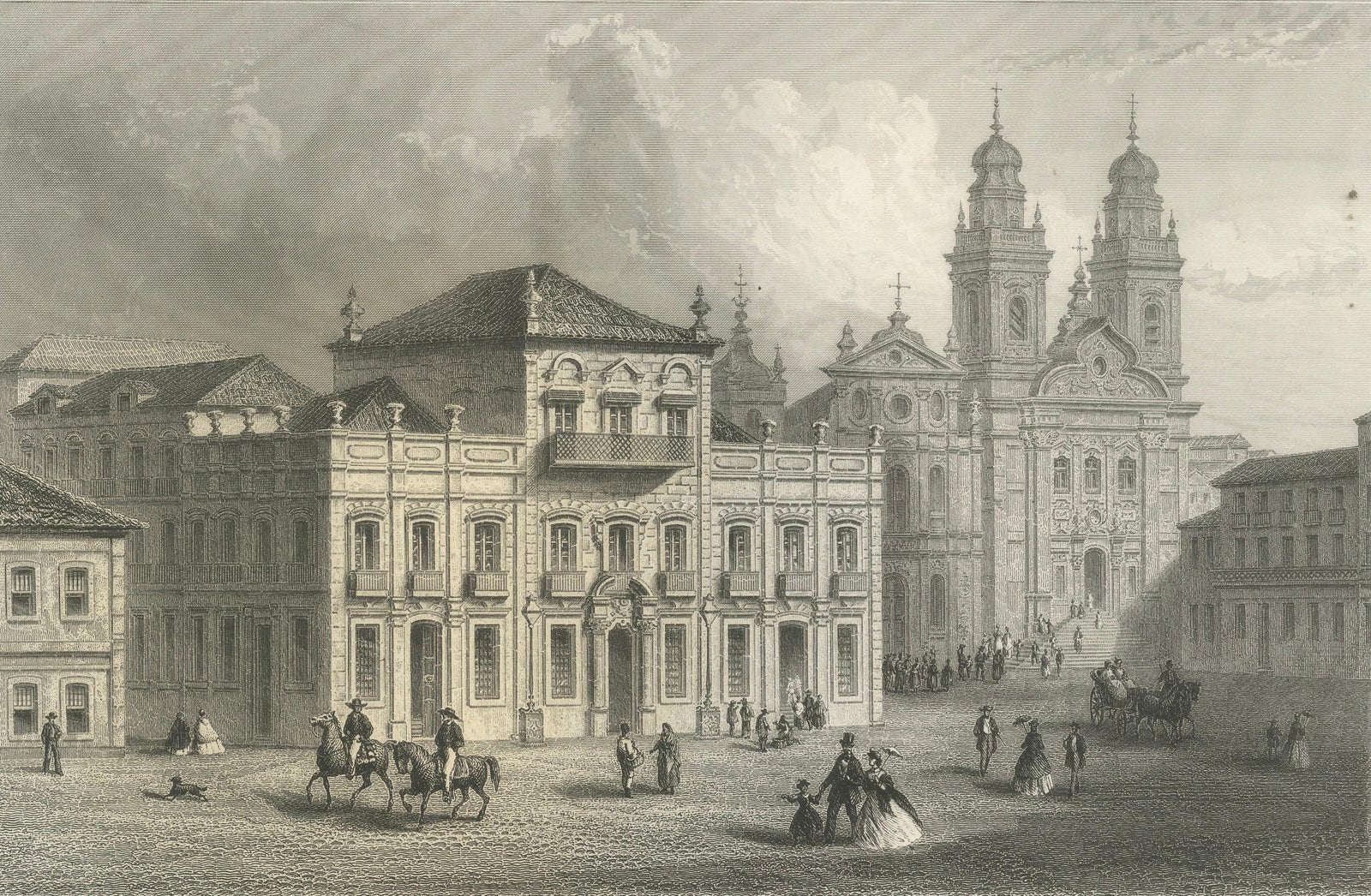
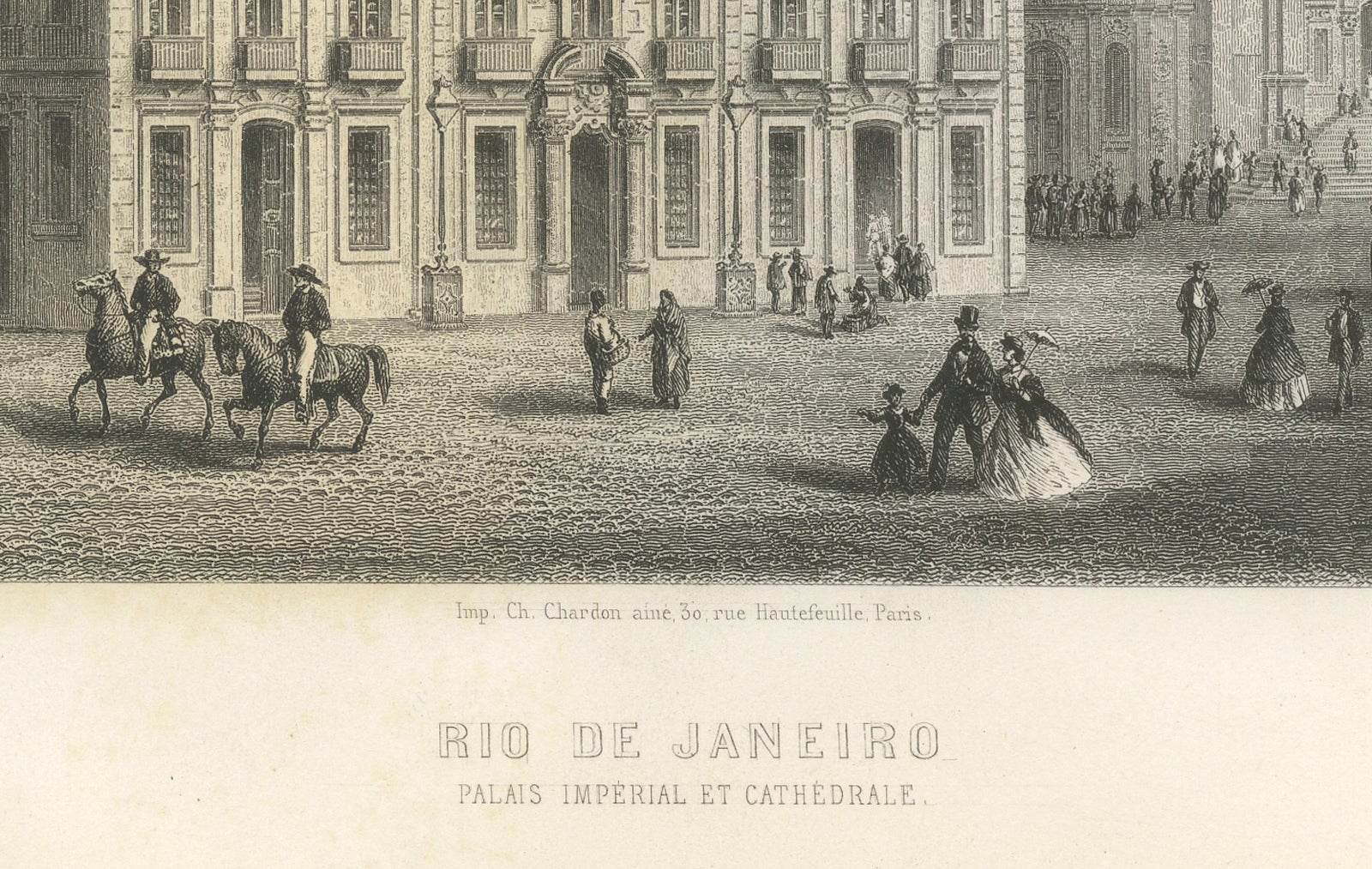
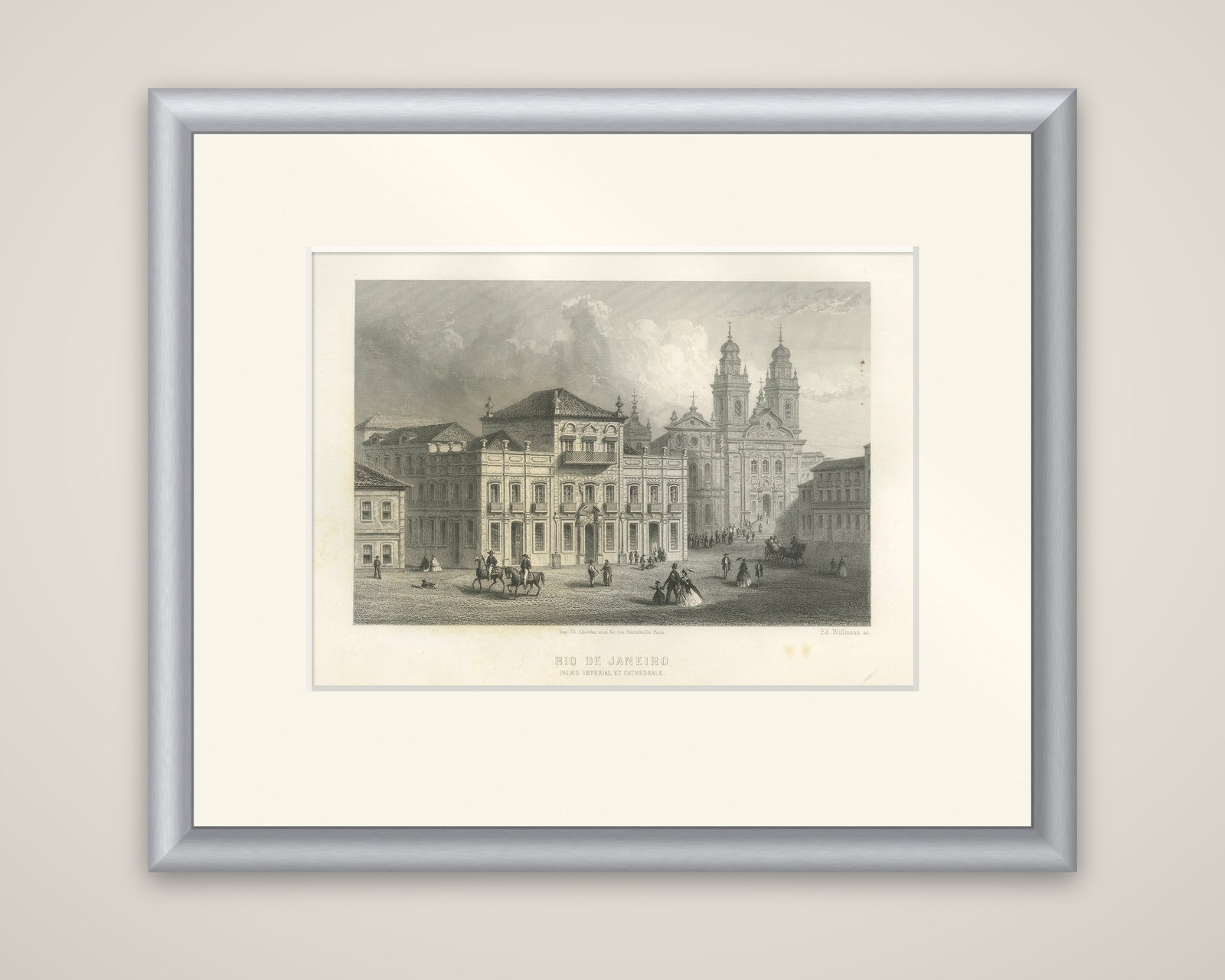
Antique Engraving of Rio de Janeiro, Imperial Palace and Cathedral, c.1867
Anno Domini MDCCCLXVII1867
$270
€240 · £205
Original print, not a reproduction
Ships worldwide from the Netherlands, flat, insured and tracked. 14-day returns. To buy, use Ask a question (info@antiquesacredprints.com) and we will reserve it for you.
- Date
- 1867
- Sheet size
- 6.7 × 10.4 in (17 × 26.3 cm)
- Condition
- Very good, with general age-related toning and some light foxing in the margins. Strong impression with crisp detail throughout. Blank verso. Please review the image carefully.
- Faith
- Christianity
- Collection
- Houses of Worship
- Era
- 1850 and after, Chromolithographs and devotional prints
- Stock no.
- f_46703702
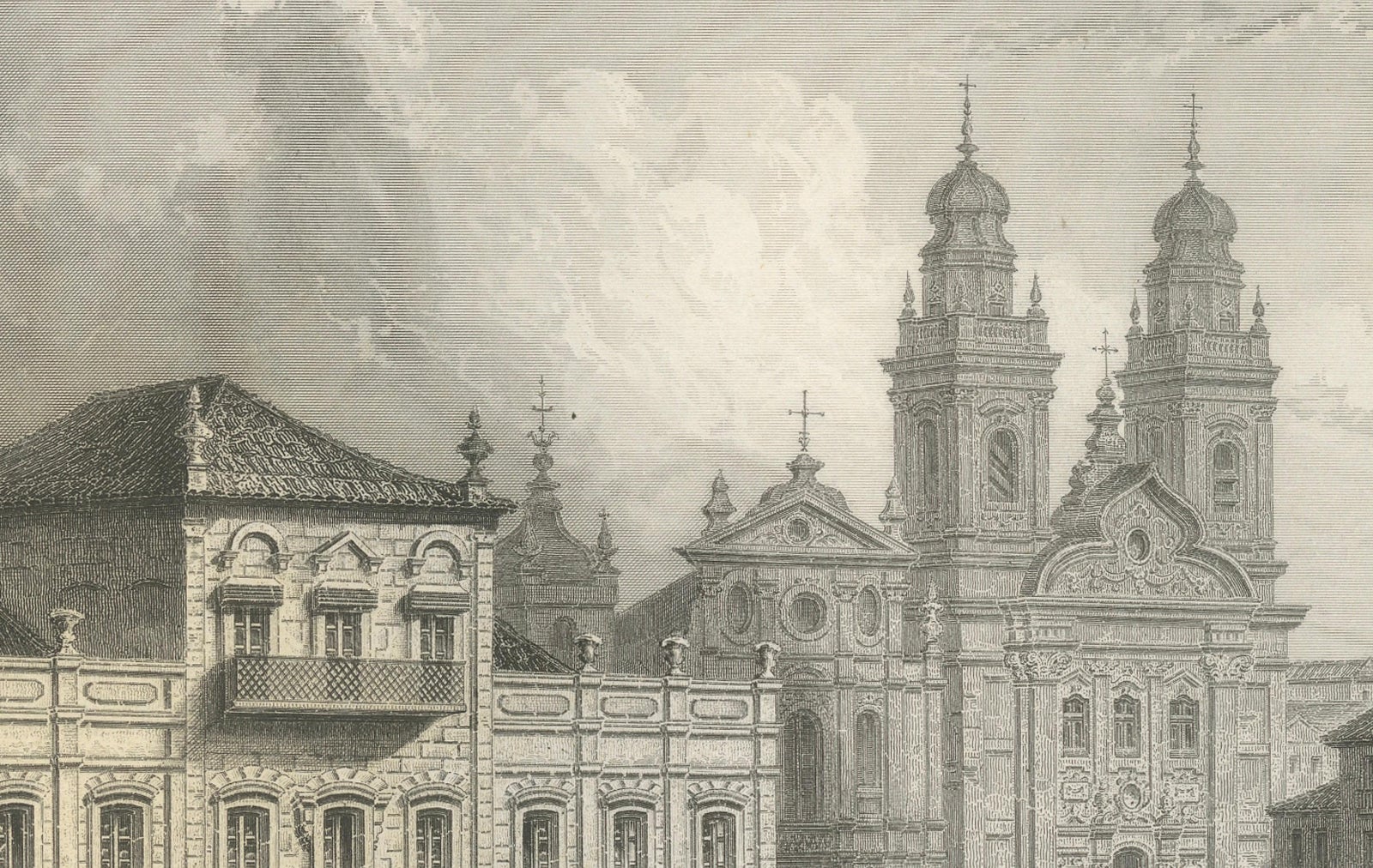
The Imperial Palace and cathedral square of Rio de Janeiro, an original steel engraving printed in Paris in the 1860s. The plate is lettered "Rio de Janeiro, Palais Impérial et Cathédrale", engraved by Ed. Willmann and printed by Chardon, and belongs to the same series of Latin American city views as the Énault plates of 1867.
A wide cobbled square fills the foreground. The palace stands at the left, a long, two-story building with a central balcony, shuttered windows and a steep tiled roof, and at the right the twin-towered church of Our Lady of Mount Carmel faces the square. Riders on horseback cross the left, women in crinolines and men in top hats stroll and talk in the center, and a carriage stands near the right edge.
At the time of publication Rio was the seat of the Brazilian monarchy and a center of transatlantic trade.