Close-ups
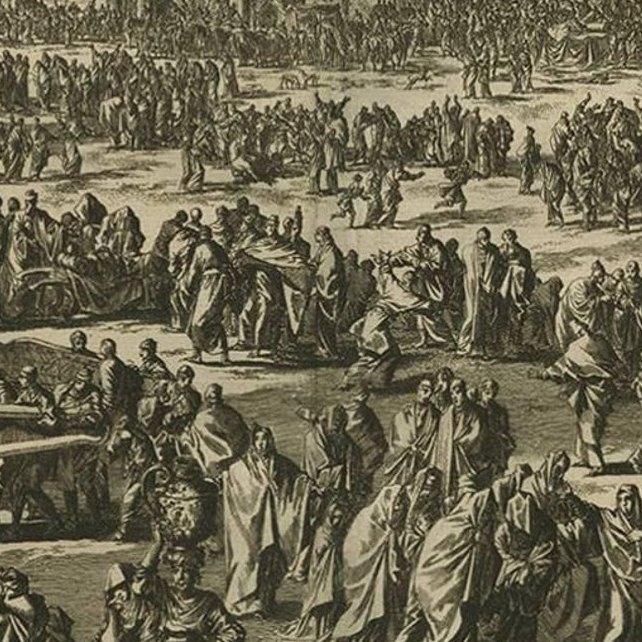
Framed and on the wall

Frame and rooms are illustrations of how the print could look, drawn to its real size; it is sold unframed unless the description says otherwise.
Scripture
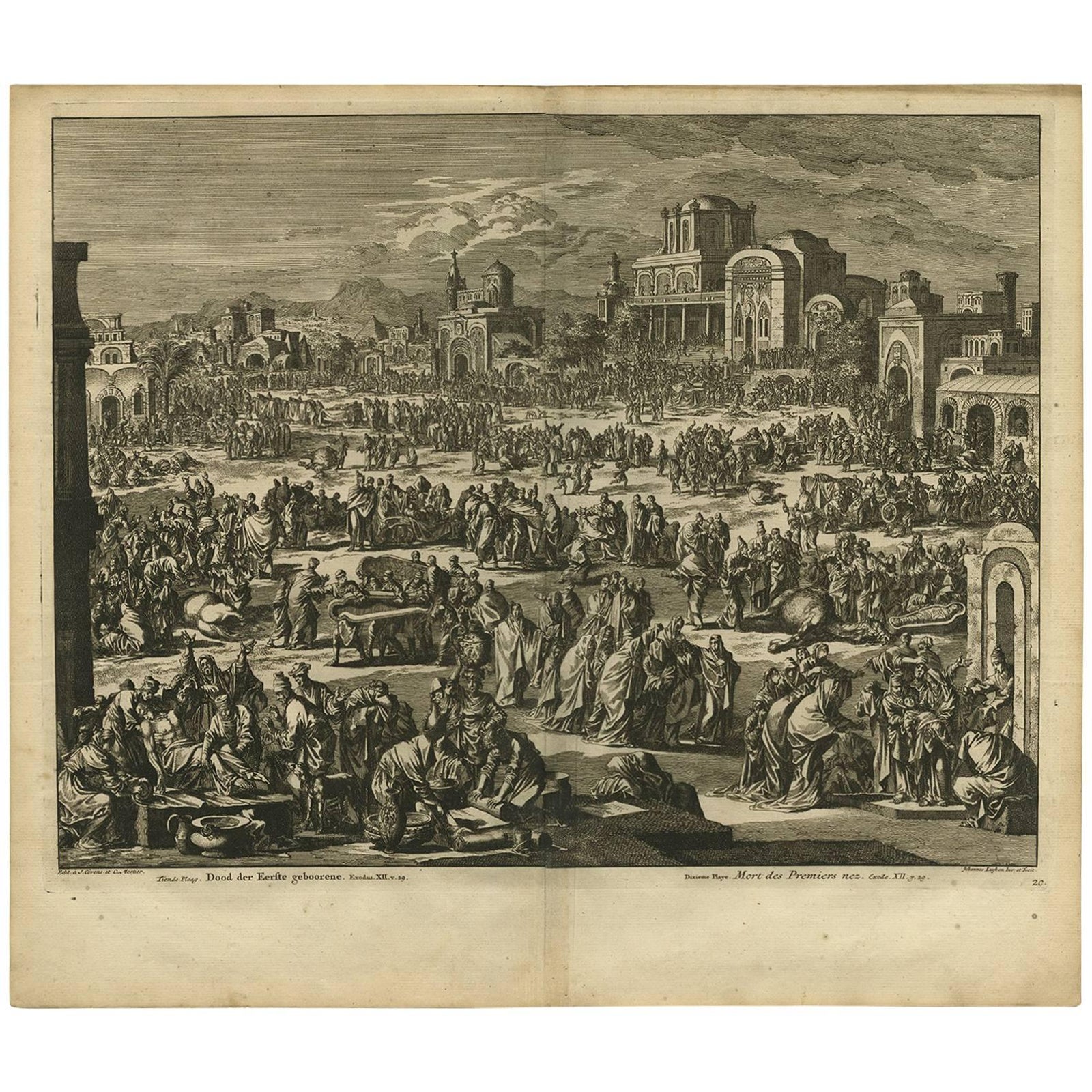
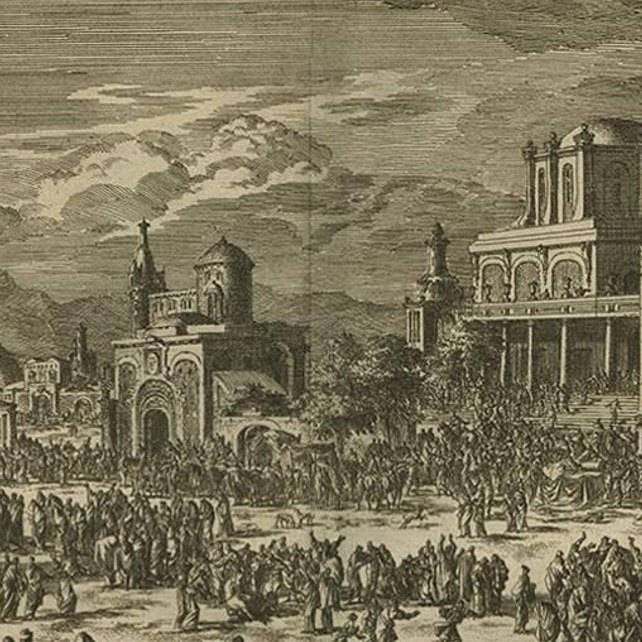
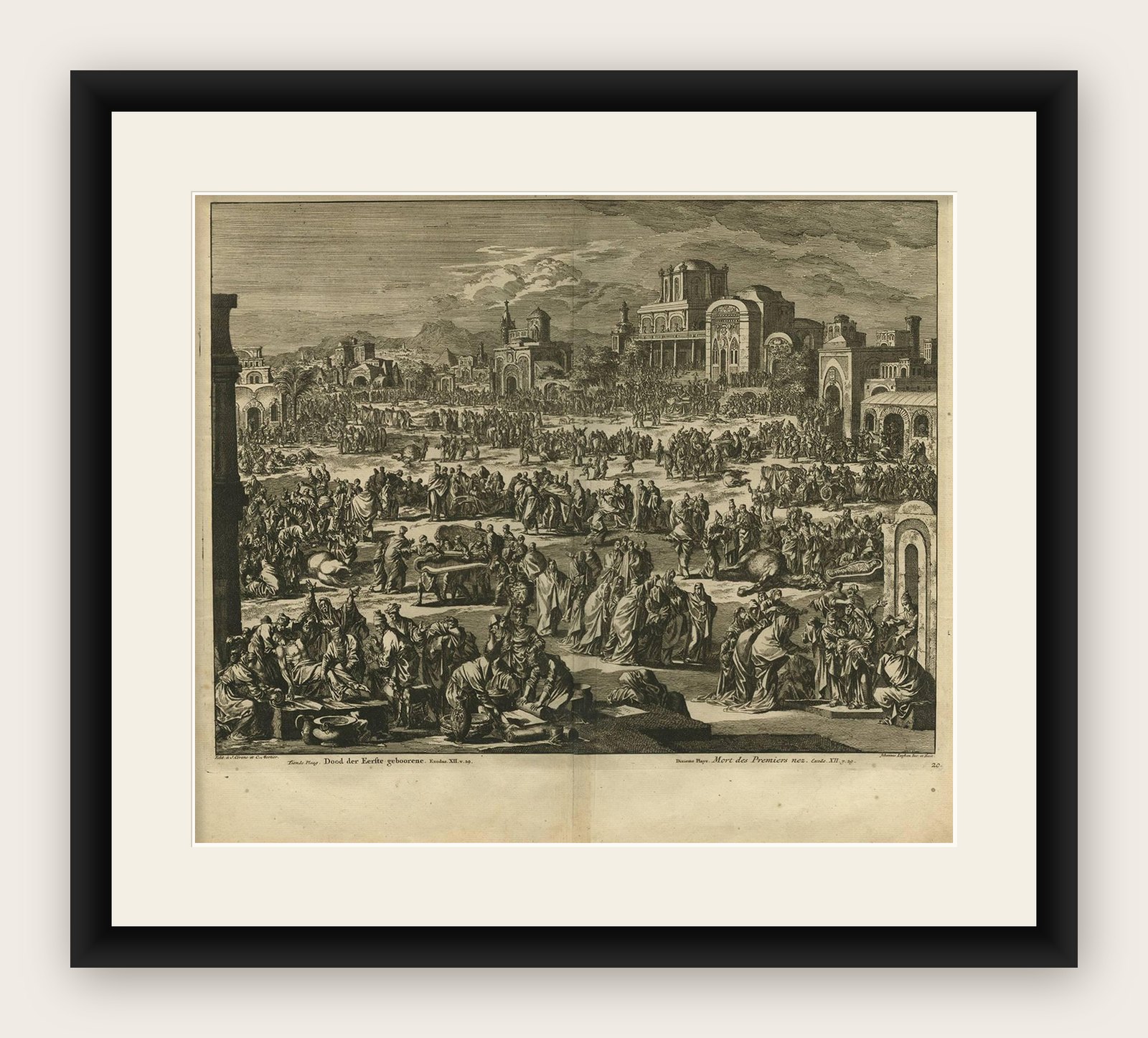
Antique Bible Print Tenth Plague of Egypt by J. Luyken, 1743
Anno Domini MDCCXLIII1743
€350
$395 · £295
Original print, not a reproduction
Ships worldwide from the Netherlands, flat, insured and tracked. 14-day returns. To buy, use Ask a question (info@antiquesacredprints.com) and we will reserve it for you.
- Date
- 1743
- Sheet size
- 15.4 × 18 in (39 × 45.8 cm)
- Condition
- Good. Please study image carefully.
- Faith
- Christianity, Judaism
- Collection
- Scripture
- Era
- 1700 to 1799, Mortier, Picart and the illustrated Bible
- Stock no.
- f_9290873
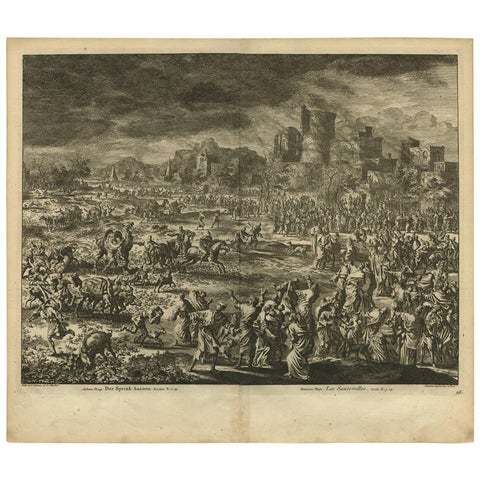
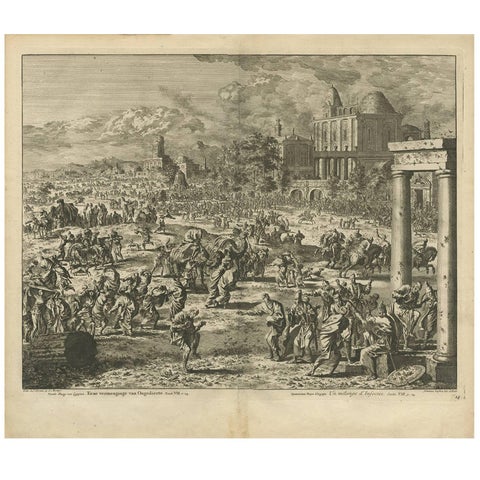
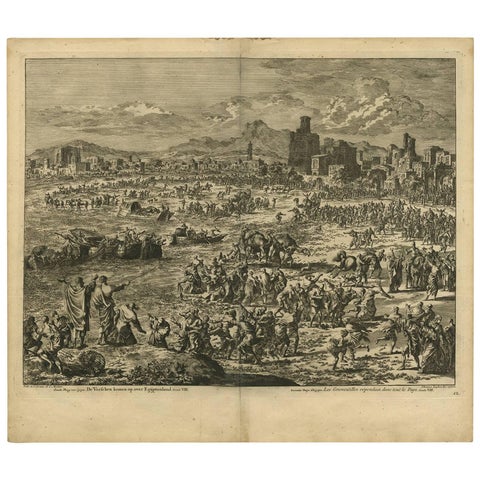
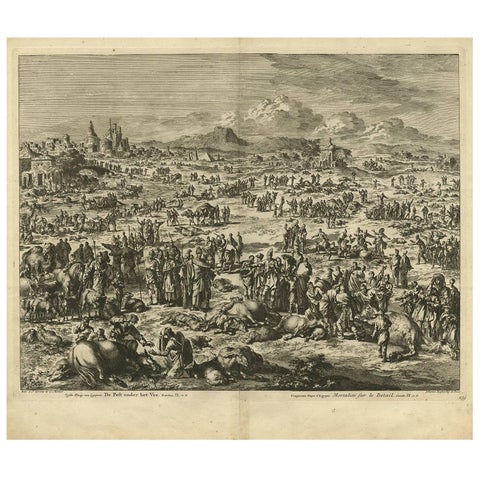
Pharoah was warned that the tenth and final plague would be the most devastating. God told the Hebrews to sacrifice lambs and eat the meat before morning, but not before they used the blood to paint their doorposts. The Hebrews followed these directions and also asked for and received all the gold, silver, jewelry, and clothes from the Egyptians. These treasures would later be used for the tabernacle. Over the night, an angel came and passed over all of the Hebrew homes. The firstborn in every Egyptian household would die, including Pharoah's son. This caused such a clamor that Pharoah ordered the Hebrews to leave and take all they owned.
This print originates from ‘Biblia Sacra, dat is, de H. Schriftuer van het Oude, en het Nieuwe Testament, naer de laetste Roomsche keure der gemeine Latijnsche overzettinge, in nederduitsch vertaeld (...)’ Utrecht, Hermanus Besseling, 1743.