Close-ups
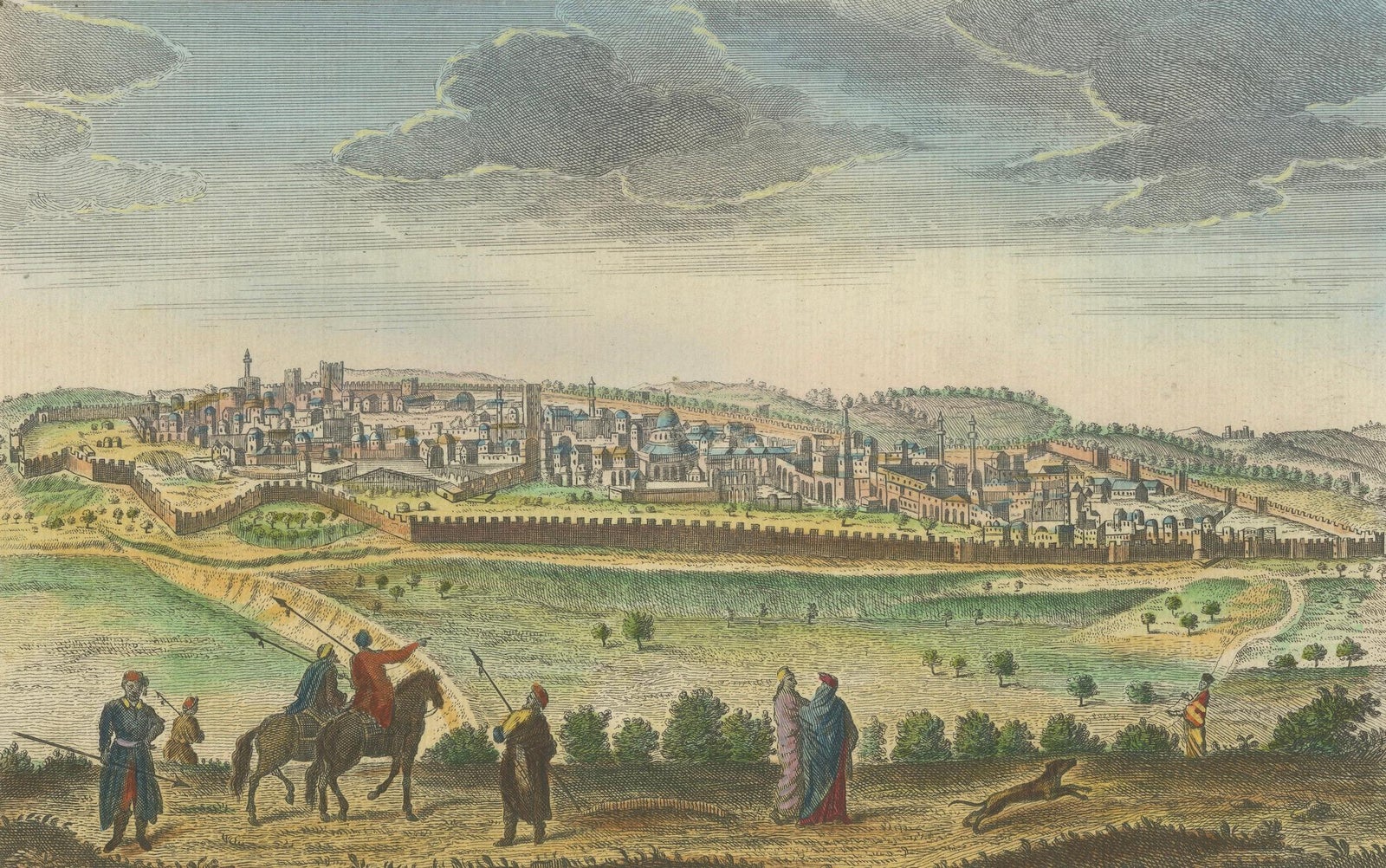
Framed and on the wall
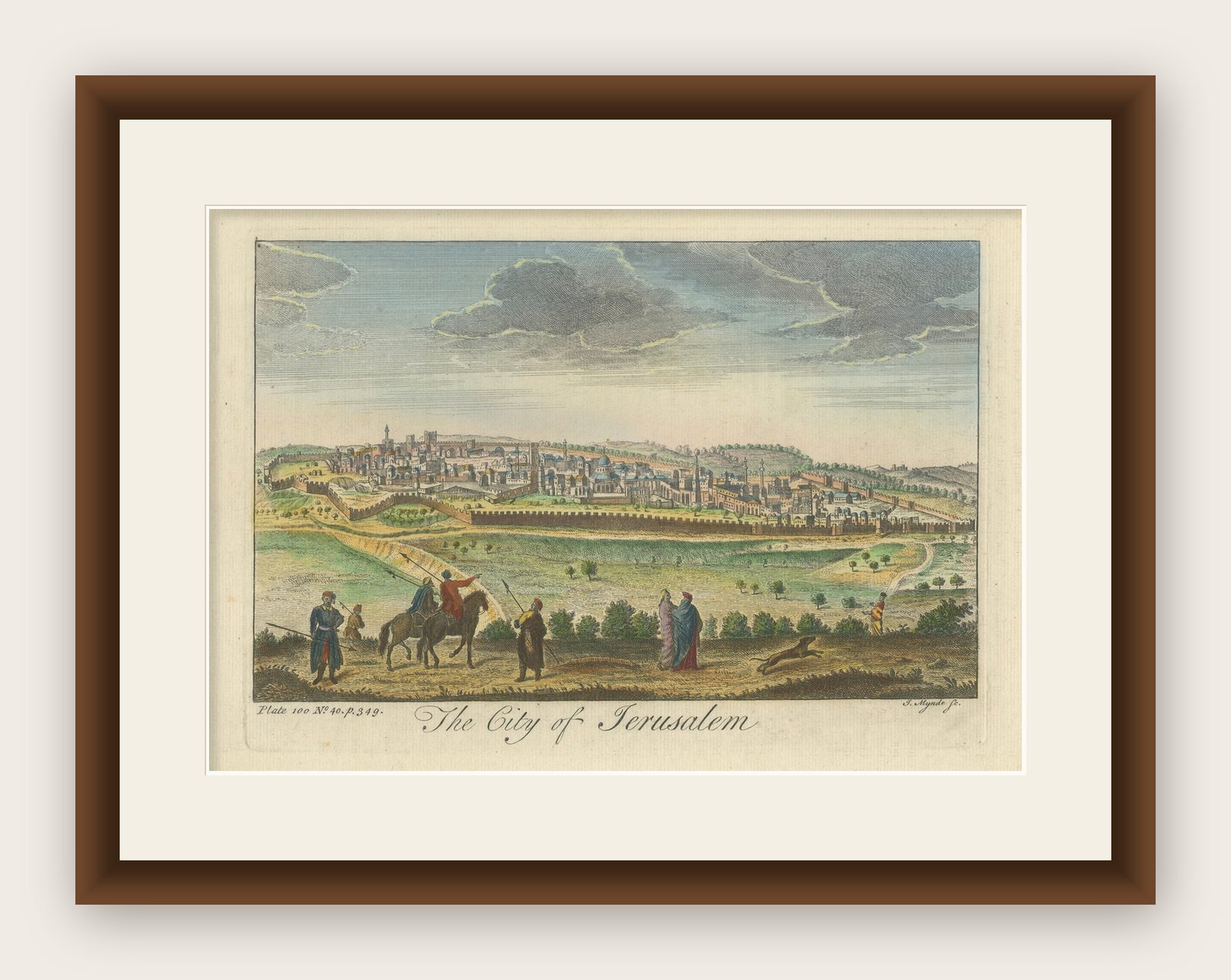

Frame and rooms are illustrations of how the print could look, drawn to its real size; it is sold unframed unless the description says otherwise.
The Holy Land
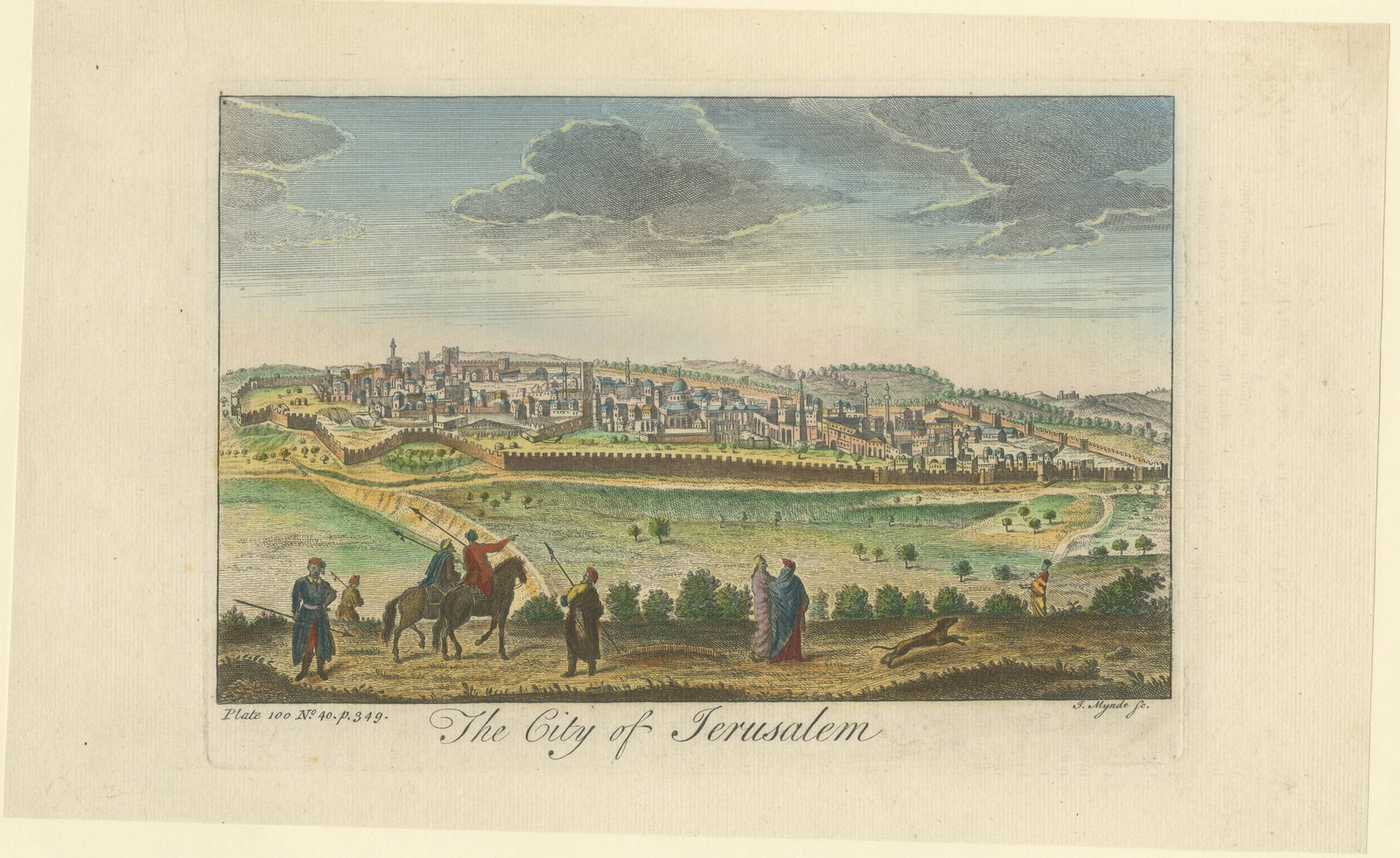
A General View of Jerusalem in the Early Part of the 18th Century" (circa 1752)
Anno Domini MDCCLII1752
€440
$495 · £375
Original print, not a reproduction
Ships worldwide from the Netherlands, flat, insured and tracked. 14-day returns. To buy, use Ask a question (info@antiquesacredprints.com) and we will reserve it for you.
- Date
- 1752
- Sheet size
- 8.5 × 14 in (21.5 × 35.5 cm)
- Condition
- Good, given age. General age-related toning and/or occasional minor defects from handling. One small corner (outside the image) attached to a paper backing. Please study scan carefully.
- Faith
- Christianity, Judaism
- Collection
- The Holy Land
- Era
- 1700 to 1799, Mortier, Picart and the illustrated Bible
- Stock no.
- f_40396722
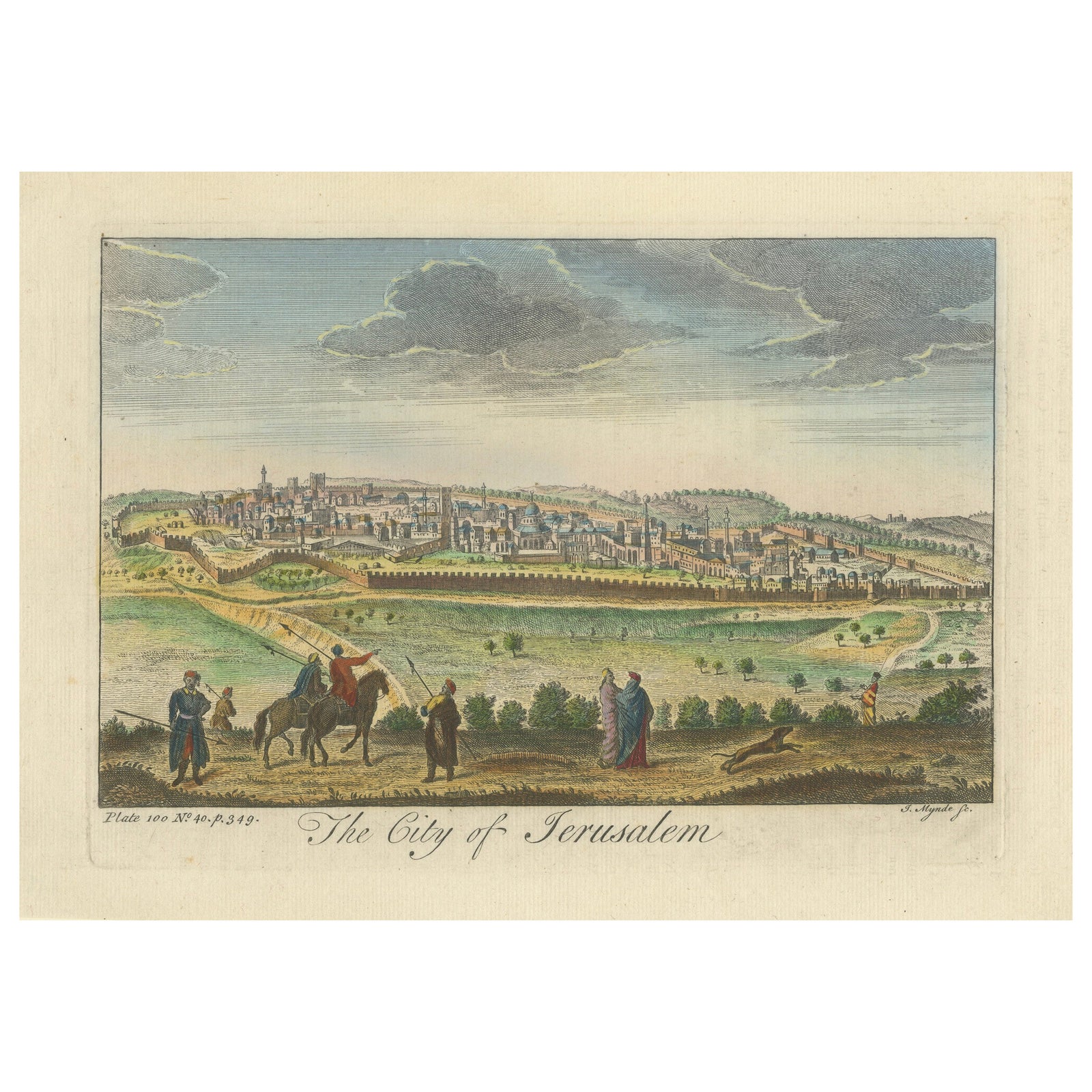
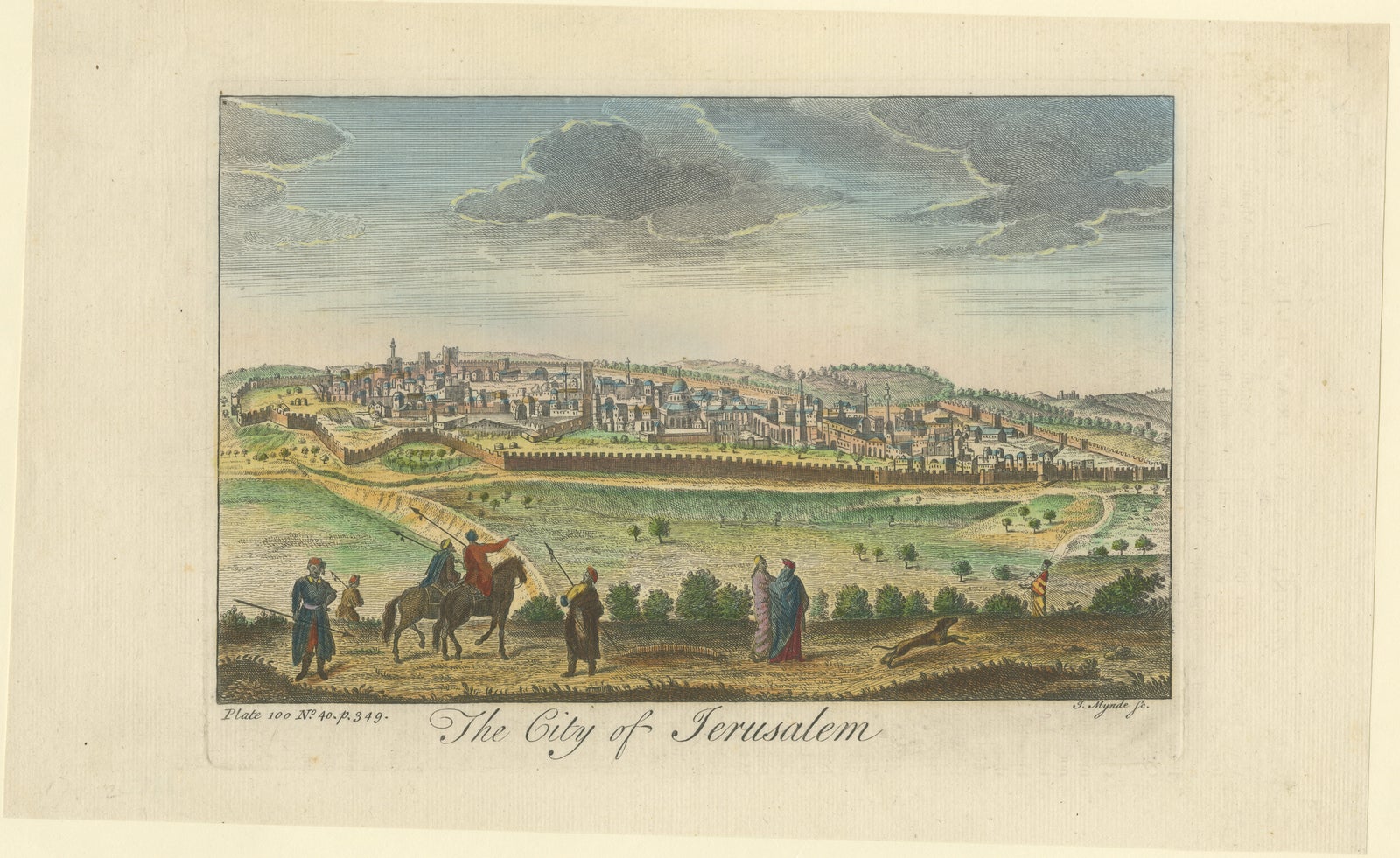
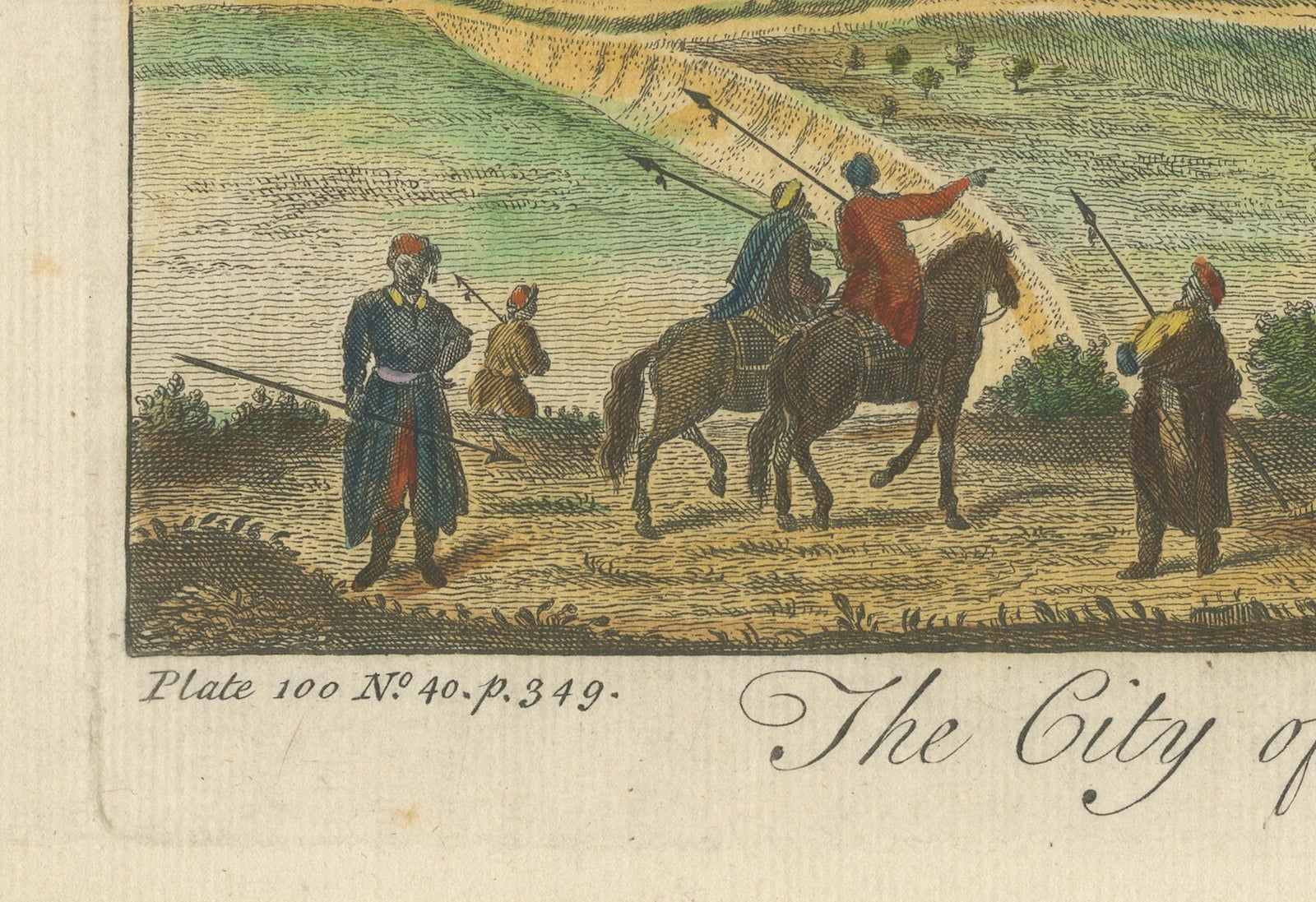
The print is signed by the artist "S. Mynde sc." in the lower right corner. This suggests that the maker of the print is Samuel Mynde, a known engraver from the 18th century. His works often included engravings for books, maps, and prints, contributing to the dissemination of geographical and historical knowledge during that time. The signature "sc" stands for "sculpsit," a Latin term meaning "engraved by."
This evocative print, titled **"A General View of Jerusalem in the Early Part of the 18th Century" (circa 1752)**, offers a captivating glimpse into the rich history and complex layering of the ancient city of Jerusalem during a pivotal period in its storied past. The image, produced around 1752, presents a panoramic scene of the city as it appeared before the significant transformations that were to take place in the following centuries.
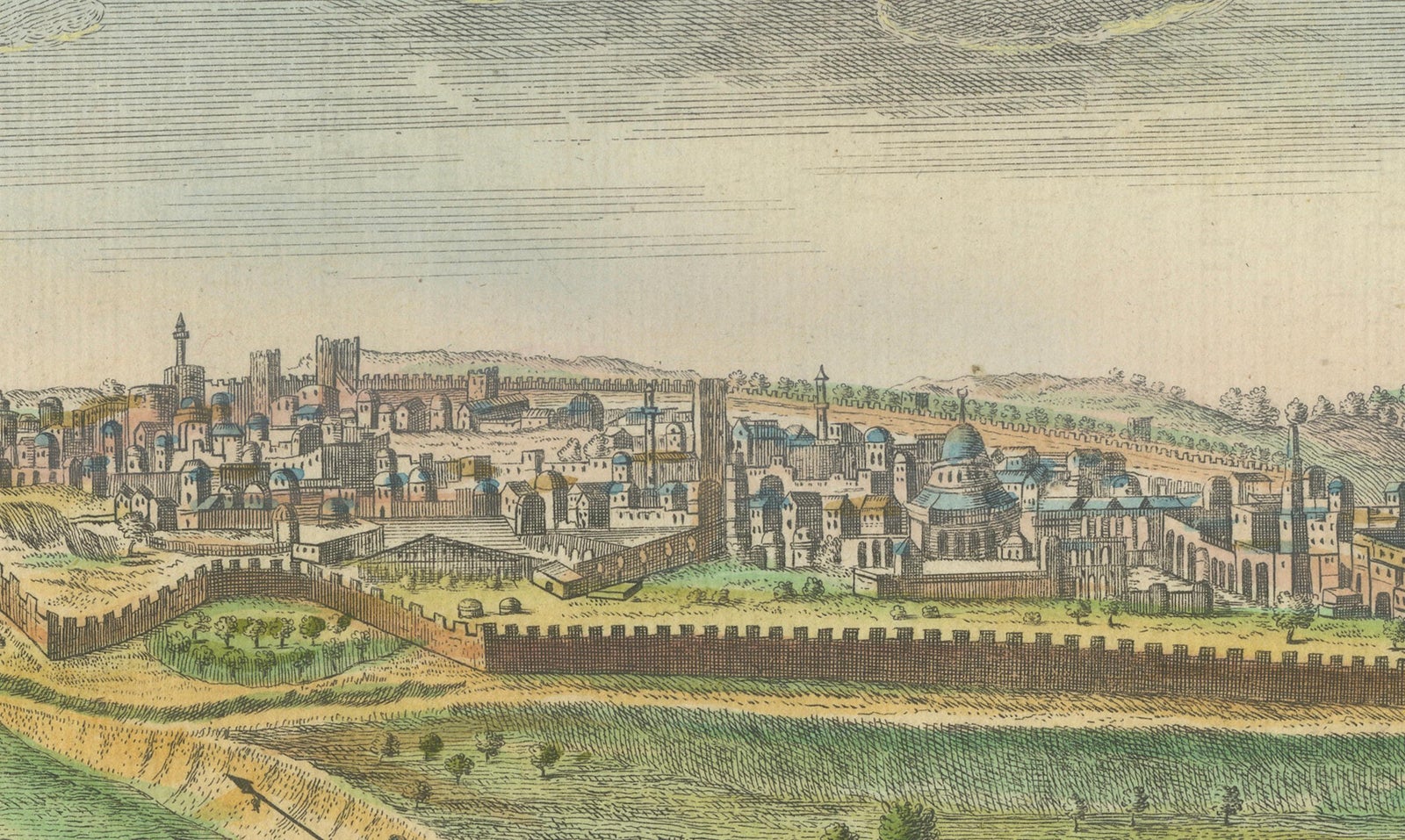
Nestled amidst the undulating hills of the Judean Mountains, Jerusalem's iconic silhouette is dominated by the golden-hued Dome of the Rock, a revered Islamic shrine, and the adjacent Al-Aqsa Mosque, both of which are surrounded by the sprawling Temple Mount complex. The Old City walls, encircling the historic core, are visible in the foreground, their fortified gates providing entry to the various quarters, Christian, Armenian, Jewish, and Muslim, that housed the diverse communities living within the city's confines.
The print also reveals the bustling activity of the city's markets and streets, with merchants and traders haggling over goods, and the daily life of the residents unfolding amidst the vibrant urban landscape. The verdant gardens and orchards that once dotted the city's outskirts are also evident, adding to the picture of a thriving, cosmopolitan center.
The early 18th century was a time of relative peace and prosperity for Jerusalem, which served as an important crossroads for trade and pilgrimage. However, this tranquility would soon be disrupted by the political and religious tensions that would shape the city's destiny for centuries to come. This print serves as a poignant reminder of the enduring allure and complex history of Jerusalem, a city that continues to captivate and inspire generations.
More research to be done on the source.
Explore