Close-ups
Framed and on the wall

Frame and rooms are illustrations of how the print could look, drawn to its real size; it is sold unframed unless the description says otherwise.
Houses of Worship
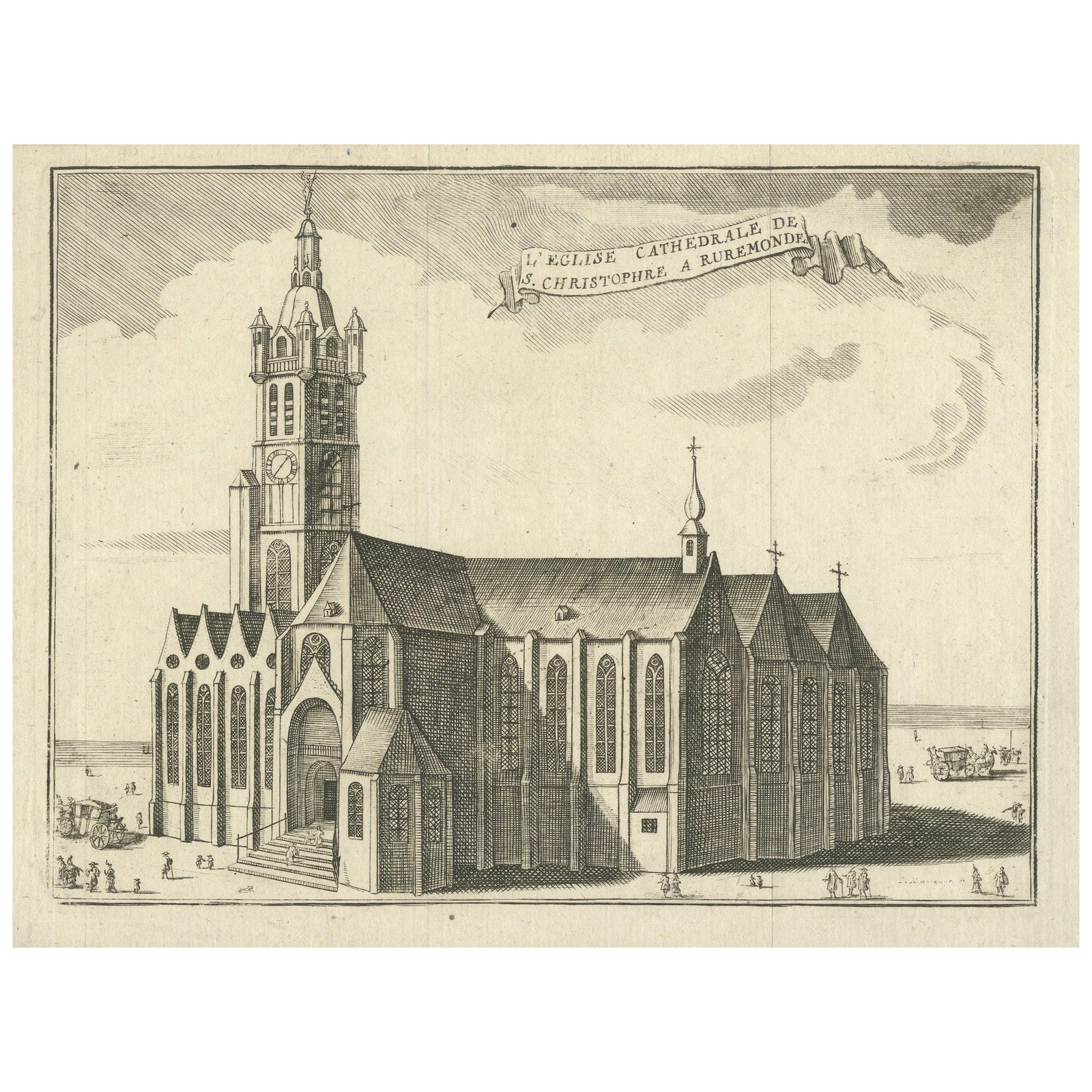
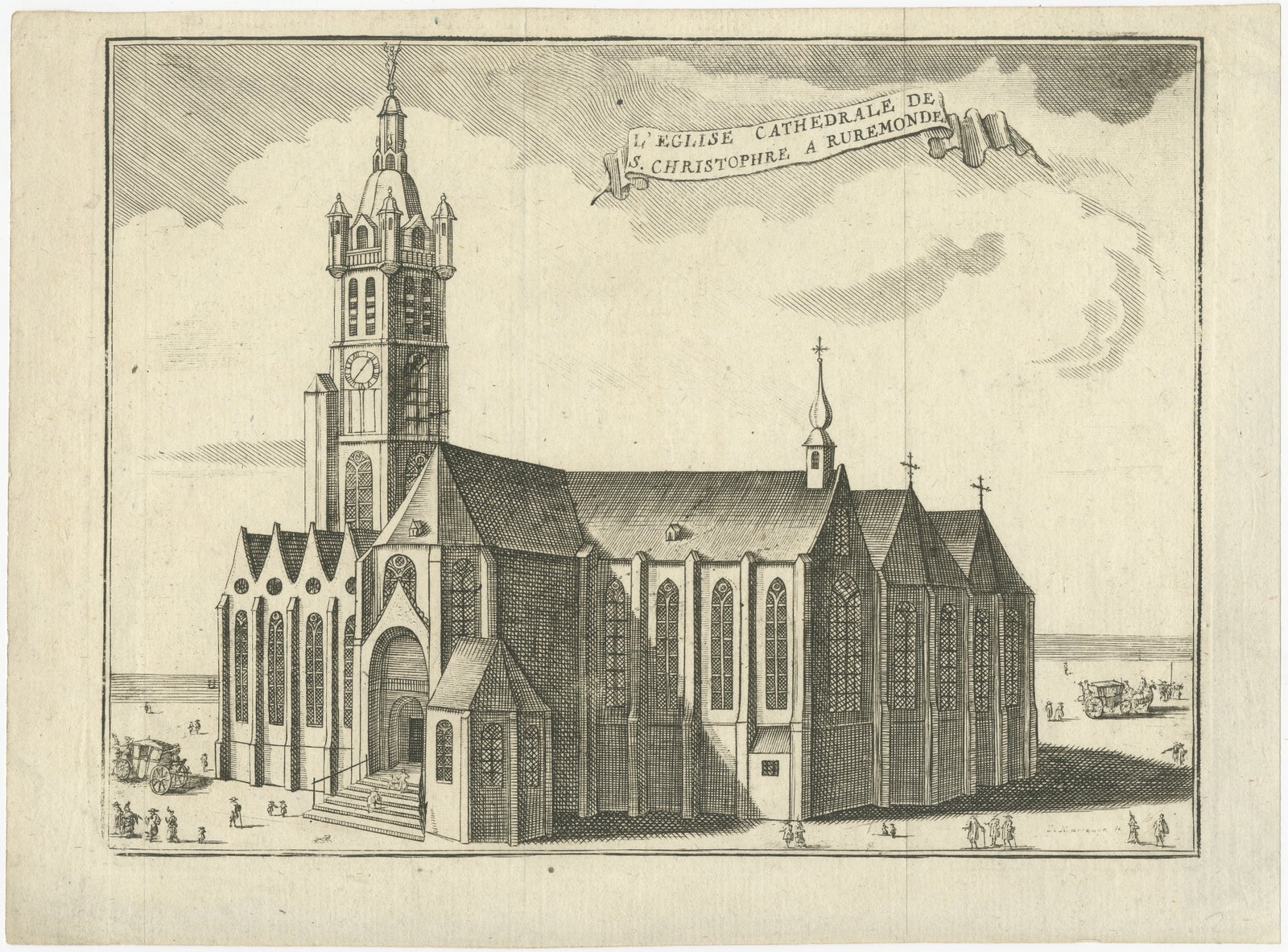
1720 Etching of St. Christopher's Cathedral in Roermond by Jacobus Harrewijn
Anno Domini MDCCXX1720
£110£8520% off
$115 · €104
Original print, not a reproduction
Ships worldwide from the Netherlands, flat or rolled, insured and tracked. 14-day returns.
- Date
- 1720
- Sheet size
- 6.5 × 8.9 in (16.5 × 22.5 cm)
- Condition
- Good, given age. General age-related toning and/or occasional minor defects from handling. Please study scan carefully.
- Faith
- Christianity
- Collection
- Houses of Worship
- Era
- 1700 to 1799, Mortier, Picart and the illustrated Bible
- Stock no.
- BG-13094-3
What the condition grades mean
- Excellent
- Bright and clean, with no faults worth mentioning.
- Very good
- Only light signs of age, such as faint toning.
- Good
- Normal signs of age for a sheet of this period: toning, some foxing, small marks or neat old repairs.
- Fair
- Clear faults such as staining, tears or repairs, priced to match.
Every fault we see is written in the condition note, and the whole sheet is shown uncropped in the photos.
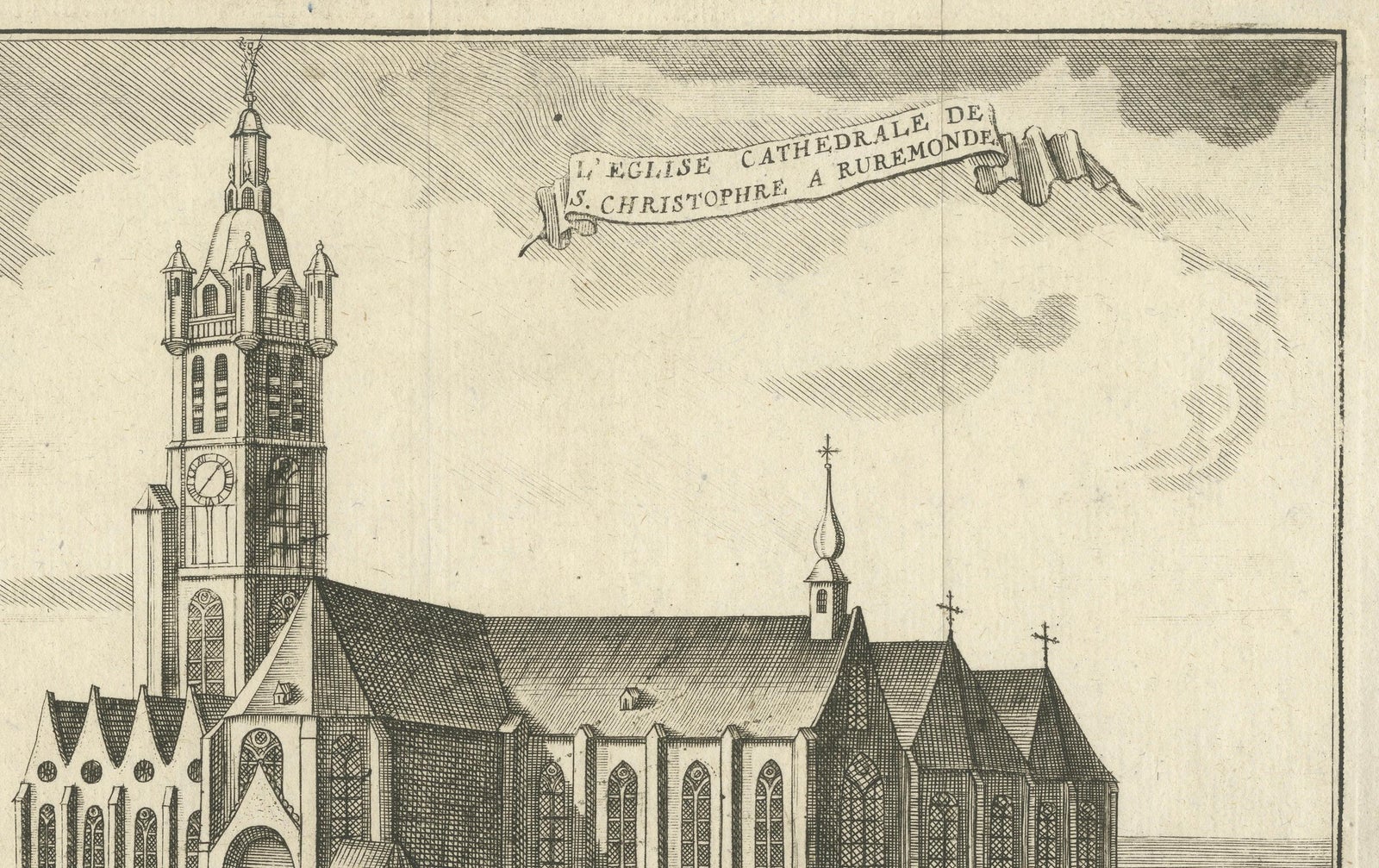
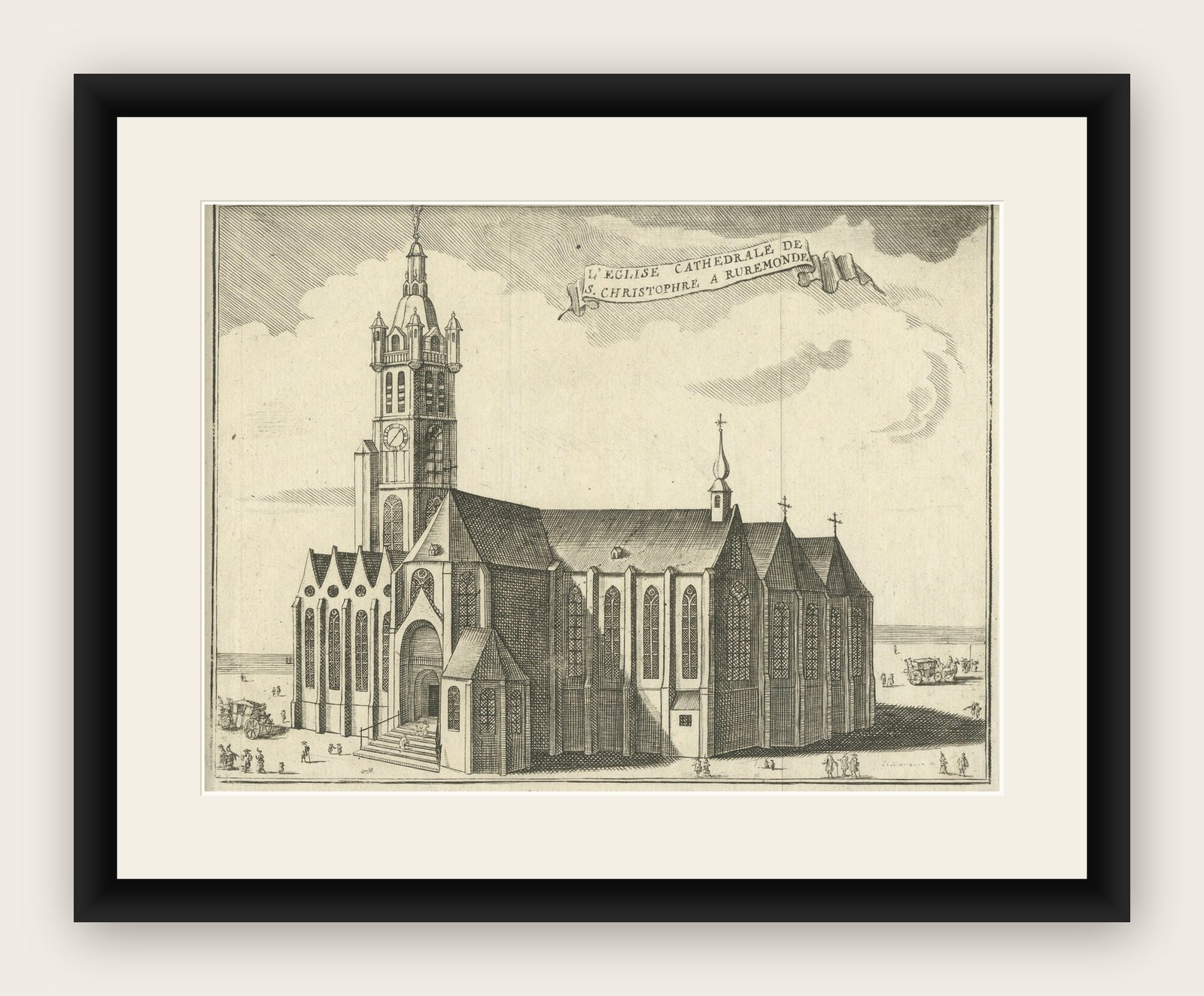
This antique print, titled L'Eglise Cathedrale de S. Christophre à Ruremonde, is an etching and engraving created by Jacobus Harrewijn around 1720.
It offers a detailed view of St. Christopher's Cathedral in Roermond, the main church of the Roman Catholic Diocese of Roermond in the Netherlands. The print measures approximately 21.4 x 16 cm (8.4 x 6.3 inches) overall, with the image itself measuring around 19.4 x 14.4 cm (7.6 x 5.7 inches).
This print was part of the "Histoire Generale des Pais Bas Contenant la Description des XVII Provinces," a historical and topographical work on the Low Countries published by Francois Foppens in Brussels. Harrewijn, a Dutch engraver and etcher, studied under the renowned Romeyn de Hooghe and became known for his topographical and decorative prints.
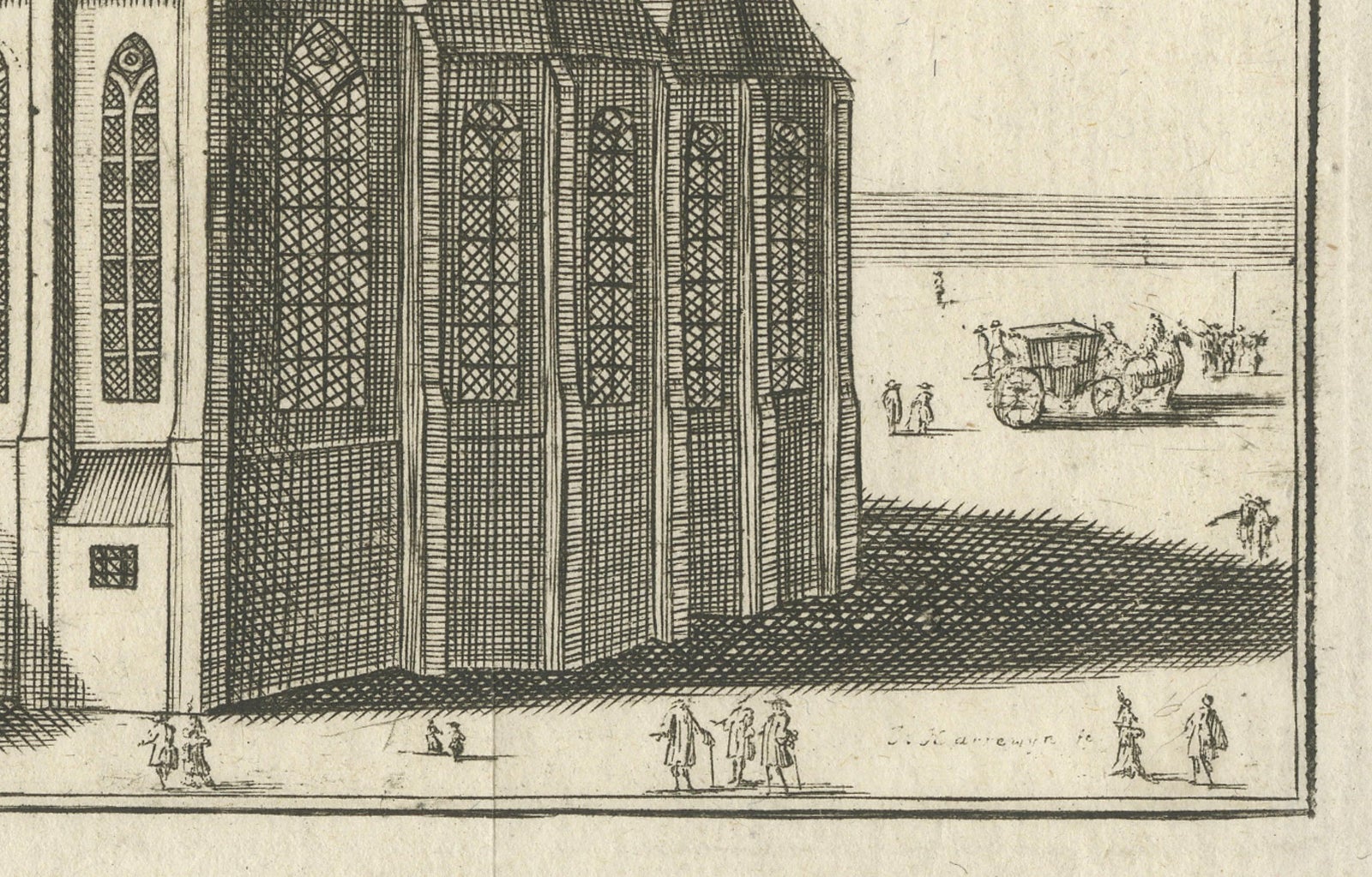
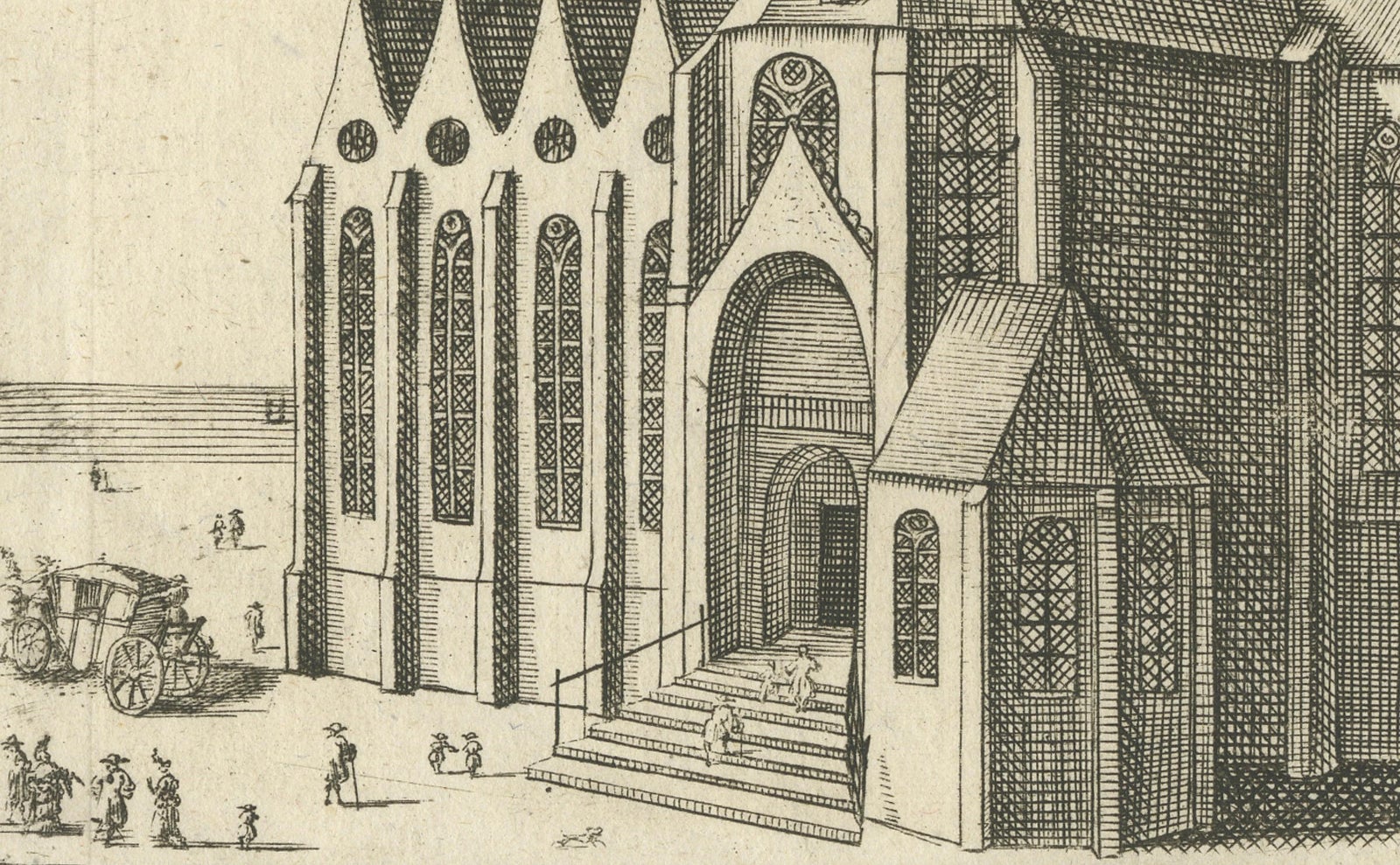
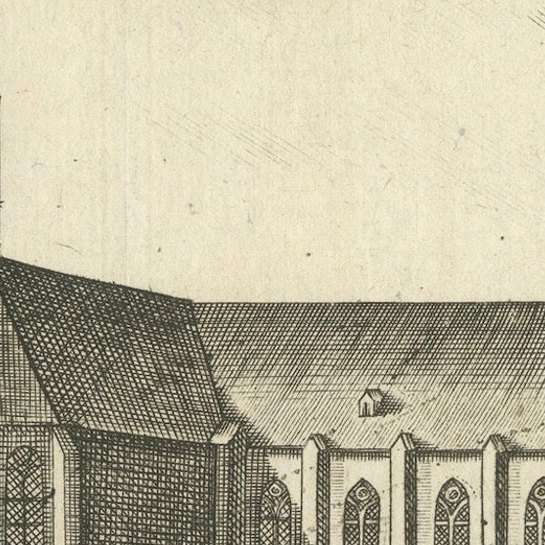
The cathedral's gothic architecture is clearly depicted in this engraving, emphasizing its tall spire and elaborate windows. Figures and carriages in the foreground bring life to the scene, suggesting the active role the cathedral played in the community. This print not only serves as an artistic representation but also as a historical document capturing one of the most significant religious structures in the Dutch province of Limburg.